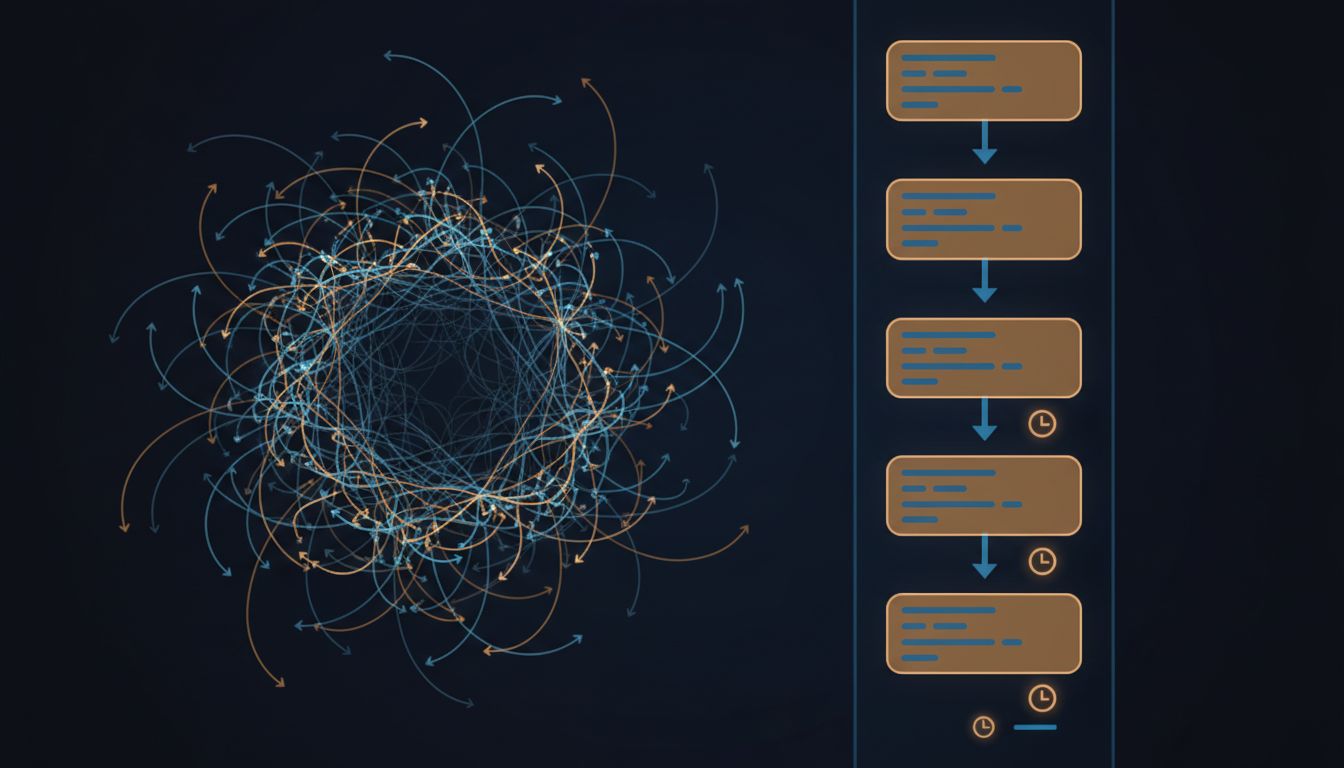
Multitasking feels productive. You have five tabs open, two Slack threads running, a half-written email, and a meeting in fifteen minutes. It feels like parallel processing. It is not. What you are actually doing is context-switching, and your brain handles it about as gracefully as a single-threaded CPU handling concurrent requests through rapid polling. The throughput numbers are not good.
Here is what is actually happening, and what people who do focused work at a high level do instead.
1. Your Brain Does Not Multitask. It Context-Switches, and the Overhead Is Enormous.
When cognitive scientists talk about multitasking, they mean attempting to perform two cognitively demanding tasks simultaneously. The research from David Meyer and Joshua Rubinstein at the University of Michigan found that switching between tasks adds what they called “mental switching costs,” and those costs compound. Each switch requires your prefrontal cortex to first disengage from the current task’s rules and goals, then re-engage with the new ones. For complex work, this takes time, and more critically, working memory.
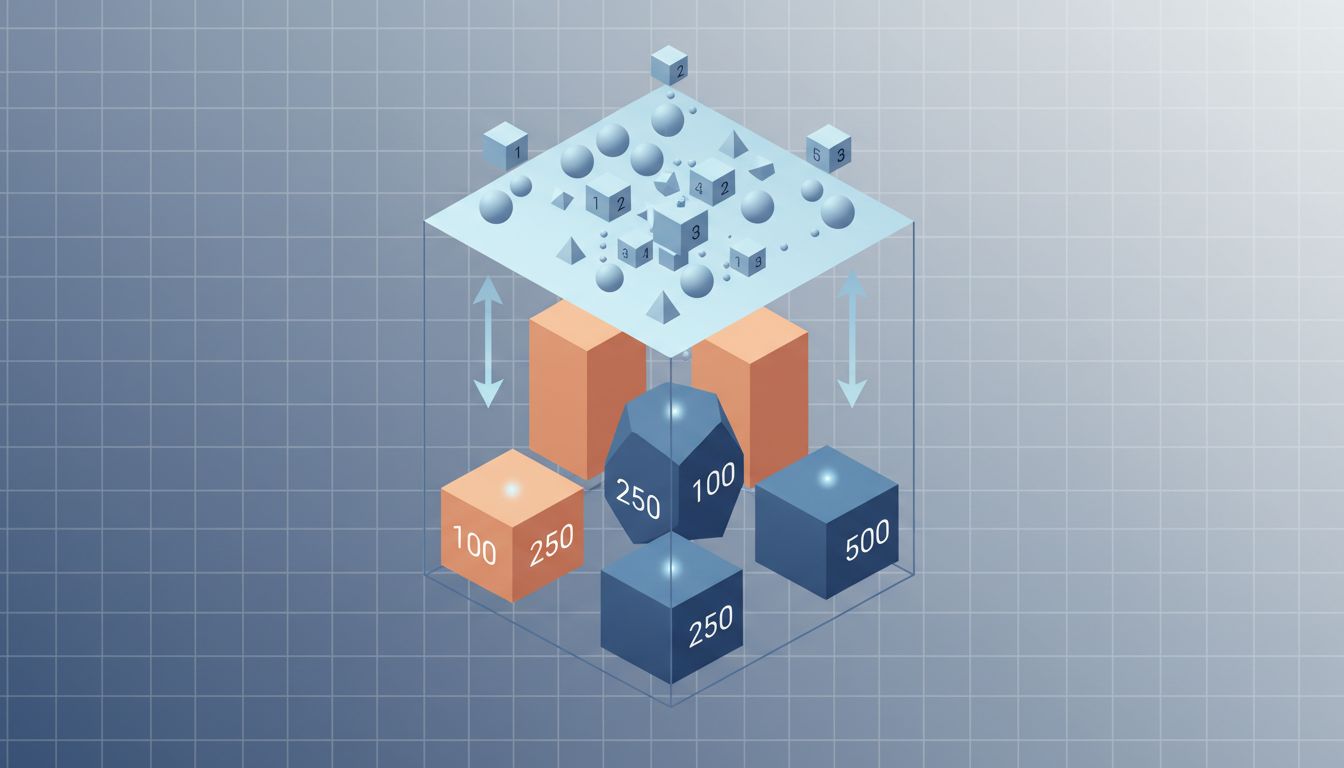
Working memory is your brain’s RAM, roughly 4 to 7 items it can hold and manipulate at once. Every context switch partially flushes it. If you are deep in a debugging session and switch to answer a Slack message, you are not just pausing the debug session. You are writing the current state to slower storage (if at all), handling the interrupt, and then paying the cost of reloading context when you return. Anyone who has been pulled out of flow during a complex refactor knows exactly how long that reload takes.
The frequently-cited “40% less productive” figure comes from research commissioned by Hewlett-Packard in the mid-2000s, and while you should treat any single-study percentage with appropriate skepticism, the directional finding is solid and replicated. The cost is real and it scales with task complexity.
2. The Interruption Costs More Than the Interruption Takes.
Gloria Mark at UC Irvine has spent years studying how long it takes workers to recover from interruptions. Her research found it takes an average of around 23 minutes to fully return to a task after being interrupted, even when the interruption itself was brief. The reason is that the path back to deep focus is not instant. You re-read what you wrote. You reconstruct your mental model. You get back to the edge of the problem.
This asymmetry is the real issue. A two-minute Slack reply does not cost two minutes. It potentially costs twenty-five minutes of fully-loaded attention, spread across the interruption and the recovery. For a knowledge worker doing eight hours of ostensibly focused work, even a handful of these per day can collapse actual deep-work time to almost nothing.
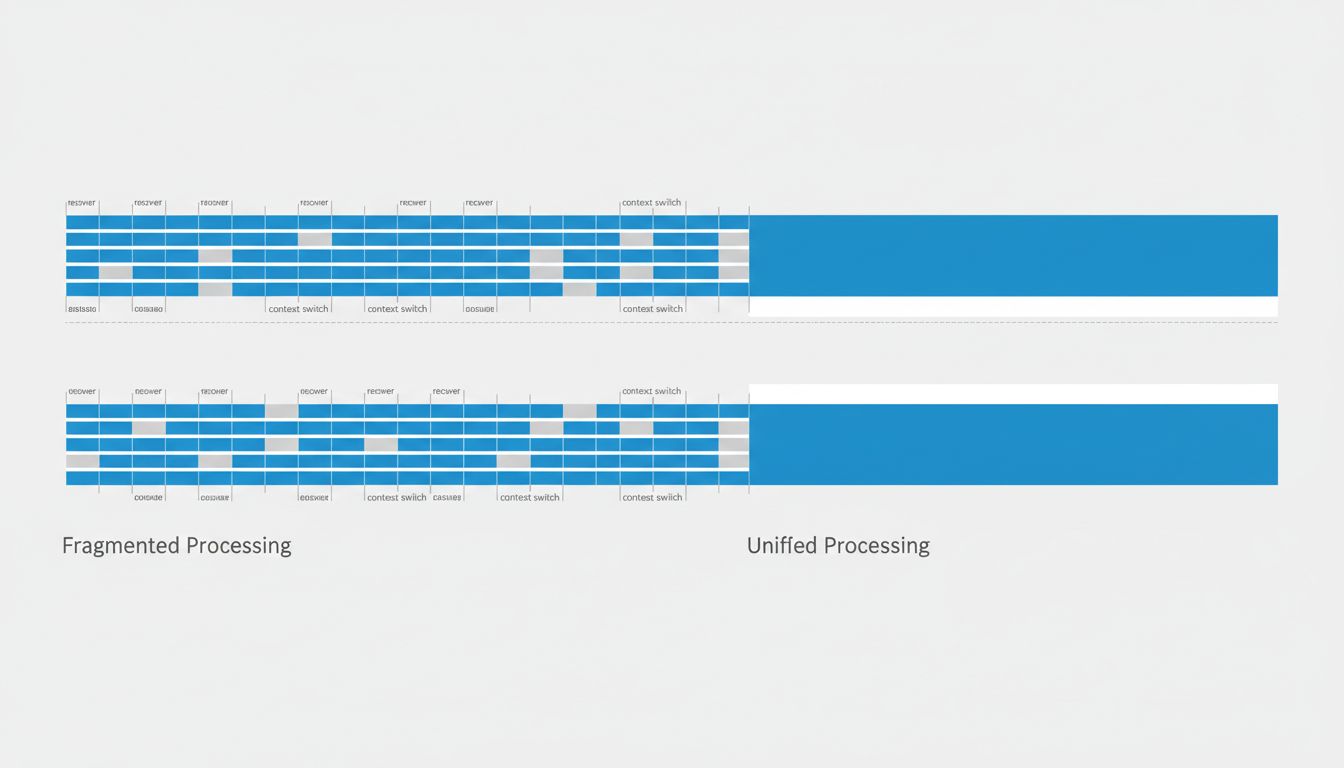
The people who produce consistently high-quality technical work, writers, architects, engineers, researchers, tend to protect against this not by being antisocial but by being deliberate about interrupt windows. They batch communications. They treat asynchronous tools as actually asynchronous, not as instant messengers with a thin excuse.
3. Notifications Are Interruptions You Agreed to Install.
There is a specific version of this problem that is worth addressing directly: the notification. Every notification is a scheduled context switch you consented to in advance, usually without thinking about the compounding cost. The badge on your email app, the Slack ping, the calendar reminder that fires five minutes before a meeting you already know about, each one is a brain interrupt.
The research from the University of California found that simply having a phone on a desk (even face-down) measurably reduces available cognitive capacity, because part of your attention is allocated to monitoring whether it will demand attention. This is not willpower failure. It is how attention works. You cannot fully allocate a resource while also partially reserving it for something else.
Serious practitioners remove notifications almost entirely and create explicit “check” windows instead. This sounds extreme until you actually do it and realize the cost you were paying was invisible because it was constant.
4. Flow Is Not a Luxury. It Is Where the Actual Work Happens.
Mihalyi Csikszentmihalyi’s work on flow, the state of deep, unselfconscious engagement with a challenging task, is sometimes treated as a productivity nicety. It is not. Flow is the only state in which certain classes of work actually happen well. You cannot debug a subtle race condition in flow fragments. You cannot architect a system in two-minute intervals between notifications.
Flow requires what Cal Newport calls “deep work,” extended, uninterrupted blocks with a specific focus. The entry cost for flow is non-trivial. Most people need 15 to 20 minutes of uninterrupted focus before they hit the state, which means even one interruption per 25-minute block prevents flow entirely for that block. If your calendar looks like the inside of a shared inbox, you may not be entering flow at all on most days, and you may not have noticed because you are staying busy.
Top performers in technical and creative fields do not have better concentration genes. They engineer their environment so that flow is structurally possible. They block calendar time, they use “do not disturb” modes with real teeth, and they treat interruptions to that time as bugs, not as normal operating behavior.
5. The Fix Is Not Time Management. It Is Attention Architecture.
Most productivity advice frames this as a scheduling problem. It is actually a systems design problem. The question is not “when should I do deep work,” it is “what in my environment is actively fighting against sustained attention, and how do I change the architecture rather than fight it with willpower?”
Willpower is a depletable resource. Designing your environment so that the default is focus rather than distraction is not. Specific implementations vary, but the pattern is consistent: reduce the number of things that can interrupt you to near zero during defined blocks, make those blocks inviolable on your calendar, and make the cost of interrupting them visible to whoever might want to.
This is also why “just be more disciplined” fails at scale. If your tools are optimized to demand attention (and they largely are, by design), swimming against that current purely through discipline is a losing game. You restructure the environment so the current runs the right direction.
6. Batch Processing Is Not Just for ETL Pipelines.
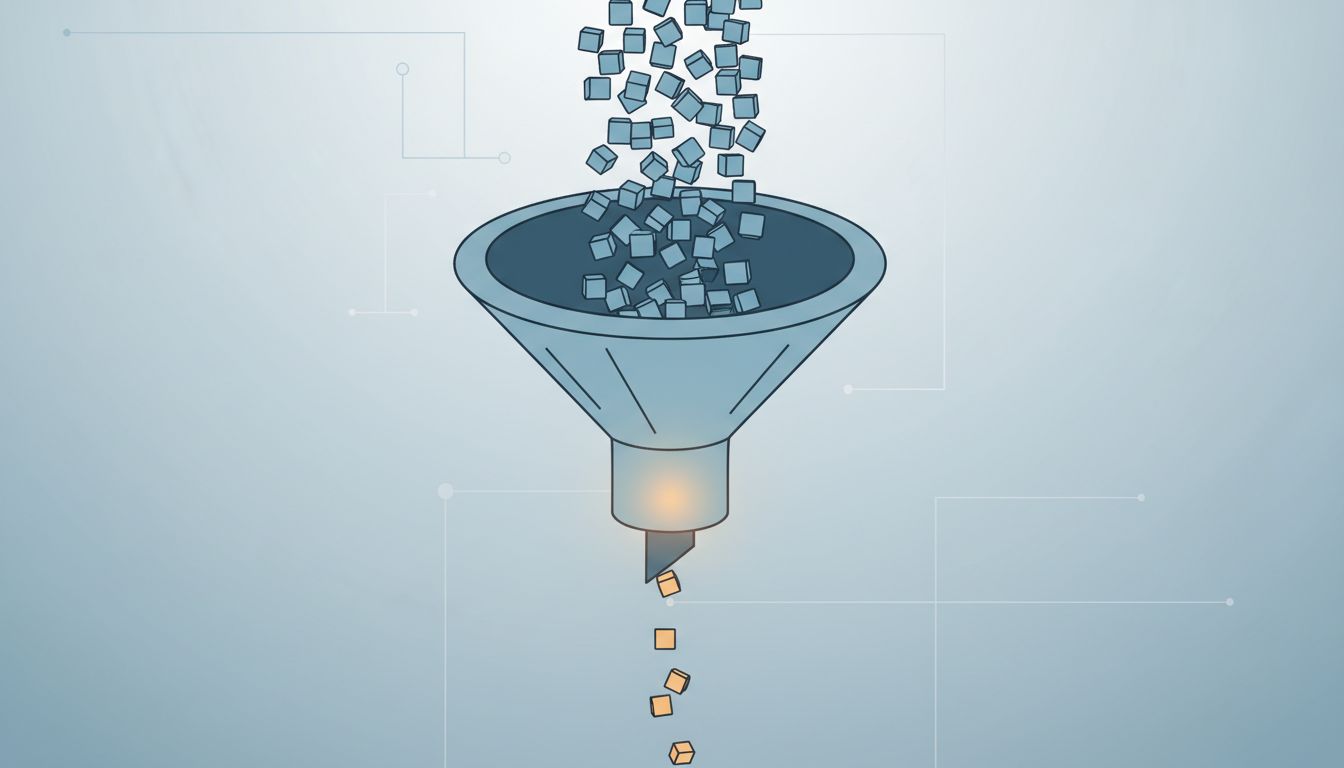
One practical thing high-output workers do is apply the batch-processing mental model to their communication. Rather than treating email and Slack as a real-time feed that demands constant polling, they designate specific times to process those queues, handle everything in the queue, and then close them. The analogy to ETL (extract, transform, load, the pattern for moving and processing data in bulk rather than record by record) is not a stretch. Record-by-record processing has overhead per record. Batch processing amortizes that overhead.
For most knowledge workers, checking email three times a day would handle nearly everything that actually needs handling while eliminating dozens of micro-interruptions. The things that genuinely require real-time response are fewer than you think, and for those, there are other channels. The issue is that most people have never audited which communications actually require sub-hour response times versus which ones simply feel urgent because they arrived as notifications.
Multitasking is not a skill you can improve at. It is a tax on thinking that you can choose to stop paying.