The Honeymoon Is Structural, Not Motivational
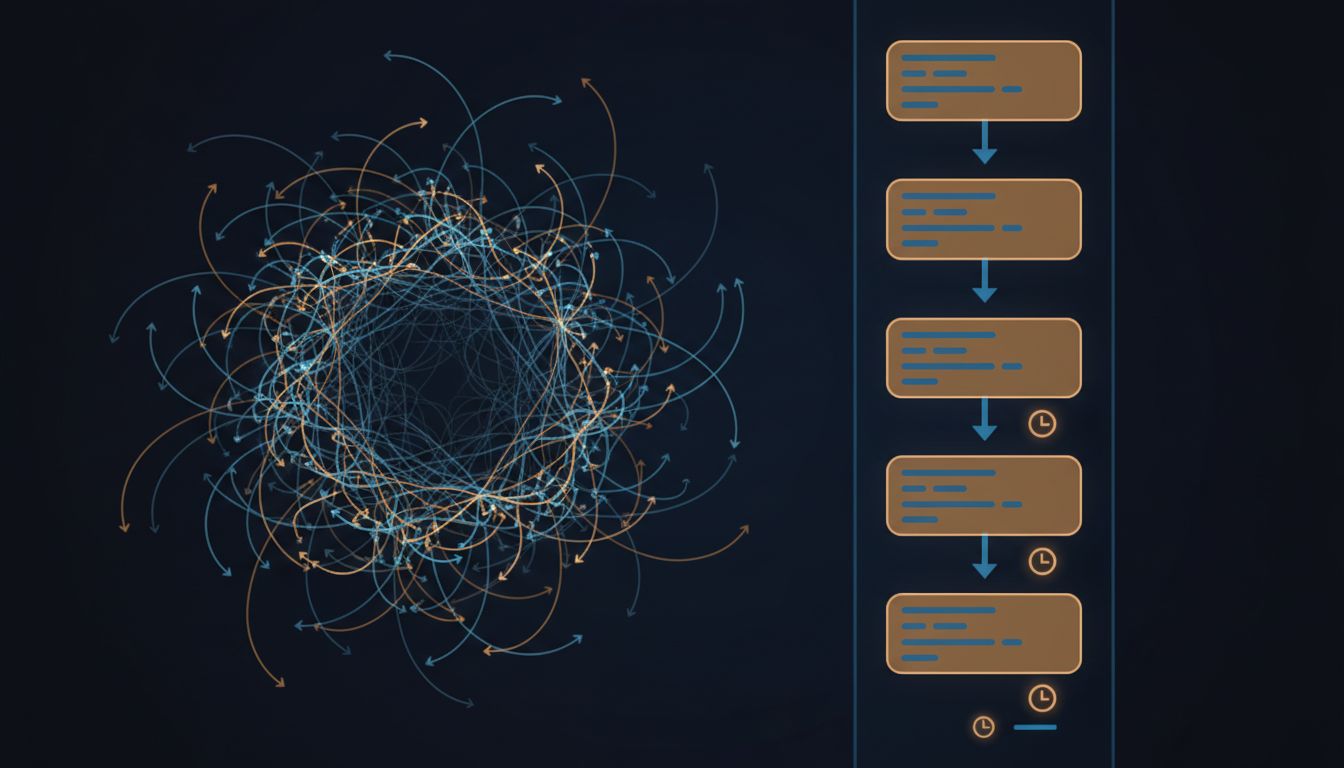
You’ve probably been here. You discover a new productivity system, maybe Getting Things Done, maybe time-blocking, maybe a Notion template someone swears by. You spend a weekend setting it up. Week one is genuinely good. You’re capturing everything, your inbox is at zero, you feel like you’ve finally figured out how your brain works.
By week four, you’ve stopped using the weekly review. By week six, the system is a monument to your good intentions, accumulating unchecked tasks like dust.
The standard explanation is willpower. You didn’t stick with it. You lost motivation. You need more discipline. This explanation is both popular and almost completely wrong.
The real problem is that every new productivity system gives you a short-term burst of output for a reason that has nothing to do with the system’s design, and once that reason expires, the underlying issues resurface unchanged.
What’s Actually Happening in the First 30 Days
When you adopt a new system, you do three things simultaneously. You capture everything that was previously floating in your head. You make a bunch of small decisions you’d been deferring. And you feel the cognitive relief of having a structure to hand things off to.
That’s three separate productivity boosts disguised as one system working.
The capture phase alone accounts for most of what feels like a new system “clicking.” Researchers studying cognitive load have consistently found that unfinished tasks occupy working memory in ways that completed ones don’t. This is sometimes called the Zeigarnik effect, after the Soviet psychologist Bluma Zeigarnik who documented that people remember interrupted tasks better than completed ones. When you dump everything into a new system, you’re not getting more productive. You’re getting your working memory back. That feels transformative.
The decision-making burst is similar. New systems force you to triage everything at once, which means you’re briefly operating with clarity about what actually matters. That clarity fades as new inputs arrive and the system fills up again.
Once these three effects wear off, you’re left with the system itself. And the system, it turns out, doesn’t solve the problem you actually have.
The Three Problems That Productivity Systems Can’t Fix
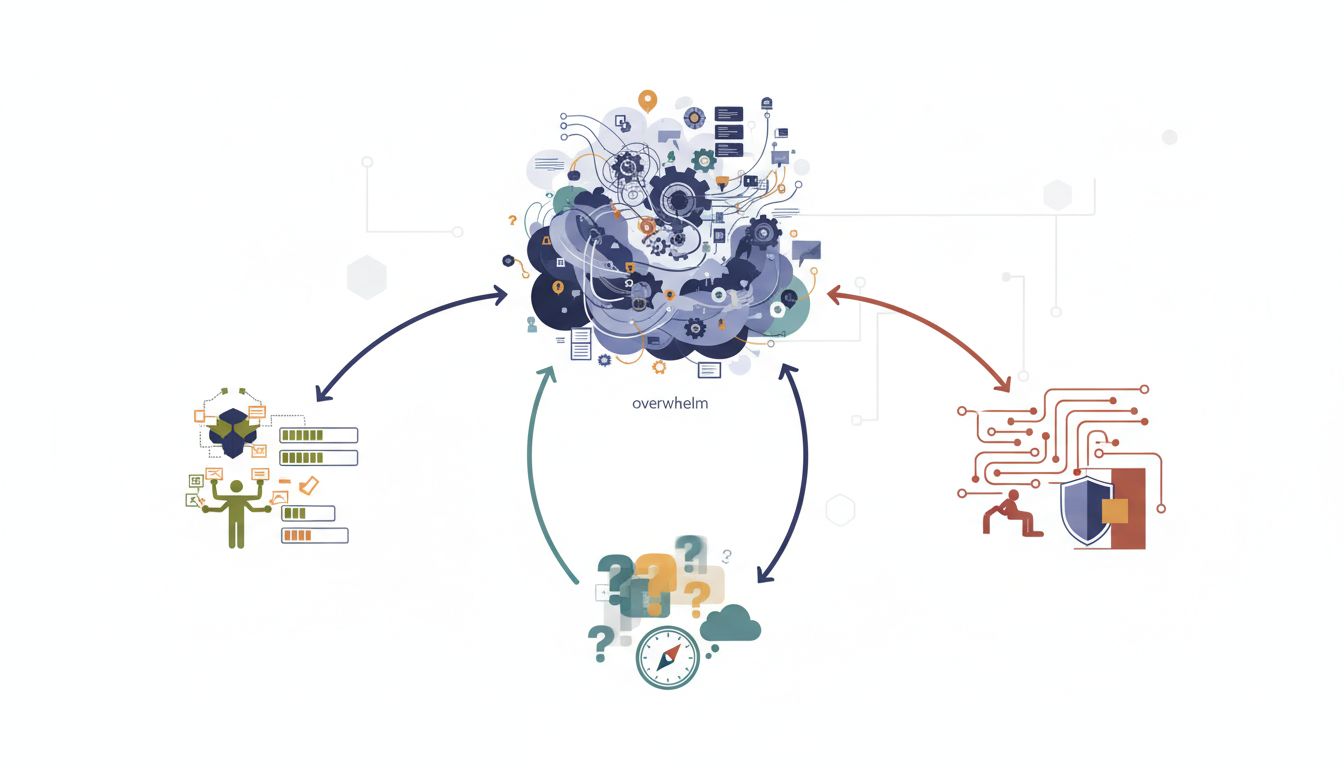
Most people don’t have a system problem. They have one of three different problems, and they keep reaching for systems to solve them.
You have too much actual work. No system helps when the volume of work legitimately exceeds the hours available. A better capture system doesn’t create more hours. A cleaner task list doesn’t reduce the demands on you. What you actually need here isn’t GTD, it’s a conversation with your manager, a renegotiated scope, or a hard decision about what you’re going to stop doing. Systems can make you feel organized while doing nothing about the throughput problem.
You don’t know what matters. Some people aren’t overwhelmed by volume. They’re paralyzed by ambiguity. They have forty tasks and no clear sense of which ones move the needle. Productivity systems often make this worse by giving you a beautifully organized list of tasks you still can’t prioritize. You can’t systematize your way out of unclear goals. This requires reflection, not a better tool.
You’re avoiding something specific. Procrastination that looks like a system problem is often avoidance of one particular task or category of tasks. You’ll do everything else with remarkable efficiency. The system becomes a way to feel productive while circling around the thing you’re not doing. Adding another layer of system doesn’t address the avoidance; it gives it more structure. (There’s a useful piece on this pattern worth reading: what looks like procrastination in top performers is often deliberate.)
Identifying which of these three you actually have is more valuable than any system. Sit with this honestly. Which description makes you slightly uncomfortable?
Why Systems Feel Like Solutions Even When They Aren’t
Systems are appealing for a specific psychological reason: they convert an ambiguous problem into a concrete project. “I’m overwhelmed and unproductive” is a vague, uncomfortable state. “I need to set up my inbox, build a weekly review, and label my projects” is a discrete to-do list.
Building the system scratches the productivity itch without requiring you to actually confront the harder questions. You get the dopamine hit of checking tasks off (set up Todoist, configure recurring tasks, watch the YouTube tutorial about time-blocking) without having to do the uncomfortable thing, which is deciding what matters, saying no to things, or having a hard conversation about workload.
This is why productivity content is so popular and why it keeps generating the same complaints. The content is genuinely useful. The systems are often well-designed. But they’re being used as substitutes for harder decisions rather than tools to support decisions that have already been made.
The best systems in the world are multipliers of clarity. If you don’t have clarity about what matters, they multiply confusion instead.
The Specific Failure Mode of Digital Productivity Tools
Digital tools add a layer to this problem that analog systems don’t. They make capturing easier, which sounds good until you realize that frictionless capture means your system fills up faster and becomes harder to trust.
David Allen, who wrote Getting Things Done, was insistent that the value of a capture system comes from your trust that it’s complete. If you don’t trust it, you keep holding things in your head anyway, which defeats the purpose. Digital tools lower the bar to capture so much that the system rapidly becomes unmanageable, and you stop trusting it.
This is why people who swear by paper planners often report more sustained results than heavy Notion users, despite Notion’s obvious feature advantages. The friction of writing things down by hand creates a natural filter. You only write down things worth writing down. The system stays smaller and stays trusted.
Digital calendars create a related but distinct version of this problem, where the tool handles scheduling logistics but leaves the actual prioritization work entirely to you.
If you’re a digital tools person, the fix isn’t to go analog. It’s to build friction deliberately. Weekly reviews that archive anything over two weeks old. Hard limits on how many active projects your system can hold. A “someday” list that you review monthly and delete aggressively.
How to Build Something That Lasts Past 30 Days
The goal isn’t a better system. The goal is a system matched to your actual problem. Here’s a practical way to approach this.
First, diagnose before you design. Spend one week tracking where your time actually goes versus where you think it goes, and tracking which tasks you’re avoiding versus which you’re completing. Don’t change anything yet. You want data about your real behavior, not your aspirational behavior.
Second, separate decisions from tasks. The most useful function of any productivity system is helping you make decisions at the right time rather than every time. If you’re deciding what to work on every morning from scratch, you’re spending decision-making energy that should go toward the work itself. The system should encode decisions you’ve already made: these are my three priorities this quarter, these are the tasks that advance them, everything else is a distraction.
Third, match the system’s complexity to your actual needs. If you have thirty major projects and dozens of stakeholders, you probably need sophisticated tooling. If you have one job with clear deliverables and moderate volume, you probably need a text file and a calendar. Most people are running the wrong level of complexity for their situation, and the mismatch creates overhead that consumes the productivity gains.
Fourth, build in a monthly “does this still make sense” review. Not a weekly review of tasks. A monthly review of the system itself. Is this system helping me do more of what matters? If the honest answer is no, don’t add to it. Simplify or start over with better information about what you actually need.
What This Means
The 30-day cliff isn’t a character flaw and it isn’t proof that productivity systems don’t work. It’s evidence that you’ve been using a tool to solve a problem it wasn’t designed for.
Before you download another app or rewatch a tutorial about time-blocking, get specific about your actual constraint. Is it volume? Clarity? Avoidance? The answer determines everything about what you should do next.
If it’s volume, the solution is outside any system. If it’s clarity, you need reflection time before you need organization tools. If it’s avoidance, you need to identify the specific thing and address it directly.
Once you know which problem you have, pick the simplest system that addresses it and add friction deliberately so it stays manageable. You want a system you’ll actually use six months from now, not one that impresses you in week one.
The best productivity system is the one you maintain when you’re tired, busy, and not feeling particularly motivated. Build for that person, not for the version of yourself who spent a Saturday watching setup tutorials.