

Most software teams treat bugs as failures to be eliminated. The goal is a clean backlog, zero known issues, a smooth release. But look at the products that actually win over time and you’ll notice something uncomfortable: they shipped with bugs, sometimes spectacular ones, and grew anyway. That’s not luck. There are real mechanisms at work here.
1. Bugs Force Users to Become Experts
When a product works perfectly out of the box, users stay shallow. They get what they came for and move on. But when something behaves unexpectedly, users who care enough to stay start digging. They find workarounds. They discover adjacent features. They share what they learned.
This is the same logic behind hiding advanced features from new users: friction at the right moment creates invested users, not frustrated ones. A user who figured out how to work around a quirk in your interface knows your product better than one who never hit an edge case. That knowledge becomes identity. They stop being a user and start being a power user, which is a completely different kind of customer.
You can test this yourself. Think about the software you know best. Odds are it’s software you’ve had to troubleshoot.
2. Bug Reports Are the Most Honest User Research You’ll Ever Get
Surveys lie. Focus groups perform. But a bug report tells you exactly what a real user was actually trying to do at the moment something broke. It’s behavioral data with emotional context attached.
When Slack was in early development, the team treated every support ticket as a signal about what users were attempting, not just what was broken. That orientation, reading complaints as intent data, helped them prioritize features that matched actual use rather than assumed use. The bug isn’t just a problem to fix. It’s a map of where users are going that you didn’t plan for.
If you’re building software right now, your bug tracker is probably the most underused research tool you have. Go sort your oldest unresolved issues by frequency. The patterns there tell you more about your users’ real workflows than any user interview you’ve scheduled.
3. A Known Bug, Handled Well, Builds More Trust Than a Flawless Release
This one runs counter to every instinct a product team has, but the evidence for it is consistent. When a company communicates clearly about a known issue, acknowledges it publicly, and shows users what they’re doing about it, trust goes up. When a company silently patches problems and says nothing, users notice the absence of communication and assume the worst.
GitHub’s status page is a good example of this done right. During outages, they post detailed incident reports that read like engineering postmortems, not PR statements. The technical honesty makes users feel like adults. Compare that to the vague “we’re experiencing issues” boilerplate you see elsewhere, which tells users that either the company doesn’t know what’s happening or doesn’t think users deserve an explanation.
Handling a bug well is a product moment. Most teams treat it as a cost center. The ones who treat it as a trust-building opportunity look completely different to their users.
4. Bugs Reveal Which Users Actually Care About Your Product
Not all users are equal. Some will encounter a bug, shrug, and never come back. Others will file a detailed report, check back to see if it’s fixed, and tell people about the experience. The second group is the one you’re building for.
Bugs act as a filter. They separate users who have a shallow relationship with your product from users who have a genuine need for it. That’s valuable information you cannot get any other way. If you’re in early-stage product development, the users who stick around despite bugs are your core users. Their behavior under friction is the clearest signal you have about product-market fit.
This doesn’t mean you should ship broken software on purpose. It means you should pay close attention to who tolerates imperfection and why. Those users are telling you something about the depth of their problem.
5. The Act of Fixing Bugs Creates Natural Touchpoints With Users
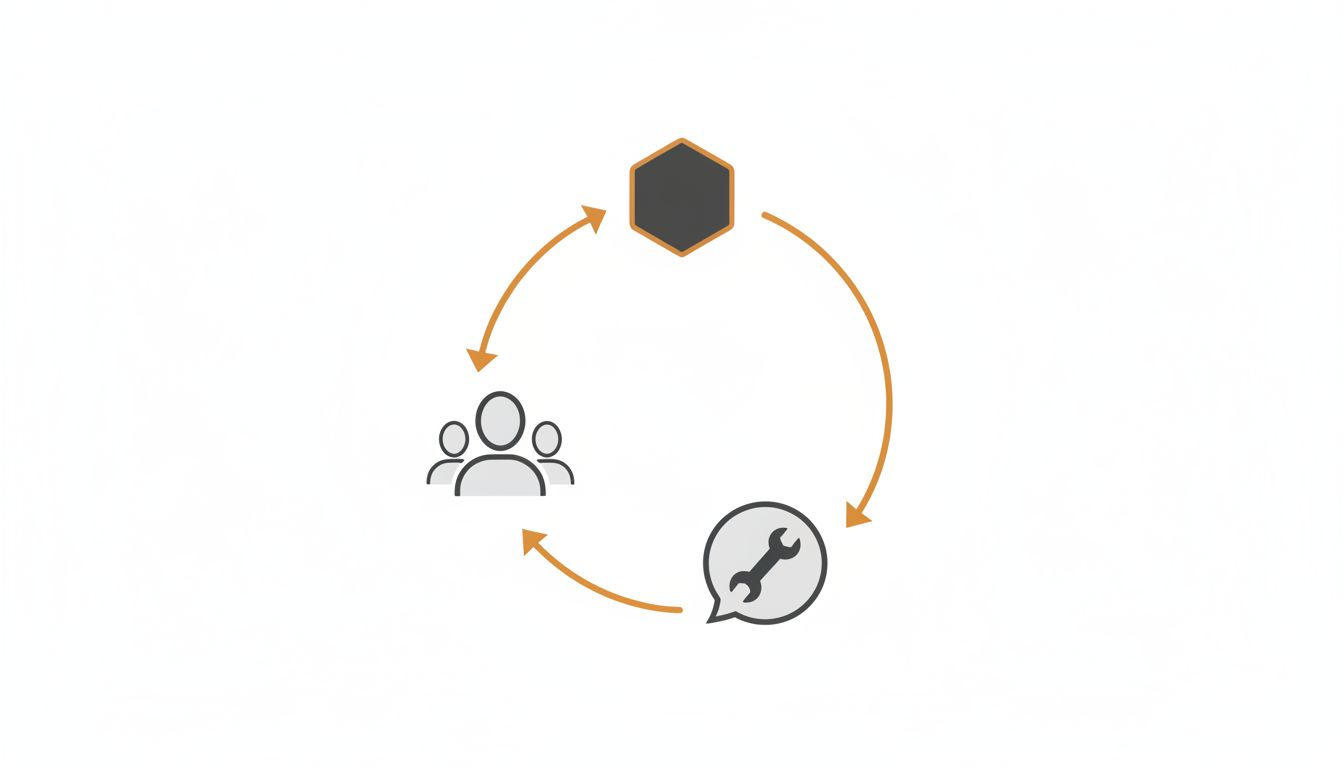
Every bug fix is a reason to reach out. “You reported an issue with X three weeks ago, it’s fixed in today’s release” is one of the highest-conversion emails a product team can send. The user reported a problem, felt heard, and now sees proof the team acted. That loop, problem to acknowledgment to resolution, is the entire customer relationship in miniature.
As noted in the rational case for skipping bug fixes entirely, teams make deliberate triage decisions about what to fix and when. The corollary is that what you do fix, and who you tell about it, is a product and retention decision as much as an engineering one. Teams that close the loop with users who reported issues see measurably better retention from that cohort. It’s direct, personal, and almost nobody does it systematically.
6. Imperfect Releases Let You Ship Faster, and Speed Compounds
The teams that wait for perfection before shipping consistently lose to teams that ship imperfect things and improve them. This is not a new observation, but the mechanism is worth being specific about: the feedback you get from real users using real software in real conditions is qualitatively different from anything you can generate internally. You cannot simulate production.
The compounding effect is the part that gets underweighted. A team that ships every two weeks, learns, and iterates will be twelve months ahead of a team that ships every quarter, even if the quarterly team’s releases are technically cleaner. The gap widens over time. By the time the careful team ships their third release, the iterating team has processed 26 rounds of real-world feedback.
Bugs are the cost of that speed. For most products, it’s a trade worth making. The question to ask isn’t “how do we eliminate bugs before shipping” but “which bugs are acceptable to ship with, given what we’ll learn faster by shipping.”
That’s a harder question, and a more useful one.