In 2011, Spotify launched in the United States with a free tier that was genuinely good. You could listen to any song, on demand, as many times as you wanted. There was no monthly listening cap in most markets when the product first launched. The ads were annoying but manageable. By the standards of what came before — buying albums, pirating MP3s, or tolerating the chaos of early streaming — Spotify free felt like an actual gift.
That gift did not last, and its disappearance was carefully managed.
The Setup
Spotify’s business problem was visible from the start. Licensing costs are brutal. The company pays rights holders every time a track is streamed, which means every free user generates cost with no guaranteed revenue. To survive, Spotify needed free users to convert to paid subscribers at a high enough rate to cover those costs and eventually turn a profit.
The conventional approach would have been to simply add more features to the premium tier. Make premium so good that people upgrade. That’s the straightforward version of freemium.
Spotify did that. But it also did something else.
What Happened
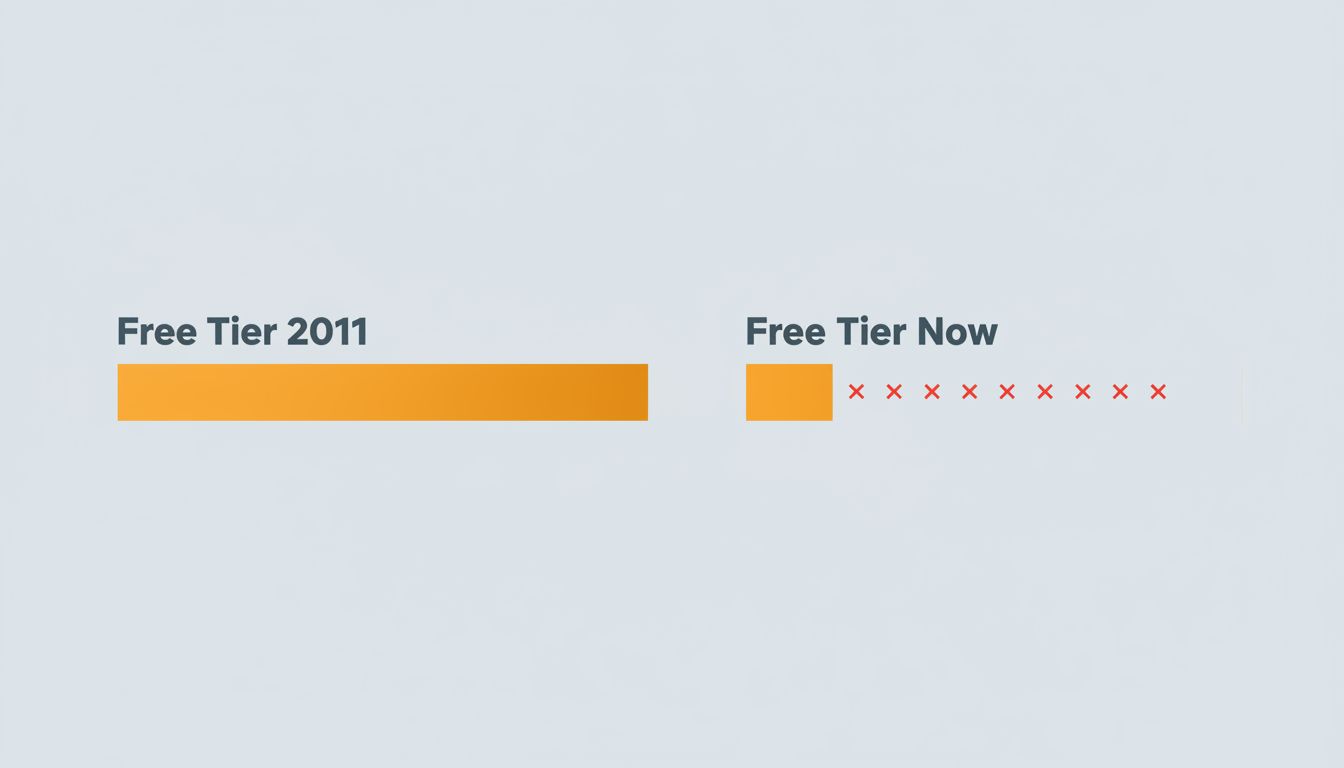
Between 2011 and today, Spotify’s free tier went through a long, incremental contraction. Mobile users lost on-demand listening and were forced into shuffle mode. Download and offline playback remained premium-only. Skip limits were introduced. Ad frequency increased. In some markets, new releases became unavailable to free users for a window of time after launch.
None of these changes were announced as removals. They were framed as clarifications, platform differences, or simply left unexplained in the fine print of terms-of-service updates. The experience didn’t collapse overnight. It degraded, steadily and deliberately, over years.
The result is that a free user today has access to something that nominally resembles the original product but functions quite differently. You can still use Spotify without paying. You just can’t use it in the ways that made it worth using in the first place.
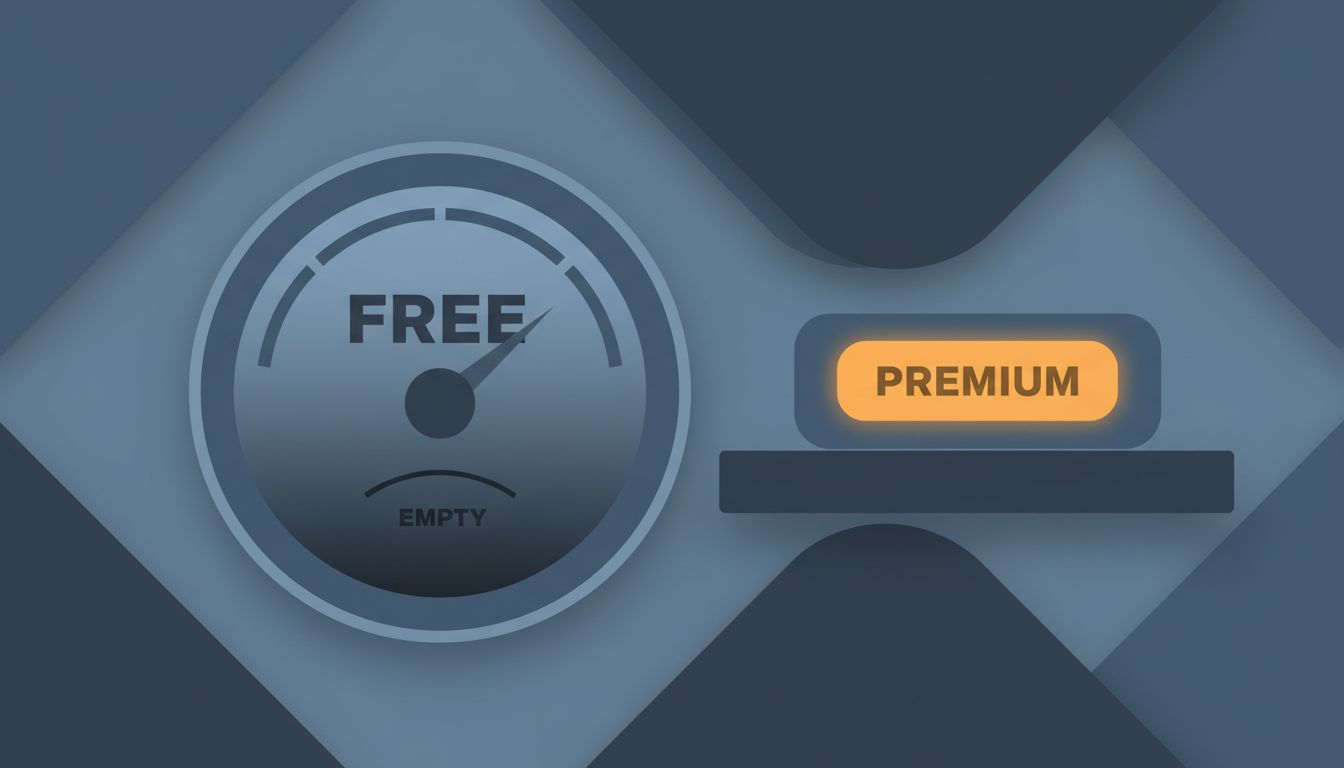
This is invisible degradation. Not a paywall. Not a removal notice. Just a slow tightening of what’s available until the free product becomes friction-filled enough that the upgrade feels like relief rather than an upsell.
Spotify is not unique here. The pattern appears across the industry. Dropbox launched with generous free storage, then cut it. LinkedIn stripped away basic messaging features, pushed them to premium. Evernote, once the canonical example of a functional free tier, restricted free accounts to two devices in 2016, which effectively made the product unusable for anyone with a phone and a laptop. Evernote’s response to user backlash was measured and confident: they knew what they were doing. The two-device limit was a conversion lever, not an oversight.
Why It Works
The mechanism behind invisible degradation is psychological more than technical. Users anchor to their current experience. When a product gets worse slowly, most people don’t register it as a change. They register it as a mild, persistent frustration. The product feels slightly off. They start to wonder if they’re just expecting too much.
This is precisely what the product team is hoping for.
The upgrade prompt doesn’t need to be a hard sell if the free experience has been engineered to feel subtly broken. The user concludes on their own that paying is the obvious solution. The conversion feels self-directed. In reality, it was designed.
This connects to how pricing tiers are structured to push you toward a specific choice. The free tier isn’t just a lower option. It’s a calibrated disappointment. And because the degradation happens in small increments, users rarely quit. Quitting would require them to acknowledge that they’ve lost something. Instead, they upgrade, and the transaction registers as a gain.
There is also an information asymmetry problem. Spotify, Dropbox, and every other company running this playbook knows exactly what they’ve changed and what effect each change has on conversion rates. They are running experiments on your behavior continuously, and the results of those experiments go directly into the next round of free-tier adjustments. Users have no visibility into this process.
What We Can Learn
For users, the practical defense is simple but requires a specific kind of attention. When a product starts feeling worse, don’t assume it’s you. Ask whether the product has actually changed. Check release notes. Compare the current free-tier terms against what was offered when you signed up. Companies are required to update their terms of service, but they’re not required to make those updates easy to notice.
If the answer is that the product has been deliberately degraded, that’s useful information. It tells you how the company views the relationship. You are not a user being served. You are a conversion target being managed.
For founders and product teams, the lesson is sharper. Invisible degradation works as a short-term conversion tactic. It demonstrably raises upgrade rates, at least initially. But it corrodes trust in ways that are hard to measure until the damage is done. Evernote is the clearest cautionary example: the two-device limit converted some users and permanently alienated others, and the product never fully recovered its cultural position. It went from “the app everyone uses” to “the app everyone used to use” with surprising speed.
The free tier is a promise. Companies that understand this build free tiers that are genuinely useful, limited in scope but honest about those limits, and stable enough that users can rely on them. That creates the goodwill that makes premium upgrades feel like a fair trade rather than a ransom.
Spotify has survived its free-tier contraction because it has no serious competition with comparable catalog depth. Most companies don’t have that structural protection. For them, the slow squeeze is a riskier strategy than it looks, because users who feel manipulated don’t just cancel. They tell people.
The product that treats its free users well is making a bet that the lifetime value of a trusted relationship exceeds the short-term lift from engineered frustration. That bet is usually right, and most companies never take it.