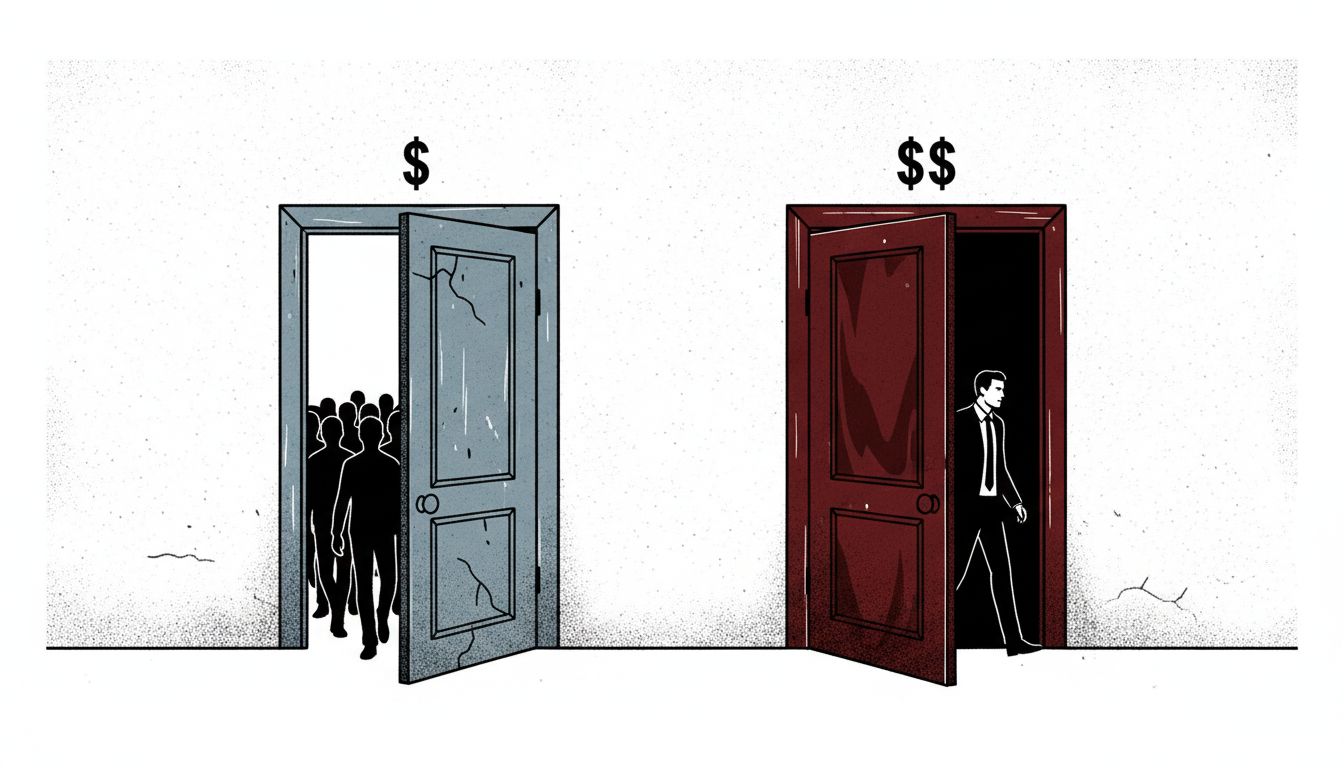
Picture this: you’ve just finished pitching your startup idea to a room of friends and colleagues. Most of them nod along, offer encouraging words, and wish you luck. But one person in the corner keeps asking uncomfortable questions. Why would anyone switch from the existing solution? What happens when a bigger player copies you in six months? Have you actually talked to customers, or are you just assuming they want this? That person, the one making you sweat through your shirt, is exactly who you should be calling the next morning with a job offer.
This sounds counterintuitive, and most first-time founders recoil at the idea. But it’s one of the most consistent patterns you see in startups that survive their first three years. The companies that surround themselves with true believers in the early days tend to build elaborate, beautiful products for problems that don’t exist at the scale they imagined. The companies that hire skeptics tend to build things people actually pay for. The logic, once you see it, is hard to argue with. It’s the same reason tech companies hire the hackers who attacked them: the person who found the flaw understands the system better than almost anyone else.
The Yes-Man Problem Nobody Talks About
Here’s what happens inside a startup that only hires enthusiastic believers. The founder, already running on adrenaline and conviction, surrounds themselves with people who reflect that energy back. Every early decision gets validated. Every pivot gets cheered. Every setback gets rationalized away as a temporary obstacle rather than a signal worth studying.
The problem isn’t morale. The problem is information. Early-stage companies desperately need accurate, brutal feedback about what’s working and what isn’t. When your first five employees all think the product is great, you’re flying blind. You don’t have customers at scale yet. You don’t have data worth trusting. What you have is a small group of people whose opinions matter enormously, and if those opinions are systematically biased toward optimism, you’re going to make expensive mistakes.
This gets compounded as the team grows. Software bugs multiply when teams grow because of a communication problem, not a coding problem, and the same principle applies to bad assumptions. When the founding team all shares the same blindspot, it doesn’t stay contained to five people. It gets baked into the product roadmap, the hiring criteria, the sales pitch, the investor updates. By the time the market tells you something is wrong, you’ve built an organization that structurally resists hearing it.
What Critics Actually Bring to the Table
Let’s get specific about what you’re actually hiring when you hire a skeptic.
First, you’re hiring someone who has already stress-tested your idea before they ever got on payroll. They’ve thought about the failure modes. They’ve considered the competitive response. They’ve asked whether the target customer is actually who you think they are. That’s months of free strategic consulting, and it arrived in the form of a difficult conversation you didn’t want to have.
Second, you’re hiring someone who won’t waste time on the comfortable work. True believers often spend startup energy polishing things that feel good rather than fixing things that matter. The critic tends to have a sharper sense of priority because they’re already oriented toward what could go wrong.
Third, and this is underrated, you’re hiring someone whose eventual conversion to believer actually means something. When a skeptic spends three months with your company, digs into the product, talks to users, and comes out the other side genuinely convinced you’re onto something real, that’s signal. It’s a far more reliable data point than enthusiasm from someone who was excited before they knew anything.
This connects to why successful founders use strategic ignorance to avoid analysis paralysis. The goal isn’t to eliminate all doubt. It’s to concentrate it usefully. A founding team with one or two rigorous skeptics can move fast on the things that are clearly working while paying close attention to the things that need to be proven out.
The Conversion That Changes Everything
There’s a moment in every startup that gets this right where the internal critic flips. They’ve been the skeptic, asking hard questions, pushing back on assumptions. And then, usually because of something they see in the data or hear from a customer, they become a convert. Not a naive cheerleader, but a genuinely convinced operator who now brings both rigor and belief to their work.
This matters for two reasons. Internally, it shifts the team dynamic in a healthy way. The questions don’t stop, but they become questions about how to accelerate rather than questions about whether to proceed. Externally, that person becomes one of your most credible advocates. When they talk to a potential hire, a skeptical investor, or a hesitant customer, they can say honestly: I had serious doubts, here’s what changed my mind.
That kind of credibility is almost impossible to manufacture. Stock options make startup employees work harder than higher salaries because ownership creates genuine alignment. But the critic-turned-believer has something deeper than financial alignment. They have intellectual commitment. They’ve done the work of challenging the thesis and found it holding up. That’s a different kind of invested.
How to Actually Find and Hire These People
You’re not looking for nihilists or professional contrarians. There’s an important distinction between someone who criticizes because they’ve thought carefully about the problem and someone who criticizes because they enjoy being difficult. The first person is gold. The second person will just create friction without generating insight.
The people you’re looking for tend to ask questions that reveal they’ve done their homework. They’re not skeptical because they don’t understand your idea. They’re skeptical because they understand it well enough to see where it could break. They usually come with a counterproposal or a condition: I’m not sure this works unless you’ve solved X. That’s the tell.
You’ll often find them in your early user testing sessions, in comment threads where someone wrote a careful critique of your product category, or in the room after a conference talk where everyone else left and one person stuck around to push back. Founders who are paying attention already know who these people are. The question is whether you’re scared of them or smart enough to recruit them.
The startup mythology says hire believers and move fast. The startups that actually make it say hire the person who almost talked you out of it, and then give them a reason to help you prove themselves wrong.