

Picture the most productive team you’ve ever been part of. Chances are, it wasn’t the one with the most Slack channels, the most detailed project management boards, or the most elaborate tagging systems. It was probably smaller, louder in person, and surprisingly light on digital infrastructure. That memory isn’t nostalgia. It’s a signal worth paying attention to.
If you’ve spent any time watching how high-performing teams actually operate, you’ve probably noticed something strange: the teams shipping the most work tend to have the fewest places where work gets discussed. And the teams drowning in backlog? They usually have a communication channel for everything. There’s a direct and uncomfortable relationship between the two. This connects to a broader pattern worth understanding, which is how notification systems are not designed to inform you, they are designed to train you into a state of constant availability that benefits platforms more than it benefits your work.
The Channel Accumulation Problem
Here’s how it usually goes. A new project kicks off, so someone creates a Slack channel for it. A question comes up about design, so someone creates a design-feedback channel. A conflict arises between two teams, so someone creates a cross-functional coordination channel. Within six months, your workspace has 200 channels and nobody can remember which one to post in.
This is what researchers sometimes call communication sprawl, and it has a measurable cost. When information is scattered across too many channels, people do one of two things: they either check everything constantly (destroying their focus) or they check almost nothing (and miss things that actually matter). Neither outcome is good.
The deeper problem is what psychologists call “cognitive load.” Every channel you have to monitor is a small, persistent tax on your attention. Your brain has to hold a mental map of what lives where, who posts in which channel, and what tone is appropriate in each space. That overhead adds up faster than most people realize.

Why Subtraction Works Better Than Addition
The instinct when communication breaks down is to add structure. A new channel here, a new tag there, a new project management integration to tie it all together. But this is almost always the wrong move.
The teams that figure this out early start doing the opposite. They audit their channels the way a good editor audits a draft, by asking not “what should we add” but “what can we cut without losing anything essential.” The answer is usually: a lot.
This isn’t just intuition. It mirrors a pattern you see in product development too. Successful apps remove features after getting popular because the cost of maintaining complexity eventually outweighs the benefit. The same economics apply to internal communication systems. Every channel you keep has a maintenance cost even if nobody posts in it, because people still have to decide whether to check it.
Amazon’s approach to team structure is instructive here. The Two-Pizza Rule was never really about headcount, it was about communication surface area. Smaller teams have fewer communication paths, which means less coordination overhead and faster decisions. Cutting channels is the communication equivalent of keeping teams small: you’re reducing the number of paths information has to travel.
A Framework for Deciding What to Cut
So how do you actually do this without breaking things? Here’s a practical three-part framework that high-performing teams use.
The Purpose Test. For every channel, write one sentence describing its specific purpose. If you can’t write that sentence in under 30 seconds, or if two channels have sentences that overlap significantly, you have a redundancy worth eliminating.
The 30-Day Rule. If a channel has fewer than five substantive messages in the last 30 days, it should either be archived or merged into a more active channel. Low-activity channels create false confidence, people assume someone else is watching them.
The Urgency Sort. Divide your remaining channels into two buckets: channels where time-sensitive decisions happen, and channels for async reference and documentation. If you have more than three channels in the first bucket, you have a real problem. Urgency channels are where the attention tax is highest, and they should be treated like prime real estate.
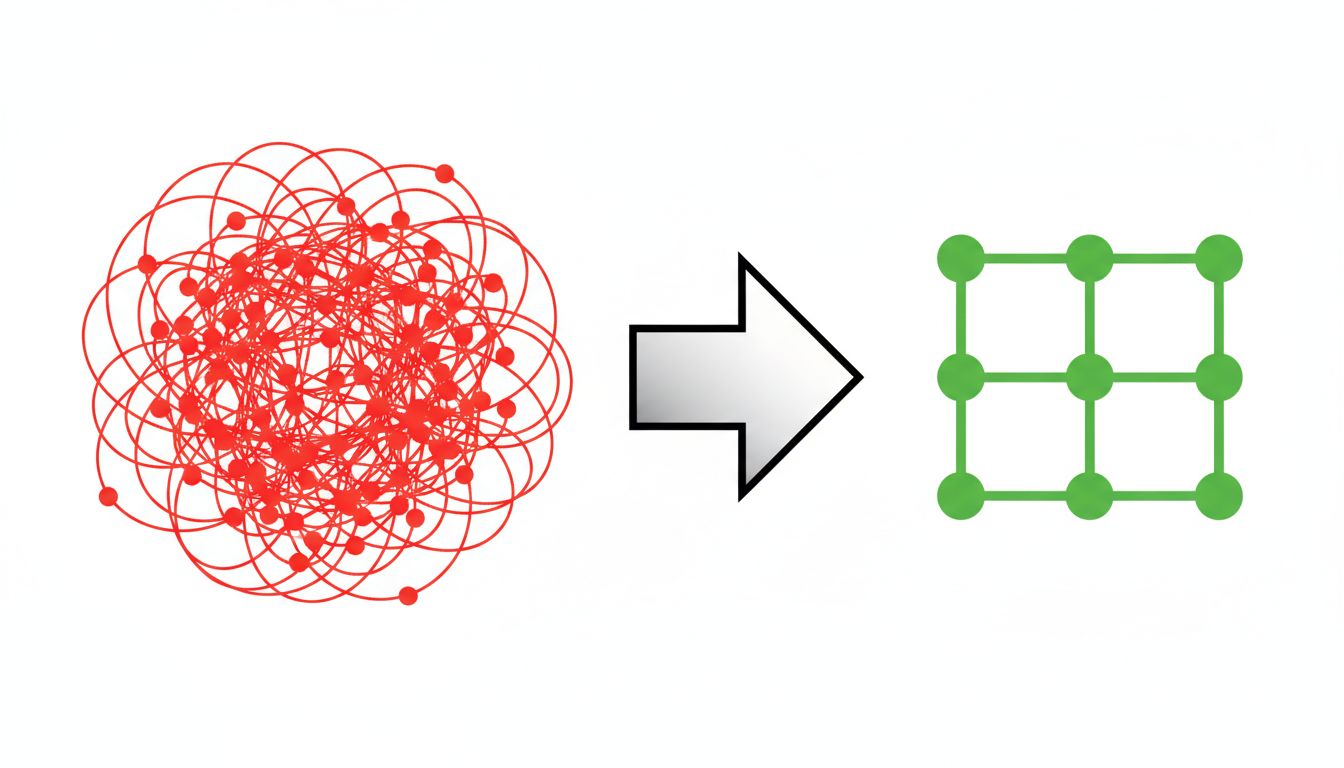
Once you apply this framework honestly, most teams find they can eliminate 40 to 60 percent of their channels without losing any meaningful information flow. The conversations don’t disappear, they consolidate. And consolidated conversations are easier to follow, easier to search, and easier to act on.
The Hidden Benefit Nobody Talks About
There’s a second-order effect to communication reduction that most teams don’t anticipate: it forces clarity about who owns what.
When you have 200 channels, accountability is diffuse. A question gets posted in the wrong channel and sits unanswered. A decision gets made in a thread that half the team never saw. A project update lives in a channel that the relevant stakeholders stopped monitoring weeks ago. The channels themselves become a place for responsibility to hide.
When you cut your channels aggressively, you have to get explicit about communication ownership. Who is responsible for posting project updates? In which channel does a product decision get made? Where do customer escalations land? These questions have to be answered when you have fewer places to dump things.
This is why the most productive remote workers deliberately create digital friction in their workflow. The friction isn’t a bug, it’s a forcing function. Fewer channels means every communication decision has to be intentional, and intentional communication is almost always higher quality.
How to Start the Deletion Process
You don’t have to do this all at once. In fact, a gradual approach tends to work better because it gives your team time to adjust habits without feeling like the floor disappeared.
Start by running a quiet audit. Export a list of all your active channels, note when each was last posted in, and flag any with overlapping purposes. Do this before you involve anyone else, because you want to come to the conversation with data, not just opinions.
Then bring your team into the process explicitly. Frame it as reducing noise, not punishing anyone’s initiative. Most people will be relieved. Ask each person to name the three channels they find most genuinely useful and the three they find most confusing or redundant. The overlap in those answers will show you exactly where to start cutting.
Finally, announce archives before you make them. Give people a two-week window to flag anything important that needs to be migrated or saved. Then archive without ceremony. The goal isn’t to make a statement, it’s to quietly make everyone’s work a little easier.
The teams that do this consistently report something interesting: once the noise goes down, the actual thinking gets louder. Decisions happen faster. Ownership becomes clearer. And the work, which is what all the channels were supposedly supporting, finally gets the attention it deserves.