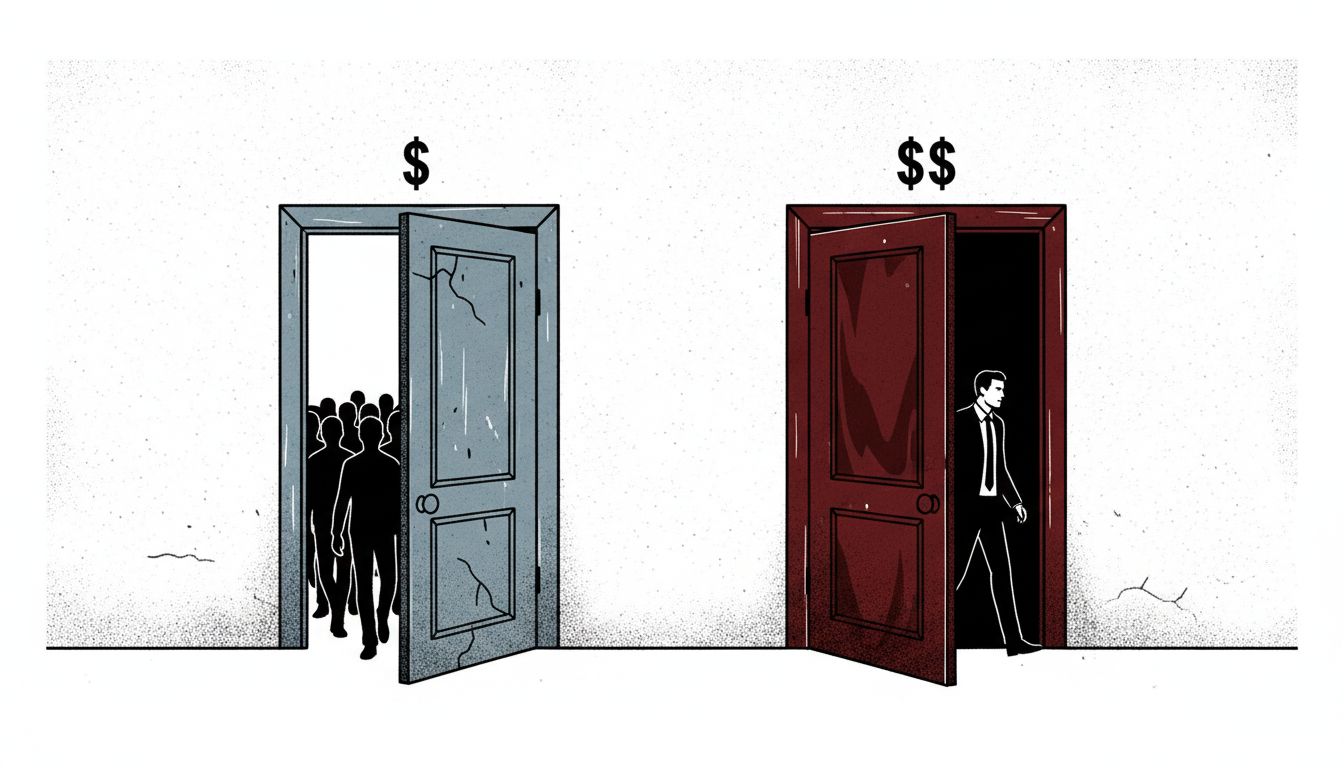

Picture a small team in a cramped office, six months into building the product they pitched to investors. The roadmap is pinned to the wall. The vision deck is polished. And then, quietly, one of the founders starts avoiding a specific slide in investor updates, the one that shows user retention. The numbers aren’t catastrophic. They’re worse: they’re flat. Nobody is leaving, but nobody is coming back either. This is the moment most startup stories skip over, because what happens next gets rewritten in the press release as a bold strategic pivot. What it actually is, more often than not, is a company finally paying attention.
Most Unicorn Companies Were Rejected by Top VCs. The Reason Is More Embarrassing Than You Think.
The Myth of the Brilliant Pivot
The tech industry loves a clean pivot narrative. Twitter started as a podcasting platform (Odeo). Slack grew out of a failed gaming company (Glitch). YouTube was originally a video dating site. These stories get told as moments of founder genius, a sudden flash of insight that redirected the ship toward calmer waters and massive valuations.
But spend any time talking to founders who actually lived through a pivot, and the story sounds a lot less like inspiration and a lot more like exhaustion. The pivot wasn’t a strategic insight. It was a capitulation to evidence that had been piling up for months. Someone finally stopped arguing with the data.
This distinction matters enormously, because if you believe pivots come from genius, you wait for a lightning bolt. If you understand they come from accumulated signal, you build systems to catch that signal early.
What the Data Is Actually Telling You
Here is something counterintuitive: the companies that pivot most successfully are rarely the ones who were building something completely wrong. They were usually building the right thing for the wrong customer, or the wrong version of the right thing.
Slack’s gaming company, Tiny Speck, wasn’t failing because the team was bad at building software. The internal communication tool they built to coordinate their distributed team was, by all accounts, excellent. The game was the pivot away from that tool. Then they pivoted back. The product that survived was the one that had already proven itself inside the company.
This pattern repeats constantly. A team builds something, uses it themselves, notices that the internal version works better than the thing they’re selling, and eventually points the whole company at the internal version. We have a whole piece on exactly this dynamic, Tech Companies Build Better Tools for Themselves Than They Sell to You. That’s Not an Accident.
The data that should trigger a pivot is rarely dramatic. It’s the support tickets that cluster around the same confusion. It’s the sales calls where the prospect keeps redirecting toward a feature you haven’t built yet. It’s the users who love your product but use it in a way you never intended.

Why Founders Ignore the Signal for So Long
If the signal is usually there, why do so many teams take so long to act on it? A few reasons, and none of them are flattering.
First, there is sunk cost psychology. The original idea has a pitch deck behind it. It has investor conversations. It has a founding myth. Abandoning it feels like admitting the whole premise was wrong, when usually the premise was just slightly miscalibrated.
Second, there is the visibility problem. Founders are often the last to know what users are actually doing with their product. The team building the feature sees the spec. The product manager sees the ticket. The founder sees the demo and the metrics summary. Nobody is lying, exactly, but the picture that reaches the top is smoothed out. This is why serial founders keep failing until they suddenly don’t, the successful pivot often only happens after someone has made the same mistake once already and built better listening habits.
Third, and this one is underappreciated, teams confuse building with learning. A sprint full of shipped features feels like progress. It often isn’t. Progress in the early stage of a startup is information, specifically, information about whether anyone wants what you’re building and why they want it.
The Strategic Version of the Pivot
Not every pivot is reactive. The best founders treat the original product as a probe, something designed to generate information rather than deliver a final answer. This is why successful startups launch with missing features on purpose. The gaps aren’t laziness or poor planning. They are deliberately open questions, watching which missing pieces users ask for loudest.
This is fundamentally different from building a half-finished product and hoping nobody notices. It’s a structured bet: we think users care most about X, so we’re going to build X well and leave Y undone, and see whether Y ever comes up.

The companies that pivot well tend to be the ones that treated their first version less like a product and more like a research instrument. Every complaint is a data point. Every workaround a user invents is a feature request. Every competitor they mention is a signal about the real landscape of the problem.
What Looks Like a Pivot Is Often a Focus Shift
Here’s the thing that startup mythology tends to obscure: most pivots are not wholesale changes in direction. They are focus shifts. The company doesn’t abandon everything it learned. It doubles down on the one part that was actually working and strips everything else away.
This is uncomfortable because the part that was working is often the boring part. Not the flashy vision. Not the technology showcase. The part where actual users were getting actual value, quietly, in the corner of the product that nobody was promoting.
Boring technology wins, and the founders who accept that soonest tend to find their pivot faster. The ones who keep waiting for the exciting version to catch on usually run out of runway before the market gives them its verdict.

The companies we celebrate for brilliant pivots mostly did one thing: they stopped arguing with their users and started listening to them. That’s not a genius move. It’s a discipline. And the reason it looks rare is that the ego required to start a company and the humility required to change course are genuinely hard to hold at the same time.
The ones who manage it don’t usually call it a pivot. They call it figuring out what they were actually building all along.