Right now, somewhere between clicking a button and seeing a result on your screen, you may be running software that nobody else around you is running. The feature looks identical. The interface is unchanged. But underneath, you are part of an experiment involving millions of people, and you were never asked. This is called a dark launch, and it is one of the most quietly powerful techniques in modern software engineering.
This connects directly to a broader pattern in how the industry ships software. As we explored in Tech Companies Deliberately Launch Broken Features and Fix Them Later, and the Business Logic Is Airtight, getting real-world signal as fast as possible is often more valuable than getting things perfect first. Dark launches are the more surgical version of that instinct.
What a Dark Launch Actually Is
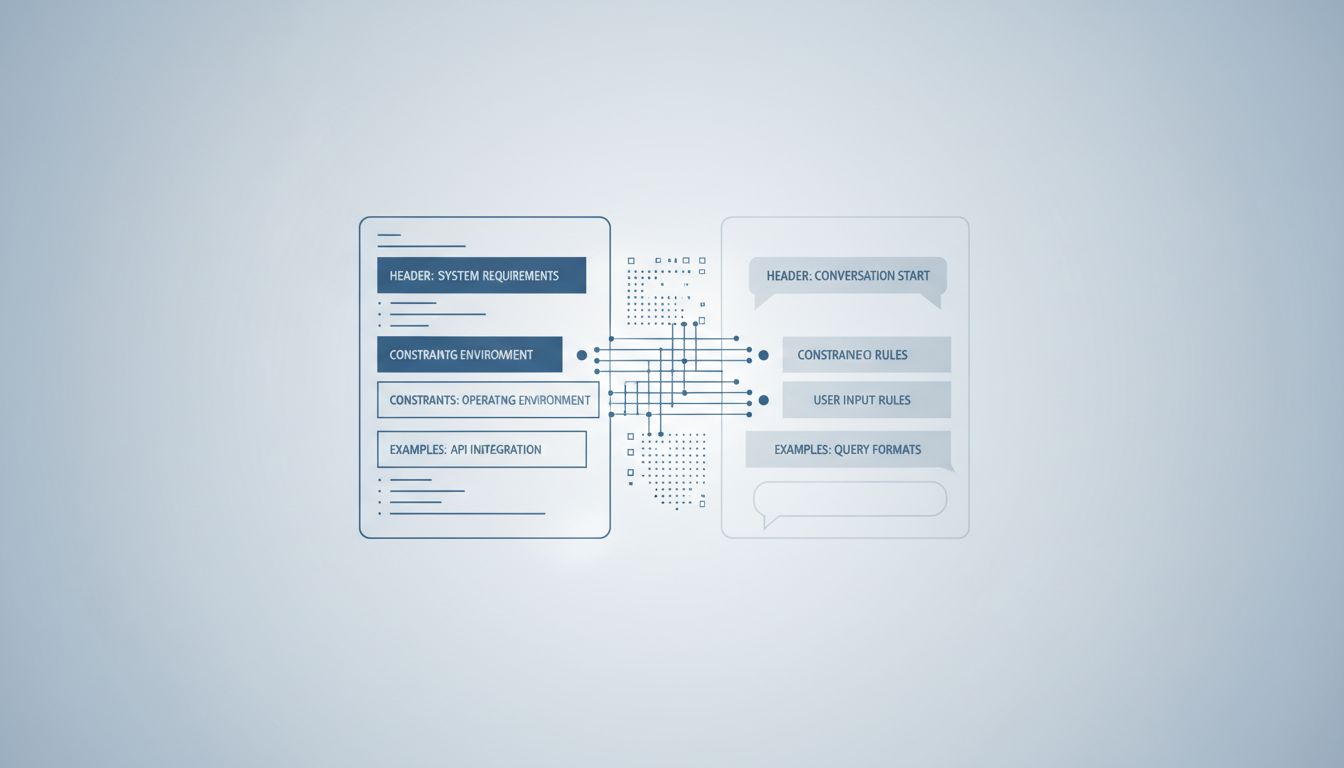
A dark launch is when a company deploys new code to production and routes real user traffic through it without exposing any visible change to those users. You use the product normally. In the background, the new system processes your request in parallel with the old one. Engineers compare the outputs, measure the performance, and watch for failures, all while you remain completely unaware anything is different.
The term comes from the idea of launching “in the dark,” meaning in stealth. It is distinct from a beta test (which users opt into and know about) and from an A/B test (which typically shows different interfaces to different users). A dark launch runs the new code silently, mirroring real traffic, without affecting the user experience at all.
The canonical example most engineers cite is Facebook’s infrastructure migrations. When Facebook moved its messaging system to a new backend, they ran both systems simultaneously for weeks. Real messages were processed by both the old and new systems. Users never saw the parallel processing happening. Engineers watched the outputs diverge, fixed discrepancies, and only cut over to the new system once confidence was high. At Facebook’s scale in that era, millions of messages per day were effectively stress-testing the new system before anyone flipped the switch.
The Engineering Machinery Behind It
Dark launches require specific infrastructure to work. The central tool is a feature flag system, sometimes called feature toggles. These are conditional branches in the code that let engineers turn functionality on or off for specific user segments without redeploying the entire application. A flag might say: “For 1% of users, route this request through the new recommendation engine and log the result, but show them the output from the old engine.”
Large companies build sophisticated flag systems internally. LaunchDarkly, Split.io, and similar vendors have built entire businesses serving teams that do not want to build this infrastructure themselves. The flags can target by user ID, geography, device type, account age, or essentially any attribute the system knows about a user.
The other critical piece is shadow traffic replay. In this pattern, a copy of real production traffic is sent to the new system asynchronously, meaning the new system’s response is discarded before it ever reaches the user. The point is purely observational: does the new system crash? Is it slower? Does it produce different outputs than expected?
This is where dark launches connect to a counterintuitive insight about AI systems specifically. AI Models Perform Worse When They Know They’re Being Tested and the Reason Is Weirder Than You Think explores how evaluation conditions can distort behavior. Shadow traffic sidesteps this entirely: the system under test is processing real workloads with no knowledge of being observed, which gives engineers the cleanest possible signal.
Why Real Traffic Is Irreplaceable
The obvious question is: why not just test in a staging environment? Staging environments fail to replicate production in ways that matter enormously. The data is synthetic or anonymized. The traffic patterns are simulated. The volume is a fraction of reality. Edge cases that appear once every ten million requests never show up in staging.
Production traffic carries what engineers call “weird user behavior,” and it is genuinely irreplaceable. Real users paste emoji into fields labeled “numbers only.” They submit forms from 2015 mobile browsers on slow connections. They use account names with Unicode characters that were never anticipated. They trigger race conditions by clicking buttons at exactly the same millisecond as ten thousand other people.
This is precisely the kind of failure mode that Senior Developers Write Code for Disasters That Haven’t Happened Yet, and It’s Why Their Software Actually Lasts describes. Dark launches are the empirical complement to that defensive mindset: instead of only imagining what might break, you expose the new system to what actually happens.
Google has used dark launch techniques extensively across its infrastructure. When migrating search indexing systems, the company ran parallel systems processing identical query sets and measured result quality differences before any user ever saw a changed result. The cost of running duplicate compute is real, but at Google’s scale, the cost of a degraded search experience for even an hour is far larger.
The Ethics and the Fine Print
Here is where it gets complicated. Dark launches involve processing real user data through systems users have not consented to. Most tech companies handle this by burying it in terms of service language about testing, improvement, and development. Users technically agree to this in exchange for using the product. Whether that counts as meaningful consent is a separate, legitimate debate.
The practice also intersects with privacy regulations differently depending on jurisdiction. GDPR in Europe, for example, requires that data processing have a lawful basis, and using customer data to train or validate new systems can fall into a gray area depending on how the company has structured its consent framework. Companies operating globally maintain legal teams specifically to map these constraints onto their experimentation infrastructure.
There is also a transparency asymmetry worth naming clearly. When companies like Netflix run dark launches to test new recommendation algorithms, they are gathering signal about user behavior to optimize for engagement metrics that may not align with what users would choose for themselves. This connects to a broader dynamic around how software is designed and for whom, something covered in depth in Multitasking Apps Are Scientifically Designed to Make You Fail (And It’s Working Perfectly).
What This Means for Everyone Outside the Engineering Team
Dark launches are not going away. If anything, as AI-powered features become more common, the technique becomes more important because AI systems degrade in unpredictable ways under real-world conditions that are nearly impossible to anticipate in controlled environments. The gap between how a model performs on benchmarks and how it performs on actual user traffic can be enormous, a point explored in detail in AI Models Actually Get Dumber When You Ask Them to Show Their Work.
For engineers, the lesson is practical: investing in feature flag infrastructure and shadow traffic tooling pays compounding returns. Every difficult migration becomes less risky. Every AI rollout becomes empirically grounded rather than speculative.
For users, the honest takeaway is simpler. The product you use every day is a living experiment. The experience you had yesterday may have been subtly different from your colleague’s, and neither of you would know. The companies running these experiments are not doing it maliciously. They are solving a genuinely hard problem: how do you know if something works until it runs in the real world?
Dark launches are their answer. Whether that answer comes with enough transparency is a question worth asking out loud.