You work in tech. You have three monitors, a cloud storage subscription, a PDF annotator, and a note-taking app you swore would change your life. And yet, quietly, maybe a little guiltily, you still walk to the printer. You print the contract before you sign it. You print the roadmap before the big meeting. You print the spec doc and grab a pen. You are not alone, and you are not being irrational. There is a real, well-documented reason why printing persists in offices that should have made paper obsolete years ago, and understanding it will actually make you more productive.
This behavior connects to a broader pattern in how we interact with technology. Multitasking apps were actually designed to make you focus on one thing at a time, and the instinct to print is a version of the same impulse: your brain trying to carve out a focused, singular surface for hard thinking.
The Screen Lies to Your Sense of Completion
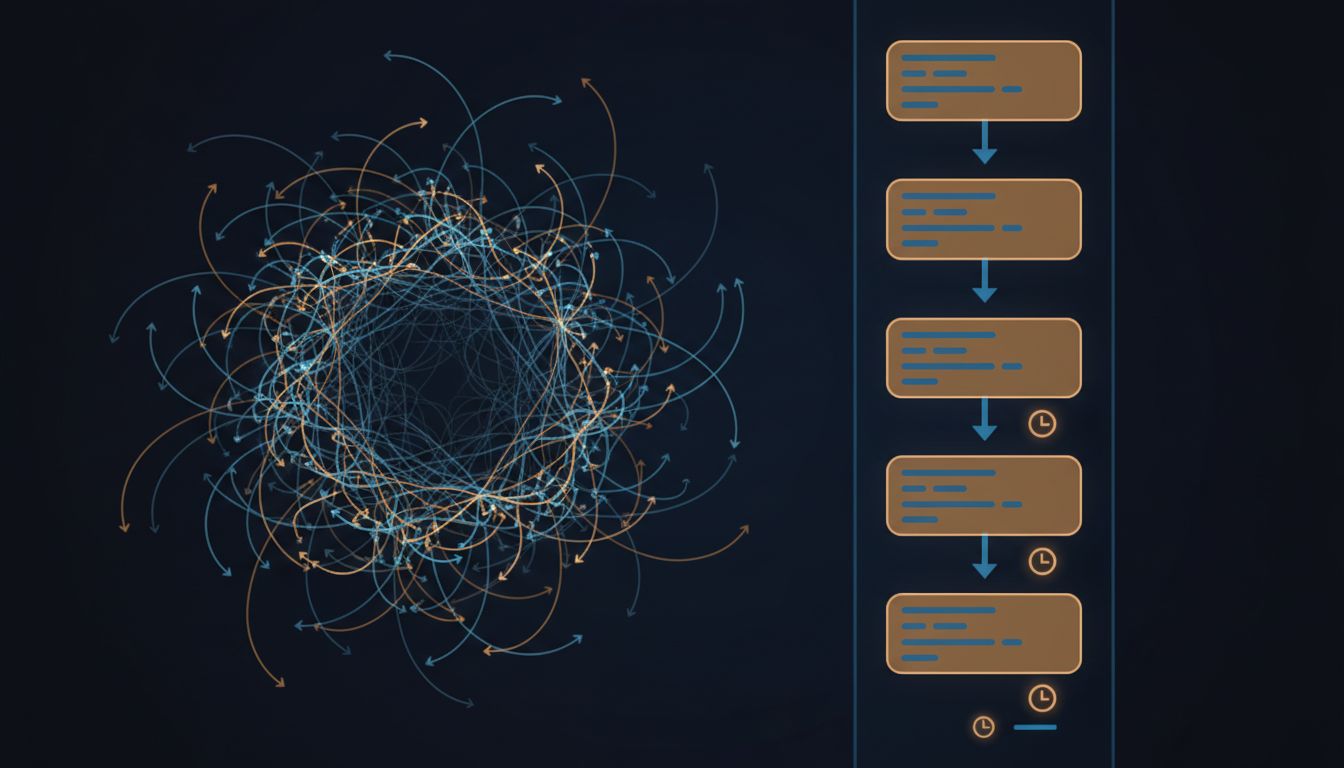
Here is what is happening neurologically. When you read a document on screen, your brain treats it as one node in an infinite network. There are tabs above it, notifications beside it, scroll bars suggesting there is always more. Your visual cortex registers the document as part of an ongoing stream, not a discrete object. This makes deep reading genuinely harder. Research from the University of Stavanger found that readers comprehend and retain less from screens than from paper, particularly for longer texts that require following an argument from beginning to end.
Paper changes the spatial equation entirely. A printed document has a front, a back, a weight, and a fixed length. When you hold it, your brain registers it as a bounded object. You know how far through you are just by feeling the pages. That sense of physical progress, what cognitive scientists call “spatial navigation in reading,” is something screens simply cannot replicate no matter how good the UI gets.
Why Annotation Changes the Way You Think
The second reason is about what happens when you write on paper. Handwriting a note activates different neural pathways than typing. It is slower, which forces your brain to process and compress information rather than transcribe it. When you circle a paragraph, draw an arrow, or scrawl a question mark in the margin, you are not just marking text. You are building a physical map of your own thinking.
Digital annotation tools have improved enormously, but most tech workers still find them subtly frustrating. The friction of switching tools, selecting the right annotation type, and making the gesture feel right on a touchscreen is just enough to interrupt the thinking flow. On paper, you grab the pen and write. The tool disappears.
This connects to something worth considering about how we interact with software broadly. Digital minimalists consistently outperform power users not because they have fewer tools, but because they have fewer moments where the tool itself becomes the obstacle.
The Review Ritual That Actually Catches Errors
Here is a practical pattern many experienced developers and engineers have settled into without fully articulating why it works. They write and review code on screen. They print the final version before a major merge or deployment review. They read it on paper, pen in hand.
The errors they catch in that paper pass are almost never the ones a linter would find. They are logical errors, structural problems, places where the argument (or the algorithm) takes a turn that made sense in the moment but looks wrong on a fresh surface. This is the same reason editors at publishing houses still work on printed manuscripts, even when the files are perfectly digital.
If your team is dealing with bugs that keep slipping through review, the problem is often not the code. Software bugs multiply when teams grow because of a communication problem, not a coding problem, and printing for review is one low-tech way to force the kind of slow, linear reading that catches the gaps.
When to Print and When to Stay Digital
This is not an argument for printing everything. That would be wasteful and unnecessary. The goal is to be intentional about which tasks get which medium. Here is a practical framework for making that call.
Print it when: - You are reviewing something that requires a final decision (contracts, specs, plans with real consequences) - You need to hold the whole structure of a document in your head at once (architecture diagrams, project roadmaps, research summaries) - You are trying to catch errors in something you wrote yourself (your own writing is hardest to proofread on the same screen you wrote it on) - You are preparing for a high-stakes presentation or negotiation and want to have genuinely absorbed the material
Stay digital when: - You need to search, cross-reference, or share the document quickly - The content will change before you act on it - You are in early exploration mode, not evaluation mode - Collaboration is happening in real time and comments need to be visible to multiple people
The key insight is that printing is not a failure to go paperless. It is a deliberate choice to switch cognitive modes.
How to Make This Work Without Wasting Paper
If you want to build the print-for-clarity habit without generating unnecessary waste, a few adjustments make it sustainable.
First, print double-sided at lower resolution for review copies. The point is the reading experience, not archival quality. Second, set a rule that printed documents get one pass, then recycled. No filing, no stacking, no “I’ll get to this later” piles. Third, keep a small notepad beside your printer for the handwritten annotations you generate during paper reviews, so the insights actually get captured and acted on rather than lost when the paper goes in the bin.
The broader takeaway here is one that successful remote teams have quietly figured out: the best productivity systems are built around how human cognition actually works, not around the theoretical capabilities of the tools available. Sometimes the most effective move in your digital workflow is a deliberate step back from the screen.
You have the apps. You have the cloud storage. And sometimes, you still need the piece of paper. That is not a contradiction. That is just knowing which tool does which job.