Walk into a software engineer’s workspace and you’ll typically find two, three, sometimes four monitors glowing at different angles, each loaded with a different context: code on the left, documentation in the middle, terminal on the right. Walk into a CEO’s office and you’ll often find a single clean display, or sometimes just a laptop. Same industry, opposite setups. That gap isn’t random, and understanding it might be the most useful thing you do for your productivity this year.
This divide says something deep about the nature of cognitive work, and it mirrors a broader pattern you’ll find across high-performing teams. Just as top performers use a single-tab rule to get more done, the best setups aren’t always the most elaborate ones. The real question isn’t how many screens you have. It’s whether your setup matches the kind of thinking your role actually demands.
The Two Modes of Cognitive Work
Here’s a useful framework: almost every professional knowledge task falls into one of two modes.
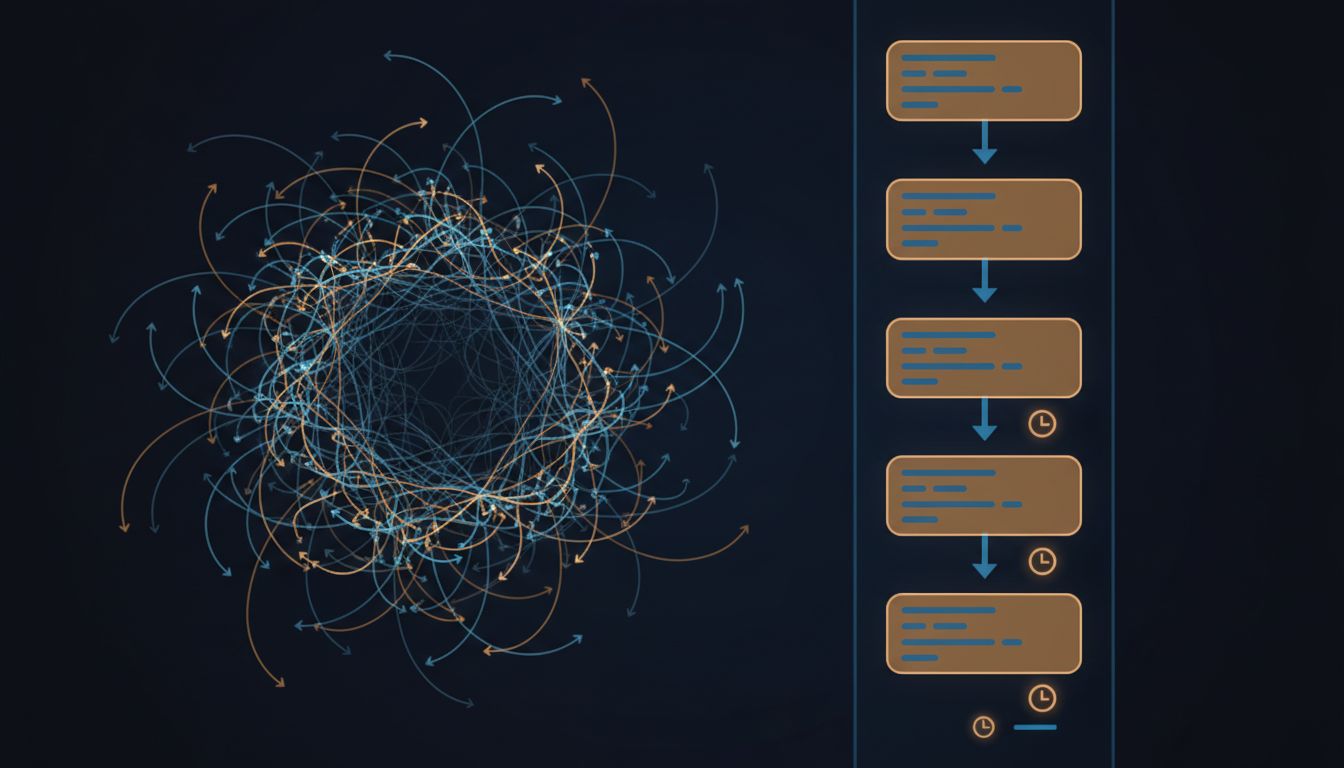
The first is parallel processing work. This is work where you need multiple streams of information visible simultaneously to do the job correctly. Software engineers live here. When you’re debugging a production issue, you need the error log, the relevant code file, the database query, and maybe a Slack thread all visible at once. Switching between them doesn’t just slow you down, it breaks your mental model. Designers, data analysts, video editors, and financial traders often operate in this same mode. For these roles, a second or third monitor isn’t a luxury. It’s load-bearing infrastructure.
The second is sequential decision work. This is work where your value comes from making clear, high-quality decisions one at a time. CEOs, executives, and senior strategists spend most of their day here. Their job is to hear a problem, apply judgment, and move forward. Too much simultaneous visual input doesn’t help this process. It fragments it. A single screen, or even just a notebook, keeps the decision surface clean.
Why More Screens Can Actually Hurt You
This is the part most productivity advice skips. More monitors do increase output for certain kinds of work, and the research on this is fairly consistent. A University of Utah study found that people with dual monitors completed tasks 44% more efficiently and made 33% fewer errors on tasks involving referencing multiple documents. That’s a real, meaningful gain, but only if the task structure matches the setup.
For sequential or creative work, the picture flips. Extra screens become extra temptation. You’re mid-thought on a strategic memo and your eye drifts to the email inbox on the second monitor. Your digital calendar is already making you worse at time management by fragmenting your attention into slots. Add a second monitor full of notifications and you’ve compounded the problem geometrically.
The honest question to ask yourself is: does my work require me to reference multiple information streams simultaneously, or does it require me to think deeply about one thing at a time? Your answer should shape your setup.
The Framework for Choosing Your Setup
Here’s a practical three-step process you can apply today.
Step 1: Audit your actual tasks for one week. Keep a simple log of what you’re doing every hour. Tag each task as either “reference-heavy” (you need multiple sources visible to do it) or “decision-heavy” (you need focus and clarity to do it well). After a week, count the tags. Most people are surprised by the ratio.
Step 2: Match your hardware to your dominant mode. If 60% or more of your week is reference-heavy, a dual monitor setup is probably helping you. If 60% or more is decision-heavy, your second monitor might be working against you. This isn’t about what looks impressive on a LinkedIn background photo. It’s about what actually moves your work forward.
Step 3: Design context switches intentionally. If you genuinely do both kinds of work (and most senior people do), consider using your monitors as mode signals. Primary monitor for deep, single-thread work. Secondary monitor only activated during reference-heavy tasks. Some people go further and physically rotate away from their second screen during strategic work sessions. It sounds theatrical, but it works because the visual field shapes your attentional field.
What Senior Engineers Know That Junior Engineers Don’t
Here’s something that surprises a lot of people: the engineers at the highest levels of seniority often simplify their setups over time rather than expanding them. This parallels a broader truth about mastery. Senior engineers delete more code than they write, and the same discipline often shows up in their physical workspace. They’ve learned to solve problems with less sprawl, not more.
The junior engineer needs four monitors because the context-switching happens in the physical environment. The senior engineer has internalized enough of the system that fewer visual anchors are needed. This doesn’t mean multiple monitors are a crutch. It means the purpose of your setup should evolve as your expertise deepens.
For someone newer to a codebase, a reference monitor showing documentation while the primary screen holds the editor is genuinely valuable. For someone who has internalized that codebase over years, the documentation monitor might be the thing that’s slowing them down by encouraging them to look things up rather than reason through them.
The One Change You Should Make This Week
You don’t need to overhaul your workspace to apply this. Start with one experiment: for three days, turn off or turn away your secondary monitor during whatever your most important task of the day is. Not forever. Just for that one task block.
Notice whether your thinking becomes clearer or more fragmented. Notice whether you produce better or worse output. Notice, specifically, whether the information you were keeping on that second screen was genuinely necessary for the task, or whether it was just comforting to have nearby.
The goal isn’t to become a minimalist or to maximize the number of pixels in your eyeline. The goal is to build a workspace that’s honest about what your brain actually needs to do your best work. Sometimes that’s three monitors. Sometimes it’s one. The executives who figured this out didn’t stumble onto it by accident. They paid attention to the signal their own performance was sending them, and they adjusted.
You can do the same thing starting today.