There is a particular kind of professional pride that comes from a clean inbox. It signals control, responsiveness, diligence. And for a mid-sized software team at a B2B SaaS company, it became something closer to a team-wide religion.
This is a story about what happened when they made empty inboxes the goal, and why it cost them more than they expected.
The Setup
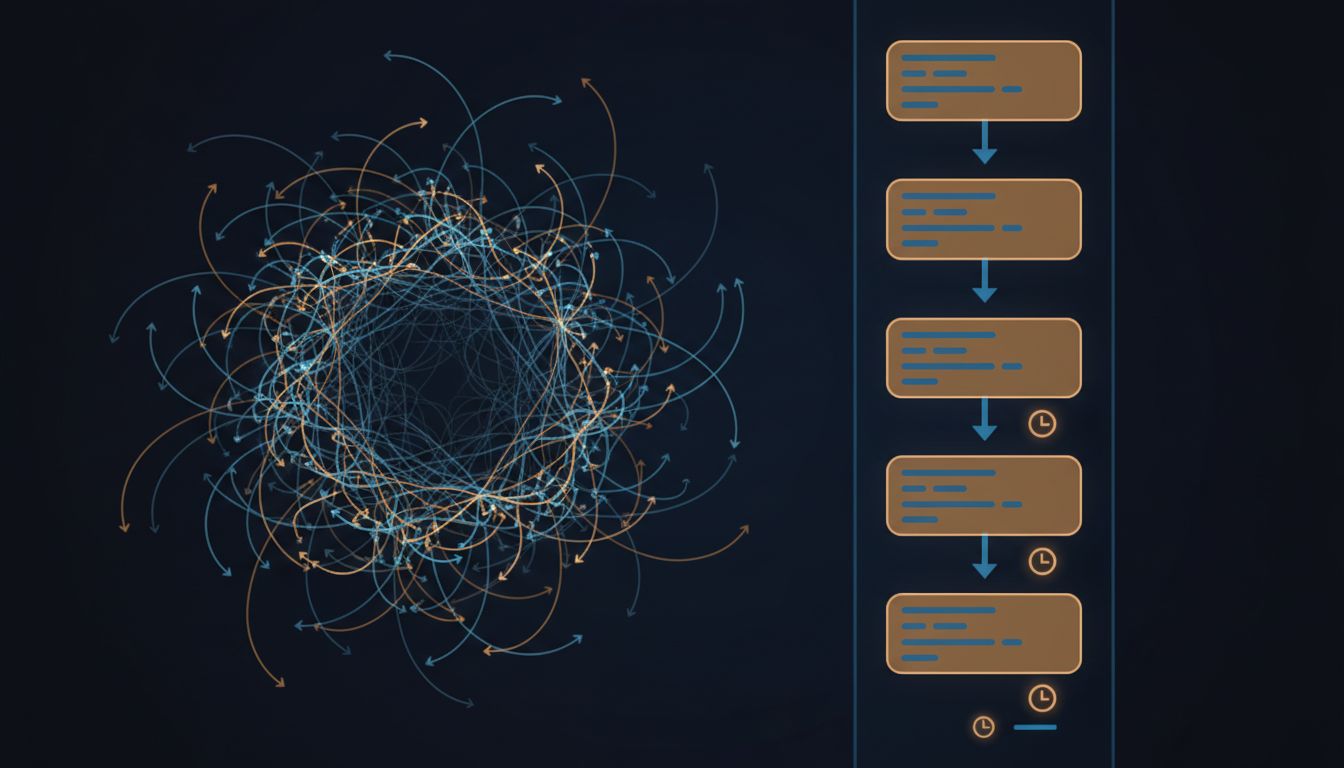
Around 2019, a product engineering team of about fourteen people started feeling buried. They were using email, Slack, and a project management tool simultaneously, and the overlap was creating a constant low-grade emergency. Messages went unanswered. Context got lost. Someone would raise a decision in Slack, another person would reply by email, and a third would open a ticket, all about the same thing.
Their solution was sensible on the surface: standardize on email for decisions, Slack for quick questions, and tickets for tracked work. Then hold everyone accountable to actually processing their inboxes. The team lead started asking in standups who was “on top of” their email. Inbox zero became a soft expectation, then a spoken one.
Within a few months, everyone had clean inboxes. Response times dropped significantly. The team lead called it a communication win.
What Actually Happened
The problems were subtle at first. The team’s most experienced engineers, the ones doing the hardest architectural work, started finishing fewer large projects. Smaller tickets were getting closed faster, but the bigger initiatives, the ones that required sustained thinking across days or weeks, kept slipping.
At first this looked like a planning problem. They adjusted sprint sizes, moved things around, tried breaking large tasks into smaller ones. Nothing helped. The throughput on genuinely complex work kept lagging.
It took an outside consultant (brought in for an unrelated process audit) to name what was happening. She pointed out that the team’s two strongest engineers were spending between two and three hours a day on email. Not because they were slow readers, but because the inbox-zero norm had trained everyone to expect rapid responses, which meant anyone with institutional knowledge was now a first-responder for questions that could have waited, or been resolved by documentation, or simply never been asked.
The empty inbox was being maintained at the cost of the very cognitive work the team was hired to do.
This is a pattern that researchers who study knowledge work have documented repeatedly. Cal Newport, in his book “Deep Work,” describes how the always-available knowledge worker is a productivity norm that persists not because it produces the best outcomes, but because it is visible and feels virtuous. Responding quickly looks like working. The hard architectural thinking that happens in a three-hour uninterrupted block looks like nothing from the outside.
The inbox zero norm had made responsiveness legible and rewarded it. Deep work remained invisible and, predictably, got crowded out.
Why Inbox Zero Gets This Wrong
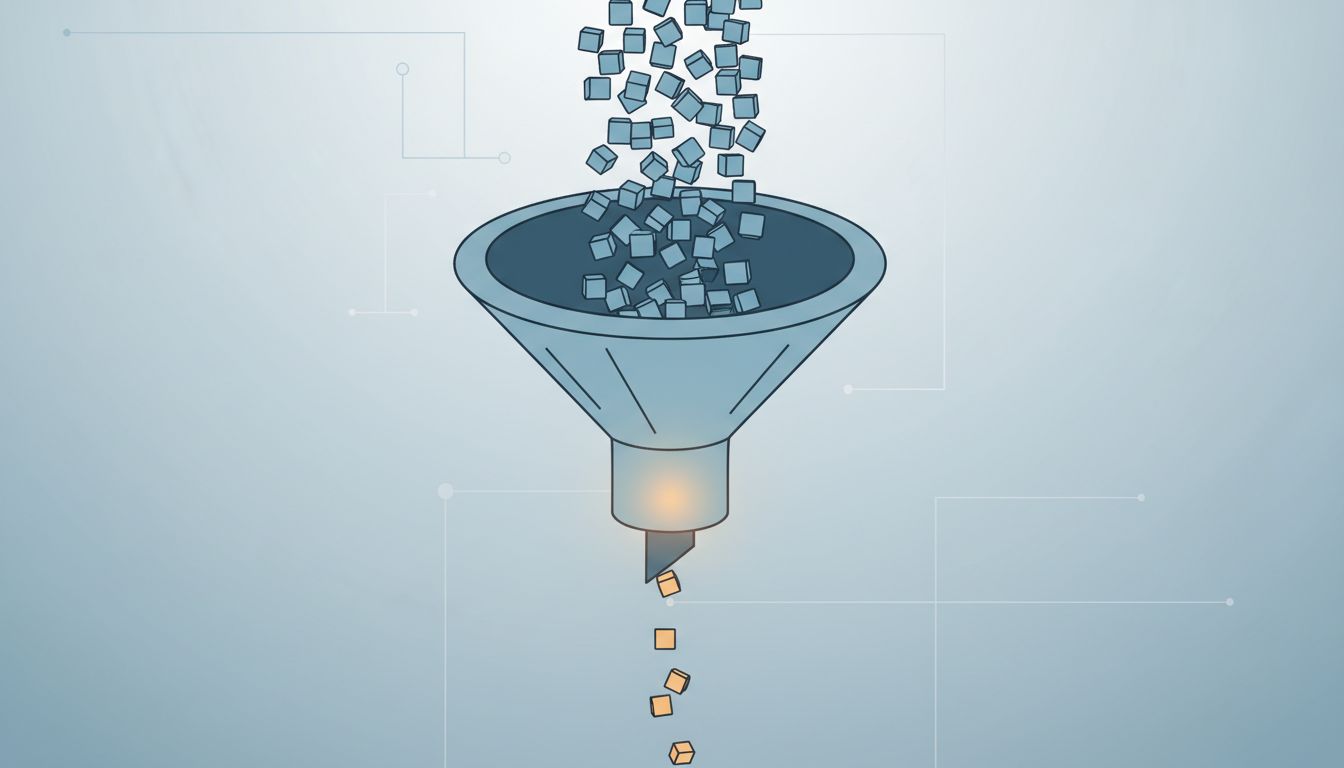
The problem with treating an empty inbox as a productivity metric is that it measures activity that is almost always reactive. You clear your inbox by responding to what other people sent you. You cannot clear your inbox by doing the thing only you can do, the thing that requires weeks of focused attention.
This is not an argument against answering email. It is an argument against confusing email processing with productive work. They are different activities with different cognitive demands and different returns.
When a team internalizes inbox zero as a shared norm, it does something particularly damaging: it creates social pressure to interrupt your own deep work in order to be seen as a good collaborator. Leaving a message unread starts to feel like neglecting a colleague. So you read it. And respond. And now you have broken whatever mental state you were in, for a message that, in most cases, could have waited four hours without consequence.
The research on interruption costs makes this concrete: the cognitive cost of switching from focused work to communication tasks is not just the time spent on the communication. It is the ramp-back time to rebuild the mental context you had before. For genuinely complex problems, that ramp-back can take twenty minutes or more.
Inbox zero, enforced as a team norm, industrializes this kind of interruption.
What the Team Changed
The fix was not elegant or tech-forward. It was mostly a policy change.
The team designated two daily windows for async communication: one in the morning before focused work began, and one in the early afternoon. Outside those windows, engineers were explicitly not expected to be checking or clearing messages. The team lead stopped asking about inbox status in standups and started asking about deep-work time instead.
They also made one structural change: any request that genuinely needed a response within two hours had to be labeled as such. Everything else was assumed to be a same-day response. This simple distinction sharply reduced the ambient pressure to stay current with every message.
Within a quarter, the large-project completion rate recovered. The engineers doing the hardest work reported feeling less fragmented. Response times on most communication went up slightly, but no client or stakeholder noticed, because the messages that needed fast replies were now clearly marked and handled promptly.
What You Can Take From This
If you manage a team or work on one, here is the practical question this story puts in front of you: what does your team actually reward? If the visible, legible behaviors (fast responses, clean inboxes, high message volume) are what get praised in standups and performance reviews, that is what you will get. The invisible behaviors, the long blocks of focused thinking, the careful design work, the slow reading of a complex spec, will happen at whatever time is left over.
And for most knowledge workers, that means they barely happen at all.
Measuring inputs is almost always easier than measuring outputs in knowledge work. An empty inbox is an input metric dressed up as an output. It tells you that someone processed their messages. It tells you nothing about whether anything that matters got done.
Before you implement a team-wide communication norm, ask what work it will crowd out. The people best positioned to answer that question are usually your most senior contributors, the ones whose time is most likely to get filled with reactive tasks because they are also the ones most people want to reach.
Ask them how many uninterrupted hours they got last week. The answer will tell you more than any inbox metric ever could.