A founder I know spent two years building a B2B analytics tool. Clean code, solid architecture, good documentation. When he finally launched, he told me he figured growth would be mostly organic because, and I’m quoting him directly, ‘software is infinitely scalable at zero marginal cost.’ Eighteen months later he shut it down. The product scaled fine. He just couldn’t afford to keep acquiring customers.
The zero marginal cost of software is one of those true things that becomes dangerous when you treat it as a complete theory of your business. It describes production costs accurately. It describes almost nothing else.
What Zero Marginal Cost Actually Means
When economists say software has zero marginal cost, they mean the cost of producing one additional unit approaches zero. You write the code once. Distributing it to the ten-thousandth customer costs you roughly what distributing it to the first customer cost. Server costs exist, yes, but at scale they’re typically a small fraction of revenue for most SaaS products. This is genuinely remarkable compared to physical goods, where every unit requires materials, labor, and shipping.
This property is why software companies can have gross margins of 70 to 80 percent, which would be unthinkable in manufacturing or retail. It’s why Salesforce and Workday can trade at multiples that look absurd if you’re used to valuing factories. The unit economics of software production are, in fact, exceptional.
But production is one line item in a P&L. It’s rarely the interesting one.
Where the Money Actually Goes
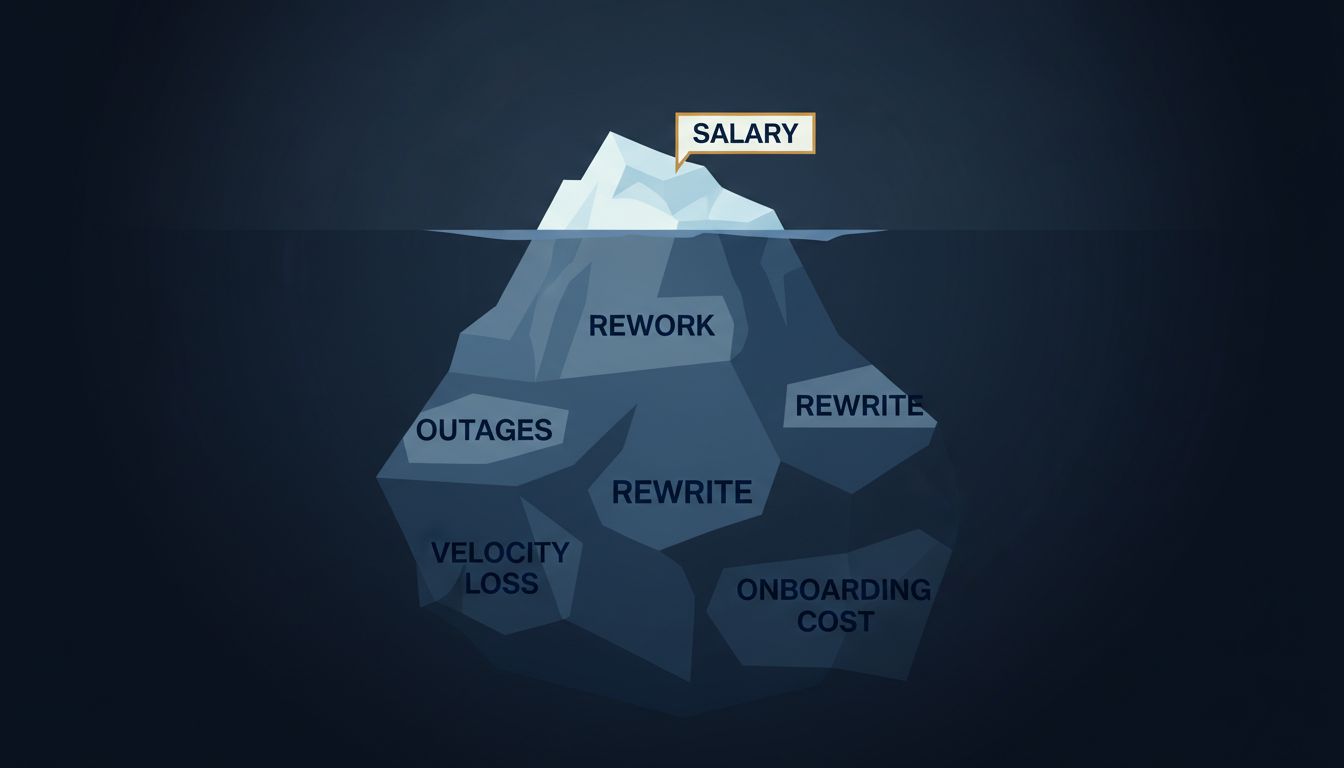
Look at the income statements of public SaaS companies and you’ll find something consistent: sales and marketing often consumes 40 to 60 percent of revenue, particularly in the growth phase. For context, cost of goods sold (which includes hosting and support) is typically well under 30 percent. The most expensive part of a software business isn’t the software. It’s convincing people to buy it and keeping them after they do.
HubSpot, Zendesk, Salesforce, Twilio: all of them spent years where sales and marketing costs exceeded gross profit. They were growing fast and could point to improving unit economics over time, but the structure of their spending tells you where the real friction is. It’s not in replicating bits. It’s in changing minds, navigating procurement, training users, and competing for attention in crowded categories.
The zero marginal cost insight gets you good gross margins. It doesn’t get you customers.
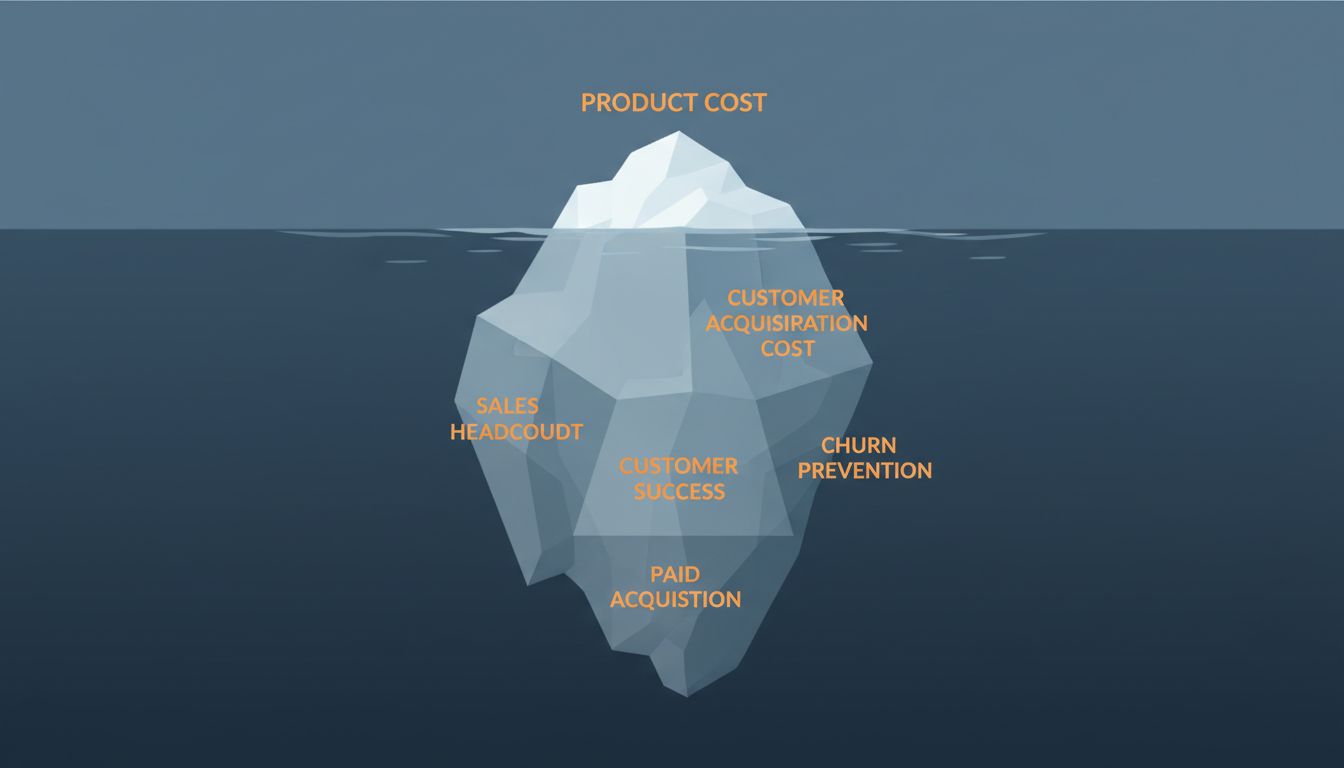
Customer Acquisition Doesn’t Scale the Way Your Codebase Does
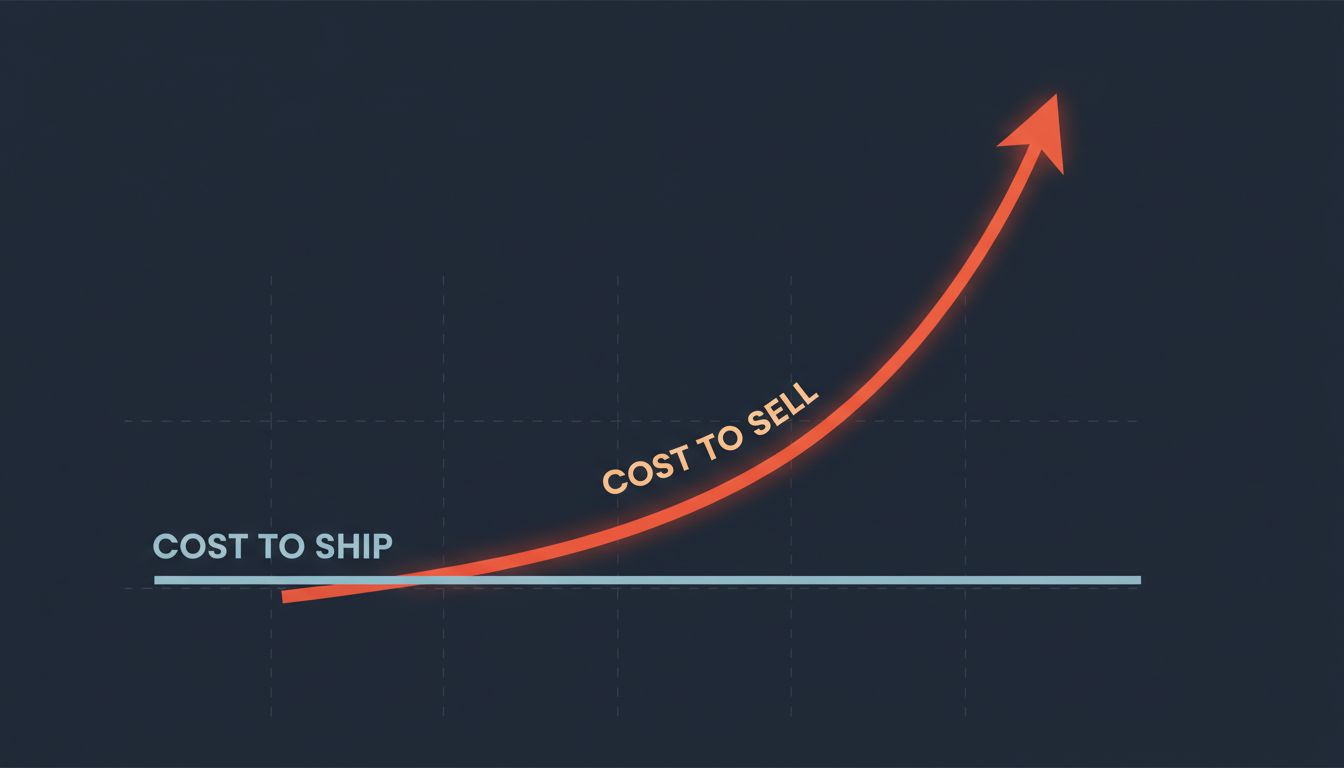
Here’s the core problem. When you ship a new feature, every existing customer gets it. When you close a new sales deal, you haven’t made closing the next deal any easier (except in narrow cases like strong referral loops or network effects). Sales effort compounds slowly if at all. Your code deploys instantly to a million users. Your sales team closes one deal at a time.
This asymmetry gets founders into trouble in a specific way. They look at their product costs, see them staying flat as they grow, and project that same flatness onto growth itself. But hiring sales reps doesn’t give you proportional revenue immediately. It gives you a ramp period of six to nine months, a quota that may or may not be hit, and a churn risk on the rep themselves. You’re adding headcount-dependent costs to pursue growth while the product sits there scaling effortlessly on its own.
Paid acquisition has its own version of this problem. Customer acquisition cost through paid channels tends to rise as you exhaust your most efficient audiences. The first cohort you reach through Google or LinkedIn ads is your best cohort. You’ve already targeted your most likely buyers. The next cohort costs more to reach because you’re now going after people who are slightly less obvious fits. Your CAC goes up as you scale, even as your marginal product cost stays flat.
The Support Trap Nobody Talks About
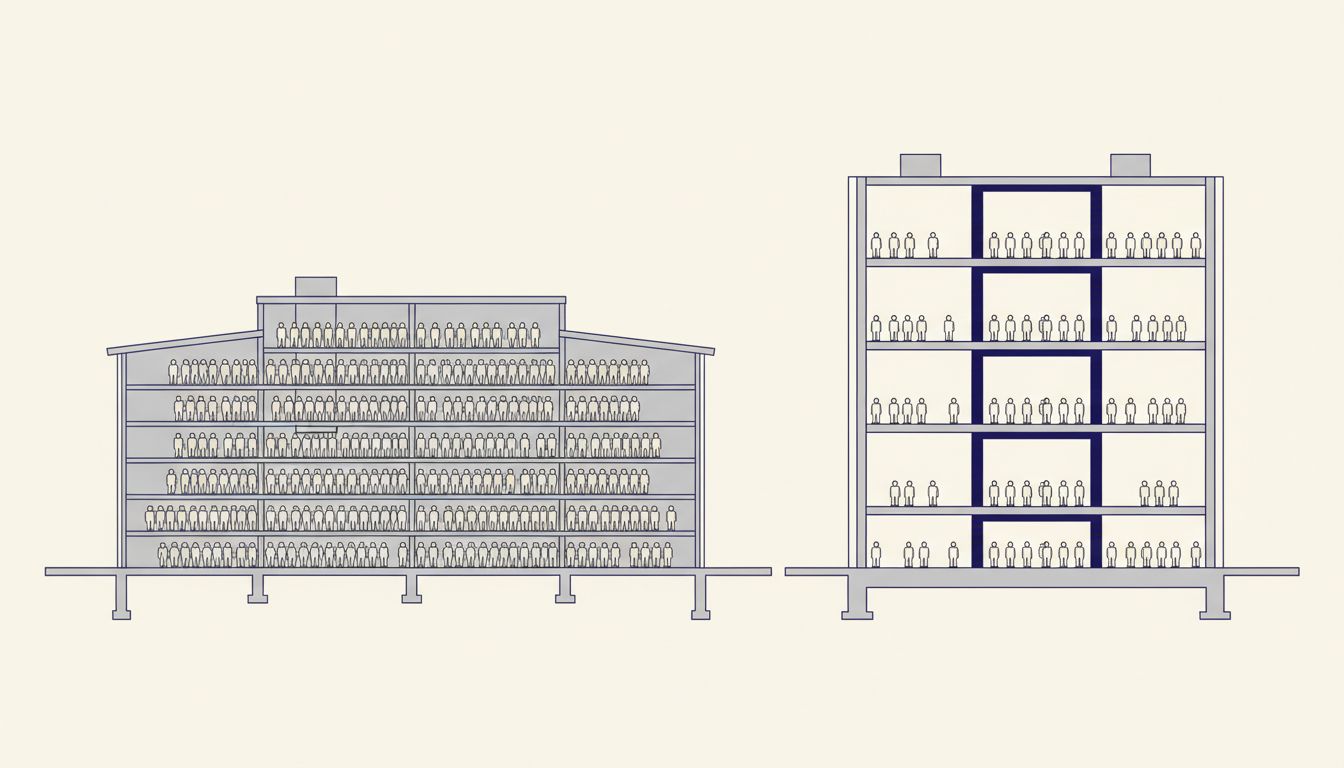
There’s a second cost that scales worse than founders expect: customer success and support. In the early days you have a few customers, you know them personally, and you handle their issues directly. As you grow, you need to hire support and CS staff. These are headcount costs that scale roughly with customer count, not with revenue. A customer paying you $200 a month requires roughly the same support burden as a customer paying $2,000 a month.
The math here punishes you if you’ve priced too low. Which is why companies that charge more per seat tend to grow faster than their cheaper competitors: higher revenue per customer means the fixed overhead of supporting that customer is a smaller fraction of what they’re paying you. You can afford to serve them well and still make money.
Low-priced products need enormous volume to cover non-zero support costs. Enormous volume requires enormous sales effort. The zero marginal cost advantage gets steadily eaten by the human costs required to move and retain customers at scale.
The Products That Actually Exploit Zero Marginal Cost
This isn’t an argument that zero marginal cost is a myth. Some businesses genuinely exploit it. The pattern is consistent: they have strong network effects or word-of-mouth loops that reduce reliance on paid acquisition, and they’ve designed the product to minimize support load through self-service.
Slack’s early growth is a good example. Teams adopted it organically, then pulled in other teams, then other companies. The product spread through existing social and professional networks. Slack still spent heavily on sales eventually, particularly moving upmarket to enterprise, but the initial growth curve was funded by virality rather than sales headcount.
Consumer software at massive scale is another case. When a product reaches hundreds of millions of users through app stores and word of mouth, the zero marginal cost property starts to dominate the economics in a real way. But those situations are rare, and building toward them requires years of product investment and usually a network-effect moat that most B2B tools simply don’t have.
For the vast majority of software companies, zero marginal cost is a ceiling on how good your gross margins can be. It doesn’t tell you anything about the work required to reach those margins in the first place.
Why Founders Keep Getting This Wrong
The zero marginal cost idea gets amplified by a specific kind of founder optimism. If you’ve spent years building something, you naturally believe the hard part is building it. Once it exists, surely people will see its value. The economics support this: the product is free to replicate, so there’s no physical constraint on growth. Why wouldn’t it spread?
This is compounded by survivorship bias. The famous software success stories really did achieve near-zero acquisition costs at some point in their trajectory. We hear about those stories constantly. We hear less about the technically excellent products that died in sales, the ones where the engineering was clean and the go-to-market was an afterthought, which is a failure mode that shows up in founder post-mortems more often than almost any other.
There’s also a VC incentive structure that quietly encourages this thinking. Investors love the gross margin profile of software, and they’ll correctly tell you that the unit economics are excellent. What they sometimes understate is that achieving those unit economics at scale requires sustained, expensive investment in go-to-market that comes before the economics look excellent. The zero marginal cost story is easier to pitch than ‘we need to spend 60 cents to acquire every dollar of ARR for the next four years.’
What This Means in Practice
If you’re building a software business, the zero marginal cost insight is worth internalizing, but so is its limit. Your job is to find the path where customer acquisition costs are sustainable relative to lifetime value, and that path is almost never ‘build it and they’ll come.’
Model your CAC and LTV honestly, including the full cost of sales headcount, paid acquisition, and customer success. Figure out early whether your product has any properties that enable organic growth: integrations that spread through organizations, referral incentives that actually convert, word-of-mouth loops with enough velocity to matter. If it doesn’t have those properties, price accordingly, because you’ll need the margin to fund distribution.
The zero marginal cost of software means you can, in theory, serve millions of customers profitably. Whether you can reach them, convince them, and keep them is an entirely different problem, and one that requires people, time, and money that don’t get cheaper as you scale.