The Setup
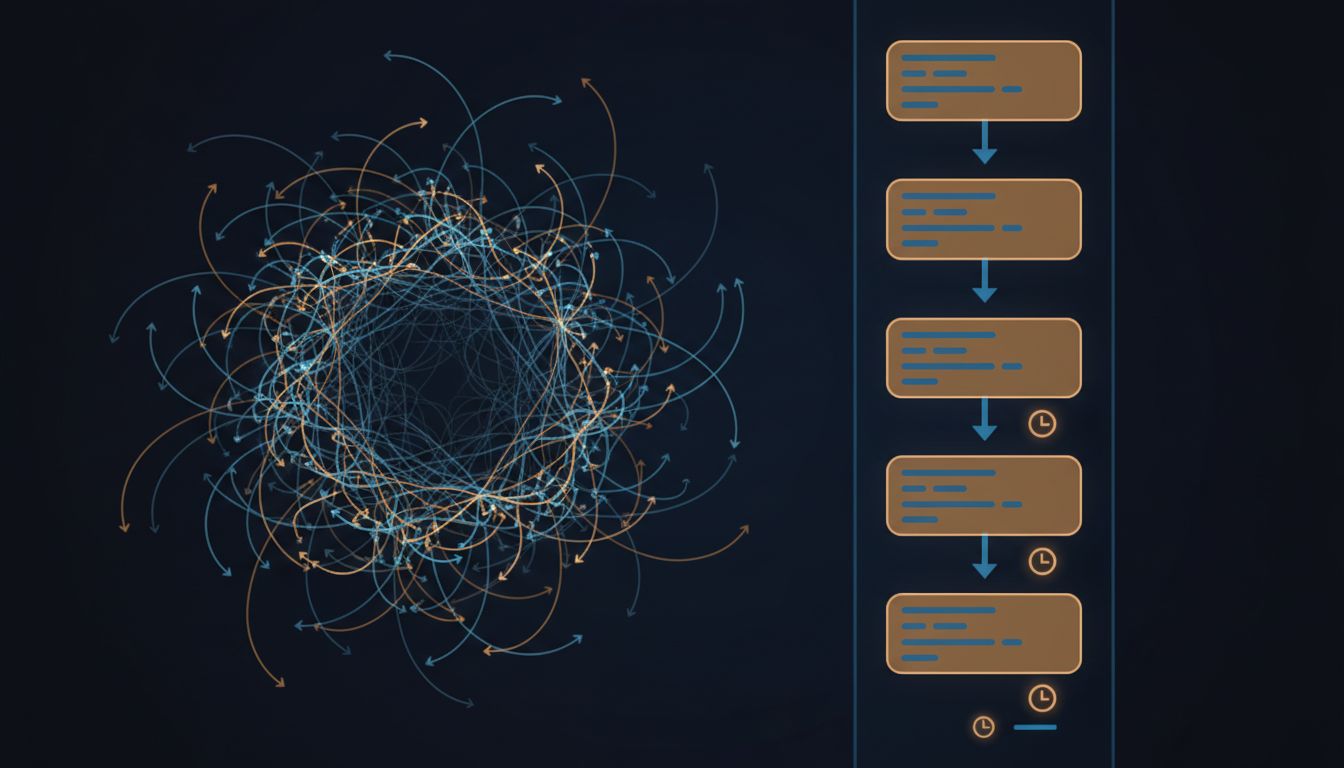
In 2012, Asana was a small but growing productivity software company with a problem common to productivity software companies: they were drowning in meetings. Calendars were fragmented. Engineers complained they couldn’t get into flow. Managers scheduled syncs to coordinate other syncs. The irony was not lost on anyone.
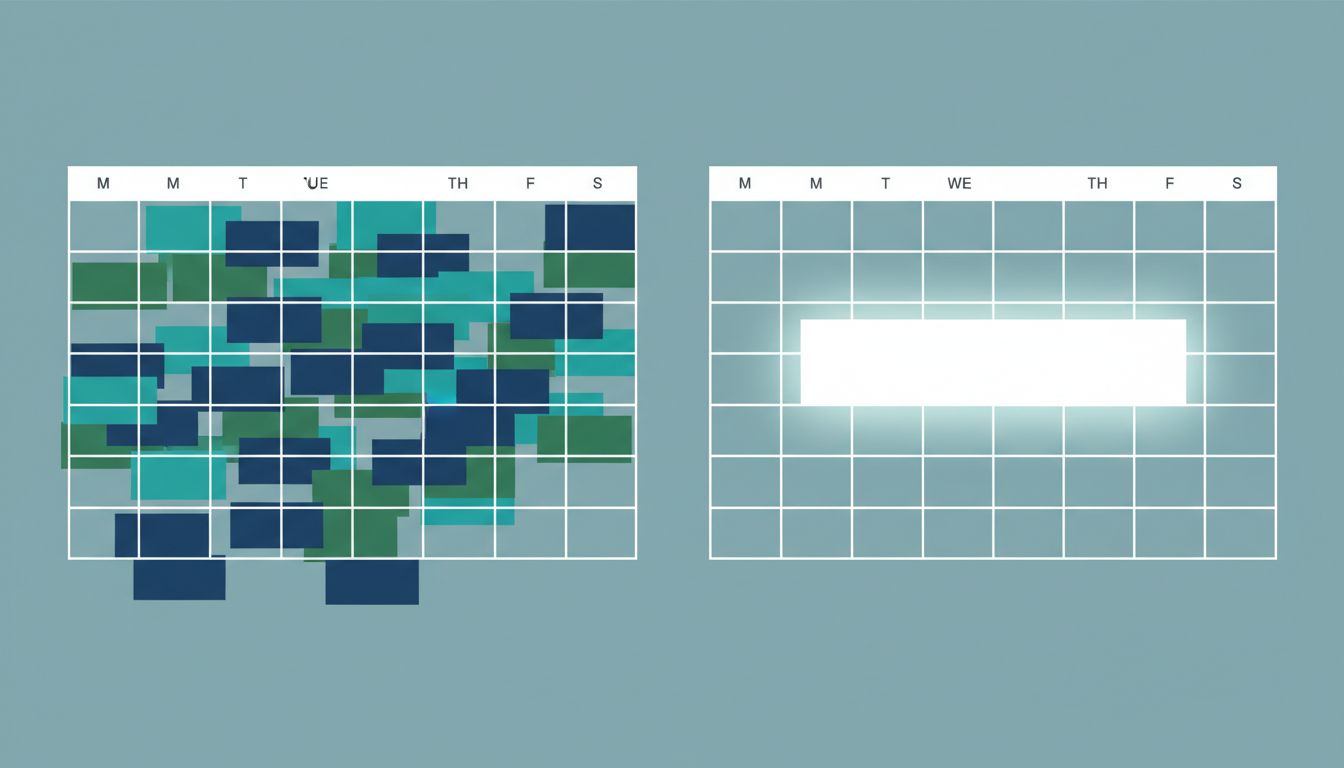
Asana’s response became one of the more cited experiments in workplace design. They instituted No Meeting Wednesdays, a company-wide policy that blocked out the middle of every workweek for uninterrupted focus time. No standups. No one-on-ones. No “quick syncs” that were never quick.
The results were good enough that they kept the policy. Years later, it became a documented part of their operating philosophy, and Dustin Moskovitz, Asana’s co-founder, has spoken publicly about the relationship between concentrated work time and the quality of output that drives company results.
But the more interesting story isn’t about Asana’s policy. It’s about what the policy revealed.
What Happened
When you remove a regular meeting from a team’s calendar, one of two things happens. Either something important doesn’t get done, proving the meeting was necessary, or everything gets done anyway, proving the meeting wasn’t.
Asana found the latter was true far more often than anyone expected. Work that teams assumed required real-time coordination turned out to require something simpler: clear written communication and enough uninterrupted time to act on it.
This pattern shows up repeatedly across organizations that have run similar experiments. When Shopify did a large-scale calendar purge in 2023, deleting recurring meetings with more than two people and canceling many internal meetings outright, they reported that the critical decisions still got made. The work continued. What fell away were the meetings that had existed to maintain the appearance of coordination rather than coordination itself.
Here’s the mechanism. Most recurring meetings exist to solve a problem that was real at some point. A weekly status update made sense when the team was new and trust was low. A Friday all-hands was useful when the company had fewer than twenty people and everyone genuinely needed to hear the same thing at the same time. But organizations rarely cancel meetings when the original problem goes away. Meetings accumulate. They become habits dressed up as processes.
The meeting you canceled did more work than the one you attended because canceling it forced the work to happen in a better medium.
Why It Matters
There’s a concept worth naming here: meeting as proxy. Teams use meetings to proxy for outcomes they could achieve more directly. A meeting to “align on priorities” is often a proxy for a clear written strategy document. A meeting to “check in on progress” is often a proxy for a project management system that surfaces status without human intervention. A meeting to “make a decision” is often a proxy for one person having the authority and information to make that decision without convening a committee.
When you cancel the proxy, you’re forced to build the real thing. And the real thing almost always works better.
This connects to something that researchers who study knowledge work have noted for decades. Cal Newport, in his work on deep work, argues that the capacity to concentrate without distraction is the skill that produces the most valuable output in cognitive work, and it’s the skill that meeting-heavy cultures most reliably destroy. You’re not just losing the hour in the conference room. You’re losing the two hours of productive state before and after it, because your brain is either winding up toward the meeting or winding down from it.
Asana’s No Meeting Wednesdays addressed this directly. A single protected day isn’t just six more hours of working time. It’s one day per week where the cognitive overhead of meeting preparation and meeting recovery disappears entirely. The math compounds faster than you’d expect.
What We Can Learn
The lesson here is not “have fewer meetings.” That framing is too blunt to be useful. Some meetings are genuinely irreplaceable. A difficult performance conversation needs to happen in real time. A founding team working through a strategic pivot probably needs to be in a room together. Creative brainstorming with high ambiguity can benefit from spontaneous verbal exchange in ways that async writing can’t replicate.
The lesson is more specific: the meeting you’re not questioning is probably the one most worth questioning.
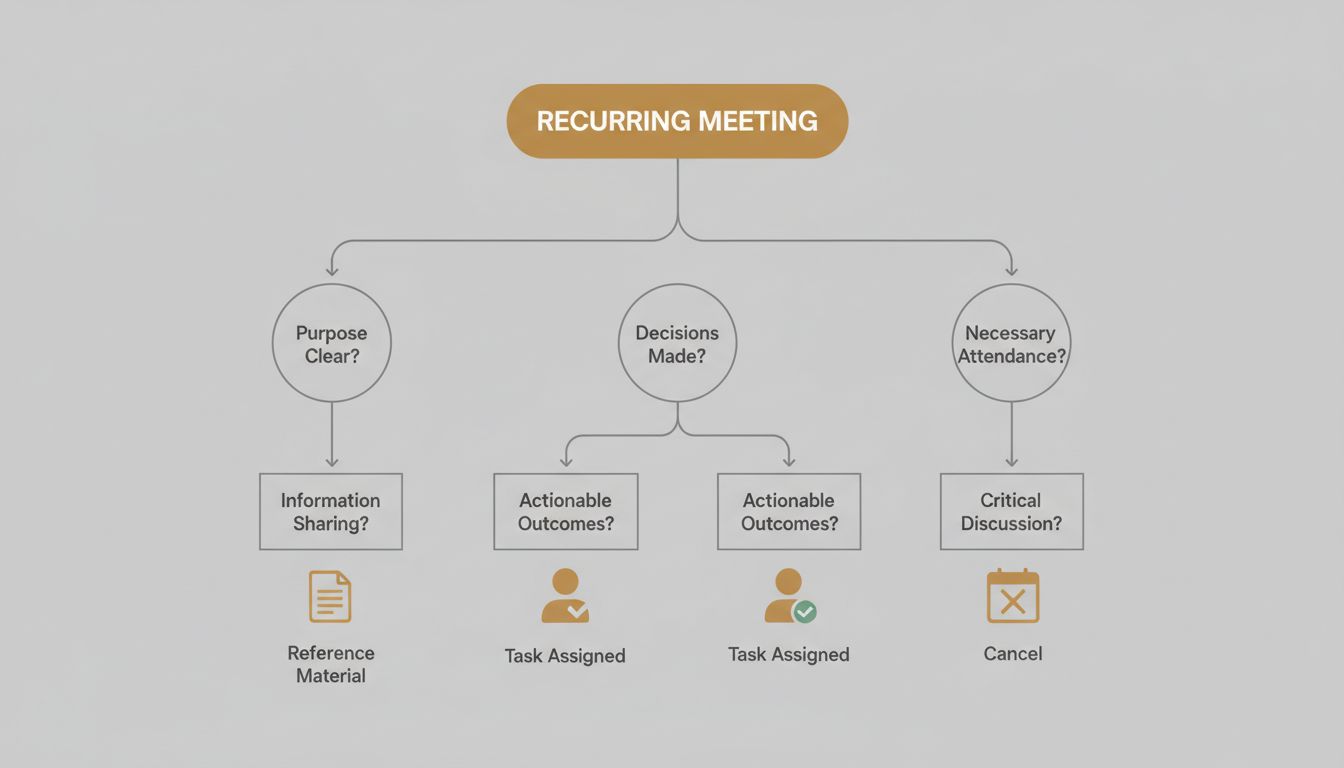
Here’s a practical framework. For every recurring meeting on your calendar, ask three questions. First, what is the actual output of this meeting? Not the topic. The output. A decision, a shared understanding, a plan with owners and dates. If you can’t name the output, the meeting doesn’t have one. Second, could that output be produced without synchronous time? Most status updates can be a shared doc. Most decisions can be made by one person with input gathered async. Third, what would we do instead if this meeting didn’t exist? If the answer is “we’d figure it out,” you have your answer.
The Shopify approach is worth considering for teams that want to move faster than one calendar experiment at a time. Rather than auditing meetings one by one, they deleted categories of meetings wholesale and then added back only what was genuinely missed. The presumption flipped: meetings needed to justify their existence rather than existing by default.
You can do a smaller version of this right now. Pick one recurring meeting you attend but don’t run. Send a message to the organizer this week asking what the intended output is, and whether there’s a way to produce that output without the meeting. You’ll learn something useful either way. Either the meeting sharpens into something more purposeful, or it disappears, and the work gets done better.
Asana’s insight, the one that actually mattered, wasn’t that Wednesdays should be meeting-free. It was that the value of uninterrupted time is invisible until you’ve experienced it consistently, and by then the meetings that used to fill that time seem obviously unnecessary. You can’t see the cost of fragmentation while you’re fragmented.
The meeting you canceled created space. Space is where the actual work lives.
If you’ve noticed that your calendar is effectively controlling your day rather than reflecting your priorities, your digital calendar is not helping you manage time the way you think it is. The infrastructure problem and the meeting problem tend to arrive together.