There is a pattern that shows up repeatedly across high-output engineering teams, and it runs completely counter to what every productivity influencer is selling. The teams shipping the most reliable software, the ones with the lowest defect rates and the fastest decision cycles, are often running on communication infrastructure that looks almost embarrassingly old. Plain text email threads. IRC channels. Mailing lists with no threading UI. Static wikis that nobody has touched the CSS on since the mid-2010s. The instinct is to assume these teams are behind. The more interesting possibility is that they figured something out.
This connects to a broader pattern in how sophisticated organizations think about tooling. Much like how software engineers delete more code than they write as a sign of growing maturity, the best teams often reduce communication surface area rather than expand it. Subtraction, not addition, is the discipline.
What “Outdated” Actually Means Here
Let’s be precise, because this matters. When I say outdated communication tools, I am not talking about avoiding version control or refusing to use CI/CD pipelines. I am talking specifically about the layer where humans exchange ideas and make decisions. Email over Slack. Mailing lists over Discord. Long-form written documents over synchronous video calls. Wikis with enforced structure over freeform Notion databases that have become impossible to navigate.
The distinction is important. These tools are not outdated in the sense of being broken or unmaintained. They are outdated in the market-trend sense: they have been around long enough that nobody is writing Medium posts about them anymore. And that turns out to be a feature, not a bug.
The Bandwidth Constraint Is the Point
Here is the core mechanism, explained the same way you would explain a rate limiter to a junior developer. A rate limiter is a system that intentionally caps how fast requests can flow through a pipeline. It feels like a restriction. It is actually protection. Without it, a sudden spike in traffic can cascade into failures that take down the entire system.
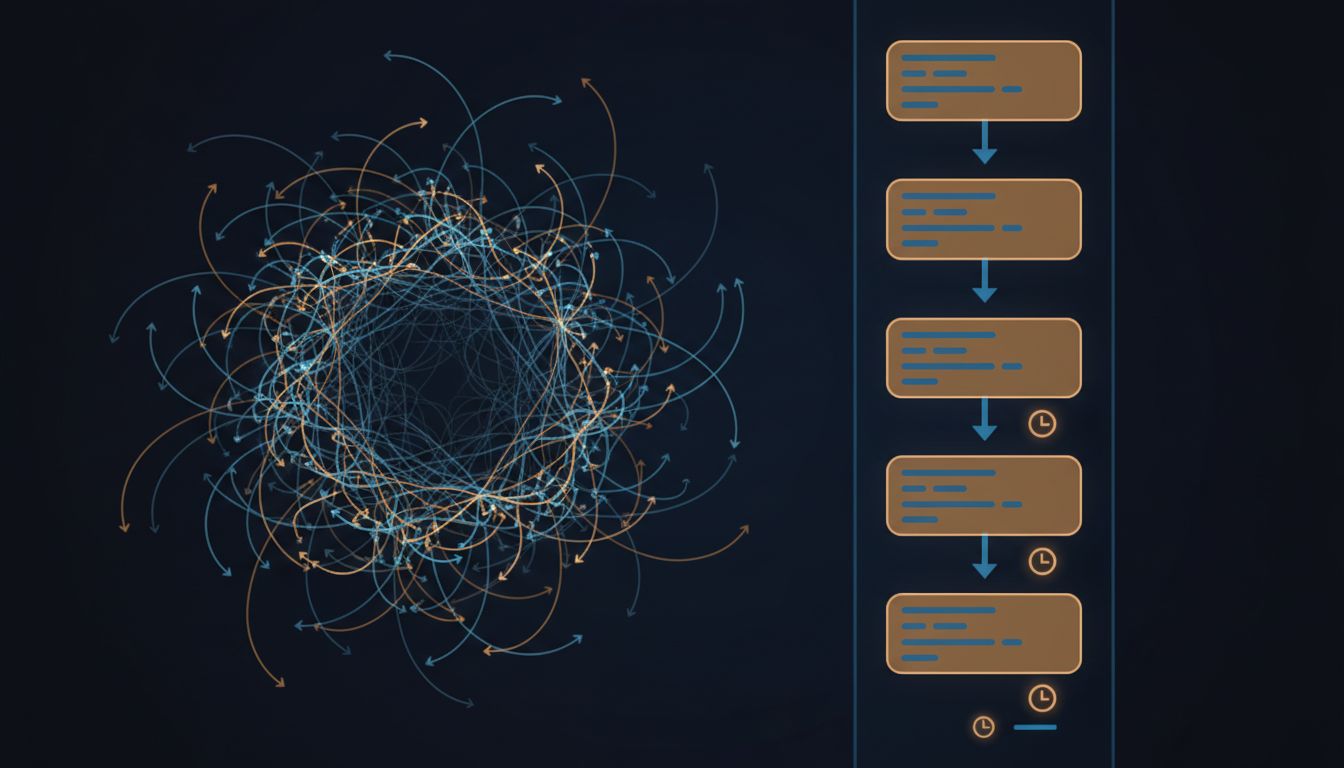
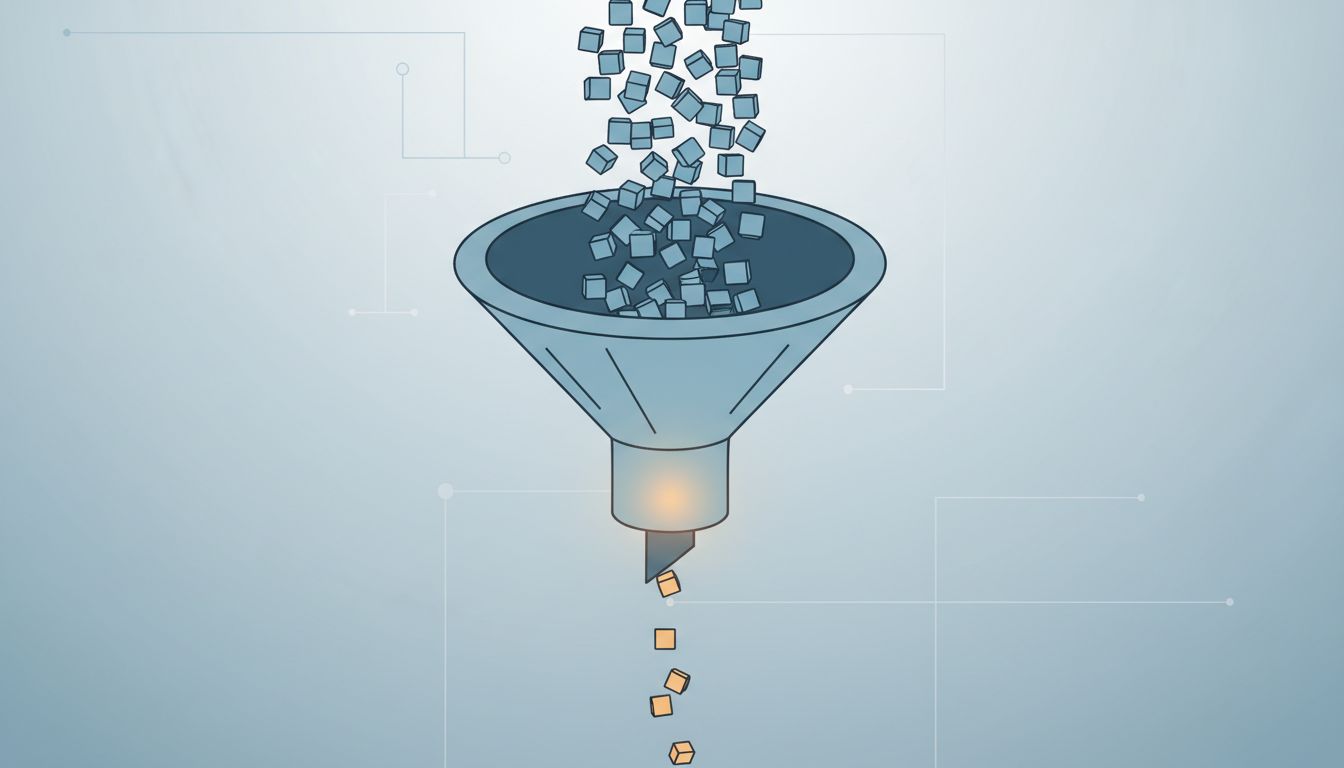
Old-school communication tools function as rate limiters on information flow. Email has friction. You cannot send a reaction. You cannot create a thread with seventeen people in thirty seconds. You cannot paste a meme as a response to a serious architectural question. That friction is load shedding. Only the information worth the effort actually gets transmitted.
Modern team chat tools are optimized for low-friction communication. That sounds like a good thing until you realize that low friction means high volume, and high volume means noise, and noise means that the signal, the actual decisions and reasoning that need to be preserved, gets buried. This is not a new observation. Fred Brooks was writing about communication overhead in software teams in the 1970s. The fact that the industry keeps relearning it is its own kind of fascinating, and it connects to why software bugs multiply when teams grow, which turns out to be a communication problem rather than a coding problem.
The Asynchronous Depth Advantage
The second mechanism is less obvious and worth dwelling on. Older communication tools were designed for asynchronous use because they had no other choice. Bandwidth was limited. Latency was real. You wrote something, sent it, and waited. That constraint produced a particular kind of communication: denser, more self-contained, and more carefully reasoned.
When you write an email to a mailing list, you know you will not be there to answer follow-up questions in real time. So you anticipate them. You include your reasoning. You define your terms. You link to your sources. You write the thing so that someone reading it a week later, or a year later, will still be able to understand what was decided and why.
Compare that to a Slack thread, where the implicit expectation is that someone is available to clarify, and where the UI actively encourages short replies. The result is communication that is fast in the moment and completely useless as a historical record. Six months later, when a new engineer joins and wants to understand why the system is architected the way it is, there is nothing to find. The knowledge evaporated into a river of “sounds good” and thumbs-up emoji.
Why Teams Resist the Downgrade
If old tools work better for deep work and knowledge preservation, why does every team drift toward the newest, most feature-rich communication platform? The answer is signaling and social dynamics, not productivity.
New tools feel productive. They have features. They have integrations. They have dashboards showing how active your team is. Activity metrics are seductive because they look like output metrics, even when they measure the opposite thing. A team generating 3,000 Slack messages a day might be doing almost no focused work. A team exchanging twelve careful emails might be building something that lasts a decade.
There is also a management visibility problem. A mailing list with weekly digests is harder for a manager to feel connected to than a real-time channel where they can watch the conversation happen. This gets into territory that the best tech leaders navigate by knowing less than you think, trusting the process rather than monitoring the activity.
The irony is that the tools designed to make teams feel more connected often make them less cohesive. The low-friction environment rewards whoever is most available, not whoever has thought the most carefully. Introverts, deep thinkers, and people across time zones get systematically disadvantaged. The loudest voice in the channel wins, which is exactly the wrong selection pressure for engineering decisions.
A Practical Framework for Deliberate Downgrading
This is not an argument for throwing away modern tools entirely. It is an argument for conscious tool selection based on what you are actually trying to accomplish.
Here is a useful mental model. Treat your communication stack the way a good compiler treats optimization levels. At O0 (no optimization), everything is verbose and slow but easy to debug. At O3 (maximum optimization), things are fast but harder to reason about and prone to surprising behavior. Most production systems run at something between those extremes, tuned for the specific tradeoffs that matter.
For decisions that need to be preserved and reasoned about later, use high-friction asynchronous tools. Email, mailing lists, long-form documents, or structured wikis. The friction is doing real work.
For ephemeral coordination (“is the deploy done,” “which meeting room are we in”), use whatever is fastest. The content does not need to survive.
For creative brainstorming, use synchronous voice or video. Some problems genuinely benefit from real-time back-and-forth.
The failure mode most teams fall into is using the same low-friction, high-volume channel for all three categories. Everything becomes equally urgent and equally disposable, which means nothing is actually preserved or prioritized.
The teams that have figured this out are not being contrarian for its own sake. They are applying the same thinking that good engineers apply to system design: choose the right tool for the constraint profile of the problem, not the tool with the most impressive feature set. Sometimes the right answer is a boring mailing list and a document that someone actually wrote carefully. That is not a step backward. That is exactly the kind of deliberate simplification that separates teams that ship from teams that discuss shipping.