
The Calendar That Looks Broken
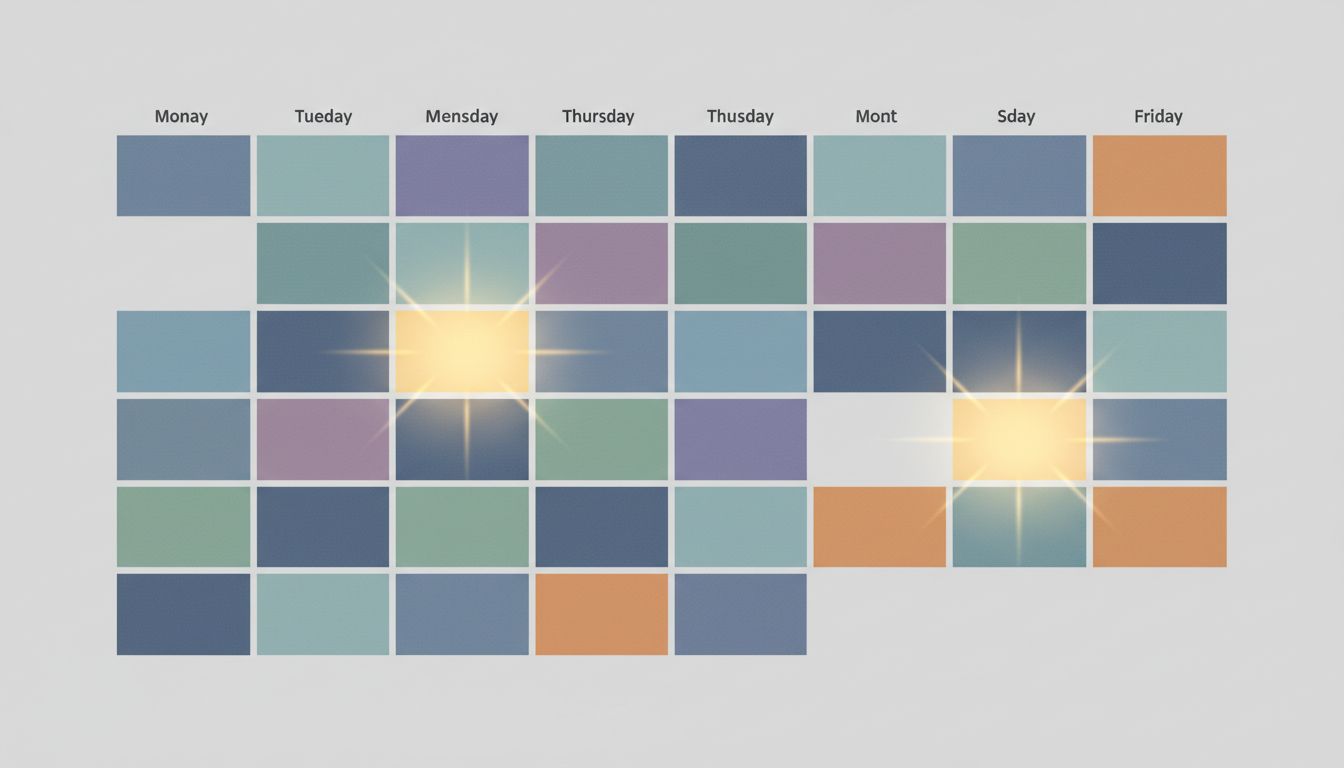
If you looked at Cal Newport’s calendar, or Linus Torvalds’ description of his work habits, or how Jeff Dean (one of Google’s most technically decorated engineers) has described his approach to deep work, you’d notice something that looks wrong from the outside: gaps. Deliberate, protected, recurring gaps.
To a manager trained on utilization metrics, a gap in a senior engineer’s calendar looks like waste. It looks like a scheduling error waiting to be filled with a standup, a design review, a sync. The instinct to fill it is almost physiological.
That instinct is exactly what makes people less productive, and understanding why requires a short detour into how your brain actually handles complex work.
Your Brain Has a Background Thread
Cognitive science has a name for what happens when you’re not consciously focused on a problem: the default mode network (DMN). This is the network of brain regions that activates during rest, mind-wandering, and what we loosely call “doing nothing.” For a long time, researchers treated the DMN as noise, the brain idling. That framing turned out to be wrong.
The DMN is where your brain does integration work. It takes information that’s been loaded into working memory (the conscious scratchpad) and starts connecting it to older, deeper structures. It’s the process by which a solution to a problem you’ve been stuck on suddenly appears in the shower, or on a walk, or halfway through a completely unrelated conversation.
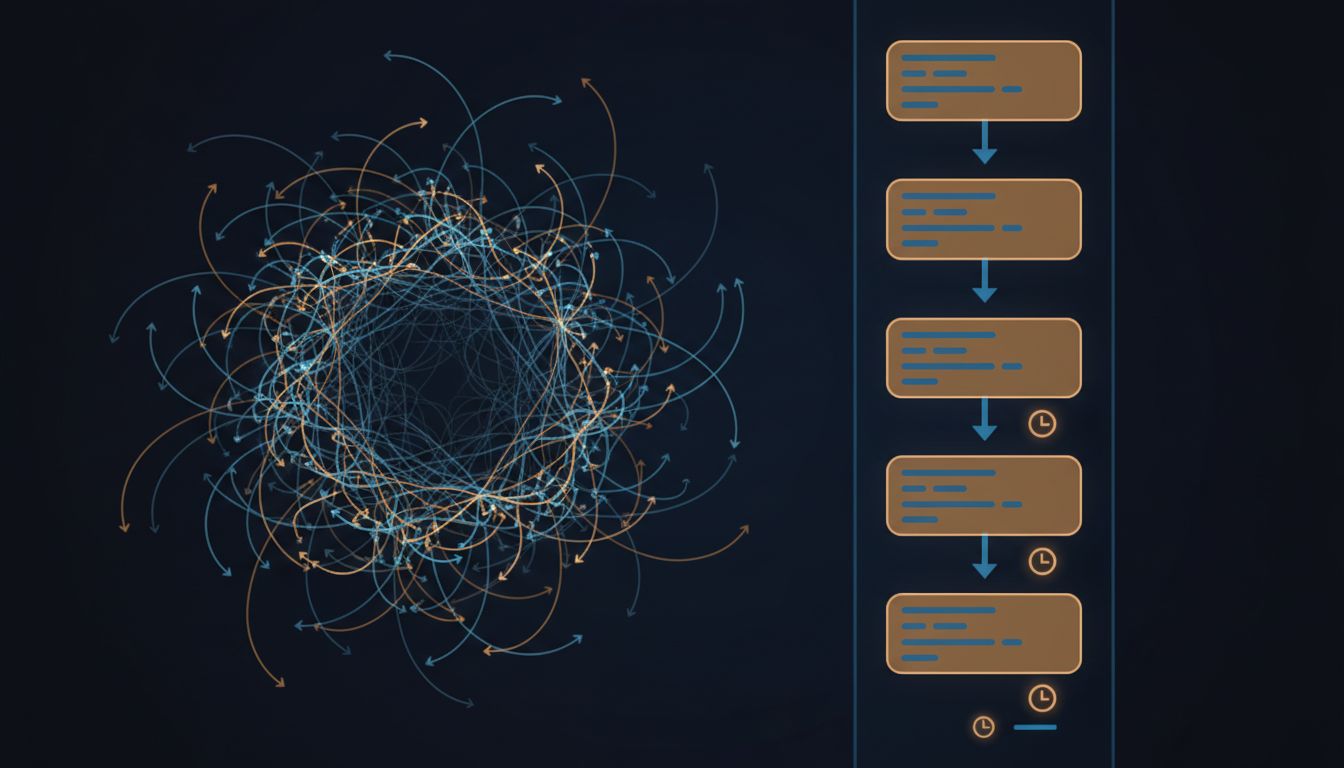
This isn’t mysticism. It’s closer to how a build system works. While you’re actively editing code, the compiler isn’t running full optimizations. Those happen in a separate pass, with full context, after you’ve stopped touching things. The DMN is that pass. And like a compiler, it needs the right inputs loaded in before it can do useful work.
The practical implication is uncomfortable: if you never stop actively working, you never give the integration pass a chance to run.
Why Busyness Feels Like Productivity
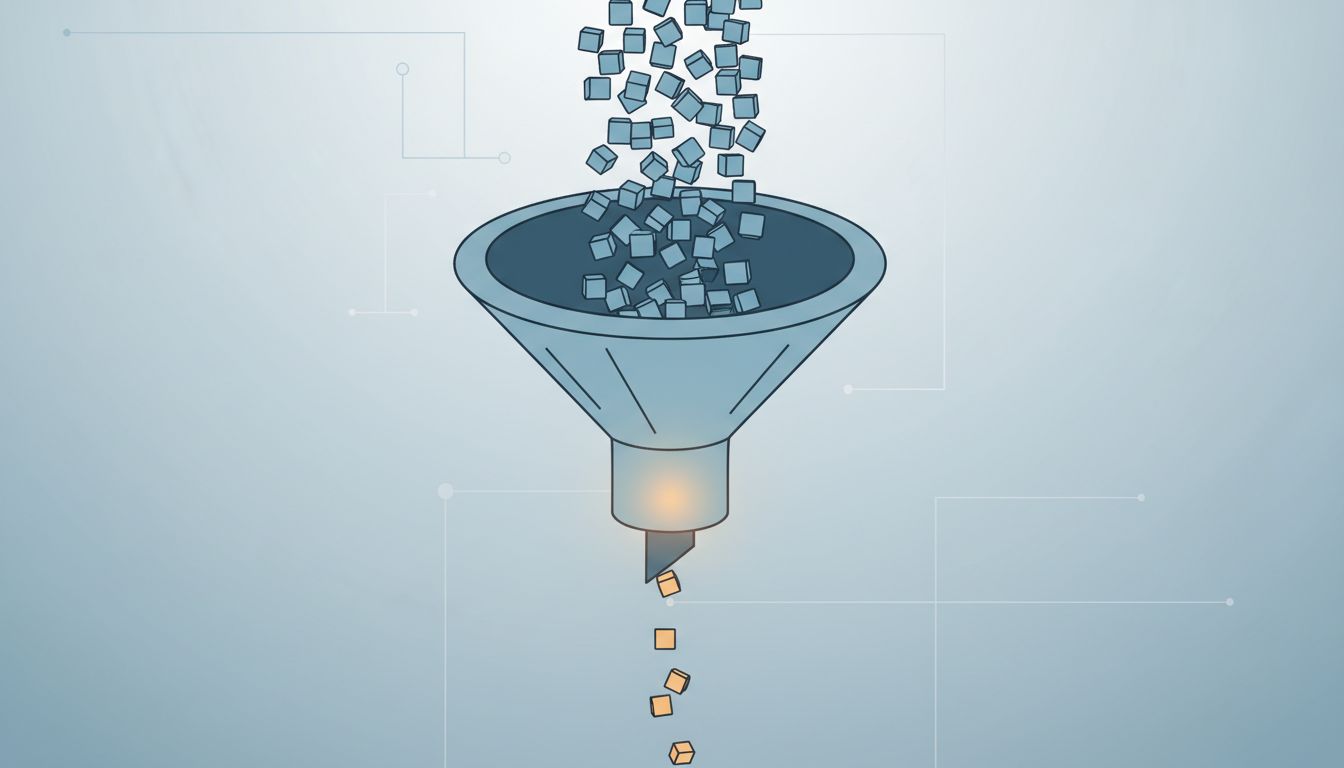
There’s a specific cognitive trap at work here that’s worth naming. Completing tasks generates dopamine. Checking items off a list, closing tickets, responding to messages, these all feel good in proportion to how much activity they represent, not in proportion to how much value they create.
This means a day filled with low-complexity, high-frequency tasks will consistently feel more productive than a day spent on two hard problems with long stretches of uncomfortable thinking in between. The feeling is a lie, but it’s a very convincing one.
Knowledge work at the senior level is almost entirely about the hard problems with long stretches in between. The moment you let “feeling busy” become the signal you’re optimizing for, you’ve accepted a proxy metric that’s poorly correlated with the actual goal. Deadlines have the same problem: they make the urgency signal so loud that it drowns out the importance signal entirely.
The calendar-filling behavior is the same failure mode. You’re optimizing for utilization when you should be optimizing for output quality.
What “Doing Nothing” Actually Means
Scheduled empty time is not meditation (though meditation is useful for different reasons). It’s not scrolling your phone. It’s not a coffee break in the sense of a social obligation you push through to get back to real work.
What it is: time with low external stimulus and no task obligation, where your mind is allowed to wander over the problem space you’ve been working in.
The distinction matters because the wrong kind of nothing doesn’t work. Scrolling social media is high-stimulus, low-coherence input that actively competes with DMN processing. Watching television similarly. The brain regions that handle stimulus processing overlap enough with the DMN that constant input suppresses the integration work you’re trying to let happen.
Walks work well for many people, particularly walks without headphones (or with something instrumental and not attention-demanding). Sitting with a coffee and no phone works. Some people use deliberate journaling with no agenda, just writing whatever comes up. The common thread is low external demand.
This is also why sleep is not a substitute, though sleep does its own critical consolidation work. Waking-state DMN processing handles a different kind of integration. Both matter.
The Scheduling Problem
Here’s where the practical friction lives. If you work in an environment where your calendar is visible to others and open for booking, empty time will be filled. This is not malice; it’s coordination software doing exactly what it’s designed to do.
The engineers and researchers and executives who successfully protect idle time all solve this the same way: they make it a hard block, named something that looks legitimate. “Research time” or “deep work” or in some cases just “hold” with no description. The block needs to look non-negotiable because if it looks negotiable, it will be negotiated away.
This is the same principle behind systems that externalize memory and state: you can’t trust yourself to protect the time in-the-moment when someone is asking you for it with a reasonable face. The protection has to be structural, encoded in advance, resistant to in-the-moment override.
Frequency matters more than duration. A ninety-minute block three times a week is more useful than a single four-hour block once a month, because the DMN integration pass works best when the inputs are fresh. You want the empty time close in time to the hard work, not weeks later.
Why Senior People Do This More
There’s a pattern that looks paradoxical until you understand the mechanism: the more senior and high-output a technical person is, the more protective they tend to be about unscheduled time. Junior developers often fill every hour, anxious to look productive. Staff engineers and above tend to have calendars that look sparse by comparison.
This isn’t seniority granting permission to do less. It’s experience revealing what actually produces results.
Hard architectural decisions, the kind that have decade-long consequences, are not made well under constant interrupt load. Security vulnerabilities that require holding a complex system model in mind simultaneously cannot be found in five-minute windows between meetings. Writing that actually communicates something difficult doesn’t happen in stolen moments.
All of these require what Newport calls “deep work” in the most literal sense: sustained engagement with a problem, followed by space for the brain to process it fully. The senior engineers who consistently produce the most architecturally sound, least bug-prone, most clearly documented work are almost invariably the ones who’ve figured out how to create that space.
The Compounding Effect Nobody Talks About
Scheduled empty time doesn’t just help with the immediate problem you’re working on. It has a compounding effect that’s easy to undervalue.
When you regularly give your brain time to integrate across domains (the security issue you’ve been thinking about, the new database pattern you read about last week, the architectural smell you noticed in a code review), you build a denser associative graph. You start noticing non-obvious connections faster. The “senior engineer intuition” that’s hard to explain in interviews is largely this: a well-integrated knowledge graph built up over time, combined with the habit of letting that graph run its background processes.
The developers who describe themselves as “always on” and who fill every waking hour with input (podcasts, tutorials, articles, meetings) often know a lot of individual things while struggling to connect them under pressure. The integration pass never ran. The graph has nodes but sparse edges.
Deliberately doing nothing is, counterintuitively, one of the higher-leverage investments you can make in your own technical depth.
What This Means in Practice
The argument here is not that you should work less. The argument is that the work you can only do in your head, the synthesis, the non-obvious connection, the design smell you can’t quite articulate yet, requires mental conditions that constant activity destroys.
To implement this without getting steamrolled by a meeting culture that abhors white space:
Block the time before it gets taken, weekly, recurring, named as something that sounds like work (because it is). Keep it close to your most cognitively demanding work, not isolated at the end of the week as a reward. Keep it genuinely low-stimulus. A walk without headphones costs you nothing and gives the DMN the conditions it needs. Don’t evaluate whether it’s “working” in the moment; the output shows up later and looks like insight, not like a task you completed.
The productivity systems that actually hold up at senior levels are the ones built around how cognition works, not how activity meters measure it. Scheduling nothing is how you make sure the most important part of your thinking actually gets done.