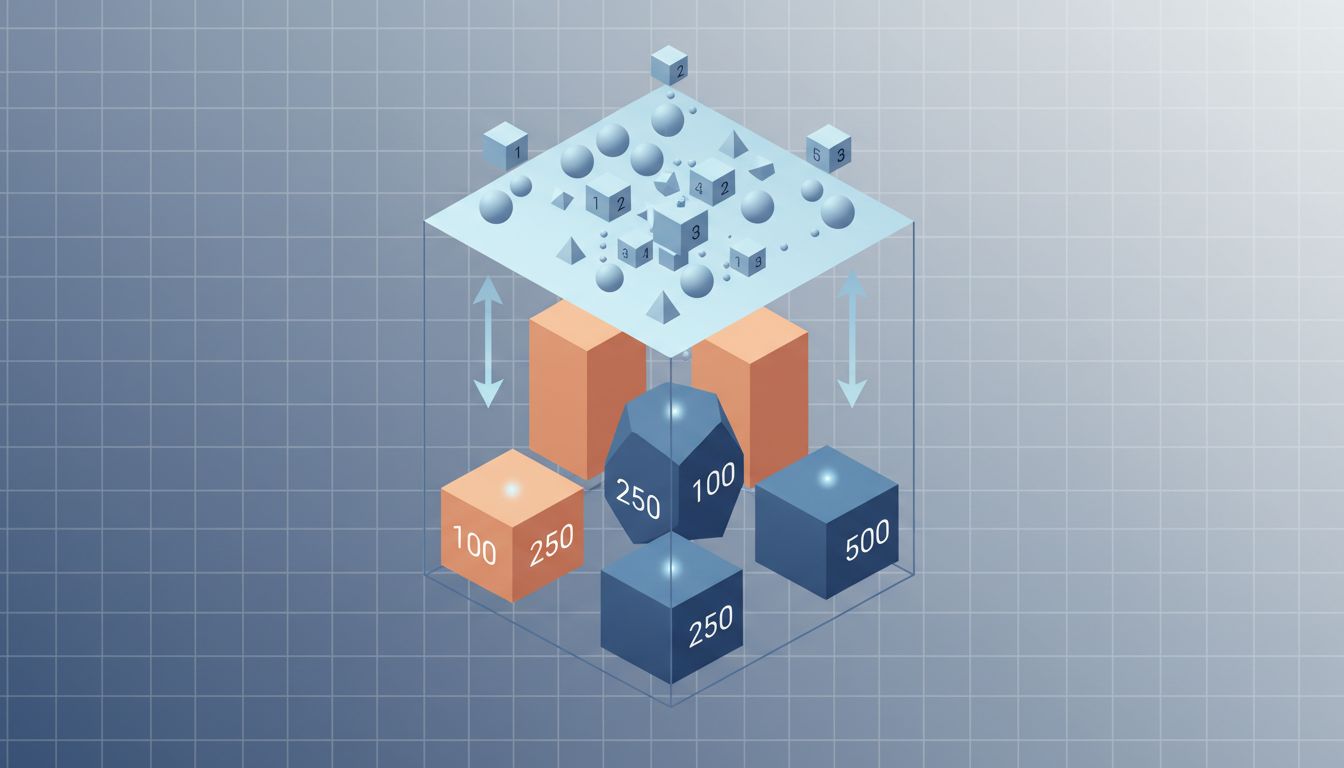
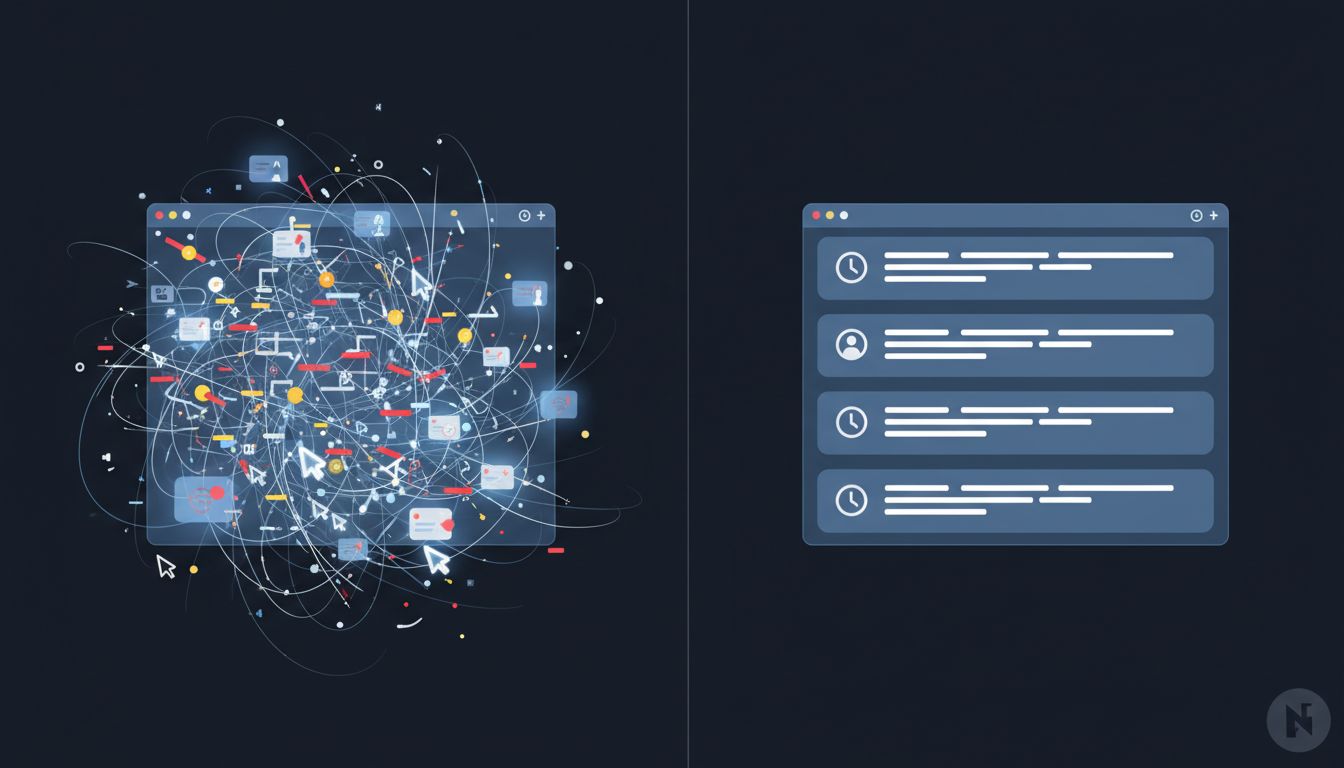
There’s a subtle trap baked into most modern collaboration tools, and it’s disguised as a feature. When your entire team can edit a document simultaneously, comment in threads, react with emojis, and watch each other’s cursors float around the screen, it feels like peak productivity. It looks like teamwork. It generates the sensation of progress. But a growing body of engineering team research suggests that this kind of real-time, always-on collaboration is actively degrading the quality of the work being produced, not because people are lazy, but because of how human cognition actually handles shared context.
This connects to something worth understanding about how top performers structure their work environments. As we’ve explored in why top performers take one day offline per week and their output goes up, the counterintuitive truth is that disconnecting from the stream often produces better results than staying immersed in it.
The Race Condition Problem in Human Collaboration
If you’ve written any concurrent code, you already understand race conditions. Two threads try to write to the same memory location at the same time, and the result is corrupted data. Neither write was wrong in isolation. The problem was the collision.
Real-time document collaboration creates a cognitive version of this exact problem. When five people are editing the same section of a product spec simultaneously, nobody is in a state of deep thinking. Everyone is context-switching at high frequency, reading what others just typed, adjusting their own contributions to avoid conflict, and monitoring the document’s state as it changes under their cursor. The document becomes a shared mutable object, and like shared mutable state in code, it introduces bugs: vague language that satisfies multiple interpretations, decisions made by whoever typed fastest, and arguments that get resolved by exhaustion rather than reasoning.
Shared documents, used asynchronously, solve this the same way immutable data structures solve concurrency problems. Each contributor works from a stable snapshot, produces a complete thought, and then merges it in. The result is reviewable, attributable, and reversible.
What “Shared Document” Actually Means (and Doesn’t)
It’s worth being precise here, because “shared document” gets used loosely. The distinction isn’t about Google Docs versus Microsoft Word. It’s about the protocol, meaning the agreed-upon rules for how the document is used.
A shared document used as an async collaboration tool has a few key properties. First, contributors write in complete thoughts before others respond. Second, the document has a clear ownership structure, often a single named author or designated section owners. Third, edits are additive and non-destructive, meaning you’re commenting on or appending to existing content rather than silently overwriting it. Fourth, the document has version history, so you can reconstruct the decision-making process later.
This last point matters enormously. Documentation that captures not just what was decided but why it was decided is infrastructure, not overhead. The reason most teams’ documentation degrades over time is explored in depth in why tech documentation is always out of date because keeping it current is nobody’s job, and the core issue is that real-time tools produce outputs that look like records but aren’t structured to function as them.
A Slack thread where ten people debated an architectural choice last March is technically a log of that conversation. But nobody can reconstruct the conclusion from it six months later without reading all forty messages in sequence. A well-structured async document with a “Decision” section and a “Rationale” subsection is findable, skimmable, and still useful a year later.
Why Real-Time Tools Feel More Productive Than They Are
There’s a psychological mechanism at work here that’s worth naming. Real-time collaboration produces immediate feedback loops. You type something, someone reacts. You ask a question, someone answers. The latency is near zero, and low latency feels efficient.
But efficiency and effectiveness are different measurements. Efficiency is throughput per unit time. Effectiveness is whether the output actually accomplishes something useful. You can have a very efficient meeting that produces zero durable decisions. The interaction was fast. Nothing was accomplished.
This maps onto a broader pattern in how we evaluate digital tools. As explored in digital minimalists being more productive than power users because of how the brain allocates resources, the cognitive cost of managing a high-stimulation tool environment often exceeds the value it generates. The tools that feel most powerful are sometimes the ones consuming the most attention without producing proportional output.
How High-Output Engineering Teams Actually Use Documents
The teams that consistently produce high-quality technical work tend to have a documentation culture that treats written artifacts the way good engineers treat source code: versioned, reviewed, and maintained. This isn’t incidental. The correlation between writing discipline and engineering output is strong enough that, as noted in why the best developers treat documentation like source code and it shows in their salaries, it’s become a meaningful differentiator in hiring and promotion decisions at high-performing organizations.
In practice, this looks like the following. Before a meeting, someone writes a structured document with context, relevant constraints, and specific questions that need resolution. During the meeting (if one is even necessary), the document is the agenda. After the meeting, the document is updated with decisions and action items, then shared with everyone, including people who weren’t present. The document is the primary artifact. The meeting, if it happened at all, was just a tool for resolving ambiguity that the document surfaced.
Compare this to the alternative: a meeting with no pre-read, a Slack thread that spirals, a follow-up meeting to re-align, and then a Confluence page someone created three weeks later that approximates what was decided but gets the details slightly wrong because they were working from memory.
The Async Document as a Force Multiplier
There’s one more property of well-structured async documents that doesn’t get discussed enough: they scale.
When a decision lives in a real-time conversation, it’s accessible only to the people present. Everyone else has to be told separately, which means the information degrades with each retelling, the way a string passed through multiple function calls accumulates mutation errors. When a decision lives in a well-structured document, every new team member, every future self trying to reconstruct context, every stakeholder who joined six months later, can access the same source of truth.
This is what high-performing teams mean when they talk about “writing things down.” They don’t mean creating a record for compliance purposes. They mean building infrastructure that makes good decisions reproducible and bad decisions reversible. That’s not a documentation strategy. That’s a systems design choice applied to how humans communicate.
The real-time collaboration tools aren’t going away, and they’re not useless. For certain tasks, synchronous brainstorming and live editing are genuinely the right tool. But defaulting to them for everything because they feel productive is the same category of error as writing everything in a single-threaded synchronous loop because it’s easier to reason about. It works until it doesn’t, and by the time you notice the bottleneck, you’re already behind.