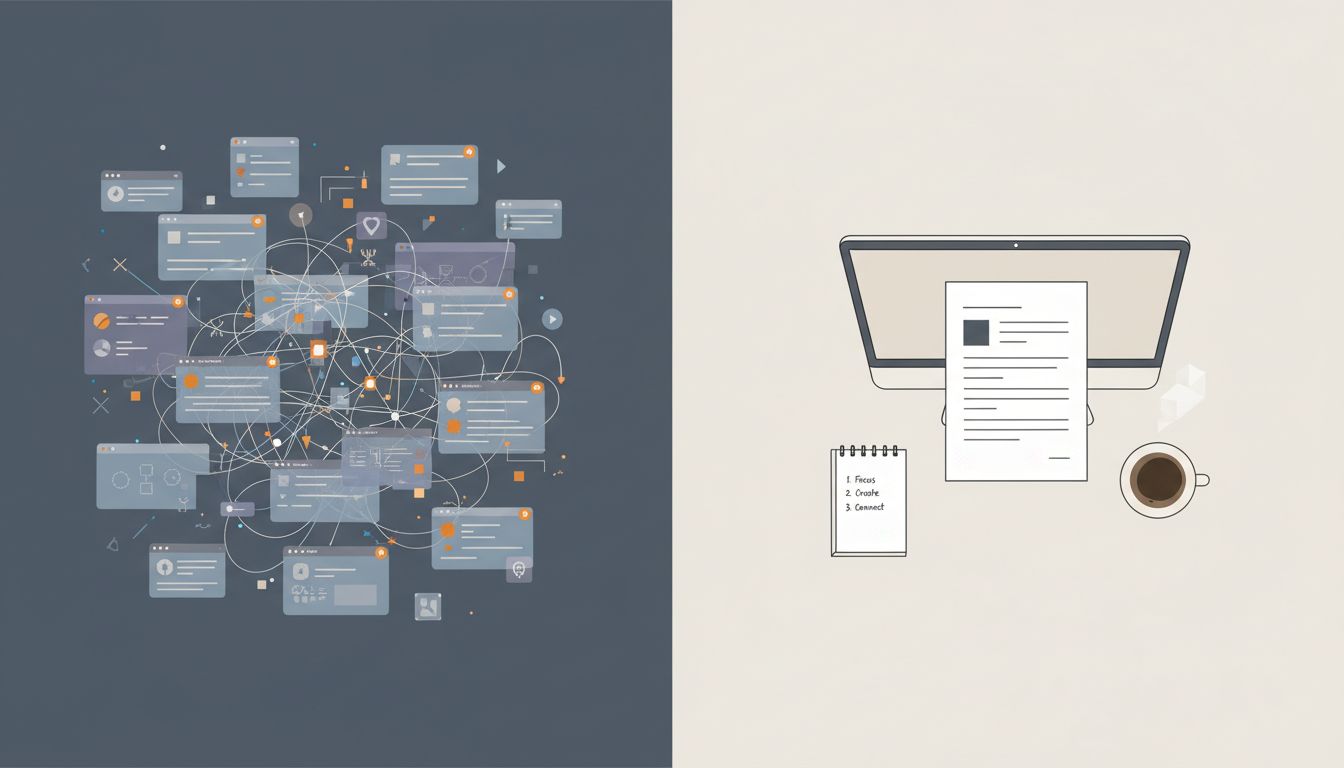
The productivity world has a status problem. We celebrate the person with seventeen browser tabs open, six apps syncing in real time, and a Notion workspace that required a tutorial to build. We call them power users, and we treat the label as a compliment. It is not.
The people I have watched do their best work consistently are usually running fewer tools, not more. They have made deliberate choices to cut options, not accumulate them. And those constraints, far from limiting them, are the source of their output. Intentional limitation outperforms maximal capability. I will defend that position.
Constraints force prioritization, and prioritization is the real skill
When you have twelve tools available, you can defer the hard question of what actually matters. The power user’s sprawling setup creates the illusion of thoroughness. Everything is captured somewhere, tracked somehow, connected to something. But nothing has been genuinely prioritized because the system itself absorbs the decision.
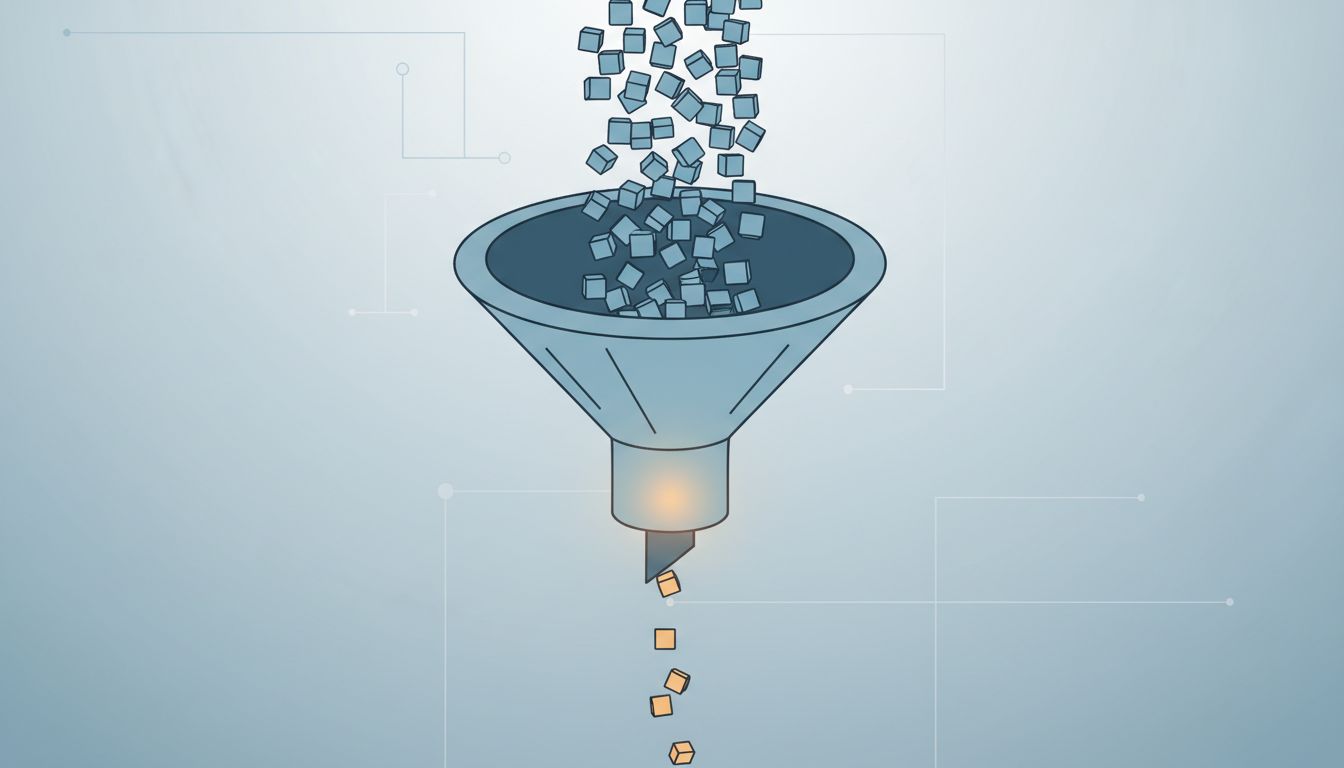
The minimalist who commits to a single writing environment, a short daily task list, and one communication channel cannot avoid prioritization. The constraint makes the decision necessary. And making that decision, actually choosing what gets your attention today, is the cognitive work that separates high output from high activity.
This is not speculation. Research on decision fatigue, much of it built on Roy Baumeister’s foundational work on ego depletion, consistently shows that the quality of decisions deteriorates as the number of decisions increases. Every new tool in your stack is not just a feature addition. It is an ongoing source of micro-decisions about where to put things, what to check, and what to act on.
A simpler system gets used. A complex one gets managed.
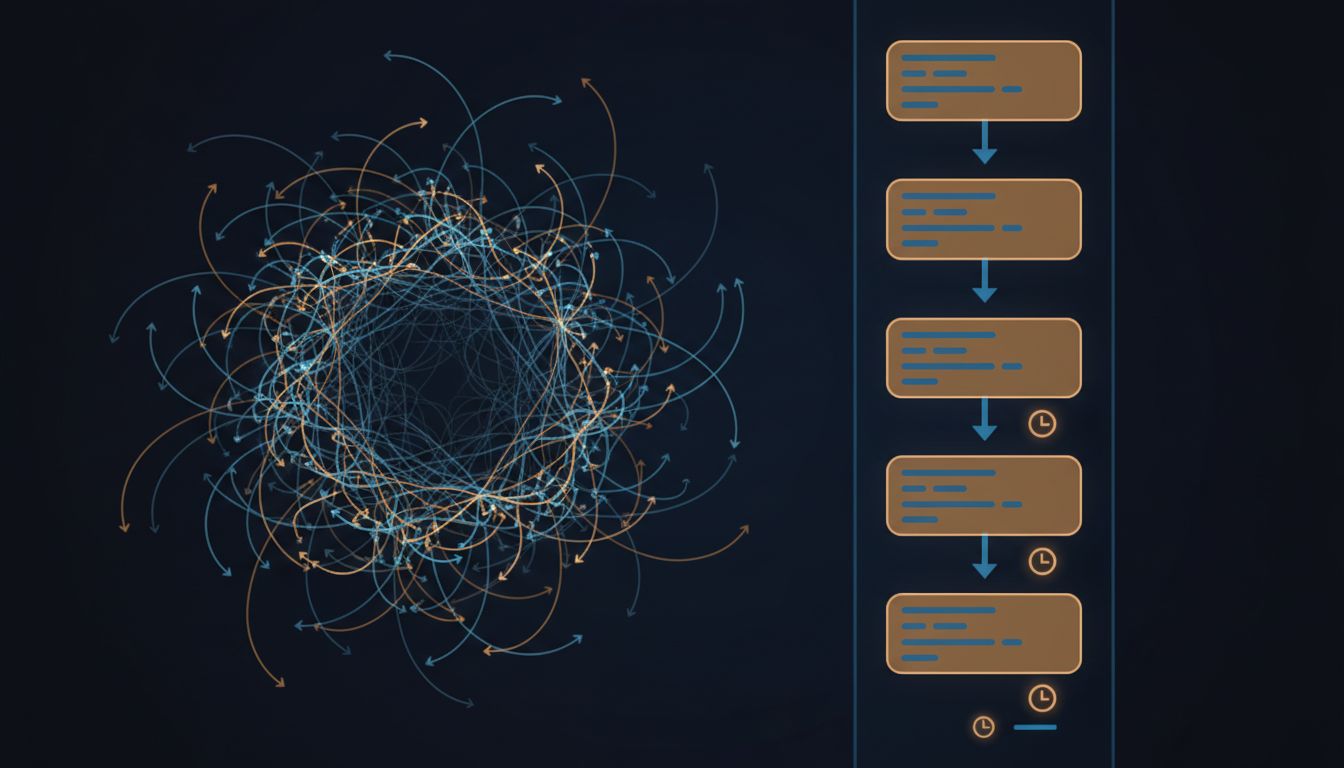
Here is the failure mode nobody talks about when they are selling you a productivity stack: the system becomes the work. You spend real time maintaining integrations, updating statuses across platforms, and refiling things that fell into the wrong bucket. The complexity demands upkeep, and upkeep is not output.
Digital minimalists sidestep this entirely. A system with fewer moving parts requires less maintenance, which means more time doing the actual work the system was supposed to support. This is not laziness. It is leverage.
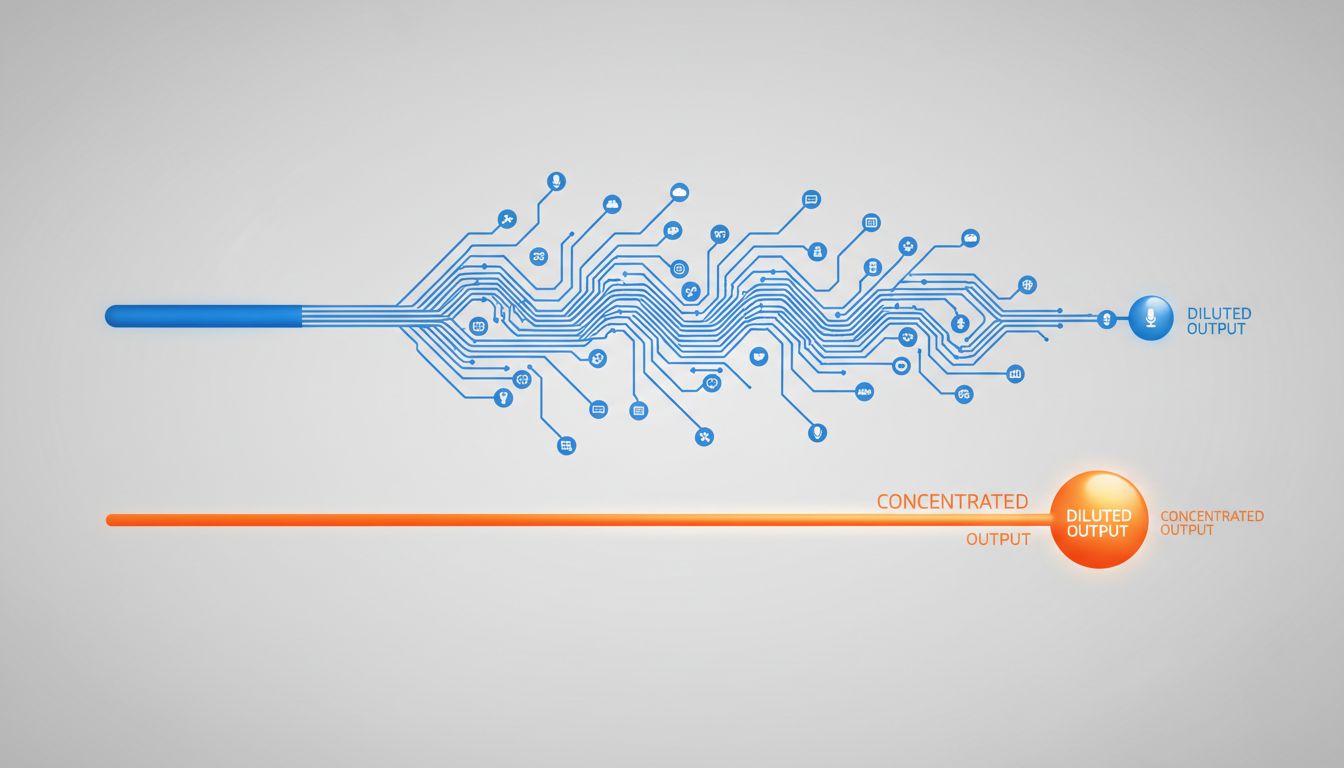
I have watched teams adopt elaborate project management setups that required weekly grooming sessions just to stay coherent. The tool was solving a problem created by the tool. Compare that with teams who keep things embarrassingly simple, the way Basecamp has publicly described its own approach to time and project discipline, and the difference in shipping cadence is real and measurable.
Fewer inputs mean better thinking
The power user is connected to everything. Every relevant Slack channel, every newsletter, every notification feed. The argument is that staying informed produces better decisions. But there is a meaningful difference between having access to information and having processed it well enough to act on it.
Attention residue is one of the clearest findings in the psychology of knowledge work. When you switch between information sources constantly, cognitive residue from the previous context lingers and degrades performance on whatever you do next. The power user’s always-on information posture is not an advantage. It is a slow leak.
Minimalists who protect their input channels, who choose when they consume information rather than allowing it to arrive continuously, are not missing out. They are thinking more clearly with what they have.
The counterargument
The reasonable objection here is that constraints are context-dependent. A software engineer coordinating across time zones genuinely needs more tools than a solo writer. A researcher doing competitive analysis needs broad information access. Some complexity is not bloat. It is the actual job.
This is fair. The argument is not that every power user’s setup is gratuitous. It is that most of them are. The default orientation in productivity culture is additive: when something feels hard, add a tool, add a process, add an integration. The minimalist’s instinct is the opposite, and that instinct is more often correct.
The test is simple. For each tool in your stack, ask whether removing it would make you measurably less capable or just less comfortable. Discomfort with reduction is not evidence that the tool is necessary. It is often evidence that you have built a dependency on the feeling of being set up.
What this means practically
You do not need to delete everything tomorrow. But you should approach your current setup with genuine skepticism rather than the accumulative instinct most of us have been trained into.
Audit your tools by actual use, not theoretical value. If you have not opened something in three weeks, it is not part of your workflow. It is part of your inventory.
Pick one tool per job. One place for notes. One place for tasks. One communication channel per relationship type. The overlap between tools is where work goes to get lost.
Protect your inputs deliberately. Choose when you read, when you check messages, when you let new information in. The power user’s always-available posture feels productive and costs focus.
The minimalist is not under-equipped. They are unencumbered. Over a long enough timeframe, that is the position you want to be in.