
The Second Brain movement, built around tools like Obsidian, Notion, and Roam Research, makes a seductive promise: capture everything, connect everything, and your notes will do your thinking for you. Millions of people have taken that promise seriously. They’ve built elaborate systems with nested tags, bidirectional links, and daily capture rituals. They’ve produced enormous, beautifully organized knowledge bases. And many of them, if you ask them honestly, will tell you they’re not actually thinking any more clearly than before.
This is not a coincidence. It is a predictable consequence of what happens when you optimize for storage instead of synthesis.
Capturing Is Not the Same as Understanding
There’s a concept in cognitive science called the generation effect: information you produce yourself (by summarizing, paraphrasing, or explaining) sticks dramatically better than information you passively receive. The research on this goes back to Slamecka and Graf’s 1978 study and has been replicated many times since. When you highlight a passage or clip a web article into your note system, you bypass the generation effect entirely. You’ve created a retrieval artifact without doing the cognitive work that would make retrieval unnecessary.
The Second Brain framework encourages exactly this behavior. Tiago Forte’s PARA system (Projects, Areas, Resources, Archives) is a genuinely useful organizational structure. But the surrounding culture has evolved into something he probably didn’t intend: people spending more time tagging and filing than actually wrestling with ideas. The note becomes a proxy for the thought.
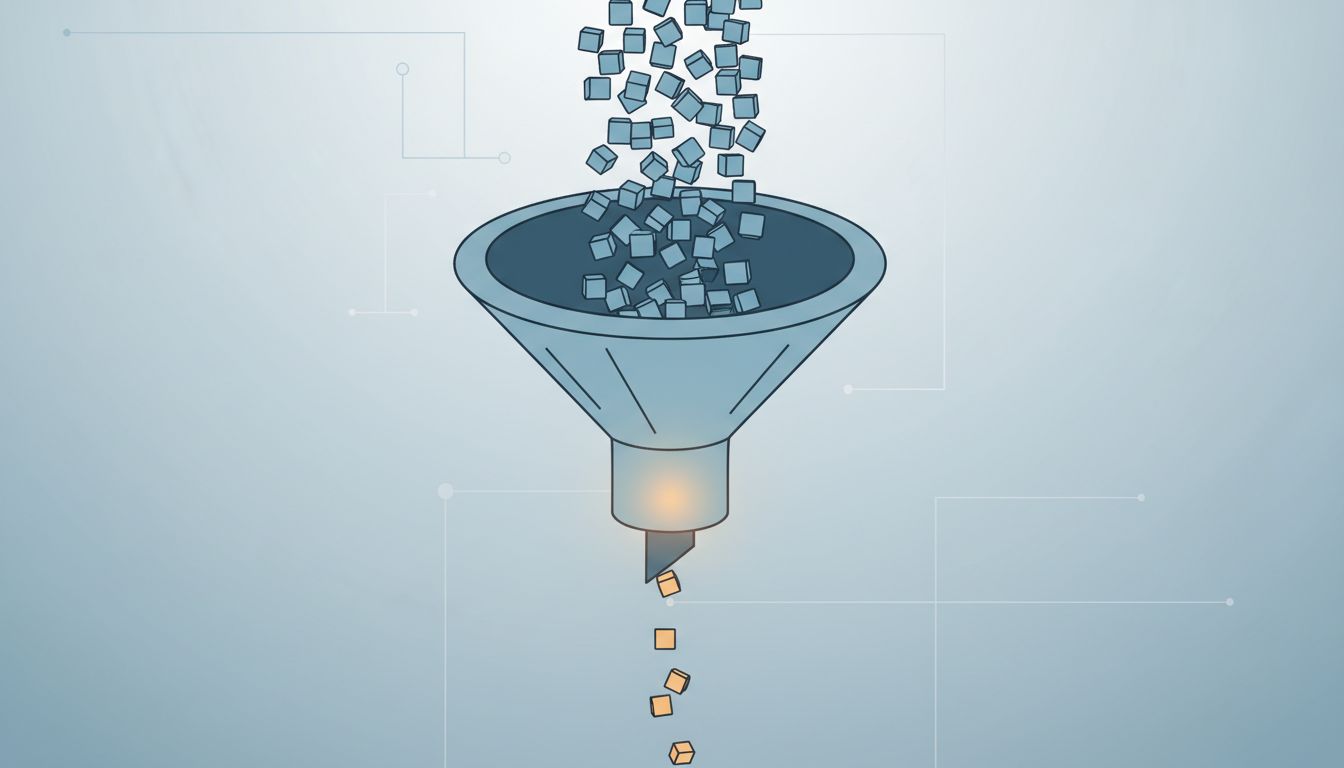
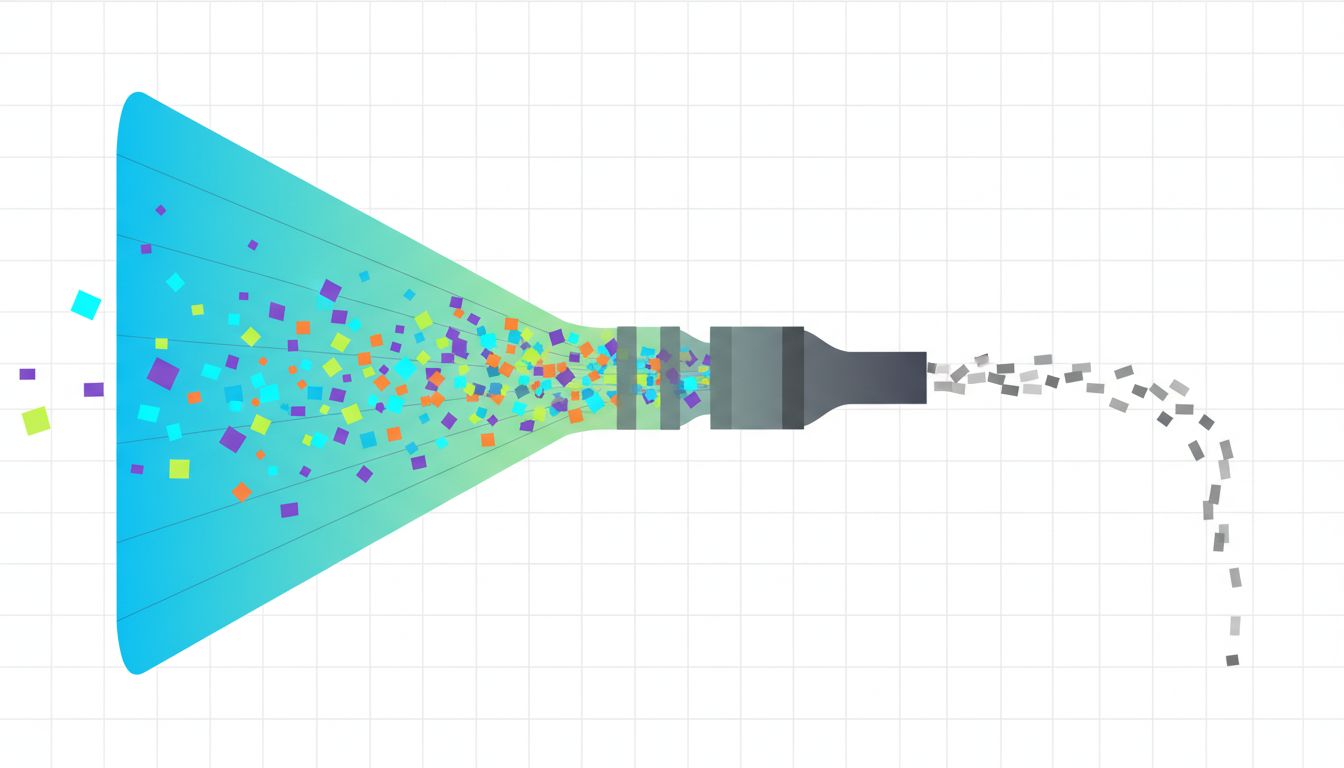
This is the same failure mode as logging everything instead of logging the right things. You end up with a massive corpus that’s technically complete and practically useless because you never made the hard decisions about what actually matters.
The Linked Notes Illusion
Bidirectional linking, the feature that made Roam Research briefly feel like a paradigm shift, creates a specific kind of false comfort. When you draw a link between two notes, you feel like you’ve made a connection. You’ve done something link-shaped. But drawing a link is not the same as understanding the relationship between two ideas, any more than drawing a line between two variables means you understand the mechanism connecting them.
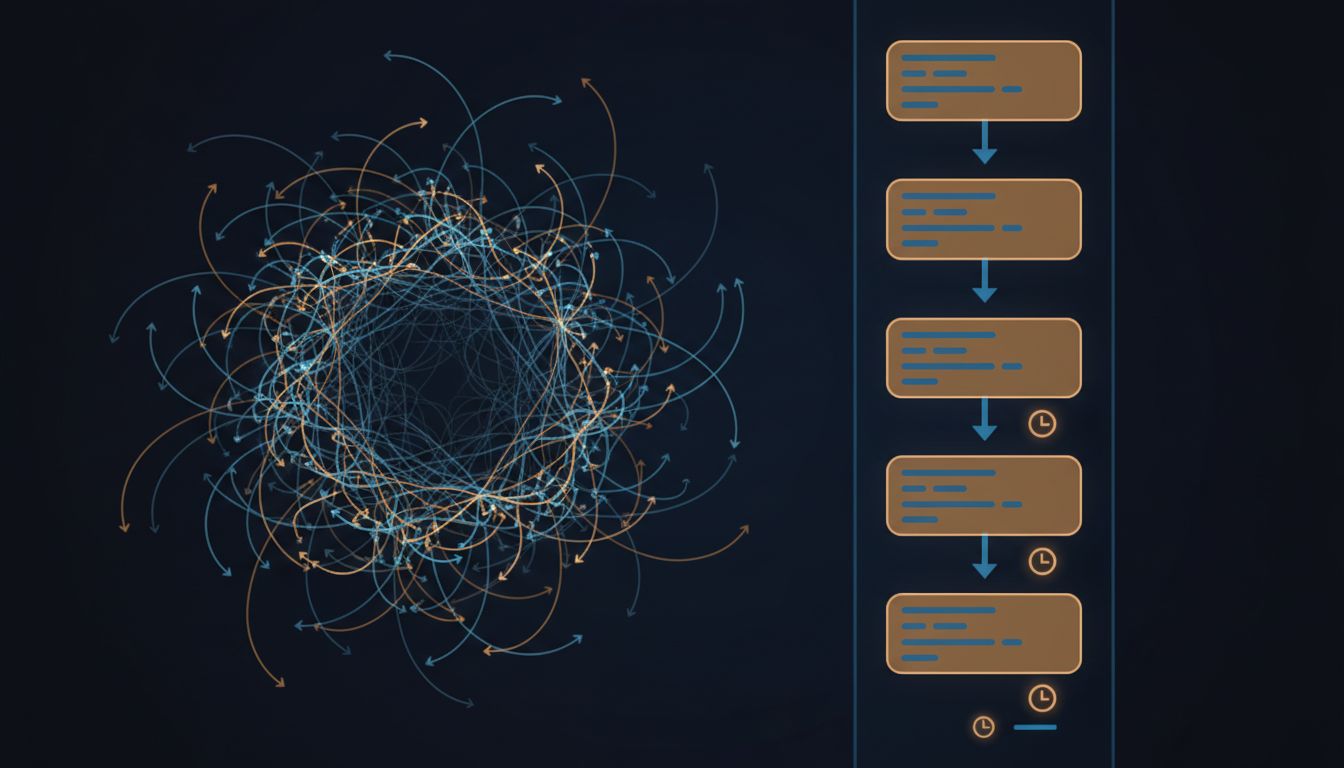
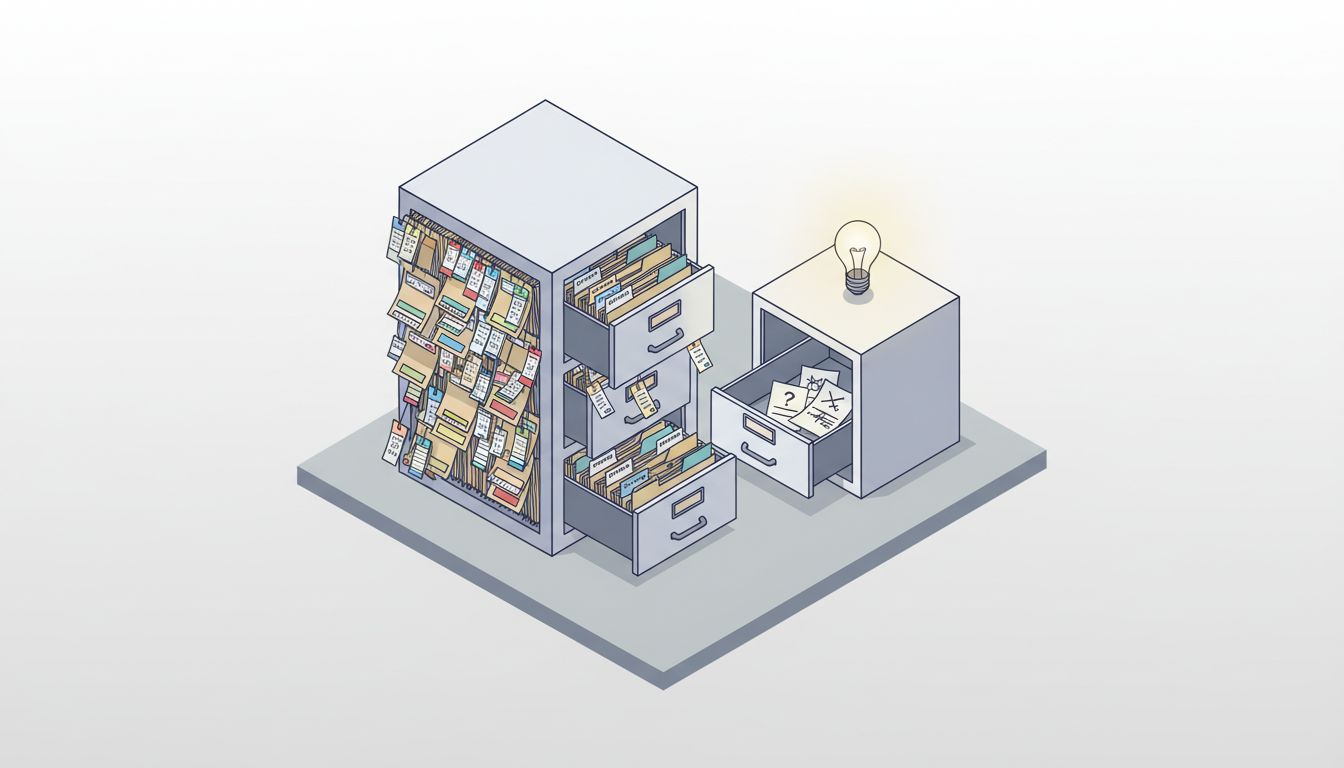
In software, we have a term for this: accidental complexity. It’s the complexity that accumulates not because your problem requires it, but because your tools encourage it. A graph of 3,000 interconnected notes isn’t a second brain. It’s a codebase with no tests and no documentation, impressive in scope, hostile to navigation, and maintained by a single contributor who will eventually lose context.
The people getting real intellectual leverage from tools like Obsidian tend to have something in common: they use them sparingly. They write fewer notes, link them deliberately, and review them regularly. They’re treating the tool like a scratchpad for thinking in progress, not a warehouse for thinking completed.
The System Becomes the Work
Any sufficiently complex personal system eventually starts consuming the attention it was supposed to free. This is a well-documented failure mode in productivity tooling, and note-taking is especially vulnerable to it because there’s no external forcing function. A task list has deadlines. A note archive has none.
The communities around PKM (Personal Knowledge Management) tools have, somewhat ironically, become elaborate procrastination ecosystems. There are entire YouTube channels dedicated not to thinking well, but to configuring Obsidian. Thousands of people have spent weekends designing the perfect folder structure for a vault they barely open. The system-building substitutes for the intellectual work the system was supposed to support.
This isn’t a character flaw. It’s a design consequence. These tools are built to make capture and organization feel productive, complete with satisfying UI, graph visualizations, and plugin ecosystems. The actual hard work of reading something twice, arguing with it in writing, and changing your mind leaves no artifact worth admiring. So people optimize for what the tool can show them.
The Counterargument
The honest counterargument is that cognitive offloading is real and valuable. Holding everything in working memory is expensive, and writing things down does free up mental bandwidth. Tools like Obsidian genuinely help people with ADHD maintain continuity across sessions. Researchers who write well-structured literature notes do synthesize ideas more effectively than those who don’t. Spaced repetition systems built on top of note archives have real empirical support behind them.
None of that is wrong. The issue isn’t with writing things down. The issue is with the specific ideology that has grown around it: the belief that more notes equals more thinking, that a larger graph equals deeper understanding, that the system itself is the output. Writing has always been a technology for thought. The question is whether you’re using it to think or to avoid thinking.
What Actually Works
The most intellectually productive people I know share a specific habit: they write to figure out what they think, not to record what they already know. Their notes are messy. They contradict each other. They contain questions more often than answers. They look nothing like the curated knowledge graphs people screenshot for Twitter.
If you use a note-taking system, the test is simple. When did a note you wrote last month actually change how you thought about something this month? If you can’t answer that readily, you’re probably not using your system, you’re maintaining it. And there’s a meaningful difference between those two things.
The Second Brain was supposed to extend your cognition. For a lot of people, it’s replaced it.