
In 2004, 37signals was a web design consultancy that had accidentally built a project management tool for internal use. Investors came calling. The growth playbook was obvious: raise a round, hire a sales team, expand the product, capture the market before someone else did. Jason Fried and David Heinemeier Hansson did none of it.
They released the tool, called Basecamp, charged for it immediately, and kept the team tiny on purpose. For years, this looked like a lack of ambition. Competitors raised millions, hired aggressively, and chased enterprise contracts. Some of them had Basecamp’s user count within eighteen months. Most of them are gone now.
Basecamp is still running. It has been profitable for over two decades. And the arc of how it got there contains one of the more durable lessons in startup strategy: the companies that scale fastest are often the ones that resisted scaling until they understood exactly what they were scaling.
The Setup
The pressure on early-stage startups to grow fast is not irrational. Network effects are real. First-mover advantages in some markets are real. If you are building infrastructure or a marketplace, the logic of racing to critical mass has genuine merit.
But most startups are not building those things. Most startups are building software tools, services, or products where the dynamics are far more forgiving and where premature scale is not a competitive advantage but a liability.
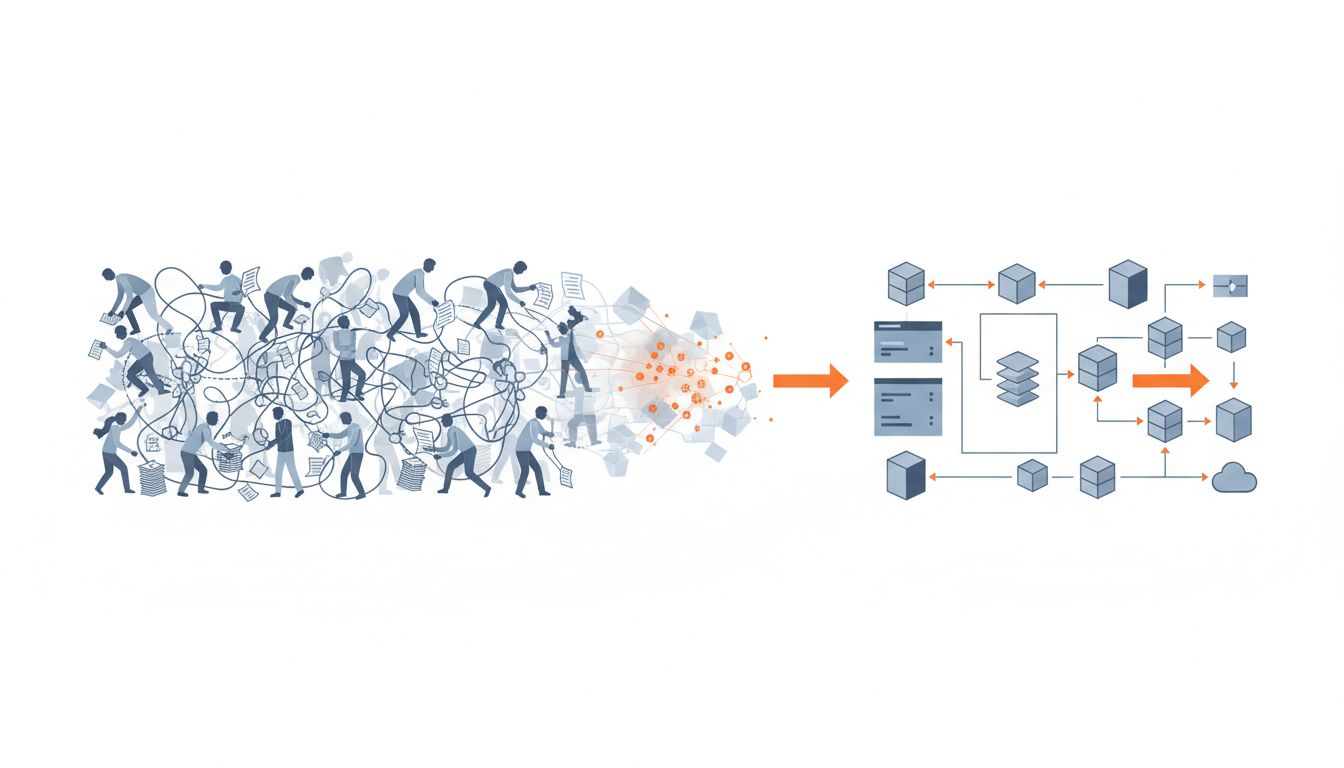
The mythology of hypergrowth has convinced a generation of founders that the goal is always to grow faster. Get to a hundred customers before you truly understand ten. Hire a team to build features your first users haven’t asked for. Expand into adjacent markets before you own your core one. This is not strategy. It is anxiety dressed up as ambition.
What Actually Happened
37signals kept Basecamp’s team at a size where everyone knew what every other person was working on. They did not build features to impress investors. They built features that paying customers were actively asking for, and sometimes they didn’t build those either, because Fried and DHH had strong opinions about product simplicity. The constraint was the point.
Small teams move faster than large ones inside the actual work of building. They communicate without overhead. They make decisions without committees. They can reverse course without a reorganization. The startups that hire aggressively early often find that by the time they understand what they should be building, they have forty people with sunk costs in the wrong direction.
This is not a fringe observation. Notion ran for years with a team that most Series A startups would consider impossibly lean before its growth inflected sharply upward. Linear, the project management tool, was known for years for keeping its headcount almost comically small relative to its ambitions. Both companies emerged with codebases and product visions that hadn’t been diluted by growth-for-growth’s-sake.

The pattern is consistent enough to name: the period that looks like stagnation from outside is often when a company’s actual competitive foundation is being poured. The team is learning what the product is really for. The founders are developing genuine intuition about their customers. The codebase is being shaped by people who care about it rather than contractors hired to ship features against a deadline.
By the time growth happens, there is something real underneath it.
Why It Matters
The failure mode of premature scaling is well-documented but underappreciated. It is not just that you run out of money. It is that you obscure your own signal. When you have ten customers, you know which three are genuinely happy and you know why. When you have ten thousand customers acquired through aggressive paid acquisition, you know almost nothing useful. The churn patterns are murky. The power users are buried in the data. The thing your best customers actually love is hidden behind the noise of everyone who signed up for a free trial and left.
Basecamp never had this problem because they never manufactured growth they couldn’t learn from. Every new cohort of users was digestible. The team could read support tickets, notice patterns, and respond. The product got sharper because the feedback loop stayed tight.
Contrast this with the project management software that raised a large Series A around the same era, hired a sales team, landed enterprise clients, and then discovered that enterprise clients wanted fundamentally different things than the SMB customers who had validated the product. They tried to serve both. The product became bloated. The sales motion became confused. The company eventually sold for less than it had raised.
This story repeats constantly. The startup that owns a niche beats the one chasing scale not because niche is a defensible position forever, but because it is how you develop the product intelligence to eventually move beyond the niche.
What We Can Learn
The question for founders is not whether to scale but when, and what you need to know before you do.
You need to know which customers actually love the product (not just use it). You need to know what makes those customers different from the ones who churned. You need to have at least a working theory of your growth mechanism: why does one customer become five, and is that because the product is genuinely good or because you’re spending money on acquisition that will stop working when you stop spending?
None of this can be discovered at speed. It requires staying close to the ground long enough to see clearly.
The irony is that founders who stay small longest often feel the most pressure to explain themselves. Their investors want metrics that look like hockey sticks. Their peers are announcing funding rounds. The Silicon Valley narrative makes restraint look like failure.
But the restraint is doing real work. It is keeping the team small enough to communicate. It is keeping the customer base manageable enough to understand. It is keeping the product focused enough to improve. It is, in a real sense, the accumulation of the knowledge that fast scaling will later spend.
Basecamp has now outlasted dozens of better-funded, faster-growing competitors. The 37signals team is still small by industry standards. The product is still opinionated in ways that exclude some potential customers and deeply serve others. That is not a limitation of the model. That is the model.
The companies that scale fastest are not the ones with the most resources at the start. They are the ones who understood what they were building before they built it at scale. Staying small was how they got there. The growth, when it came, was fast because the foundation was solid, and the foundation was solid because they didn’t rush it.