
A founder I know spent eight months building a compliance tool for mid-market HR teams before he talked to a single potential customer. By the time he had a demo, the problem he’d solved wasn’t quite the problem they had. He lost another six months rebuilding. The product eventually shipped, but two of his three co-founders were gone by then.
The thing is, he had leverage in those first eight months that he never used. He could have sold something. Not the product, obviously. But something real, something that would have told him what to build before he built it.
Pre-product startups sell more than most founders realize. The mistake is not knowing which of these things you’re selling at any given moment, because each one requires a different pitch, a different kind of customer, and a different definition of success.
1. A Credible Point of View
Before you have a product, you have a thesis. The market is broken in a specific way, and you understand that break better than the people living inside it. That understanding is sellable.
This is why so many founders write before they build. Not for SEO or thought leadership theater, but because articulating a clear point of view forces you to find out whether anyone agrees. Paul Graham has written about this pattern for years: the founders who can explain why a problem exists, not just that it exists, tend to build better companies. Investors buy this constantly. They fund a credible argument before they fund a product.
The test is whether a senior person at a target company will take a meeting based on your thinking alone. If they won’t, your thesis isn’t sharp enough yet.
2. A Promise With a Deadline
Pre-orders, letters of intent, pilot agreements, design partnerships. These are all variations of the same thing: a customer paying, or at least committing, for something that doesn’t exist yet.
The hardware startup Oculus raised $2.4 million on Kickstarter in 2012 before shipping a single consumer unit. That’s an extreme case, but the mechanism is ordinary. What you’re actually selling is confidence that you will deliver, combined with a specific enough description of the thing that the buyer can picture their problem going away.
The discipline this requires is underrated. You have to be concrete enough that the promise means something, but honest enough that you’re not selling vapor. Founders who are good at this tend to be good at product too, because the skill is the same: translating a fuzzy future into a crisp, believable story.
3. Access to a Better Future Version of Themselves
This sounds abstract until you watch it work. Early customers at pre-product startups often aren’t buying a product. They’re buying membership in something: a cohort of early adopters, a seat at the table where the roadmap gets shaped, a story they can tell about being early.
Salesforce understood this early. The companies that signed on in 1999 weren’t just getting CRM software. They were aligning themselves with a bet against on-premise software at a time when that was a contrarian position. The product was almost secondary to the identity of being a Salesforce customer.
You can’t manufacture this dynamic, but you can cultivate it honestly. If your early customers genuinely get more input into what you build, tell them that. If being an early adopter of your category is actually a competitive advantage for them, make that case. The founders who abuse this, who promise influence and then ignore it, create exactly the kind of early customer problems that haunt companies for years. The wrong early customer is one of the most reliable ways to break a startup before it scales.
4. Risk Reduction in Disguise
Enterprise buyers almost never admit they’re afraid. But a lot of pre-product sales in B2B are fundamentally about one person at a company deciding that whatever you’re building is less risky than the status quo.
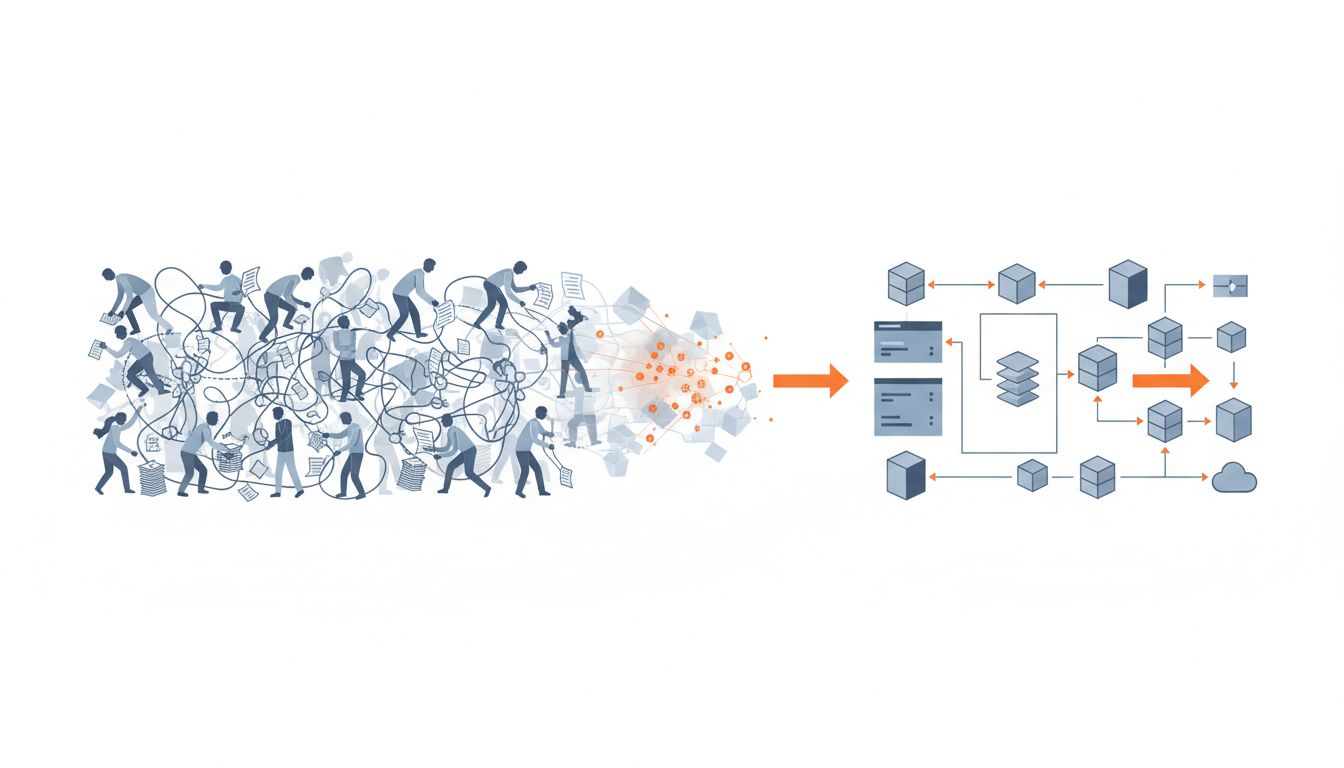
The status quo at most companies is held together with spreadsheets, workarounds, and institutional memory that lives in one person’s head. When you pitch a pre-product startup to a buyer who is living inside that chaos, you’re not selling features. You’re selling the reassurance that someone, finally, is thinking seriously about their problem.
The founders who close these deals are the ones who demonstrate deep familiarity with the buyer’s specific pain. Not the category pain, the specific pain. They know what the buyer’s Tuesday afternoon looks like. That knowledge, demonstrated in a conversation, is itself a product. It tells the buyer you will not waste their time building the wrong thing.
5. Your Own Reputation as a Signal of Quality
Reputation is uncomfortable to talk about because it sounds like bragging. But it’s one of the most transactable assets a pre-product startup has, and founders who pretend otherwise tend to undersell it.
Stripe’s early traction was not accidental. Patrick and John Collison were known quantities in the developer community before Stripe launched. Their early adopters were betting partly on the product and partly on the founders. That’s a real sale. The founders who came out of Google, or who had shipped a previous successful product, or who are deeply trusted within a specific professional community, are selling something when they pitch. Ignoring that is leaving money on the table.
This matters even for first-time founders without obvious credentials. Domain expertise is reputation. A founder who spent ten years doing medical billing before building a medical billing startup is selling something before the first line of code is written. The second startup is often harder precisely because founders forget how much their reputation was doing in the first one.
6. A Defined Problem Worth Solving
Sometimes the most valuable thing you can sell is clarity. A well-defined problem, one that a buyer has been experiencing but struggling to articulate, is genuinely worth money. Consulting firms have made a hundred-billion-dollar industry out of exactly this.
The pre-product startup that can walk into a room, accurately name the problem the people in that room are having, and describe why it’s happening, earns trust that no demo can create. It also earns information. The buyer will correct you, refine your description, add nuance. That information is the real asset. You leave with a better product brief than you walked in with.
This is why the best pre-product founders are obsessive interviewers. Not to validate a thesis they’ve already decided is right, but because the gap between their description of the problem and the buyer’s description of the problem is where the actual product lives.