
The Simple Version
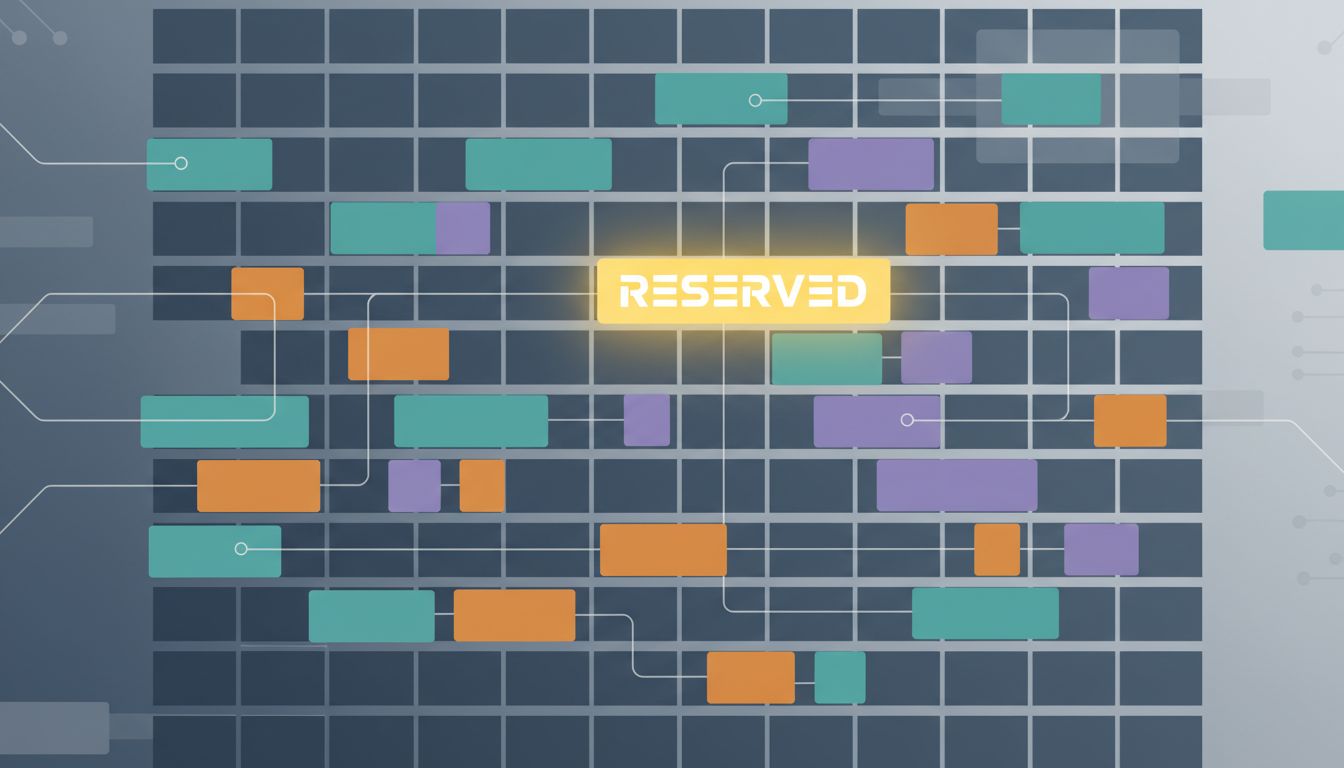
Shared calendar systems treat every unblocked hour as available time, so if you don’t claim your hours first, someone else will. Fake meetings are just a low-tech patch for a resource-allocation problem.
Your Calendar Is a Scheduling Algorithm With Bad Defaults
When you share a calendar with colleagues, you’re participating in a distributed scheduling system. Other people’s calendar apps query your availability, find open slots, and insert events. From the software’s perspective, an open hour and a productive hour look identical. There’s no field for “deep work in progress” or “I’m in the middle of something difficult.”
This is the core problem. Calendar software models time as a resource to be allocated, and its default assumption is that unallocated time is unclaimed. Which, if you think about it, is exactly how a job queue works in computing: idle CPU cycles get assigned to the next waiting task. You are the CPU. Everyone else’s requests are the queue.
The fake meeting is a hack. You’re inserting a dummy entry into the queue so the scheduler skips over that slot. It’s inelegant, but it works precisely because it operates within the rules of the system rather than fighting them.
Why This Matters More Than Simple Time Management
The productivity argument here isn’t just “protect your mornings” advice dressed up in fancier clothes. There’s a specific cognitive mechanism at stake.
Research on attention switching (the process of disengaging from one task and reorienting to another) consistently shows that the cost isn’t just the time lost during the interruption. It’s the time lost reconstructing context afterward. In software terms, think of your working memory as a cache. When you context-switch, you flush the cache. Rebuilding it takes time, and that rebuilding time is invisible to any external observer, including whoever just booked a 30-minute check-in during your best thinking hours.
Gloria Mark’s research at UC Irvine found that it takes an average of around 23 minutes to fully return to a task after an interruption. That number gets cited constantly, sometimes skeptically, but the direction of the finding is solid and replicated across different study designs. A single “quick” meeting inserted into a four-hour block doesn’t just consume 45 minutes. It can effectively eliminate the deep-work value of the entire surrounding window.
If you’ve ever noticed that multitasking doesn’t just hurt your focus today but actually trains your brain to prefer distraction, the fake meeting strategy addresses the upstream cause: preventing the interruptions that trigger the switching in the first place.
The Social Layer Nobody Talks About
There’s a second reason this works that has nothing to do with cognitive science. It’s organizational politics.
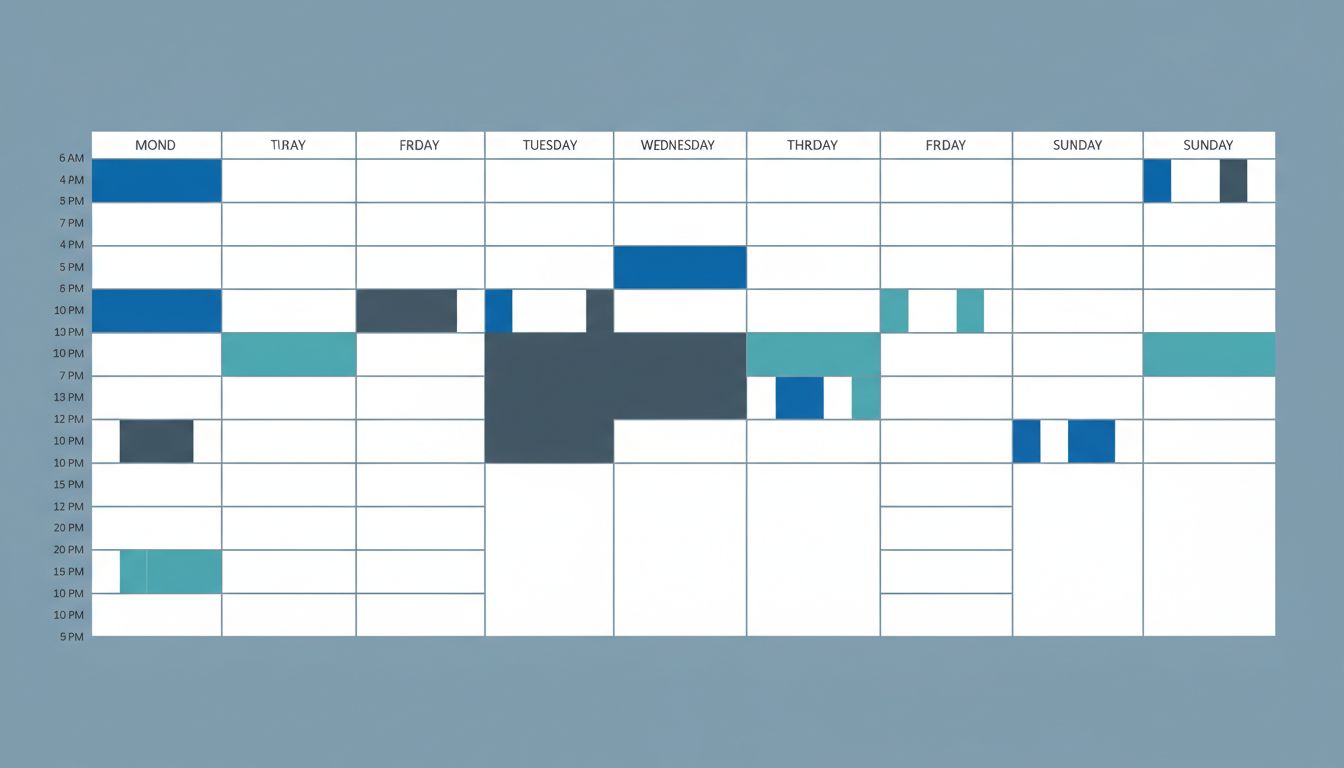
In most workplace cultures, a blocked calendar slot is socially protected in a way that a verbal “I need to focus this afternoon” is not. If you tell someone you’re busy Thursday morning, they’ll often push back or just wait until you seem free. If your calendar shows a meeting Thursday morning, the same person will look for a different slot without asking questions.
The fake meeting shifts the burden of justification. You no longer have to defend your time as worthy of protection. The calendar entry does that for you, and it does it in the language the system already respects.
This is uncomfortable to say plainly, but it’s true: in organizations where meeting culture is strong, the path of least resistance for protecting thinking time is to make that time look like a meeting. You’re not deceiving anyone in a meaningful sense. You’re translating your needs into the format the system understands.
How People Actually Implement This
The mechanics vary, but the most functional approaches share a few traits.
First, the blocks are recurring and pre-scheduled rather than added reactively. If you only block time after your calendar starts filling up, you’ve already lost. The logic is the same as deploying infrastructure before traffic spikes rather than during them: by the time you need the capacity, it’s too late to provision it cleanly.
Second, the most effective practitioners treat these blocks the same way they’d treat external commitments. They don’t cancel on themselves lightly. This sounds obvious until you realize how often people sacrifice their own blocked time first when scheduling pressure builds, precisely because there’s no external accountability.
Third, the label matters less than the habit. Some people use neutral labels like “Focus Block” or “Project Work.” Others use meeting-sounding names. The specific choice is less important than the consistency. Your colleagues will learn to read your calendar patterns over time, and a reliably blocked Thursday morning communicates something even without an explanation.
The Real Tradeoff Worth Acknowledging
This strategy has a cost that enthusiasm for it tends to understate.
Organizations with genuinely collaborative work sometimes suffer when individuals aggressively protect their calendars. If everyone on a team blocks large portions of their time, finding windows for legitimate coordination becomes genuinely difficult. There’s a coordination tax, and someone pays it.
The honest version of this advice is: fake meetings work well when the work you need to protect is primarily individual and cognitively demanding, when your environment has a culture of over-scheduling, and when you have enough social capital to occasionally decline meeting requests without it being read as hostility.
If your work is deeply interdependent and fast-moving, the same instinct (protecting cognitive resources) might be better served by using deliberately boring, low-friction communication tools that reduce the coordination overhead without requiring you to wall yourself off entirely.
The fake meeting is a tool. Like most tools, it solves a specific problem well and a different problem poorly. Understanding which problem you actually have is most of the work.