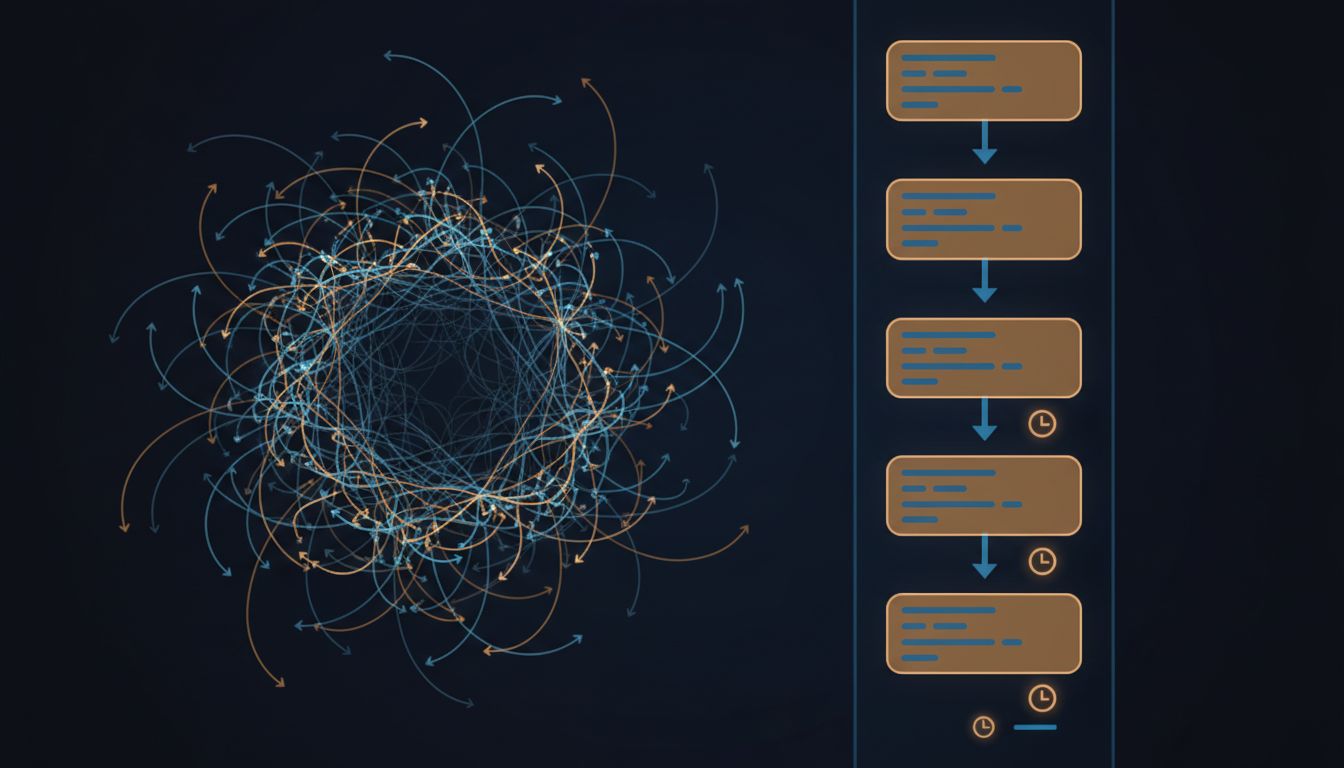
Most productivity advice treats interruptions like runtime exceptions: catch them, suppress them, log them somewhere you’ll never look, and move on. The goal, supposedly, is the longest possible unbroken stretch of focus. Deep work, maker schedules, notification blackouts. All of it built on the assumption that interruptions are pure noise, and that the optimal human brain is one that never gets interrupted at all. That assumption is wrong, and the developers, researchers, and high-output knowledge workers who figured this out have quietly reorganized their entire approach to time.
This connects to a broader pattern worth understanding: the most productive people often do the thing that sounds counterproductive on its surface. Tech workers accomplish more by deliberately breaking their own workflows, not by perfecting them. Scheduled interruptions follow the same logic.
Why Your Brain Is Not a Single-Threaded Process
Here’s the core problem with the “zero interruption” model. It treats your cognitive system like a single-threaded application: one task queue, one processor, one context at a time, and any context switch is overhead to be minimized. But your brain is closer to a distributed system with multiple processes running in parallel, including background processes you cannot directly observe.
When you work on a hard problem and then deliberately step away, something keeps running. Psychologists call this incubation. It’s the mechanism behind why you solve a debugging problem in the shower that stumped you for three hours at your desk. The background thread, so to speak, keeps processing. But here’s the thing: that background process needs inputs. It needs new data, new patterns, new stimuli. A well-timed interruption is a data injection into a process you can’t directly control but can absolutely influence.
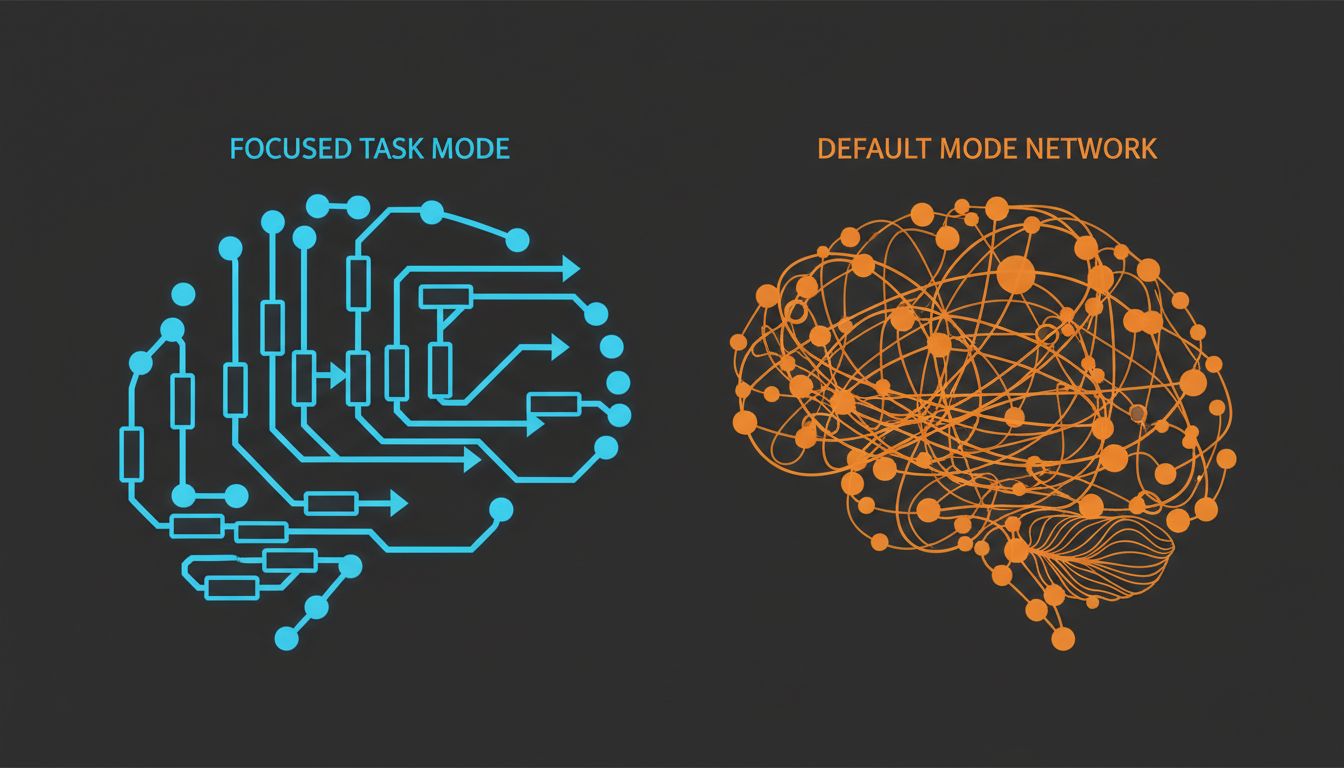
This is not a metaphor. Neuroscience research consistently shows that the default mode network, the brain’s “resting state” circuitry, is highly active during unfocused periods and plays a significant role in creative synthesis and problem solving. Suppressing every interruption suppresses every activation of that network.
The Scheduler Pattern, Applied to Your Day
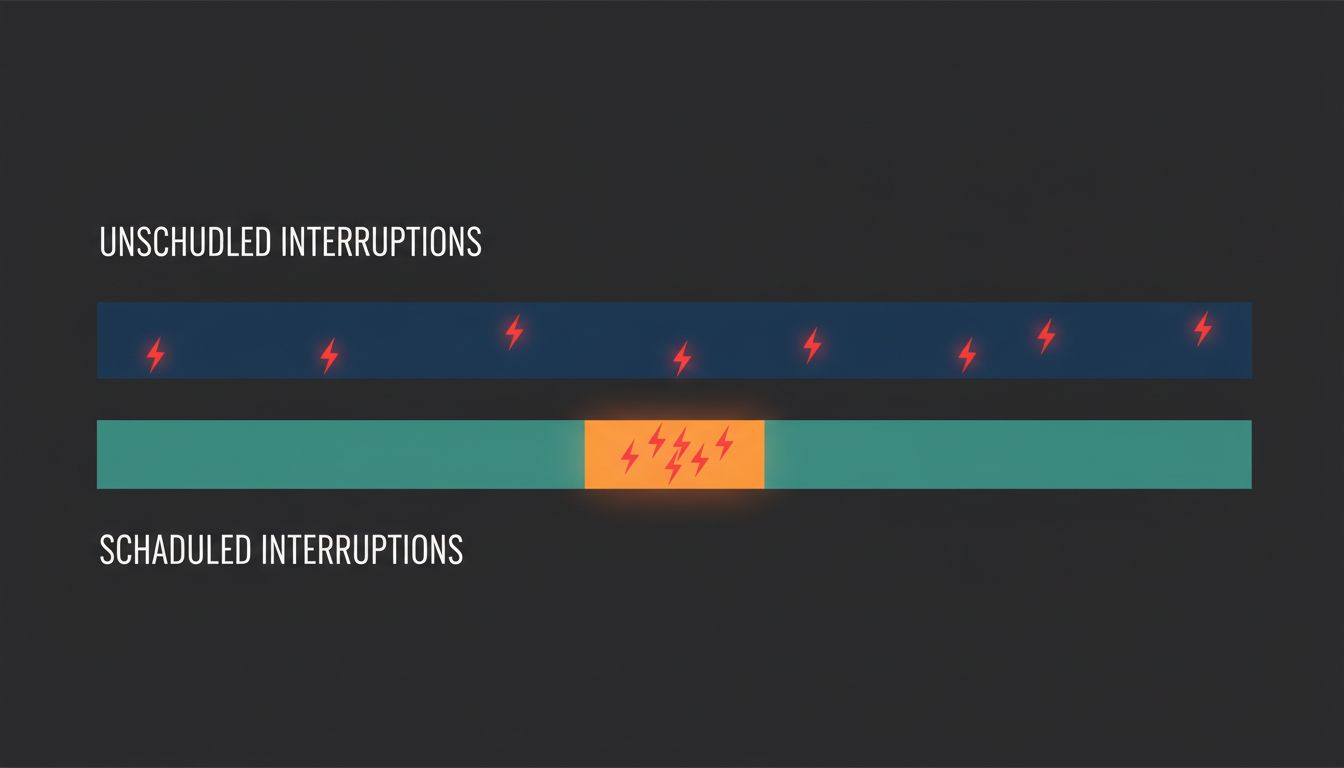
So how do top performers actually implement this? Not by accepting random interruptions, which is chaos, but by scheduling them with intent. Think of it like a job scheduler in a production system. You don’t let random processes interrupt your critical jobs at arbitrary times. But you also don’t run a single monolithic job forever with no checkpoints. You define interrupt windows. You allocate time slices. You make the system interruptible at safe points.
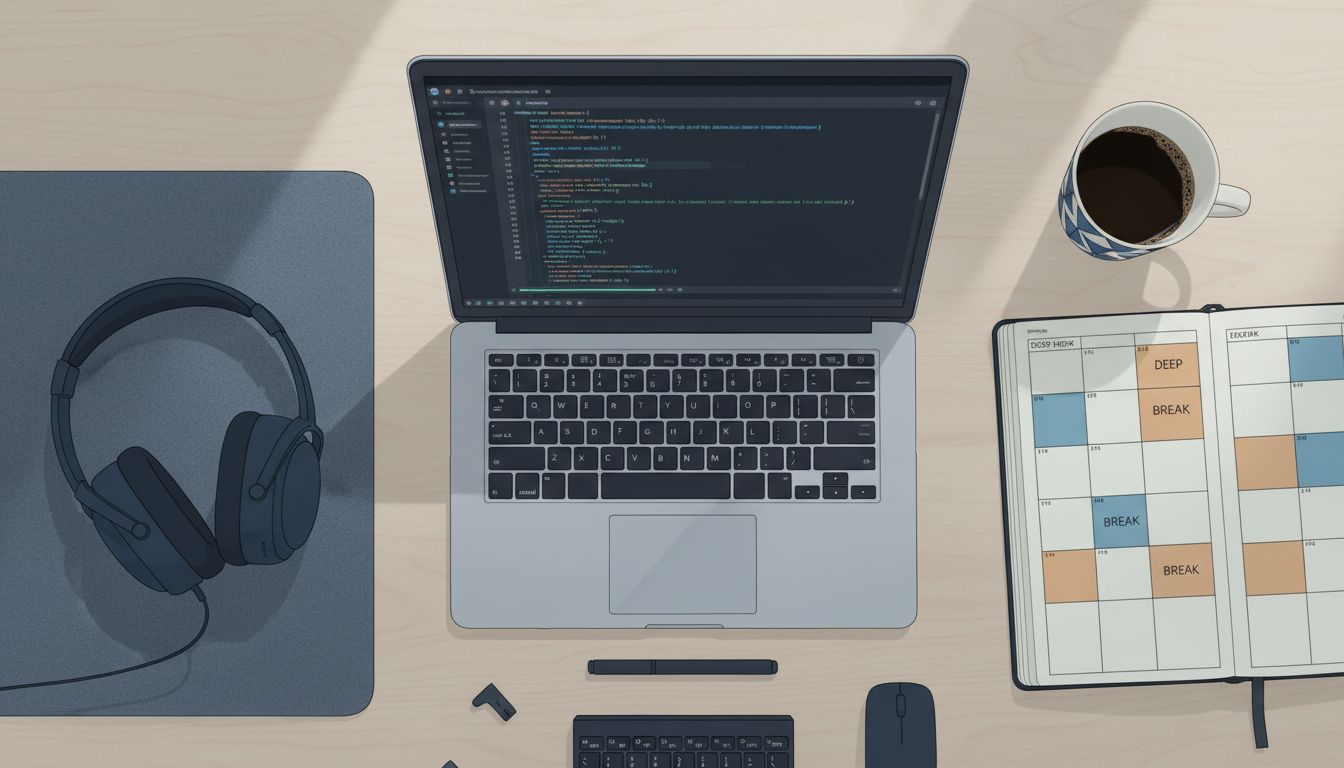
In practice, this looks like blocking out specific 15-to-20-minute windows two or three times during a deep work block, where interruptions are not just allowed but expected. You check Slack. You take a colleague’s question. You read something only loosely related to what you’re working on. Then you return. The key design constraint is that these windows are predictable and bounded. They are not reactive. You are not responding to every ping as it arrives. You are batching the interruptions and choosing when they occur.
This is meaningfully different from what digital calendars quietly encourage you to do, which is to treat every block of open time as available and every meeting as a hard interrupt that fires whenever someone else decides.
Cognitive Load and the Cost of Unplanned Context Switching
Here’s where it gets technical in a useful way. Cognitive load theory, developed by educational psychologist John Sweller, distinguishes between intrinsic load (the inherent complexity of the task), extraneous load (complexity added by poor task design), and germane load (the mental effort used to build long-term schemas). Unplanned interruptions almost exclusively add extraneous load. They force you to serialize your mental state, handle the interrupt, and then deserialize back into the original context. That deserialization is expensive and lossy.
Software engineers who’ve worked on context-switching in operating systems will recognize this immediately. Every context switch has a cost: registers need saving, caches go cold, TLB (translation lookaside buffer) entries may be invalidated. The operating system is designed to minimize unnecessary context switches while still allowing the system to be responsive. Your productivity system should be designed the same way.
When interruptions are scheduled, the deserialization cost drops dramatically. You know the interrupt is coming, so you reach a natural checkpoint before it fires. You leave yourself a comment, metaphorically speaking. A note, a partial sentence, a sticky flag in your working memory that says “resume here.” Unplanned interruptions don’t give you that grace period.
What You’re Actually Doing When You Schedule an Interruption
The deeper insight is that scheduling an interruption is an act of metacognition. You are thinking about how you think, and designing conditions that support the cognitive processes you want. This is the same instinct behind rubber duck debugging, where the act of explaining your problem to an inanimate object forces a perspective shift that your internally looping thoughts couldn’t achieve alone. Scheduled interruptions work on the same principle: you are engineering a break in your own loop.
Top performers who do this well also tend to be thoughtful about what fills the interrupt window. A short walk gives the default mode network room to run. A quick conversation with a colleague on a different problem seeds new pattern associations. Even skimming a loosely related article can introduce a concept that your background process cross-references with the hard problem you left parked. The interruption is not empty time. It’s a scheduled data import.

Building the System Without Breaking Your Flow
The practical implementation is straightforward, though it takes a few iterations to calibrate. Start by identifying your longest reliable focus block, probably two to three hours. Divide it into segments of roughly 50 to 70 minutes, with a 15-to-20-minute interrupt window between them. During deep segments, notifications are off. Full off. Not vibrate, not badge counts, not anything. During interrupt windows, everything is open, but the window has a hard end time.
Calendar this. Treat the interrupt windows as meetings with yourself that cannot be moved. If someone tries to schedule over a deep segment, that time is unavailable. If they try to schedule over an interrupt window, that’s actually fine, because you were going to be interruptible anyway.
The people who get the most out of this pattern are also usually the ones paying attention to making their most distracting apps genuinely invisible during deep segments, not just muted or minimized, but completely out of the visual field and out of the task switcher. The interrupt window is when those apps come back into scope. Not before.
This is the part most productivity frameworks miss. They try to eliminate interruptions entirely, which is both impossible and, as it turns out, counterproductive. The brain needs them. It just needs them on a schedule it can reason about, the same way any well-designed system needs maintenance windows, health checks, and the occasional garbage collection pass. Fight the interruptions and you fight your own cognition. Schedule them and you put that cognition to work.