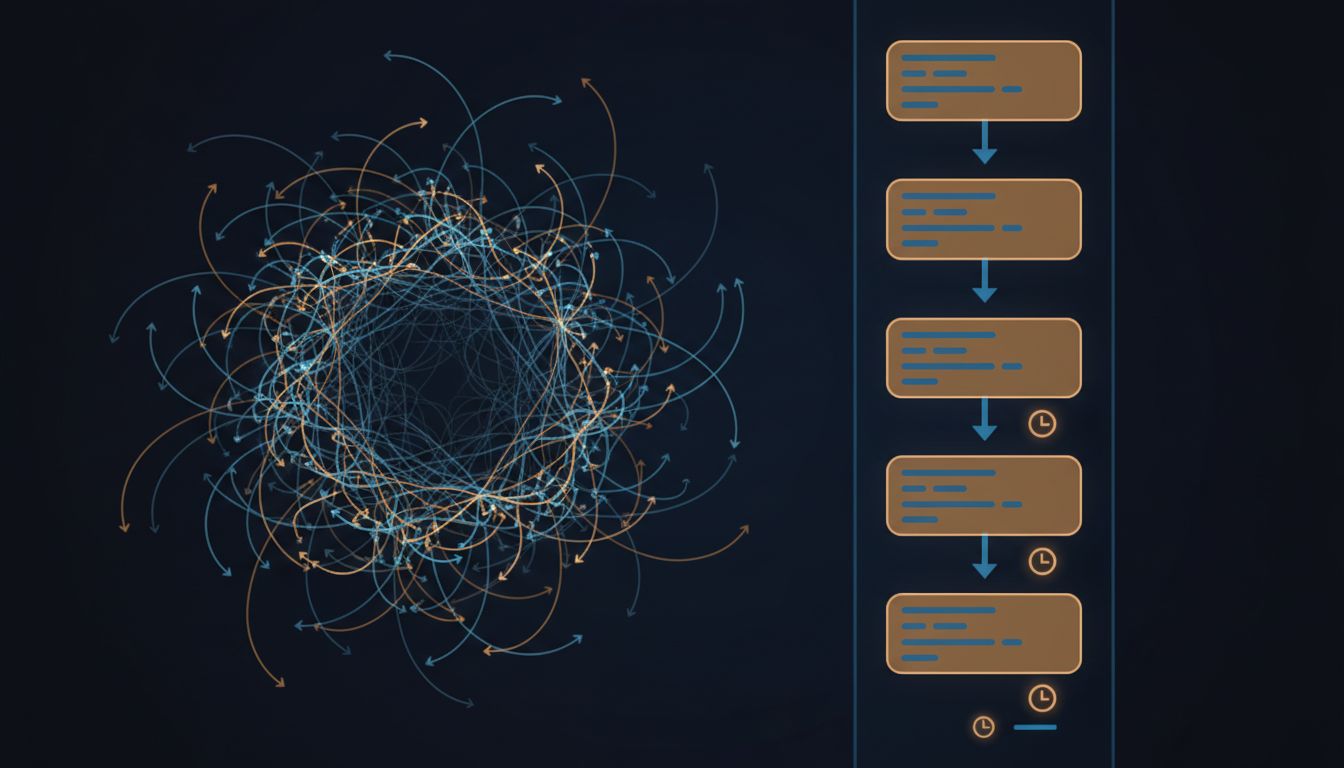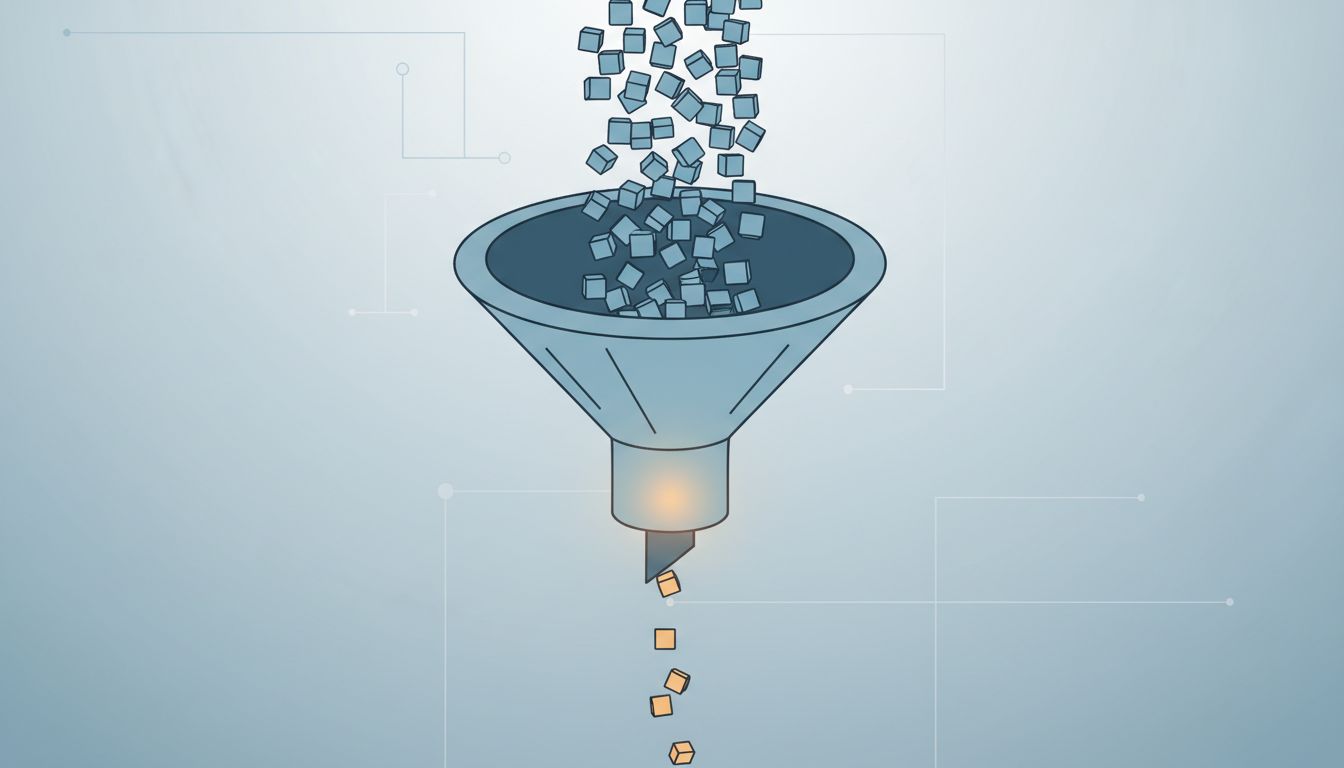
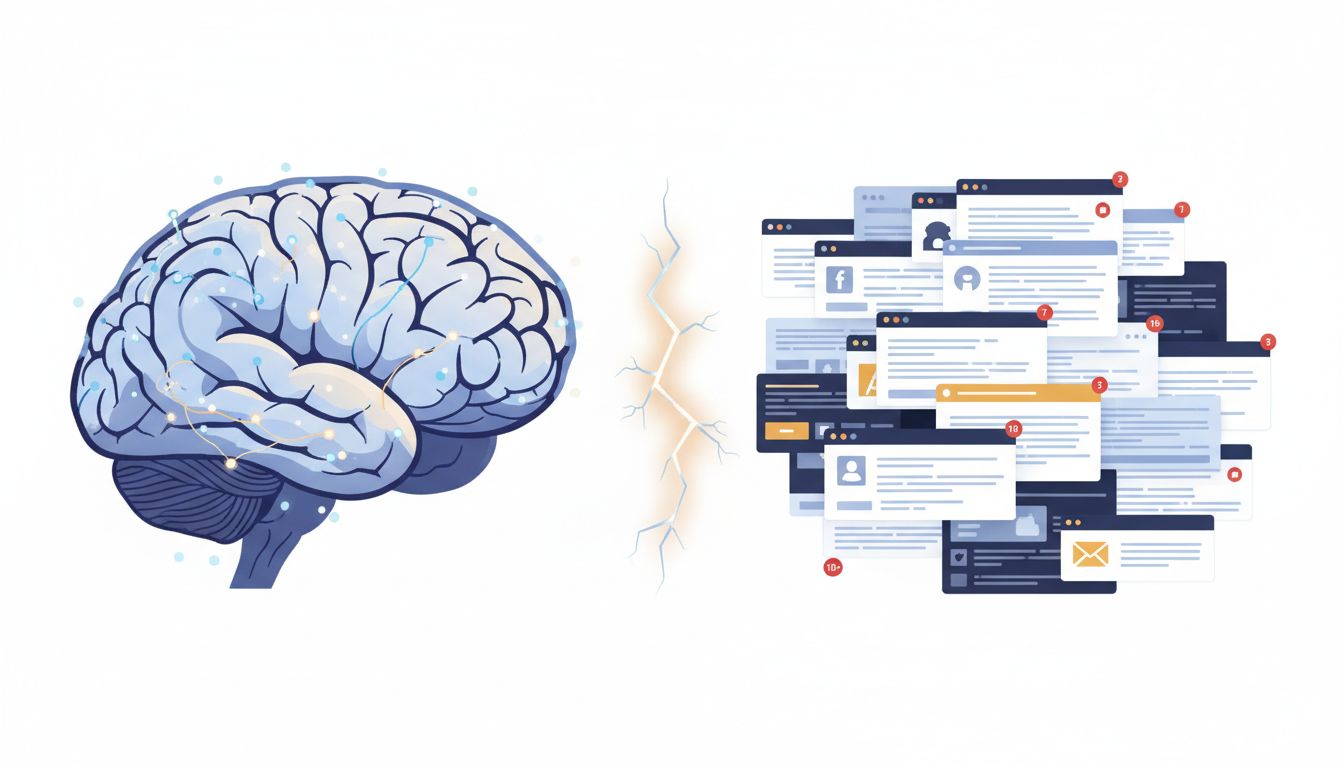
Every time you jump from a pull request review to a Slack thread to a budget spreadsheet, your brain doesn’t just change gears smoothly. It stalls. It burns fuel re-loading context, rebuilding mental models, and figuring out where it left off. Researchers call this residual attention, and the cost it extracts is real enough to have a name among high-performing knowledge workers: the context switch tax. Understanding this tax is not just an interesting piece of cognitive trivia. It is the single most practical lens you can apply to how you structure your workday.

If you have ever noticed that your best work happens in long, uninterrupted stretches, you have already felt the tax at work. What you may not have done yet is deliberately design your schedule around avoiding it. That is exactly what top performers do, and the process is more systematic than you might expect. As we have covered in our piece on digital minimalists outperforming power users, the brain allocates cognitive resources in ways that reward depth over breadth, and the context switch tax is a big part of why.
What the Context Switch Tax Actually Costs You
The research on task-switching has been building for decades. Studies from the American Psychological Association have found that switching between tasks can cost you up to 40 percent of productive time. That is not a rounding error. That is nearly half your day evaporating into transition friction.
The tax has three components. First, there is the ramp-up cost, the time it takes to reload the context of whatever you are returning to. Second, there is the residual attention cost, where part of your brain stays attached to the previous task even after you have nominally moved on. Third, there is the decision fatigue cost, because every switch requires a micro-decision about priorities, and those decisions add up.
The workers who consistently outperform their peers are not necessarily smarter or more disciplined in some abstract sense. They have simply learned to minimize all three components. They build their days so that context switches are rare, deliberate, and scheduled rather than constant and reactive.
The Three-Zone Day
The most effective framework for managing the context switch tax is what productive teams call the Three-Zone Day. You divide your working hours into three distinct zones, each designed around a different cognitive mode.
Zone 1: Deep Work (2 to 4 hours, ideally morning). This block is for your highest-complexity tasks, the ones that require sustained focus and active problem-solving. No meetings, no notifications, no email. You pick one to three items that genuinely move the needle and you work on nothing else. The key is ruthlessness: if a task does not belong here, it belongs in Zone 2 or 3.
Zone 2: Collaborative and Reactive Work (1 to 3 hours, mid-day). This is your communication window. You respond to messages, join meetings, and handle anything that requires input from others. Because you are already in a context-switching mindset, the tax of bouncing between conversations is much lower here. Batching your reactive work this way is the same principle behind why the most productive teams stopped using real-time collaboration tools across the whole day, reserving synchronous communication for intentional windows.
Zone 3: Administrative and Maintenance Work (1 to 2 hours, late day). Low-cognitive-load tasks go here. Updating tickets, reviewing documentation, processing your inbox to zero, scheduling. Your brain is often less sharp in the late afternoon, so you are not wasting peak capacity on work that does not need it.
The magic of this structure is not any single zone in isolation. It is the way grouping similar cognitive modes together keeps the tax low across the entire day.
How to Calculate Your Own Tax Rate
Before you redesign your schedule, it helps to know what you are actually paying. Spend one week tracking every context switch. Every time you shift from one type of task to another, write down the time and what you switched from and to. After five days, you will have a clear picture of your personal tax profile.
Most people who do this exercise are shocked. They find they are switching tasks every 10 to 15 minutes on average, often without realizing it. Your calendar is not helping here either. As we explored in how digital calendars quietly sabotage your deadlines, the way most scheduling tools work actively encourages fragmentation by making it easy to pack meetings into every available slot without accounting for transition time.
Once you have your baseline, you can start making targeted changes. A good initial goal is to reduce your daily switches by 30 percent in the first two weeks. That is achievable without overhauling everything at once.
The Setup Rituals That Make Zones Work
Zones only hold up if you have rituals to enter and exit them cleanly. Without a clear entry ritual, Zone 1 bleeds into Zone 2 before you have done anything meaningful. Without an exit ritual, the residual attention from deep work follows you into your collaborative window and makes you less present.
Here is what works. Before entering Zone 1, spend five minutes writing down exactly what you intend to accomplish. Be specific. Before closing Zone 1, spend two minutes writing where you left off and what the next concrete action is. This offloads the memory burden to paper or your notes app, which frees your brain to actually switch contexts cleanly.
For Zone 2, a quick review of your messages before the window opens lets you triage and prioritize. You respond to what matters and archive what does not. When Zone 2 ends, you close all communication apps completely. Not muted. Closed.
These rituals take less than ten minutes combined, and they are the difference between zones that stick and zones that collapse by Tuesday afternoon.
The Compound Effect Over Time
The reason top performers swear by this approach is not just the daily gain. It is the compounding. When you spend weeks and months primarily in deep work during your best cognitive hours, you produce work of a fundamentally different quality. You develop expertise faster. You solve harder problems. You build momentum that shallow, fragmented work simply cannot generate.
There is also a recovery dimension worth noting. Protecting your deep work time and deliberately ending your reactive window at a set hour is closely related to why top performers who take one day fully offline each week actually see their output go up. The brain needs not just focused time but true rest, and the Three-Zone Day creates a structure where rest is built in at the daily level rather than accumulated as a debt you pay on weekends.
You do not need a perfect schedule to start. Pick your Zone 1 window for tomorrow, block it in your calendar, turn off notifications for that period, and write down the one thing you most need to finish. That is the whole system in miniature. The context switch tax is real, it is costing you every single day, and the good news is that you can start reducing it within the next 24 hours.