
The Bug You Solve in the Shower
Every developer has had this experience. You’ve been staring at a gnarly bug for three hours. You close the laptop, go make coffee, and somewhere between the grind and the pour, the solution appears fully formed. You didn’t think about it. You weren’t trying. It just surfaced.
This isn’t magic, and it isn’t luck. It’s a fairly well-understood cognitive process that top performers have learned to trigger intentionally. The informal name for the practice is productive procrastination, though that label does it a disservice. It’s not really procrastination at all. It’s more like deliberately handing a problem off to a part of your brain that works better without your conscious interference.
Understanding the mechanics of this is genuinely useful. Once you see what’s happening, you can start treating it as a technique rather than a happy accident.
What Your Brain Is Actually Doing When You Stop Trying
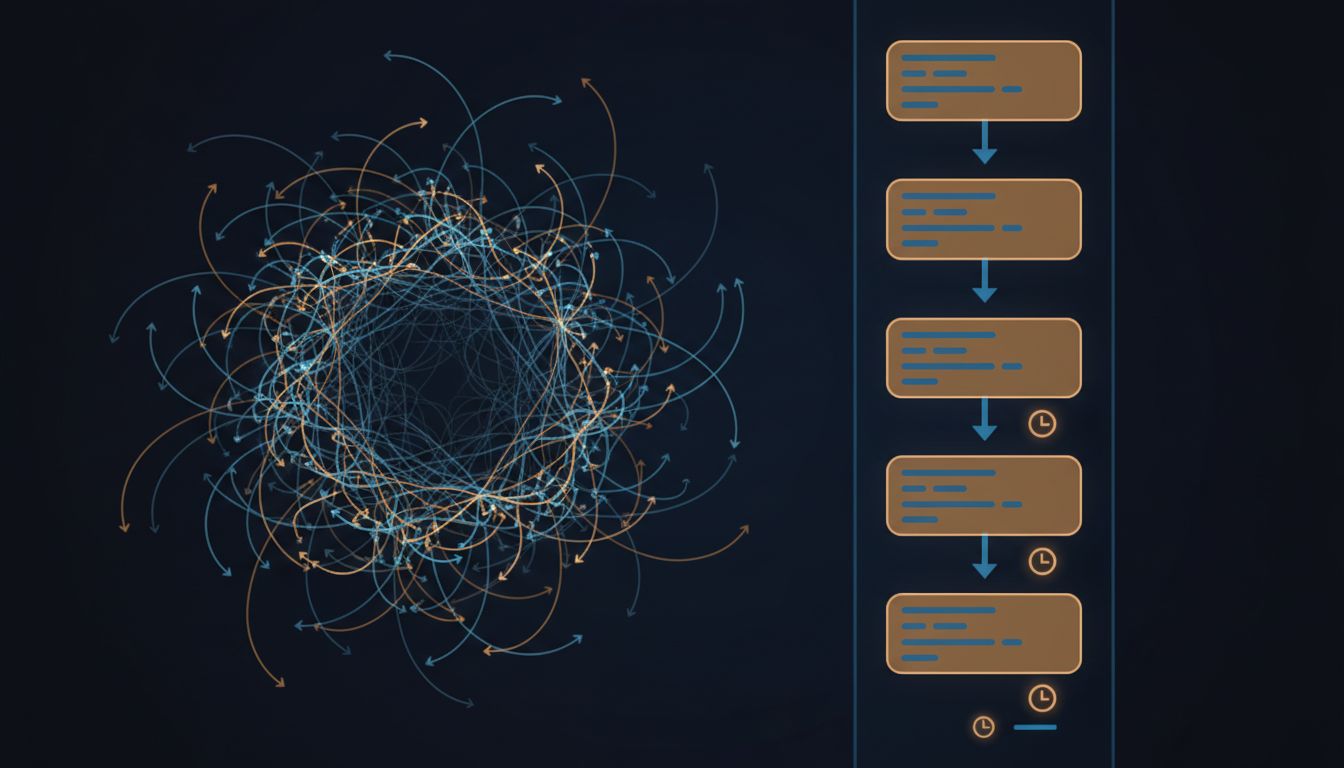
The relevant concept here is diffuse thinking, a term associated with neuroscientist Barbara Oakley’s work on learning and problem-solving. Focused thinking is what you do when you’re directly attacking a problem: concentrated, sequential, working within established patterns. Diffuse thinking is what happens when your attention relaxes. The brain shifts into a broader activation mode, making connections across areas that focused thinking doesn’t reach.
Think of focused thinking like a spotlight. It illuminates exactly where you’re pointing it, which is great for executing known procedures. Diffuse thinking is more like ambient lighting. Less intense, but it covers the room. Problems that require novel connections between distant ideas (most of the interesting problems in software) are often better served by the ambient mode.
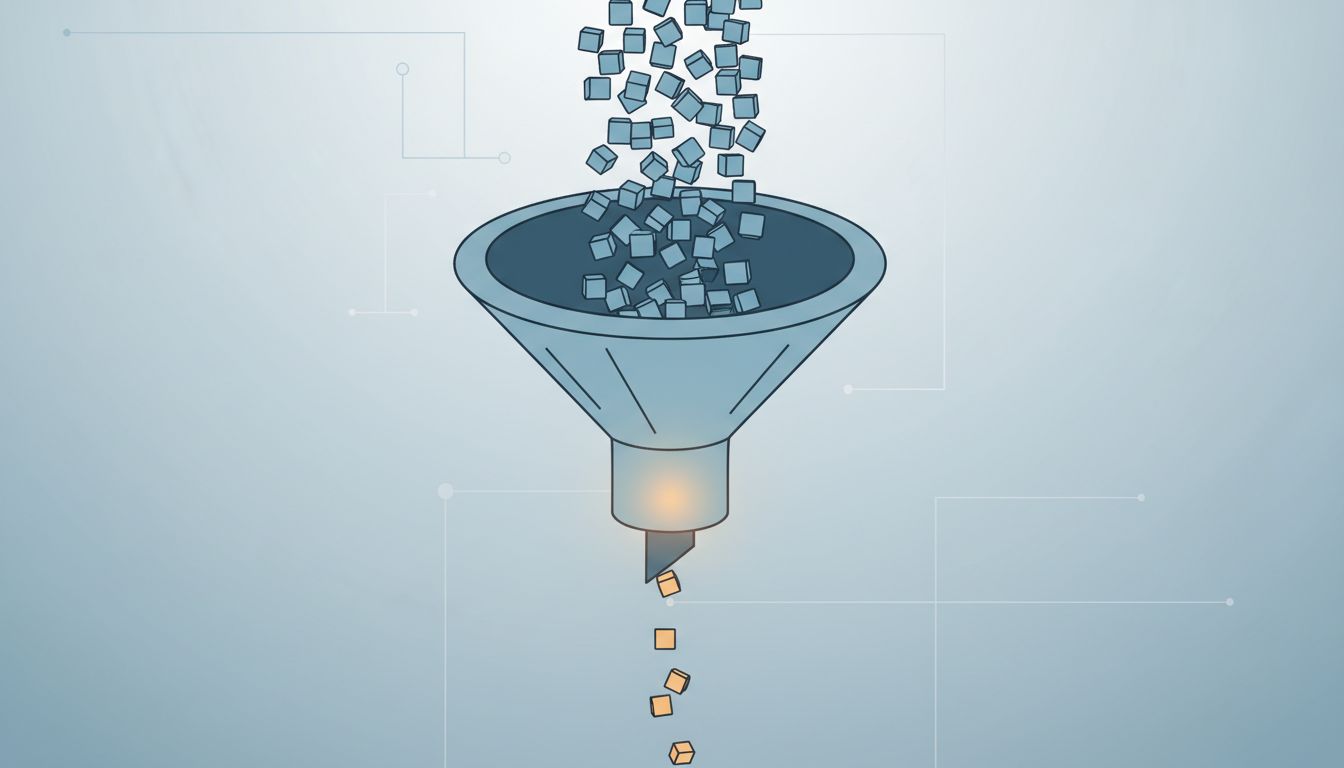
The reason focused thinking can actually block solutions is a phenomenon called fixation. Once you’ve committed to a mental model of a problem, your brain tends to search for solutions within that model. You’re essentially grepping the same directory over and over. Stepping away forces a context switch, and when you come back, you often approach the problem from a different angle without consciously deciding to.

This maps directly onto what happens when you’re debugging. You’re convinced the issue is in the authentication middleware. You’ve read that code fifteen times. The problem is actually in how a downstream service handles null tokens, three layers away. A fresh perspective, even just a ten-minute walk, can dislodge the fixation entirely.
The Specific Conditions That Make It Work
Here’s where productive procrastination differs from regular procrastination. It requires deliberate loading before you step away.
The technique only produces results if you’ve done the focused work first. You need to have genuinely wrestled with the problem, loaded all the relevant context into working memory, tried approaches that didn’t work, and hit a wall. That friction isn’t wasted effort. It’s the input to the diffuse process. Without it, you’re not running background processing. You’re just avoiding work.
The analogy I find most useful is compiler precompilation. Before your code can be optimized at build time, it needs to be parsed and analyzed. The optimization step looks fast, but it depends entirely on the expensive analysis that came first. If you skip the analysis, there’s nothing to optimize.
After loading the problem, the second condition is genuine disengagement. This is harder than it sounds. Checking Twitter between attempts doesn’t count. The activities that reliably produce results share a common property: they occupy the focused, verbal, sequential mind just enough to stop it from continuing to grip the problem, while leaving enough cognitive capacity for background processing. Walking, showering, doing dishes, light exercise. Interestingly, activities that demand full attention (a hard conversation, a stressful commute, a new video game) tend to interrupt the background process rather than enabling it.
Sleep is the extreme version of this. The research on sleep consolidation is robust: memory traces laid down during waking become more stable and more integrated during sleep, particularly during REM stages. Many experienced developers report that genuinely hard architectural problems benefit from sleeping on them, not as a figure of speech, but as an actual strategy. You load the problem thoroughly in the evening, you wake up with a different relationship to it.
Why High-Performers Treat This as Infrastructure, Not Accident
Most people experience the shower insight and feel grateful for the fluke. Top performers structure their work to make it repeatable.
This usually looks like a few specific practices. First, they maintain a list of loaded problems, problems they’ve actively worked on and not yet solved, which they rotate through diffuse processing. Rather than grinding on one problem until it breaks or they break, they load it, let it sit, and bring fresh focus to it the next day while working on something else.
Second, they protect certain transitions. The walk to get coffee isn’t an interruption to work. It’s part of the processing cycle. This is why many senior engineers are particular about office environments in ways that can look like fussiness to outsiders. An open-plan office where every transition is socially loaded makes the diffuse phase harder to access. The mild social anxiety of navigating a crowded floor activates exactly the kind of focused, verbal thinking that prevents background processing.
Third, they capture aggressively. The moment of insight from diffuse processing is often fragile. The connection surfaces and, without reinforcement, disappears. Top performers have trained themselves to immediately record whatever emerges, in whatever form works, voice memo, scribbled note, a message to themselves in Slack. The idea here is not to lose the output of the background process before the focused mind can work with it.
The Difference Between Loading and Spinning
There’s a failure mode worth naming: what looks like productive procrastination but is actually just anxiety cycling.
Anxiety cycling is when you think about a problem repeatedly without making progress. You’re not doing focused work on it (which requires sitting down and actually engaging) and you’re not genuinely disengaged from it either. You’re running a loop that consumes cognitive resources without producing output. It’s the equivalent of a process that’s spinning at 100% CPU without actually doing computation, just waiting on a lock it’s never going to acquire.
The distinction from genuine productive procrastination is that loading requires an attempt, not just worry. If you’ve been thinking about a problem for days without actually sitting down to work on it, you haven’t loaded it. You’ve just generated ongoing low-level stress about it. That stress doesn’t enable diffuse processing. It actively interferes with it.
This is also why top performers tend to use fewer tools rather than more. Each open loop in your system, each undone task that lives in an ambiguous state, creates a small persistent load on working memory. The cognitive overhead of tracking many partially-loaded problems prevents the genuine disengagement that diffuse processing requires.
Hard Problems That Actually Benefit From This
Not all work responds to this technique the same way. Execution tasks, work where you know exactly what to do and need to do it, generally don’t benefit from stepping away. Writing a function you’ve already mentally specified, filling out a form, cleaning up indentation. These just need time and attention.
The technique is specifically valuable for problems where you don’t yet know the right approach. Architectural decisions with significant tradeoffs. A bug that doesn’t make sense given your current model of the system. A design problem where multiple approaches seem equivalent but something feels wrong. Cases where you’re essentially trying to generate a novel hypothesis rather than execute a known procedure.
In practice, a good heuristic is whether you’re making progress with additional time. If the marginal hour of focused work is still producing movement, keep going. If the second hour produced less than the first, and the third less than the second, you’ve likely hit fixation and the additional time is creating diminishing returns at best and entrenchment at worst. That’s the signal to stop, load completely, and let it sit.
This is actually the same principle behind the rubber duck debugging approach, which works partly because explaining a problem out loud forces a re-encoding that can break fixation, and partly because narrating your assumptions makes them visible. The cognitive mechanism behind rubber duck debugging is closer to productive procrastination than most people realize: both are techniques for escaping the trap of your own mental model.
What This Means
Productively stepping away from a hard problem is a learnable technique, not a personality trait of lucky people who happen to think in the shower.
It requires real prior engagement with the problem (not avoidance dressed up as strategy), genuine disengagement that occupies the focused mind without overwhelming it, and reliable capture of whatever surfaces. The supporting behaviors, protecting transitions, maintaining a list of loaded problems, sleeping on architectural decisions, are infrastructure rather than superstition.
The reason this gets mislabeled as procrastination is that it looks, from the outside, like not working. In terms of keystrokes and screen time, it is not working. But the cognitive process that produces novel connections in hard problems often runs better without your direct supervision. The skill is knowing when to step back, having loaded the problem well enough that there’s actually something to process.