
When two AI models give contradictory answers to the same question, most people treat it as a curiosity. “Interesting, they disagree.” What they should be asking is: what does it mean to get an answer from a system where the concept of correctness is this slippery?
My position is blunt: AI model disagreement isn’t evidence of productive epistemic diversity. It’s a reliability problem that the industry has reframed as intellectual richness to avoid confronting what it actually reveals about how these systems work.
There Is No Ground Truth These Models Are Approximating
When two calculators give different results for 847 times 23, you know immediately that at least one is broken. The disagreement is diagnostic. But when GPT-4 says the French Revolution began primarily because of fiscal crisis and Claude emphasizes social stratification, there’s no equivalent ground truth to appeal to. Both answers are defensible. Both are also incomplete. The disagreement doesn’t tell you which model is right. It tells you that the question admitted multiple framings, and each model’s training weighted those framings differently.
This sounds fine until you realize that most real-world use cases aren’t asking about historiographical nuance. They’re asking things like: “Is this drug interaction dangerous?” or “Is this contract clause enforceable?” In those domains, “both answers are defensible” is not a comfort. It’s a warning.
Large language models (LLMs) don’t compute answers from first principles. They generate statistically likely token sequences given a prompt. Two models trained on overlapping but non-identical data, with different architectural choices and fine-tuning objectives, will produce outputs that reflect those differences. The disagreement is a side effect of how the systems were built, not a property of the question’s genuine complexity.
Averaging Disagreement Doesn’t Produce Truth
The obvious engineering response to model disagreement is ensembling: run multiple models, take a majority vote or synthesize their outputs. This works reasonably well for certain classification tasks. It does not work well for reasoning under uncertainty.
If three models tell you a medical dosage is safe and two say it’s dangerous, the majority vote is not the right answer. The right answer requires knowing why they disagree, which requires interpretability tools we largely don’t have yet. Without those tools, you’re not resolving disagreement. You’re averaging confidence, which is a different thing entirely. Confident wrong answers outvote uncertain right ones.
The deeper problem is that correlated errors don’t cancel out. If all five models were trained on a corpus that underrepresents certain patient populations, their disagreements will cluster around a shared blind spot. This is structurally similar to why redundant systems fail together under the right conditions: redundancy only helps when failures are independent, and in ML systems trained on overlapping data, they rarely are.
Disagreement Gets Laundered Into Plausible Authority
Here’s what actually happens when AI models disagree in production: most users don’t see the disagreement. They see one answer, from one system, presented with the same confident tone as every other answer that system has produced. The disagreement happened upstream, was resolved by some combination of model selection and prompt engineering, and the output arrived stripped of any uncertainty signal.
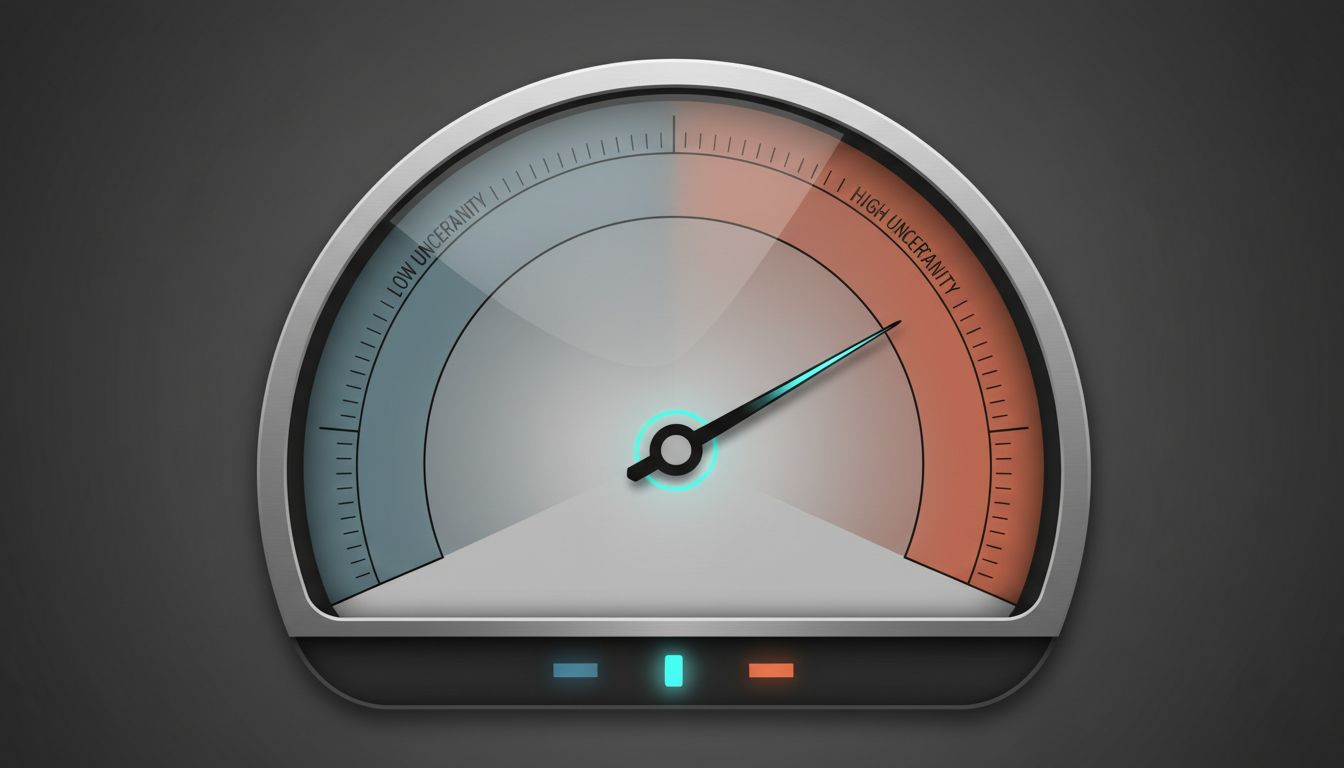
This is where the reliability problem becomes an honesty problem. A doctor who says “I’m not sure, the literature is mixed” is giving you accurate information about the state of knowledge. An AI that internally produces conflicting candidate outputs and then surfaces the highest-probability one with no hedging is hiding the uncertainty that should inform how much you trust the answer.
Some teams are working on calibrated uncertainty outputs, which is the right instinct. But most deployed consumer products don’t surface this, because “I’m not sure” is a terrible user experience metric. The incentive is to appear certain, not to be accurate about certainty.
The Counterargument
The charitable reading of model disagreement is that it reflects genuine ambiguity in the world. Complex questions don’t have single correct answers, and different models surfacing different valid perspectives is actually useful. You’d want multiple advisors to disagree with each other sometimes. A world where all models agreed perfectly would suggest they were all trained to output the same thing, which is its own problem.
This is true, and I’m not dismissing it. The issue is context-sensitivity. For genuinely open-ended questions where multiple framings are valid, surfaced disagreement is useful signal. The problem is that the systems don’t reliably distinguish between “this question is genuinely ambiguous” and “we don’t have enough signal to be confident here.” Those are different situations that require different responses from the user, and current systems mostly collapse them together.
The counterargument also assumes disagreement is being surfaced to users, which it usually isn’t. The valuable version of this argument requires transparency infrastructure that most deployments don’t have.
What This Actually Requires
If you’re building on top of LLMs, model disagreement should be a trigger for human review, not a curiosity to log and ignore. The cases where your models disagree most are the cases where your confidence should be lowest, which is exactly when the stakes of being wrong are highest.
The field needs better calibration: systems that express uncertainty proportional to their actual reliability. This is technically hard but not impossible. Researchers working on Bayesian approaches to neural networks and conformal prediction (a statistical technique for producing prediction intervals with formal coverage guarantees) are making progress. But most production systems aren’t using these approaches yet.
When two AI models disagree, the correct response isn’t to pick one, average them, or assume the question is genuinely hard. The correct response is to treat the disagreement as evidence that the system is operating outside its reliable envelope. That’s useful information. Ignoring it because it complicates the product roadmap is how systems cause harm quietly, one confident wrong answer at a time.