There is something almost embarrassing about admitting you use a paper notebook when you work in tech. You spend your days reasoning about distributed systems, debating framework choices, and shipping code that runs on servers you will never physically touch. And yet, there it is on your desk: a beat-up Leuchtturm or a spiral-bound legal pad, covered in diagrams and half-formed thoughts. If this describes you, you are in good company, and there is a more rigorous explanation for this habit than simple nostalgia.
The pattern shows up consistently among high-output engineers, founders, and researchers. People who have access to every productivity tool imaginable, from Notion to Linear to Obsidian, still default to pen and paper for certain categories of thinking. Understanding why this happens requires thinking about cognition the way you might think about a software architecture problem.
Your Brain Has a Memory Hierarchy Too
If you have worked with computer architecture at any level, you know about the memory hierarchy: registers, L1/L2/L3 cache, RAM, disk. Each layer is faster but smaller than the one below it. Your brain operates on a similar principle. Working memory (think of it as your mental L1 cache) is fast but extremely limited. Most research puts the capacity at roughly four chunks of information at once, not the famous “seven plus or minus two” that older studies claimed.
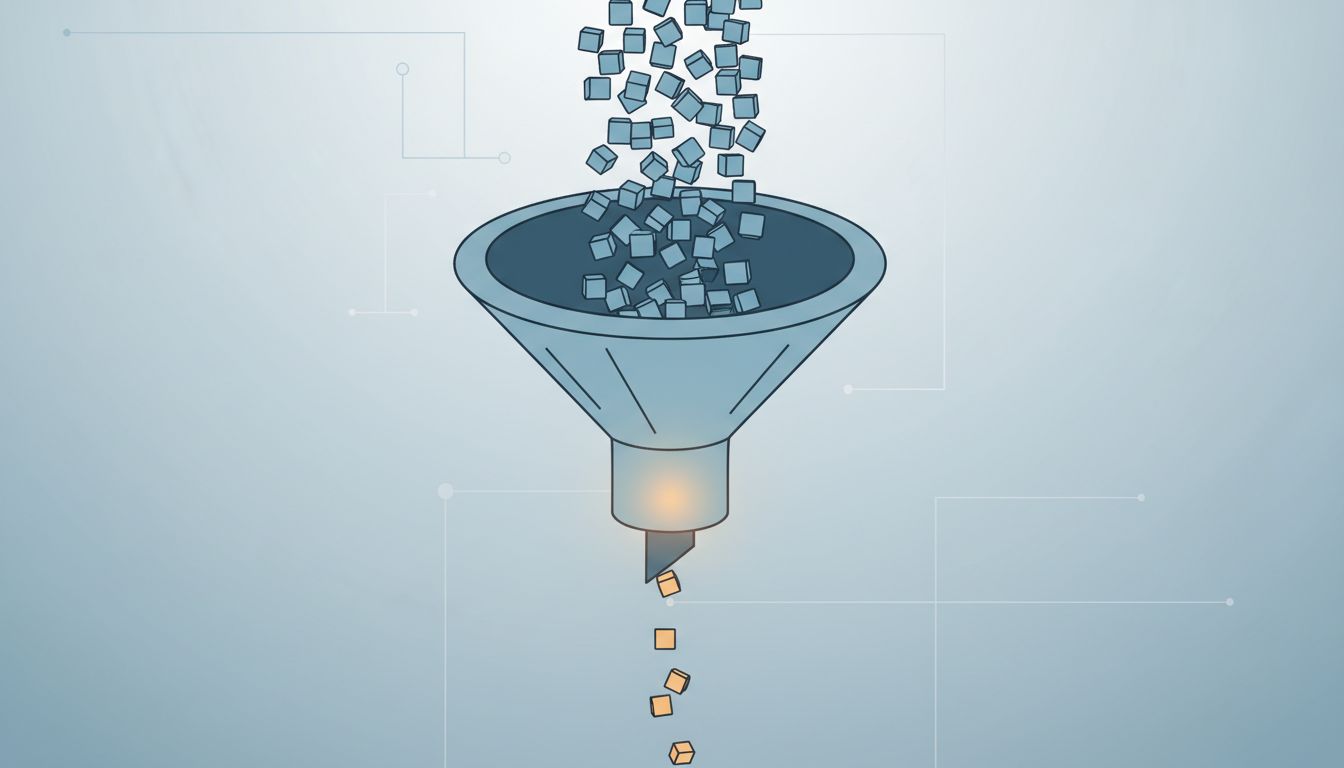
Here is where analog tools earn their keep. When you write something down by hand, you are not just offloading a memory item to external storage, you are also processing it differently. Studies using fMRI scans show that handwriting activates regions of the brain associated with language, memory encoding, and motor learning simultaneously. Typing, by contrast, is closer to a simple input operation. You are transcribing, not encoding. The physical act of forming letters with a pen forces a kind of lossy compression on your ideas, and that compression is actually useful. You cannot write as fast as you can type, so you are forced to summarize, prioritize, and restate things in your own words.
This is analogous to the difference between copying a config file and actually understanding what each line does. The outcome looks similar, but the internal state is completely different.
The Notification Problem Is an Interrupt Handler Problem
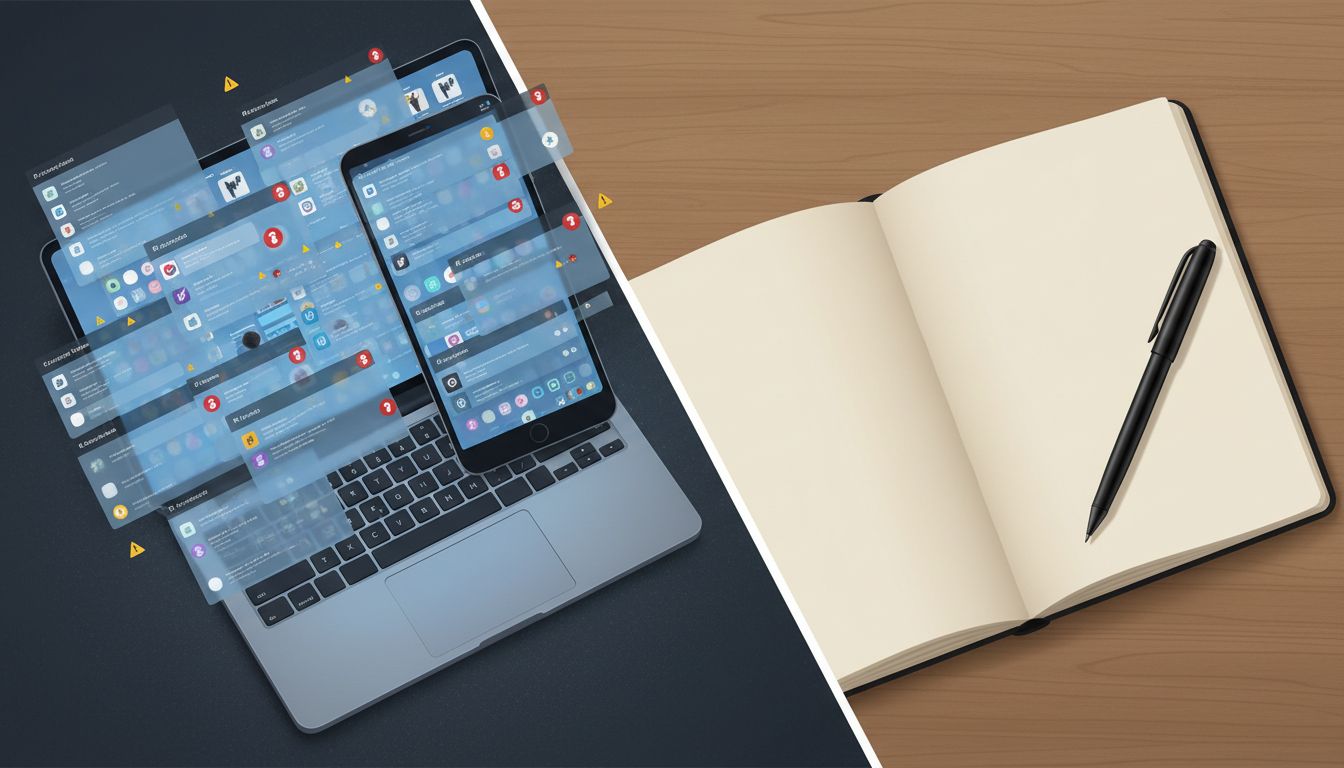
Every operating system has an interrupt handler, a mechanism that lets external events (a keystroke, a network packet) pause the currently running process and redirect CPU attention. Digital tools, almost without exception, are designed to trigger your brain’s interrupt handler constantly. This is not accidental. As we have covered in how machine learning algorithms decide what you see on social media, the entire attention economy is built around maximizing the frequency of these interrupts.
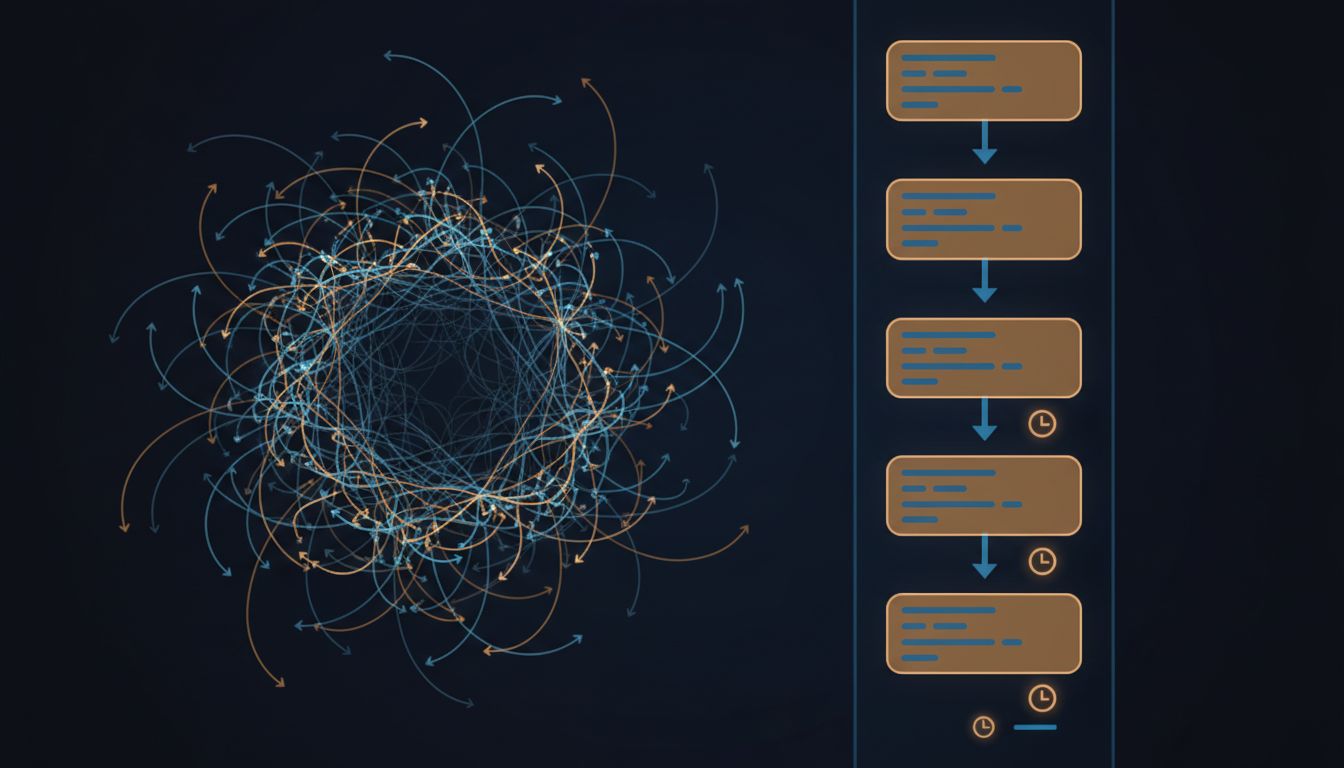
The problem for deep work is that context switching is expensive. Any developer who has been pulled out of a flow state by a Slack notification knows this intuitively. Research from Gloria Mark at UC Irvine found that it takes an average of over 23 minutes to fully return to a task after an interruption. A paper notebook cannot ping you. It cannot surface a related note from three months ago with an algorithm’s idea of relevance. It does exactly what you ask of it and nothing more. That constraint, which looks like a limitation, is actually the feature.
This is also why the design choices embedded in our tools matter more than we usually admit. The color psychology that tech giants use to keep you engaged is baked into every interface you open, including your note-taking apps. A blank page has no such agenda.
Analog as a Forcing Function for First-Principles Thinking
Here is a pattern you see in post-mortems from successful founders and senior engineers: the best decisions often came from stepping away from the screen. This is not mysticism. It is what happens when you remove yourself from the tool and its embedded assumptions.
Every productivity app encodes an opinion about how work should be structured. Jira implies that work is a queue of tickets. Notion implies that knowledge is a hierarchy of nested pages. These metaphors are useful but also constraining in ways that are easy to miss precisely because you are inside them all day. A blank piece of paper has no such opinion. You can draw a graph, write a poem, sketch a system diagram, or just dump a mess of thoughts without the tool trying to normalize your structure into its schema.
This connects to a broader principle that comes up repeatedly in founder and engineering contexts. The most durable insights tend to come from ignoring existing patterns and reasoning from scratch. It is the same instinct that drives experienced teams to sometimes question whether a legacy architecture decision still makes sense, even when everyone has long since stopped questioning it. There is a reason, after all, that Google and Meta still run on programming languages from the 1970s: sometimes the oldest tools survive because they were designed around fundamental constraints rather than current trends.
How to Use Analog Tools Without Going Full Luddite
Nobody is suggesting you throw away your task manager or stop using version control. The practical approach is about recognizing which categories of thinking benefit from the low-interrupt, high-encoding properties of analog tools.
A few patterns that work well in practice:
Morning brain dumps. Before opening any app, spend ten minutes writing longhand. No structure required. This is essentially a cache flush, clearing your working memory of overnight-accumulated anxieties and half-formed ideas before you start loading new context.
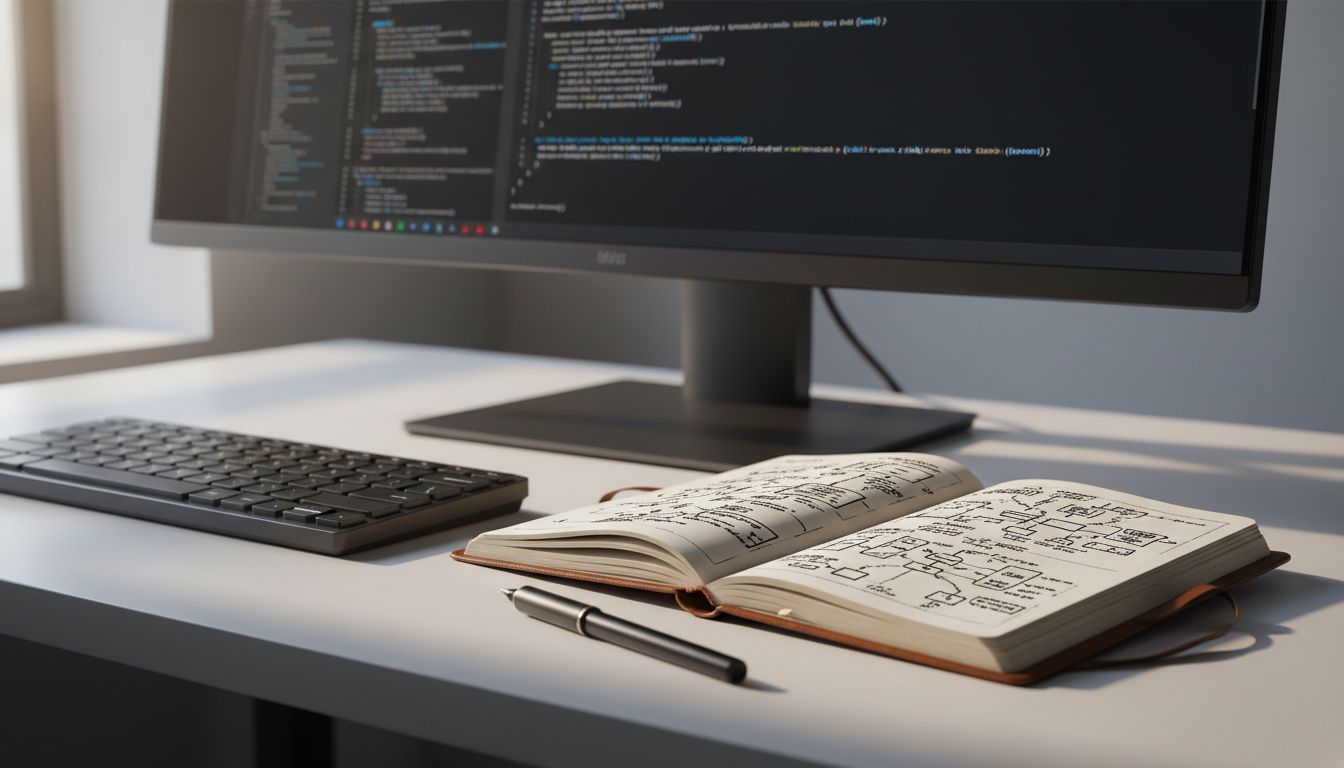
Design sessions on paper first. Before you open a diagramming tool or a whiteboard app, sketch the system on paper. You are more willing to cross things out and start over when you have not invested in formatting. The roughness lowers the psychological cost of being wrong.
Meeting notes by hand. Typing notes in a meeting puts a screen between you and the other person and signals, however subtly, that you are processing rather than listening. Handwritten notes force you to synthesize in real time rather than transcribe.
Weekly reviews in a physical journal. The act of writing a week’s summary by hand surfaces patterns that a search-indexed digital system will not, because search lets you avoid the synthesis step entirely.
The Real Signal Here
When a senior engineer with a $4,000 workstation reaches for a $3 notebook, that is data. It is not a rejection of digital tools. It is a deliberate choice to use the right tool for the cognitive job. The best performers in technical fields tend to be ruthlessly pragmatic about this. They do not use paper because it is charming. They use it because it works for a specific class of problem.
The irony is that understanding why it works requires thinking carefully about the systems we use every day, and what it costs us when those systems start optimizing for their own goals instead of ours.