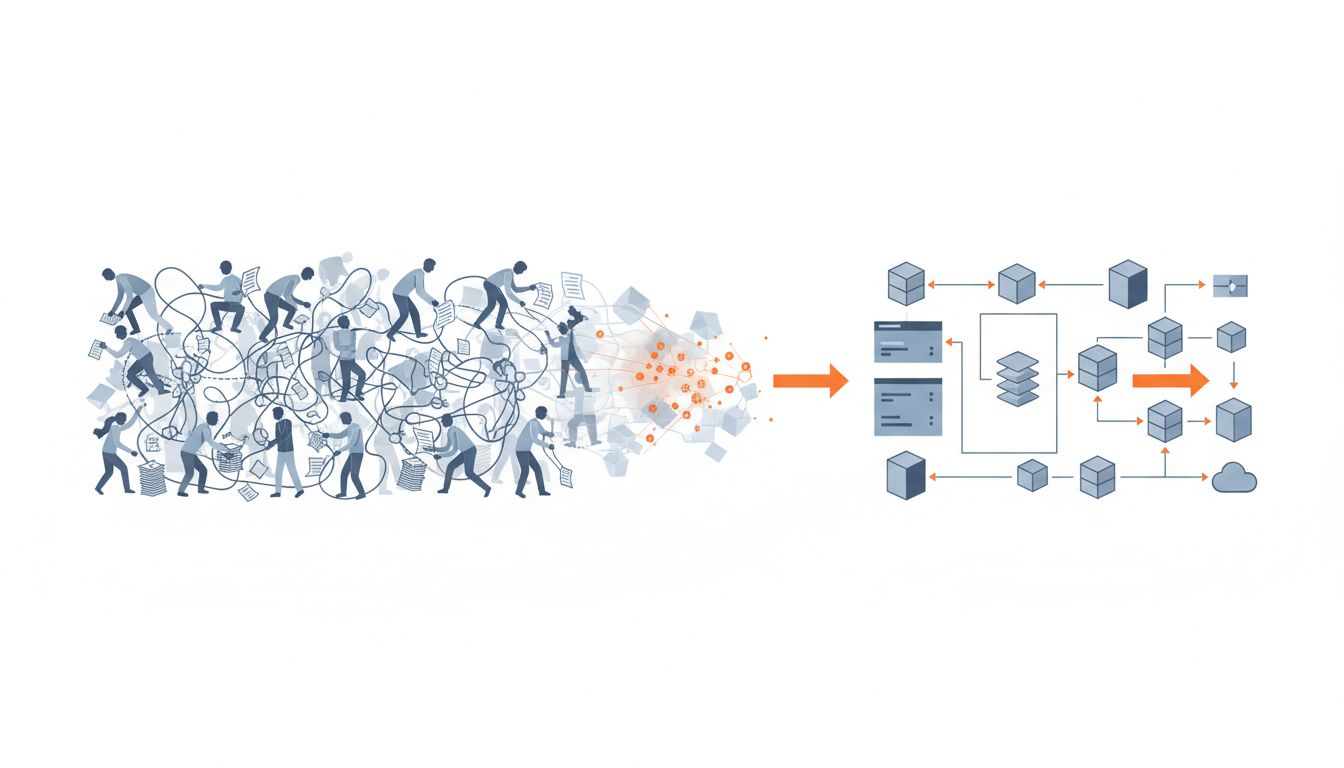

In 2003, a company called Friendster had 3 million users, a working social network, and a head start on everyone. By 2009, it was effectively dead. MySpace, which came after, took the market and then lost it to Facebook, which came after that. You could read this as a story about execution failures, and it partly is. But there’s a deeper pattern underneath it: the company that proves a market exists is rarely the company that profits from it.
This keeps happening across categories. It happened with search (AltaVista, then Yahoo, then Google). It happened with streaming video (RealPlayer, then Flash video, then YouTube). It happened with smartphones (Palm, then BlackBerry, then iPhone). The pioneer does the hard work of convincing the world that a new behavior is possible. Then someone else comes along with cleaner execution and captures what the pioneer built.
This isn’t bad luck. It’s structural.
The Pioneer’s Burden Is Real
Being first in a market sounds like an advantage. In some ways it is. You get early press, early customers, and time to iterate without competition breathing down your neck. But you also absorb costs that no one talks about enough.
The first company has to educate the market. It has to explain not just why its product is good, but why the category deserves to exist at all. This is expensive in every sense: sales cycles are longer, marketing spend goes toward concept education instead of differentiation, and customer acquisition is slow because the customer isn’t yet sure they need what you’re selling.
The first company also inherits bad assumptions. They have to make architectural decisions before they have good data on how customers will actually use the product. They commit to a particular interpretation of the problem and build around it. Some of those bets pay off. Many don’t. And unlike a second mover who can look at the first company’s customers and reverse-engineer what they actually want, the pioneer is flying blind.
There’s also something more subtle: the first company often defines the category too narrowly, because it built around the problem as it understood it at founding. The second company can define the category more broadly, or more accurately, because it’s watched real usage patterns emerge.
What ‘Second Mover Advantage’ Actually Means
The phrase gets used loosely, so it’s worth being precise about what the advantage actually is.
The second company into a market benefits from what I’d call a proof stack. The first company has already proved that customers will pay for something in this space. It’s proved that a technical approach is viable. It’s proved (through its mistakes) what doesn’t work. The second company inherits all of this proof for free. It can skip the existential debates about whether to build at all, and go straight to building better.
This is not the same as just copying. The second companies that win don’t replicate the pioneer’s product. They use the pioneer’s experience as a constraint map: here’s what customers wanted but didn’t get, here’s where the first version was brittle, here’s the assumption that turned out to be wrong. They build toward the real problem rather than the hypothesized one.
Google didn’t just rebuild AltaVista. It solved a specific thing AltaVista couldn’t: relevance at scale. Facebook didn’t just rebuild Friendster. It solved for the network that people actually wanted to be in (their real social graph) rather than a network full of strangers.
The Crossing the Chasm Problem, Seen from the Other Side
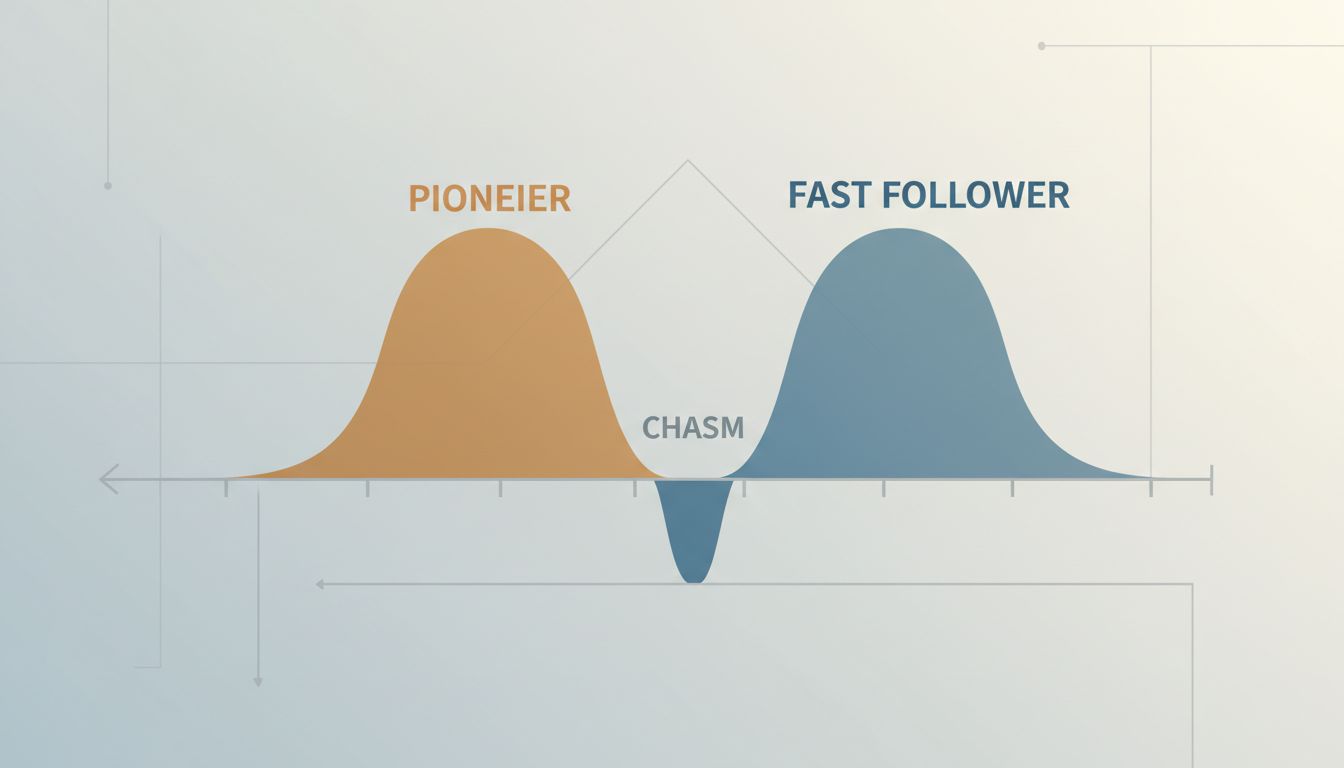
Geoffrey Moore’s framework describes how early adopters and mainstream customers are separated by a chasm that many products fall into. What’s less discussed is how this chasm actually benefits the second mover.
The pioneer usually wins the early adopters. These are the customers who will tolerate rough edges, who find the bleeding edge exciting, who will put in the effort to make a product work even when it’s half-finished. But early adopters are a small market. The real money is in the mainstream, and mainstream customers behave very differently. They want something that just works. They want evidence that other people like them are already using it. They want stability.
By the time the mainstream is ready to buy, the pioneer has usually been through a painful trough. The early adopter market is saturating, growth slows, the press that once called them visionary is now writing pieces asking what went wrong. The product has accumulated technical debt from all the pivots required to satisfy demanding early users. The team is tired.
The second company often enters at exactly this moment: just as the mainstream is opening up, armed with a cleaner product built on better information. The timing looks like luck from the outside. It’s not.
When First-Mover Advantage Does Hold
I want to be honest about this because the second-mover argument can get oversimplified. There are real cases where being first matters enormously.
Network effects can be decisive. When the value of a product is the network itself, being first gives you a compounding advantage that’s genuinely hard to dislodge. This is why Facebook eventually beat MySpace, not just because of product quality, but because it reached a critical mass in specific social contexts (college campuses) that created lock-in before competitors could establish beachheads.
Supply-side exclusivity also creates durable first-mover advantages. If you lock up key suppliers, distribution channels, or regulatory approvals, latecomers face structural barriers that product quality alone can’t overcome. This is why pharmaceutical first-movers with patent protection have a real moat in ways that software first-movers usually don’t.
Switching costs matter too. If your product creates significant friction to leave, the pioneer who gets customers first keeps them longer. Enterprise software companies have exploited this for decades. One line of code can give a vendor infinite pricing power in ways that consumer apps usually can’t replicate.
But notice the common thread: these advantages work through mechanisms that aren’t about being first per se. They work through network effects, lock-in, or exclusive resources. When those mechanisms aren’t present, the pioneer’s head start tends to erode.
The Execution Gap Is What Actually Decides It
Pitting “first mover” against “second mover” can make this sound more deterministic than it is. The category you enter matters less than most founders think. What actually decides market outcomes is execution quality, and second movers simply have better conditions for good execution.
They have more information. They have cleaner slates. They haven’t made five years of decisions they now have to unwind. They can hire people who know what the problem looks like in practice, not just in theory. They can raise money from investors who’ve seen the category mature and have sharper views on what the winning product needs to do.
This is also why well-funded second movers with mediocre ideas still beat scrappy first movers more often than the mythology of the startup world would suggest. Execution requires resources. The second company is often better funded, partly because investors will back a known market more readily than an unproven one.
What This Should Change About How You Think About Entering a Market
If you’re building something in a space where a pioneer already exists, stop treating that as a liability. The pioneer has done work for you. Study what their customers complain about. Read the one-star reviews. Talk to the customers who churned. The failure modes of the first company are your product roadmap.
This is not a small edge. Founders who enter an existing market with genuine insight into why the incumbent’s customers are unhappy are starting from a much stronger position than founders trying to invent a category from scratch. Your first customer can save or sink the company, and in a market with an established pioneer, you already have a pool of dissatisfied customers to pull your first ones from.
Conversely, if you’re the pioneer, the most important thing you can do is create the mechanisms that second movers can’t easily replicate. Build the network. Create the switching costs. Lock up distribution. Don’t assume your head start will protect you on its own, because the evidence across market after market suggests it won’t.
Being first gets you a footnote in the history of an industry. Being second, with better execution and better information, tends to get you the company.
What This Means
The pioneer’s real contribution is proof. First movers prove the market exists, prove the technology works, and prove (through their mistakes) what customers actually want. Second movers inherit that proof.
Timing beats being first. The second company often enters when the mainstream customer is ready to buy, sidestepping the expensive early-adopter phase that exhausts the pioneer.
Clean slates compound. Without years of accumulated technical and strategic debt, the second company can build a more coherent product toward a better-understood problem.
First-mover advantage is real but narrow. It holds when you can create genuine lock-in through network effects, switching costs, or exclusive resources. Without those mechanisms, the head start erodes.
The tactical move for challengers: enter markets with an established pioneer and a pool of unhappy customers. Study the churn, build against the specific failures, and avoid the pioneer’s wrong assumptions rather than inheriting them.