
The Scheduling Bug Nobody Talks About
If you’re a developer, you probably have a decent intuition about priority queues. A min-heap, for instance, guarantees that the item with the lowest priority value gets popped first. The data structure enforces the ordering. You can’t accidentally pull a low-priority item before a high-priority one because the structure won’t let you.
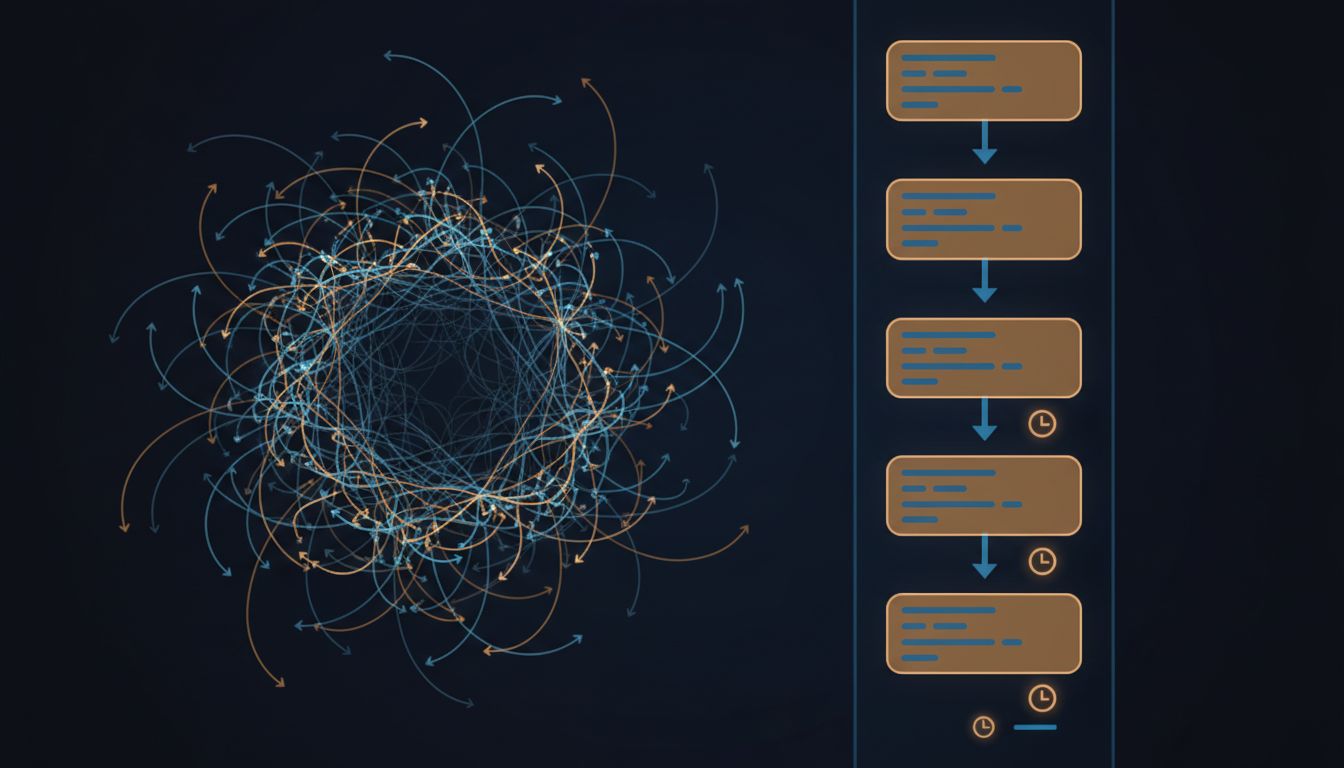
Your schedule has no such guarantee. In fact, most people’s schedules function as the opposite: a system that consistently surfaces low-complexity, low-stakes, high-urgency tasks while burying high-value, high-difficulty, low-urgency work at the bottom. Not because you planned it that way. Because urgency is loudly self-announcing and importance is usually silent.
This isn’t a time management tip article. The problem is structural, and solving it means understanding why the structure exists in the first place.
Two Axes That Get Conflated Constantly
Eisenhower’s two-by-two matrix (urgent vs. important) gets referenced so often it’s practically a cliché, but most people using it are solving the wrong problem. They categorize tasks correctly and then still execute them in urgency order anyway. The matrix diagnoses the issue. It doesn’t fix the scheduling behavior.
The underlying confusion is that urgency and importance feel the same in the moment. Both produce a kind of pressure. Urgency produces it externally: a deadline, a pinging Slack message, a calendar invite that’s 15 minutes away. Importance produces it internally, and that internal pressure is much easier to silence. You can defer writing the architecture doc because nothing breaks immediately if you don’t. You can’t defer the 3pm standup because it will happen whether you’re ready or not.
This is the core asymmetry. Urgent tasks have a natural enforcement mechanism. Important tasks have none, so they depend entirely on deliberate protection. And deliberate protection is cognitively expensive in a way that responding to urgency isn’t.
When your cognitive budget for the day is already depleted by mid-morning (which happens faster than most people realize), important-but-not-urgent work is the first thing that gets pushed. It requires the most from you and has the weakest claim on your attention. That’s a terrible combination.
The Mechanics of Deferral
Here’s a pattern most developers will recognize immediately. You block off two hours on Tuesday morning to work on a design document for a system refactor you’ve been meaning to tackle for months. Monday afternoon, something semi-urgent comes in: a question from a stakeholder, a bug that’s not critical but feels bad to leave open, a meeting request that “only needs 30 minutes.” You reschedule the two hours to Thursday. Thursday, something else. The design document lives on your to-do list for six weeks and never gets written.
What’s actually happening here is a priority inversion, a term borrowed from operating systems. In OS scheduling, priority inversion occurs when a high-priority process is blocked waiting for a resource held by a low-priority process. The classic example is the Mars Pathfinder mission in 1997, where a low-priority task held a shared data bus that a high-priority task needed, causing the system to repeatedly reset. The engineers eventually had to enable priority inheritance to fix it.
Your calendar has the same bug. Low-priority tasks are holding the resource (your time and focused attention) that high-priority tasks need. And unlike the OS context, there’s no scheduler that can preempt them. You are the scheduler, and you keep making the same decision because the low-priority tasks have urgency as their inheritance mechanism.
The solution in operating systems is to temporarily elevate the priority of the task holding the resource until it releases it. The analog in human scheduling is to treat your important work’s time slot as non-negotiable in exactly the same way a meeting is non-negotiable. Not “I’ll try to protect this time” but “this time is gone from the available pool, full stop.”
This sounds obvious. It’s surprisingly hard to actually do, because rescheduling a meeting feels like breaking a commitment to someone else, while rescheduling deep work only breaks a commitment to yourself. And most people are much better at honoring external commitments than internal ones.
Why Mornings Keep Filling Up Despite Every Intention
There’s a specific failure mode that’s worth naming directly: the progressive colonization of your protected time by synchronous communication.
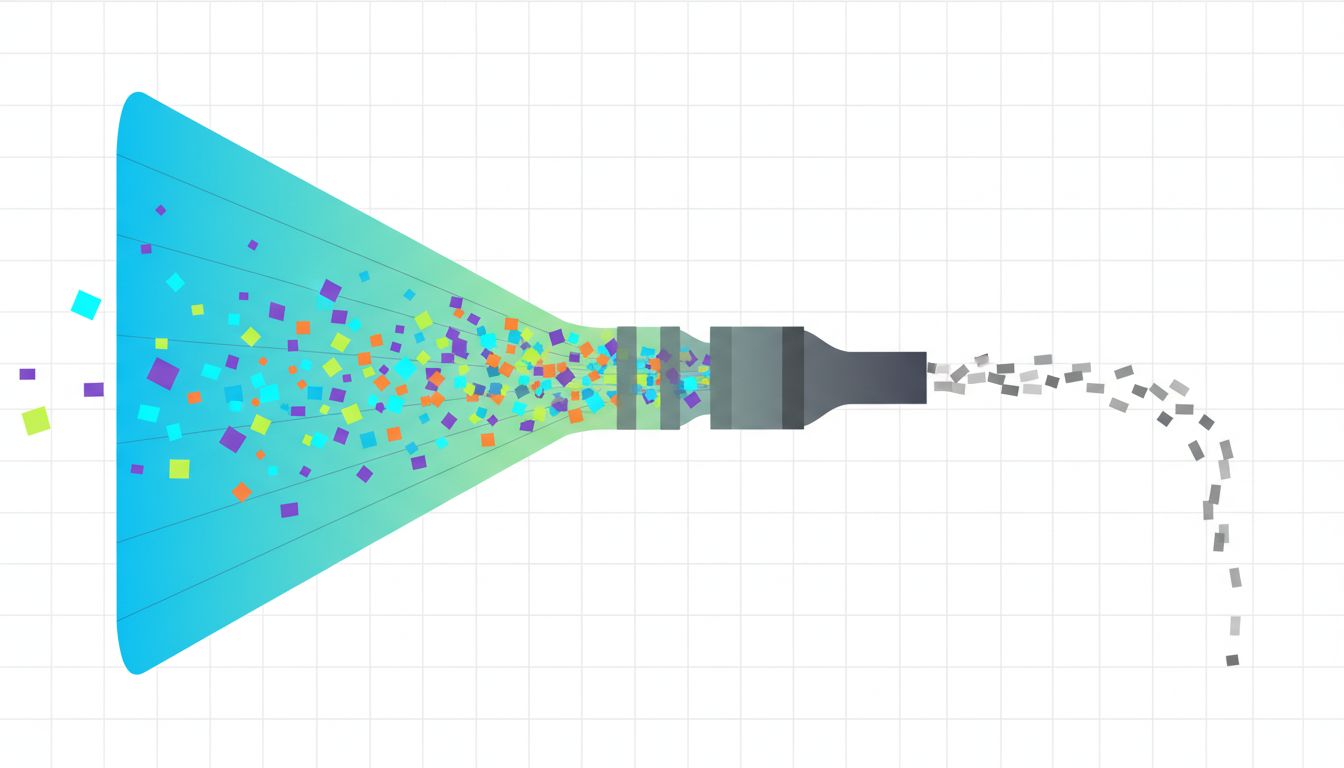
You resolve to protect mornings for deep work. You do this successfully for maybe two weeks. Then a recurring meeting gets scheduled at 10am because it’s “the only time that works.” Then another at 9:30. Your “protected morning” is now two 25-minute fragments separated by a meeting, which is functionally useless for complex work because the context-switching overhead alone consumes most of it. (The research on how long it takes to recover full focus after an interruption is genuinely grim.)
The problem isn’t the individual meetings. Each one looked reasonable in isolation. The problem is that calendar systems have no concept of “fragmentation cost.” Adding a meeting at 10am costs you the 9-10am block too, because you’ll spend the last 30 minutes of it mentally preparing for or anticipating the meeting rather than doing focused work. But your calendar shows that 9-10 slot as still free, so it looks like capacity that can be used.
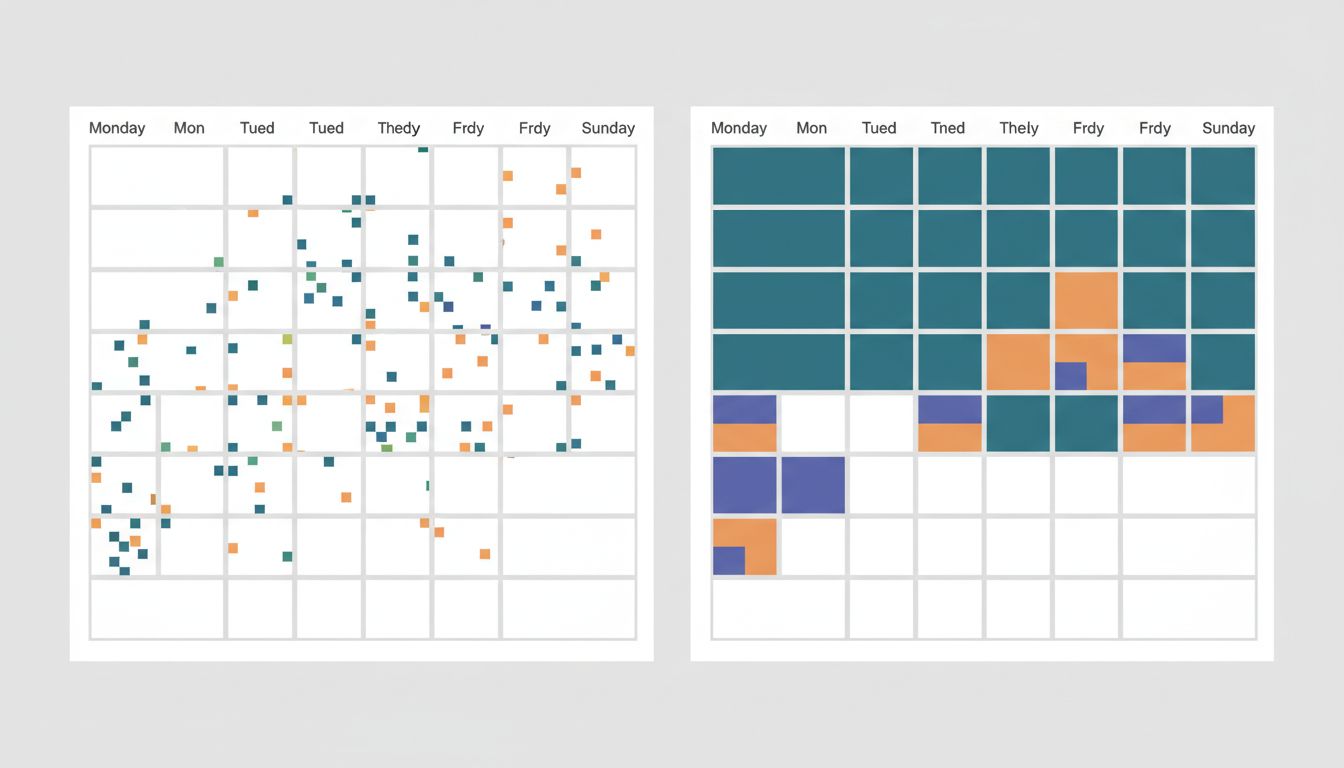
This is an invisible tax on your deep work budget, and it compounds. A calendar that looks 60% booked might actually have near-zero usable focused time if the appointments are distributed throughout the day in 45-minute intervals.
What Time Blocking Actually Solves (and What It Doesn’t)
Time blocking, the practice of scheduling specific types of work into specific calendar slots rather than maintaining a task list you work through organically, is the most reliable intervention I’ve seen for this problem. But it’s commonly misunderstood.
Most people use time blocking to ensure they “get to” their important tasks. That’s the weaker version. The stronger version is using it to change the information your calendar gives you.
When you block Tuesday 9-11am as “Architecture Review,” that block should behave identically to a meeting with another person. It’s not available for scheduling. It declines meeting invites automatically. It cannot be moved without the same social friction that rescheduling a meeting with a colleague creates. If you treat it as a meeting with your future self (who will actually have to write the architecture review), it acquires some of the enforcement mechanism that urgent tasks have naturally.
The version that doesn’t work: time blocking as an aspirational calendar decoration. Blocks that you feel fine moving when anything more urgent arrives are just visual clutter. They give you the feeling of having planned without the actual protection.
The version that does work: blocks that are genuinely load-bearing. You need a small number of them (two or three per week for your most important work), placed in your highest-cognitive-capacity time (which for most people is the first two to four hours after waking), and defended with the same social commitment you’d apply to an external meeting.
The Depth-Scheduling Inversion
Here’s the pattern that summarizes everything above: the tasks that require the most cognitive depth are the ones your schedule is least equipped to protect, because they lack urgency’s natural enforcement mechanism. Meanwhile, the tasks that require the least depth (responding to messages, attending status meetings, filling out forms) have the strongest scheduling enforcement because they’re synchronous, social, and time-bound.
This means the default state of a busy person’s calendar is a depth-scheduling inversion: shallow work is consistently over-represented in execution, high-value deep work is consistently deferred. It’s not a character flaw and it’s not laziness. It’s a structural outcome of how scheduling systems interact with human cognitive tendencies.
The fix requires treating deep work as a first-class scheduling concern rather than a fill-in-the-gaps activity. Concretely, this means scheduling it before you schedule anything else in a given week, not after. It means working backward from “what important work needs to happen this week?” rather than forward from “what’s on my task list and when do I have spare time?”
That reordering is the actual intervention. Everything else (time blocking, declining meetings, inbox management) is just implementation detail in service of it.
What This Means in Practice
The structural insight here is simple even if the execution isn’t: your scheduling system rewards urgency and ignores importance, so any important work that lacks urgency will be perpetually displaced unless you give it an artificial enforcement mechanism.
That mechanism is treating deep work blocks as hard constraints rather than soft preferences. Schedule them first. Make them immovable except under genuinely exceptional circumstances. Accept that some urgent-but-less-important work will slip as a consequence. The goal is a priority queue that actually reflects your priorities, not one that reflects which tasks can shout the loudest.
The bug is real. The patch is available. Deploying it is mostly a matter of deciding you’re going to, and then building enough structural friction around your important time to make that decision stick past the next urgent thing that comes in.