Your best ideas don’t arrive at your desk. They arrive in the shower, on a walk, halfway through a run, or at 2am when you gave up trying. This isn’t a quirk of your personality or a productivity failure. It’s how the brain is structured, and working against it is costing you.
The fix isn’t a better note-taking app or a fancier chair. It’s accepting that creative cognition and the modern knowledge work environment are fundamentally mismatched, and then doing something about it.
Your brain has a second thinking mode you keep suppressing
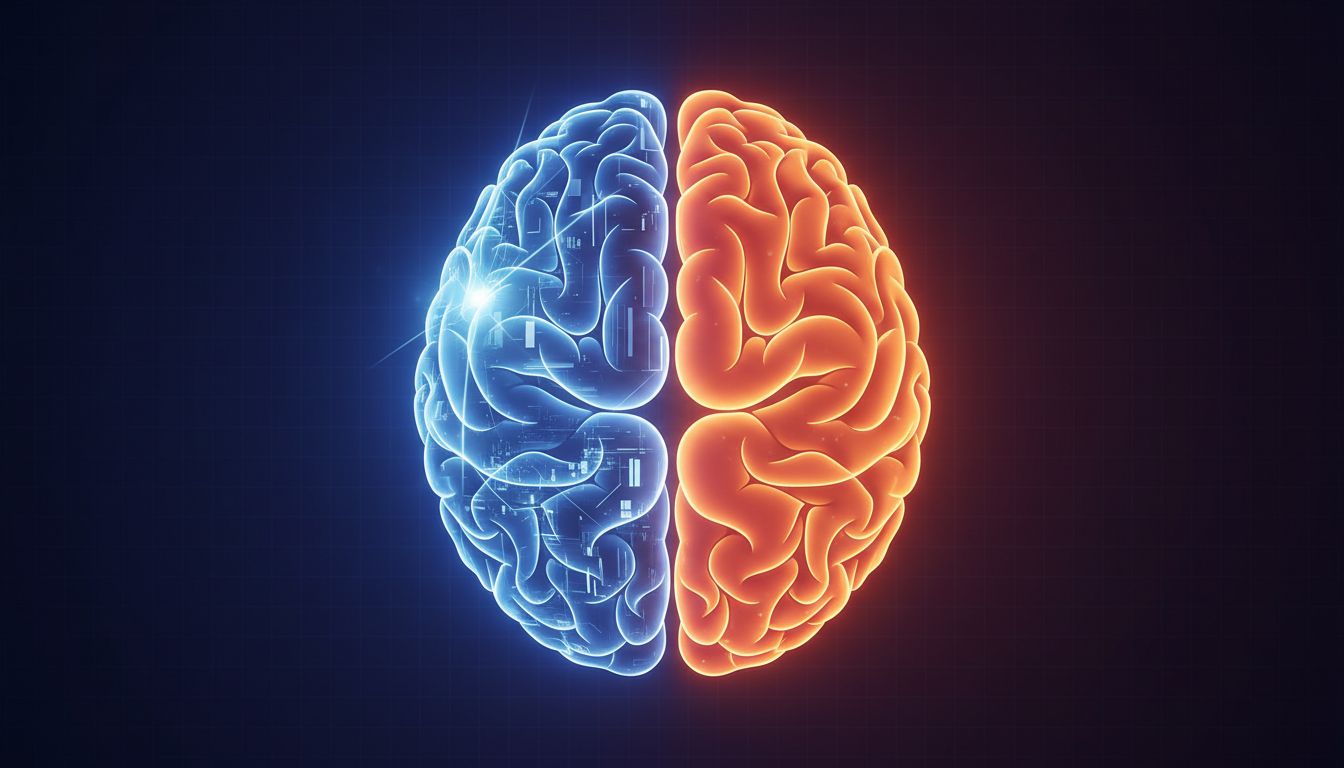
When you’re focused on a task — reading, writing, coding, answering email — your brain runs in a directed attention mode. This is useful for execution. It is genuinely bad for synthesis, connection-making, and original thought.
The competing mode, what neuroscientists call the default mode network, activates when your directed attention relaxes. It’s the mental state you enter during a walk or a shower, when your mind wanders without a specific target. This network is where the brain integrates disparate information, surfaces unexpected connections, and generates insight.
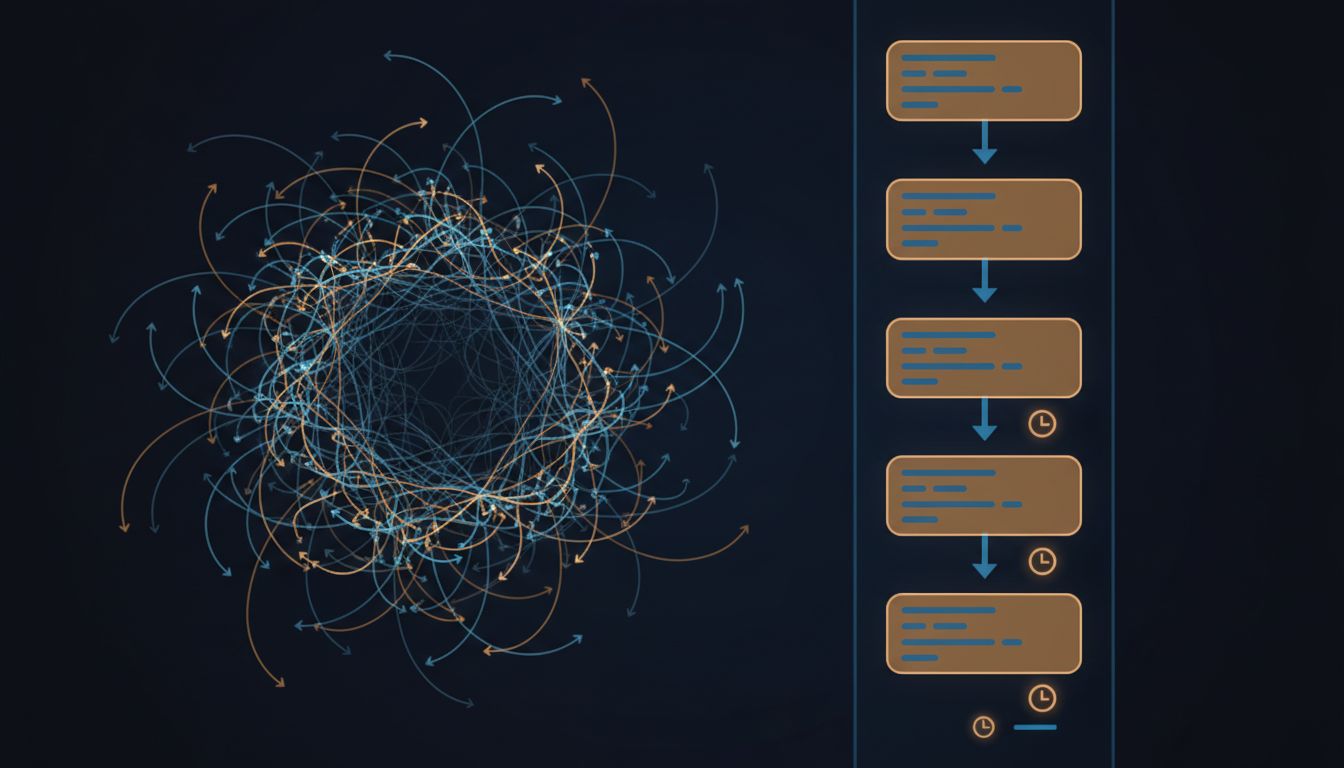
The problem is that your workday is a nearly continuous effort to suppress the default mode network. You open your laptop, and the ambient noise of notifications, Slack pings, email, and task lists keeps your directed attention perpetually engaged. You never give the synthesis layer time to run.
Boredom is load-bearing
Boredom has been optimized out of modern work life almost entirely. Waiting for a meeting to start? Check your phone. Walking to lunch? Podcast in. Commuting? Half-working on the train.
This is a problem because the moments that used to be cognitively idle, and therefore creatively useful, are now filled with low-grade input. You’re feeding your directed attention system a constant diet of light stimulation, which keeps it just engaged enough to block the default mode from doing its work.
Archimedes didn’t have a phone in the bath. Newton sat under a tree. The conditions weren’t accidental. The idleness was the point.
You don’t need to romanticize this. The practical implication is specific: if you want better ideas, you need scheduled cognitive downtime that you actually protect, not downtime that you fill with a podcast because silence feels wasteful.
The desk is also the worst environment for incubation
There’s a concept in creativity research called incubation: the period between actively working on a problem and arriving at a solution. This period is not wasted time. It’s when the brain continues processing subconsciously, testing associations you’re not consciously aware of.
Incubation requires two things: a rich input phase (you do need to actually work hard on the problem first) and then a genuine break from directed effort. The break is not optional. It’s the mechanism.
Your desk denies you the break. Every time you hit a wall and instinctively switch to email or Slack, you’re giving your directed attention system something new to chew on, which starves the incubation process. You think you’re resting the problem. You’re actually just context-switching. Multitasking research backs this up: switching between tasks doesn’t give either task the space it needs.
The environment you’re in shapes the thinking you can do
Physical movement, especially walking, changes your cognitive state in measurable ways. A Stanford study published in 2014 found that walking increased creative output in the specific category of divergent thinking, the kind involved in generating novel ideas, by an average of 81 percent compared to sitting. The effect persisted even when participants walked on a treadmill facing a blank wall. It wasn’t the scenery. It was the movement.
This isn’t a case for walking meetings or treadmill desks as performance theater. It’s a case for genuinely leaving your work environment when you’re stuck. Not to check in from somewhere else. To actually disengage and let your brain work without your supervision.
The counterargument
The obvious pushback is that deep, focused desk work is where ideas get developed, tested, and refined, and that’s completely true. The shower thought doesn’t ship. The walk insight still has to be brought back to the desk and subjected to scrutiny.
The stronger version of this objection is that knowledge work environments have to be collaborative and connected, and you can’t just disappear for contemplative walks whenever you feel like it. Fair.
But neither of these objections actually defends the current setup. Acknowledging that execution happens at the desk doesn’t mean ideation has to. Acknowledging that collaboration has constraints doesn’t mean you can’t carve out protected time for uninterrupted cognitive space. The interruption problem is real and solvable, and the solution doesn’t require pretending that constant availability is neutral.
The counterargument proves too much: it defends execution while calling it thinking.
What to actually do with this
First, stop trying to have your best ideas at your desk. That’s not where they live. Do your hard thinking, hit the wall, and then physically leave. Walk without headphones. Shower without a podcast. Sit outside without your phone.
Second, capture immediately when something surfaces. The default mode network doesn’t give you much warning. Keep something to write on near the shower, by your bed, in your pocket on walks.
Third, protect some fraction of your day from ambient input. Not for meditation or mindfulness as a performance. Just for genuine idleness. Ten minutes of nothing is not wasted. It’s probably the most productive ten minutes in your day, in the specific domain of generating ideas worth having.
Your desk is a good place to build things. It’s a poor place to discover them. The sooner you stop treating those as the same activity, the better your ideas will get.