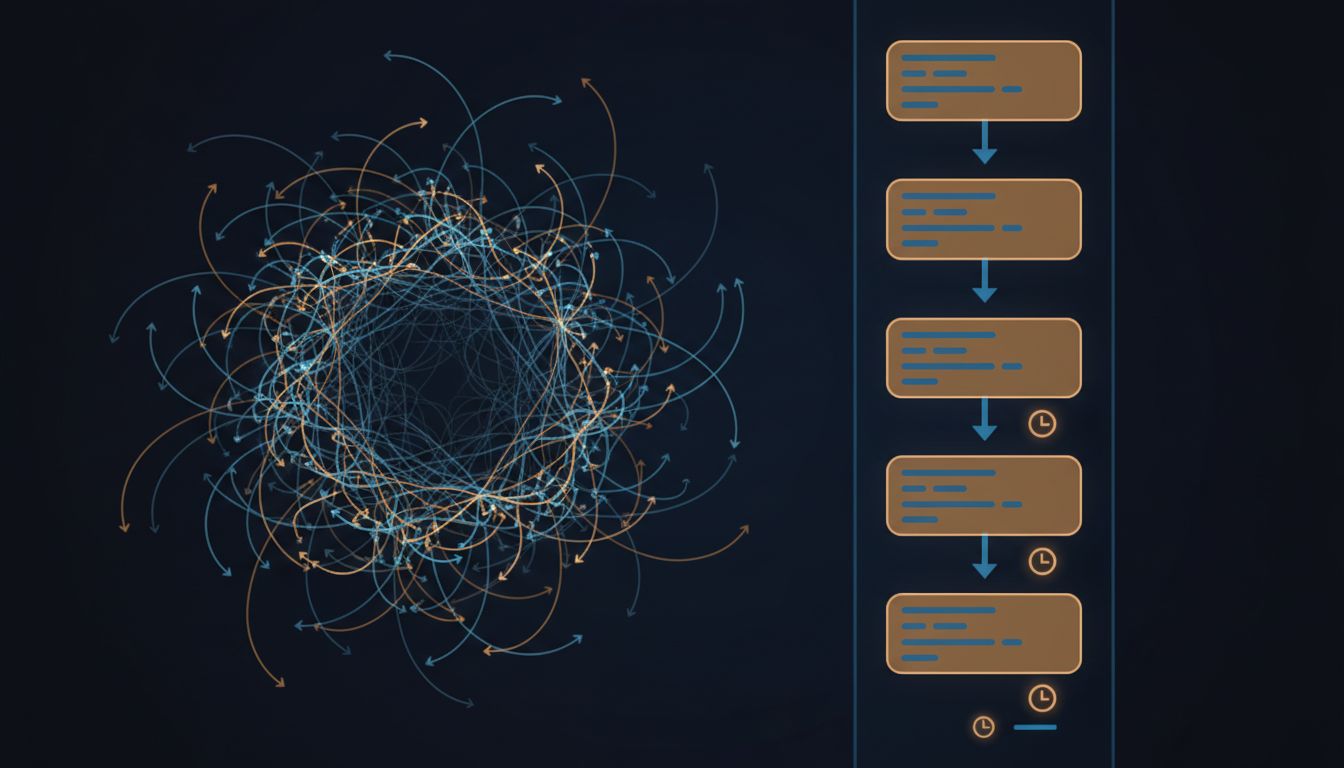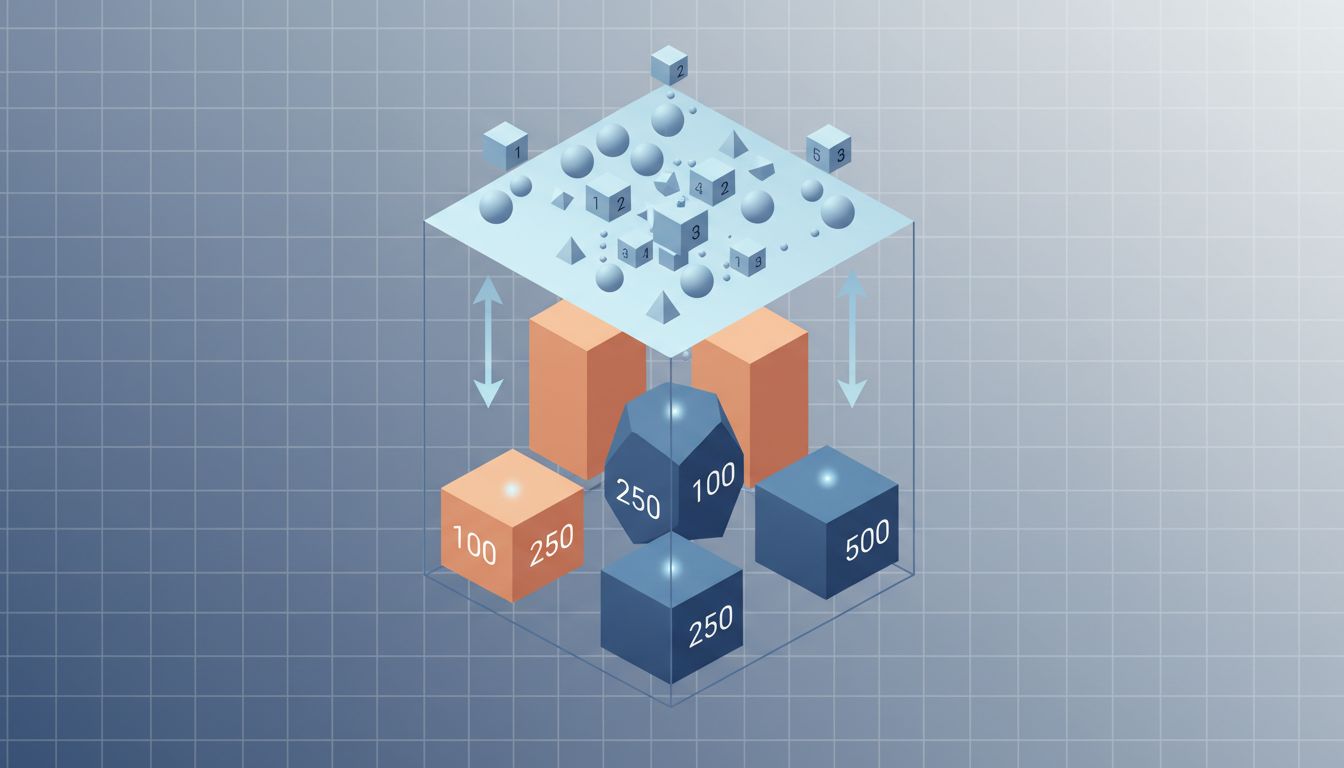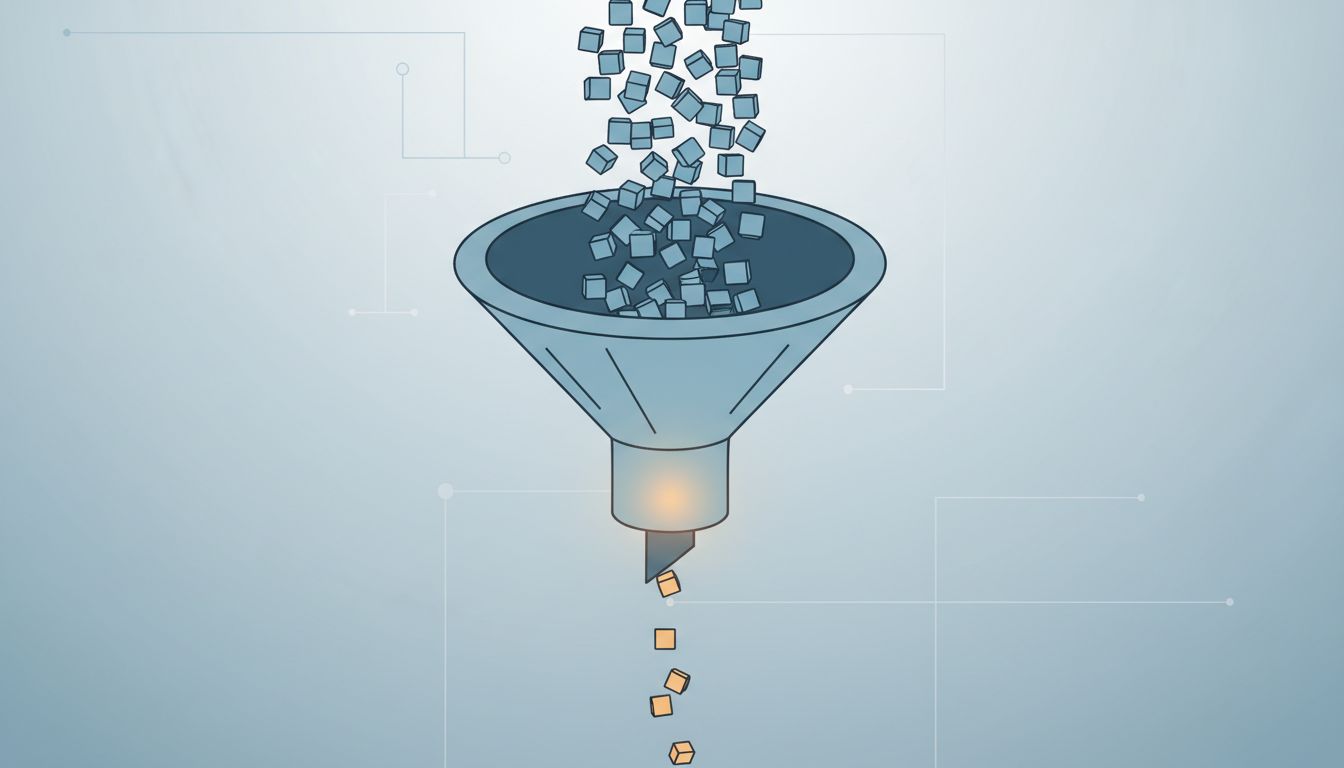

There is a bug in your brain’s task scheduler, and it has been shipping to production for thousands of years without a patch. Every time you switch from one task to another, a portion of your cognitive resources stays behind, still running background threads on the previous task. Researchers call this phenomenon ‘attention residue,’ and it explains why you can sit down to write a design document immediately after a Slack conversation and feel like you are thinking through wet concrete. The switch happened. The attention did not.
This is not a willpower problem or a focus problem in the motivational-poster sense. It is closer to what happens when you kill -9 a process but its child processes keep running in the background, consuming CPU without any visible parent to attribute them to. The work is invisible. The cost is very real. And the people who consistently outperform their peers have figured out how to either flush those background threads deliberately or, more interestingly, avoid spawning them in the first place.
What the Research Actually Says
Sophie Leroy at the University of Washington coined the term ‘attention residue’ in 2009 after studying workers who switched between tasks. Her findings were uncomfortable: even people who considered themselves good multitaskers showed measurably degraded performance on new tasks when they had not fully completed the previous one. The key variable was not the complexity of the switch. It was the incompleteness of the prior task.
This maps cleanly onto something most developers already understand intuitively. If you are mid-way through debugging a gnarly race condition and someone pulls you into a design review, you are not really in that design review. You are in a superposition of two contexts. Your mouth is discussing API contracts while your prefrontal cortex is still poking at thread-safety assumptions. Neither task gets your full stack.
Speaking of debugging, there is a reason why the rubber duck technique works so reliably. Externalizing a problem, talking it out, forces a kind of cognitive closure. You are not abandoning the problem. You are packaging it into a representational format that your brain can shelve rather than actively hold. That is attention residue management in its most primitive and effective form.
The Interruption Is Not the Problem. The Incompleteness Is.
Here is the counterintuitive part that most productivity advice gets completely wrong: the problem is not that you got interrupted. The problem is that you were interrupted mid-thought, with no closure artifact to offload the state.
Think of it like a database transaction that never received a COMMIT. The lock is held. Other operations queue up or fail. The system degrades, not because of the transaction itself, but because it was never cleanly resolved.
Top performers handle this by building what you might call ‘micro-closure rituals’ before switching contexts. Before closing a code review to jump into a meeting, they write a single sentence in their notes: ‘Left off at: questioning whether the retry logic handles partial writes correctly. Next step: check the idempotency key implementation.’ That sentence is a git stash. It does not finish the work. It snapshots the working memory state so the brain can actually release the thread.
This is related to why top performers schedule procrastination deliberately rather than fighting it reactively. Structured incompleteness, when it is chosen and documented, is fundamentally different from interrupted incompleteness. One is a clean pause. The other is a crash with no stack trace.
How High Performers Design Their Days Around Residue Windows
Once you understand attention residue as a systems problem rather than a character flaw, the architecture of a high-performance workday starts to make a different kind of sense.
High-output engineers and product leads tend to cluster their interruptive, low-cognitive-load tasks together. Code reviews, async Slack responses, calendar management, these go in a block. Deep work, architecture decisions, writing, complex debugging, these go in a completely separate block with a buffer zone in between.
That buffer zone is not downtime. It is a flush cycle. A short walk, five minutes of processing notes, even just staring at the ceiling while your brain runs its garbage collection. The goal is to reach something close to a clean working memory state before loading a new context.
This is the same reason that the most productive people effectively run multiple operating systems at once, meaning different cognitive modes for different kinds of work, with deliberate boot sequences between them. Jumping from creator mode to reviewer mode without a transition is the human equivalent of running two different workloads on the same container without resource limits. Something will get throttled.
The Notification System as a Residue Generator
If attention residue is the bug, then most of our communication tools are systems specifically engineered to trigger it as often as possible.
Every notification is a partial context load. Your brain opens a thread for ‘is this important,’ spins up some evaluation logic, and then, if you dismiss the notification without acting on it, fails to cleanly close that thread. You are left with a low-grade hum of unresolved items that collectively degrade your available cognitive bandwidth.
This is not accidental. As we have explored in how tech giants hide their most powerful retention tools, the mechanisms that feel like minor conveniences are often precision-engineered engagement loops. Notifications are not features built for you. They are demand signals built for the platform. Understanding that distinction changes how you relate to them.
High performers do not just silence notifications selectively. They designate specific times for intentional inbox processing, which means loading that context fully, processing it to a decision or action, and then cleanly closing it before switching back. Batch processing over interrupt-driven processing. It is a queue architecture choice applied to human cognition.
Designing Closure Into Your Workflow
The practical takeaway here is not ‘do more deep work’ (though yes, also do that). It is to treat cognitive closure as a first-class engineering concern in how you structure your day.
Before every task switch, create a closure artifact. One sentence, a bullet point, a commented-out note in your code, anything that externalizes the current state so your brain can release the lock. Treat unfinished tasks as open file handles and close them explicitly before switching processes. Build buffer time between context-heavy blocks, not as laziness, but as a required flush cycle for your working memory.
The insight here is that attention residue is not a problem to eliminate. It is a system behavior to design around. Your brain will always leave threads running on incomplete work. That is not a flaw. It is actually the same mechanism that makes you suddenly solve a problem in the shower, a long-running background process finally returning a result.
The goal is not to stop the background processing. The goal is to be intentional about what you leave running, and to give yourself the architectural conditions to actually use the results when they arrive.