The Simple Version
Your brain’s ability to handle complex, demanding work follows a predictable daily curve driven by cortisol and core body temperature. For most people with conventional sleep schedules, that curve peaks somewhere between 9:30 and 11 AM.
What’s Actually Happening in Your Brain
Circadian rhythms are not just about when you feel sleepy. They govern nearly every physiological process, including the ones that matter for cognitive performance: working memory (your brain’s short-term scratch pad), inhibitory control (the ability to suppress irrelevant thoughts), and processing speed.
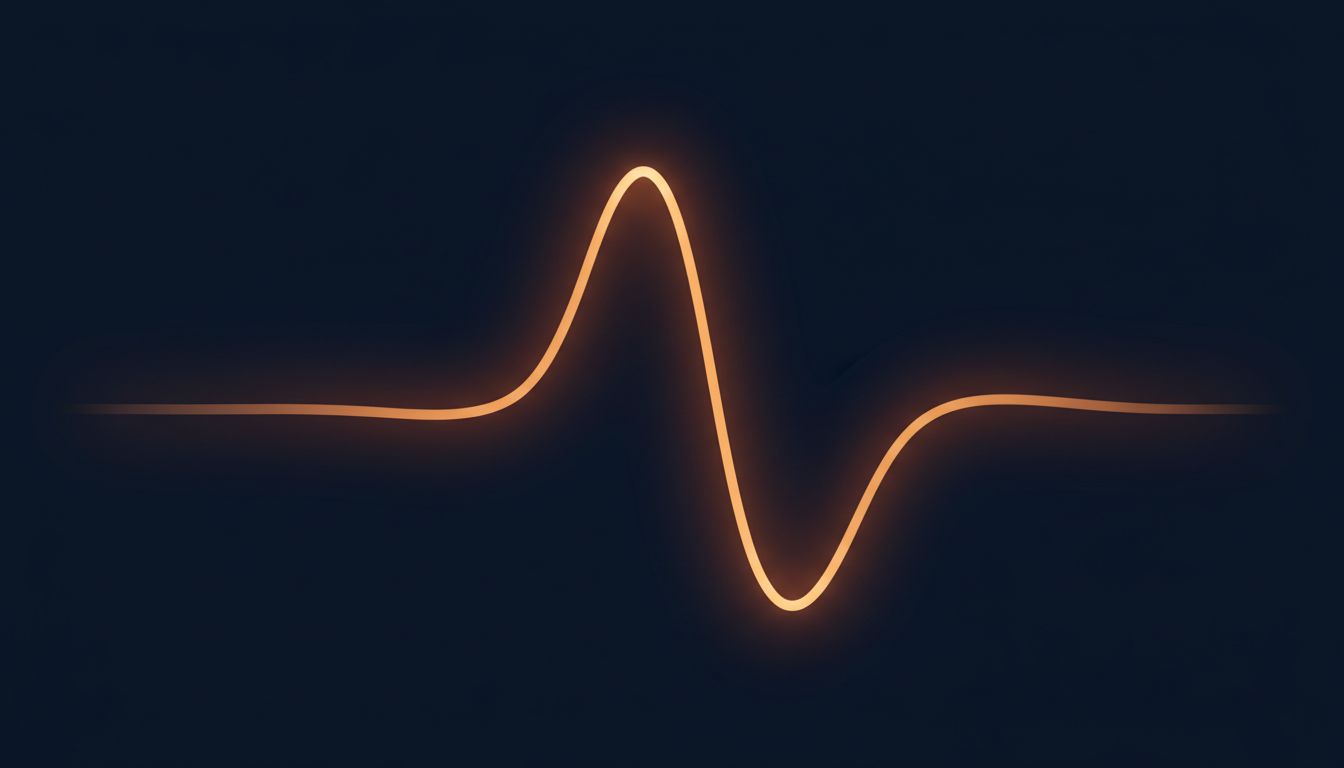
The mechanism is cortisol. Specifically, a phenomenon called the cortisol awakening response, or CAR. Within the first 30 to 45 minutes of waking, cortisol levels spike by roughly 50 to 100 percent above your baseline. This isn’t stress cortisol. This is your brain’s version of a cold-start sequence, priming alertness, focus, and metabolic readiness. Research from the field of chronobiology (the study of biological timing) has consistently documented this spike across populations.
The CAR doesn’t peak the moment you open your eyes. There’s a lag. Your prefrontal cortex, the region responsible for planning, abstract reasoning, and making decisions under uncertainty, takes about 90 minutes to two hours after waking to reach full operational capacity. This is why most sleep researchers, including Matthew Walker at UC Berkeley, caution against scheduling critical decision-making in the immediate post-waking window.
If you wake at 7 AM, your cognitive peak lands around 9 to 10:30 AM. That’s not productivity folklore. It’s the cortisol curve.

Why 10 AM Specifically Became the Cultural Default
The 10 AM figure gets thrown around in entrepreneurship circles like a sacred rule, but the honest version is more useful: the actual optimal window is relative to your wake time and chronotype, not the clock.
Chronotype is your genetically influenced preference for sleep and wake timing. About 25 percent of people are genuine morning types (early cortisol peak), roughly 25 percent are evening types (delayed peak), and the rest fall somewhere in the middle. If you’re a natural evening type forced into a 7 AM schedule by meetings and commutes, your cognitive peak might land at noon or later.
The reason 10 AM became canonical is that it describes the experience of someone with a mid-range chronotype waking around 7 to 7:30 AM, which happens to describe a plurality of the working population. It’s a reasonable population-level approximation that gets misapplied as a universal prescription.
Core body temperature also plays a role. Alertness correlates with rising body temperature, which typically begins climbing after waking and reaches a local maximum in late morning. Reaction time, working memory capacity, and logical reasoning all track this curve reasonably well in studies using standardized cognitive assessments.
The Productivity System Problem
Here’s where most advice about this topic goes wrong. Knowing you have a cognitive peak is only useful if you’ve actually structured your work to put hard problems in that window and protected it from interruption.
Most people haven’t. Their 10 AM slot is consumed by status meetings, email catch-up, and Slack threads about what was discussed in the previous meeting. The cognitive peak gets spent on tasks that require almost no executive function, while the genuinely hard work gets pushed to 3 PM, which is when alertness craters for most people (a secondary dip tied to circadian regulation, distinct from post-lunch blood sugar).
This is a scheduling architecture problem more than a willpower problem. The calendar doesn’t know your biology. You have to encode that knowledge into how you block time. The practical implementation isn’t complicated: treat your 90-minute peak window as an uninterruptible batch process. No context switching. The task you put in that slot should be the one that feels hardest to start, because that friction is usually a signal that it requires genuine prefrontal engagement.
There’s a related insight from research on decision fatigue. Judges in judicial review processes make more favorable decisions earlier in the day. Doctors order more evidence-based treatments in morning appointments. The cognitive resource being depleted isn’t attention exactly, it’s the executive control required to override automatic responses and think carefully. That resource is fullest in the morning and depleted by accumulated decisions throughout the day.
This connects to why productivity systems fall apart after 30 days: most systems focus on task capture and prioritization but ignore the biological timing layer entirely. You can have a perfect to-do list and still do all the right tasks at the wrong times.
How to Actually Apply This
Start by finding your real peak, not the hypothetical one. For one week, note the times when you feel most mentally sharp and the times when re-reading the same paragraph three times becomes normal. You’re looking for your personal version of the curve, not the average one.
Once you’ve identified that window, put one hard problem in it every day. Not your email. Not a planning session. The thing you’ve been avoiding because it requires sustained, effortful thinking. A difficult technical design. A funding proposal. An architectural decision that has downstream consequences.
The second thing is to stop treating alertness as a binary. You’re not either focused or not focused. You’re on a curve. This means there’s a right time for different work types. Administrative tasks, communication, and routine decisions work fine in the post-peak afternoon. Creative divergent thinking (brainstorming, exploring adjacent ideas) often works well in the mild fatigue of late afternoon, when reduced inhibition lets associations form more loosely. Research on creative cognition actually suggests that slightly reduced alertness can be useful for generative work, while high alertness benefits analytical, convergent tasks.
The 10 AM rule isn’t wrong. It’s just underspecified. What it’s actually pointing at is a real and measurable biological phenomenon, one that most productivity advice acknowledges superficially without explaining the mechanism. Once you understand the mechanism, you can adapt it to your actual schedule rather than treating it as a fixed number on the clock.