
The Medium Is Doing Something to the Message
There’s a moment most developers recognize: you’ve been staring at a bug in your editor for an hour, you print the code out, and you spot it in thirty seconds. Something changed, and it wasn’t the code.
This isn’t nostalgia or superstition. It’s a measurable difference in how the brain processes information depending on its physical substrate. The research on this has accumulated steadily since the early 2000s, and the picture it paints is specific enough to be actionable.
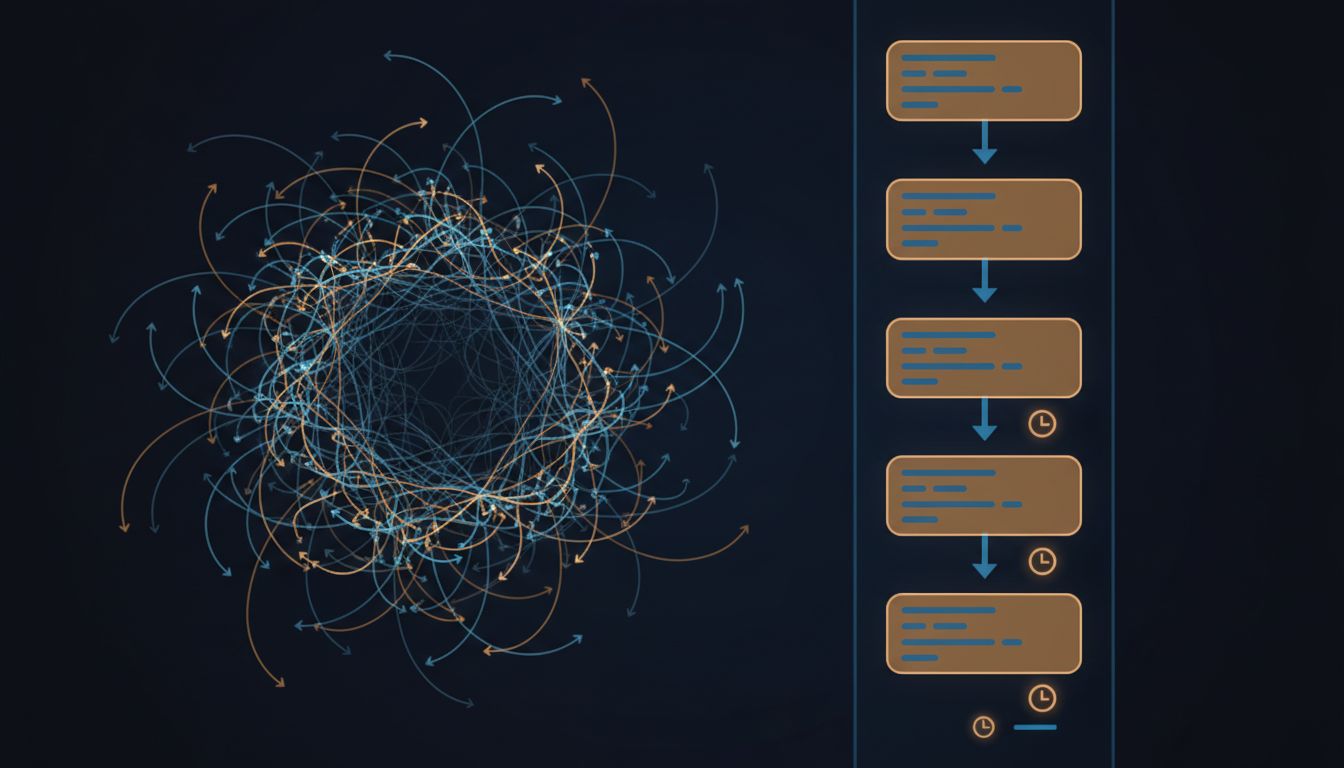
The core finding is this: reading on paper tends to support what researchers call deep reading, the kind where you’re building a mental model, tracking argument structure, and forming durable memories. Reading on screens tends to support scanning, fast pattern-matching, and shallow extraction. Neither mode is universally better. But you probably spend most of your day in one context when you need the other.
What “Shallow” Actually Means in Cognitive Terms
When neuroscientists talk about shallow processing, they mean something specific. Information is encoded but not deeply consolidated. You understand it in the moment but it doesn’t integrate well with existing knowledge, and recall degrades quickly.
Deep processing is the opposite: you’re not just reading words, you’re constructing relationships between concepts. Think of it like the difference between copying a file and actually parsing it. Shallow processing gets the bits in. Deep processing indexes them.
Maryanne Wolf, a cognitive neuroscientist at UCLA who has studied reading for decades, describes this in terms of the brain’s “reading circuit,” a network that isn’t hardwired but gets built through experience. The circuit engaged by sustained, linear reading of physical text involves more of the brain than the circuit engaged by digital skimming. This isn’t a small difference. It involves whether regions associated with inference, analogical reasoning, and background knowledge are recruited at all.
The practical implication is that you can read something on a screen, understand it, and feel like you’ve absorbed it, and be much worse at applying it two days later than if you’d read it on paper. This is not a character flaw. It’s an artifact of which circuit got activated.
Navigation and the Spatial Memory Problem
Here’s a wrinkle that most articles on this topic underweight: reading is partly a spatial act.
When you read a physical book or a printed document, you build an implicit spatial map of the content. You know roughly where in the document an argument appeared. You might remember it was “near the bottom of a right-hand page, about two-thirds through.” This sounds trivial, but it’s not. Spatial memory is a deeply integrated system in the brain. That location information becomes a retrieval cue. When you need to find a specific argument or quote, your brain uses the spatial memory to navigate, the same way you remember where something is in a room.
Digital documents strip this out almost entirely. Scrolling is spatially homogeneous. Everything comes from the same place: the middle of your screen. Page numbers exist but most people don’t track them the way they track physical position. Reformatting (zoom changes, window resizing) shuffles content location entirely. You lose the map.
This is why the “where was that thing I read” problem is so much worse with digital reading. You’re not being careless. You genuinely have fewer retrieval anchors.
Hyperlinks Are a Cognitive Tax, Not a Feature
Hyperlinks are presented as a benefit of digital text, and for navigation they sometimes are. But for reading comprehension they’re largely a liability.
Every hyperlink in a piece of text is a decision point. Your brain has to evaluate whether to follow it. Even if you don’t follow it, the evaluation cost is real. A 2011 study by researchers including David Miall and Don Kuiken found that hypertext versions of texts produced worse comprehension than linear versions, even when subjects didn’t follow the links. The presence of the links alone was enough to degrade understanding.
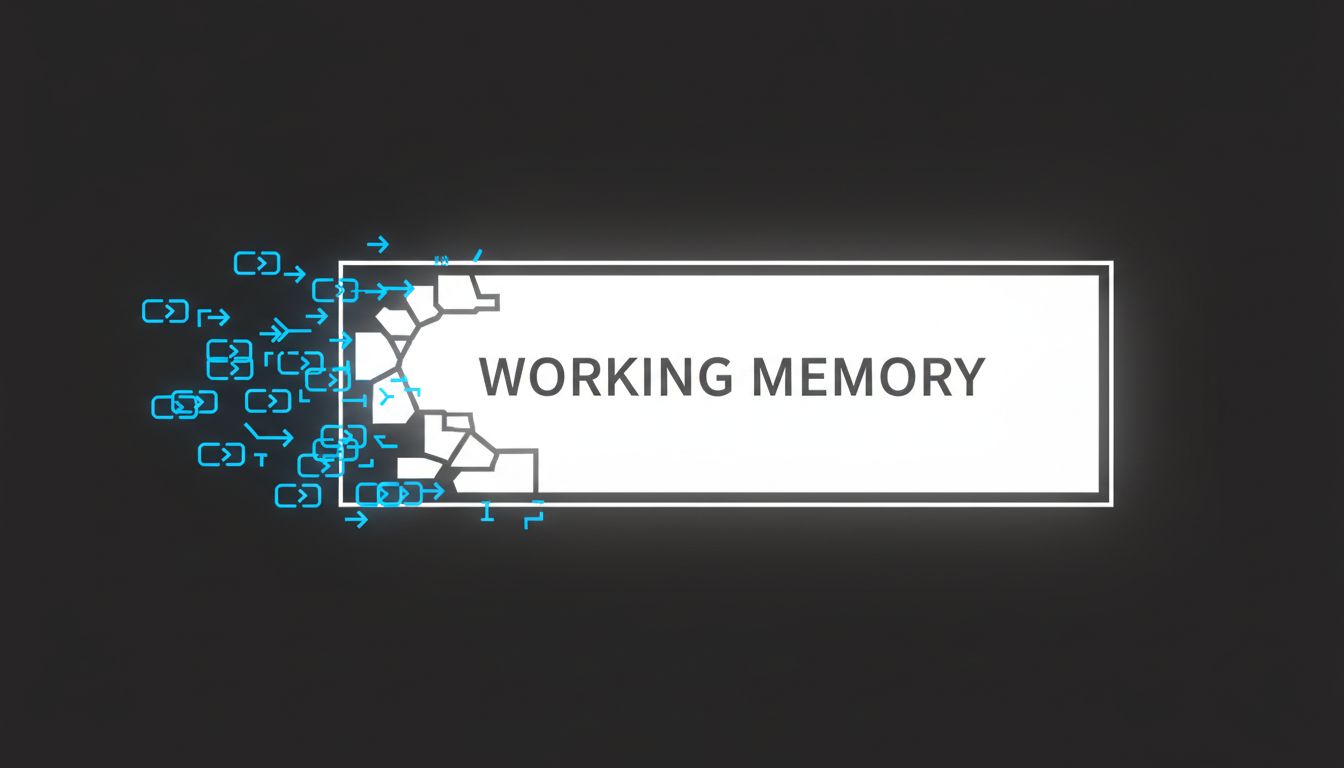
The mechanism is cognitive load. Working memory (the mental scratch space you use for active processing) is finite. Every link is a small allocation against that budget. Spend enough of it on link evaluations and you have less available for actually understanding what you’re reading.
This has a direct implication for how you structure documentation, internal wikis, and long-form writing meant to be understood rather than referenced. Dense interlinking is not always the thoughtful move. Sometimes it’s just noise.
The Interruption Architecture of Digital Reading
The spatial memory problem and the hyperlink problem are both things that emerge from the medium itself, before any external interruptions. But digital reading also exists inside a device that is aggressively designed to interrupt.
Notifications are the obvious version. But there’s a subtler form: the knowledge that the device can interrupt. Research on “anticipatory attention” shows that even when notifications are off, people reading on devices that have previously notified them show attention allocation consistent with divided focus. Part of the brain is monitoring for interruption even when none comes.
This is a known problem in systems design. An asynchronous system that might deliver a message is harder to ignore than one that is definitively offline. Your brain’s interrupt handler doesn’t have a great way to verify that the device is truly quiet. So it stays partly on-call.
The result is that digital reading has a kind of inherent background overhead that physical reading doesn’t. You can reduce it (airplane mode, dedicated reading apps, physical separation from the device), but you’re working against a default.
Print Isn’t Nostalgic, It’s a Different Tool
None of this is an argument that screens are bad. Screens are exceptional for a lot of things: searchability, portability, speed of reference, dynamic content. If you need to scan a document for a specific term, a screen beats paper badly. If you need to cross-reference multiple sources simultaneously, digital wins.
The problem isn’t screens. The problem is treating all reading as equivalent, then optimizing for volume and speed when what you actually need is retention and understanding.
A working heuristic: if you’re going to read something once and need to extract specific facts, screen is fine. If you’re going to read something because you need to understand and apply it, especially if it’s long or structurally complex, print it. This isn’t precious. It’s just allocating the right tool to the job.
This is why the most secure organizations in the world still print their secrets on paper. The security argument is real, but there’s a secondary reason that often goes unmentioned: the people making the highest-stakes decisions in those organizations need to actually understand what they’re reading, not just scan it.
What to Actually Do With This
The research doesn’t prescribe a complete return to paper. It prescribes being intentional.
For technical documentation you’re learning for the first time: print or use a dedicated e-ink reader (e-ink devices share some spatial properties with print, including consistent pagination, and lack the notification infrastructure of tablets and phones). Annotate physically if possible. Annotation forces deeper processing, you’re not just reading, you’re responding.
For code review on anything more than trivial changes: consider reading a printed diff or at minimum a static screenshot. The print-the-code-out trick works because it removes you from the interactive environment and forces linear reading.
For anything you’ll need to recall in a meeting or apply in conversation: read it in the format that recruits your spatial memory. If you can remember “it was on the third page, right column,” you’ll find it again faster in your head than any Ctrl+F.
For writing: the medium you draft in affects what you write. Screen drafting tends toward shorter sentences, more fragmented structure, and less sustained argument. This is worth resisting deliberately if your goal is complex explanation rather than quick communication.
And for the hyperlink problem specifically: when you’re writing something meant to be deeply understood, treat every link you add as a small tax on your reader’s comprehension. Sometimes the tax is worth paying. Often it isn’t.
What This Means
Your brain runs different reading modes depending on the medium, and the digital mode is optimized for speed and scanning, not for understanding and retention. The differences are structural: spatial memory is weaker without physical navigation cues, working memory is more taxed by hyperlinks and interaction affordances, and attention is partially reserved for potential interruptions.
The fix isn’t to abandon screens. It’s to notice when you’ve been treating understanding-grade reading as scanning-grade reading, and to route the former to a medium that supports it. Print is not a retreat. It’s a specific tool that does something screens genuinely cannot.