The Phenomenon Is Real, But the Explanation Is Wrong
You know this feeling. It’s 4:40 PM. You have a hard stop at 5. Somehow, in the next twenty minutes, you write the section of the proposal you’ve been staring at for two days. You solve the architectural problem that’s been sitting in a Slack thread. You send the email you’ve been composing and deleting for a week.
The usual explanation is deadline pressure. Parkinson’s Law, the idea that work expands to fill the time available, gets invoked. People talk about adrenaline, about how constraints sharpen the mind. These aren’t wrong exactly, but they’re incomplete. They describe the symptom without explaining the mechanism. And if you don’t understand the mechanism, you can’t actually design your days around it.
The real explanation is more uncomfortable: you didn’t lack time. You lacked conditions. And most of those conditions were things you could have created much earlier.
What’s Actually Different at 4:40 PM
Think about what changes in the last twenty minutes of your workday. Meetings don’t get scheduled. Notifications feel less urgent because there’s no time to act on them anyway. You stop checking Slack because you know you won’t be able to follow up. The ambient background hum of “I should respond to that” and “I need to get back to them” drops significantly because the day is nearly over.
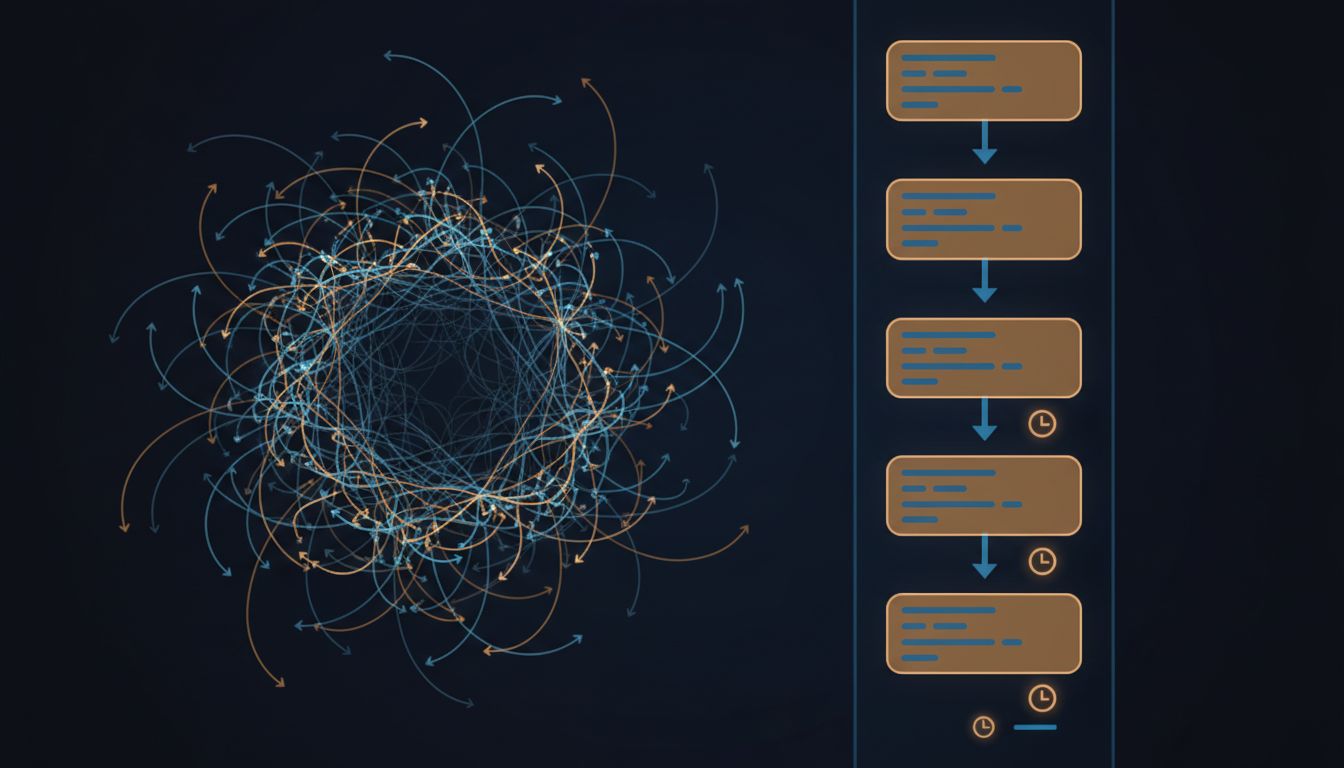
You also stop planning. During most of the workday, a large portion of your cognitive bandwidth goes toward meta-tasks: prioritizing, scheduling, deciding what to work on next, feeling vaguely guilty about what you’re not working on. In the last twenty minutes, that collapses. There’s only one thing left to do, and everyone implicitly agrees there’s no time to interrupt it.
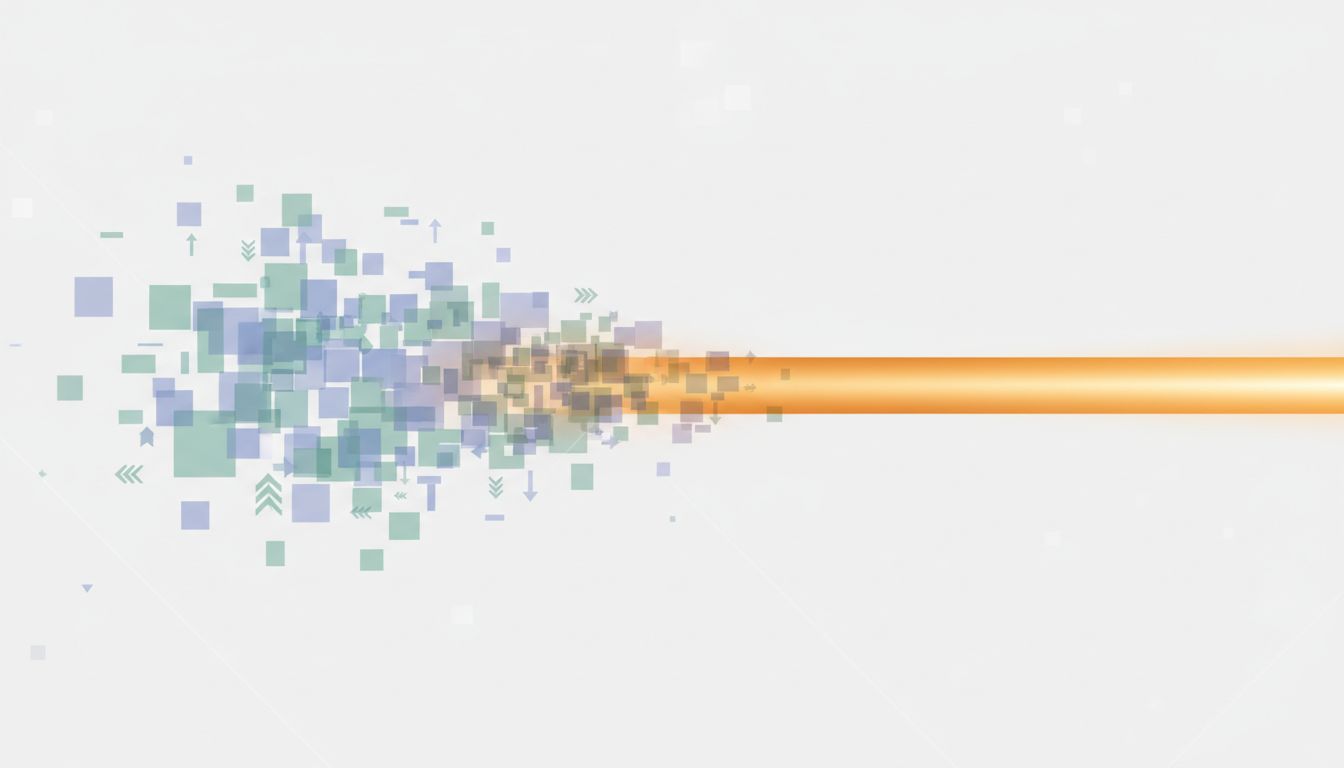
What you’re experiencing isn’t a burst of energy. It’s the first moment of genuine single-tasking you’ve had all day.
Researchers who study attention use the term “cognitive load” to describe the mental weight of holding multiple concerns simultaneously. Gloria Mark at UC Irvine has spent years documenting how long it takes workers to return to a task after an interruption (the number is consistently over twenty minutes for deep work). What the end of the day does is effectively eliminate new interruptions while your brain, somewhat depleted, finally has nowhere else to scatter its attention.
The Morning Myth
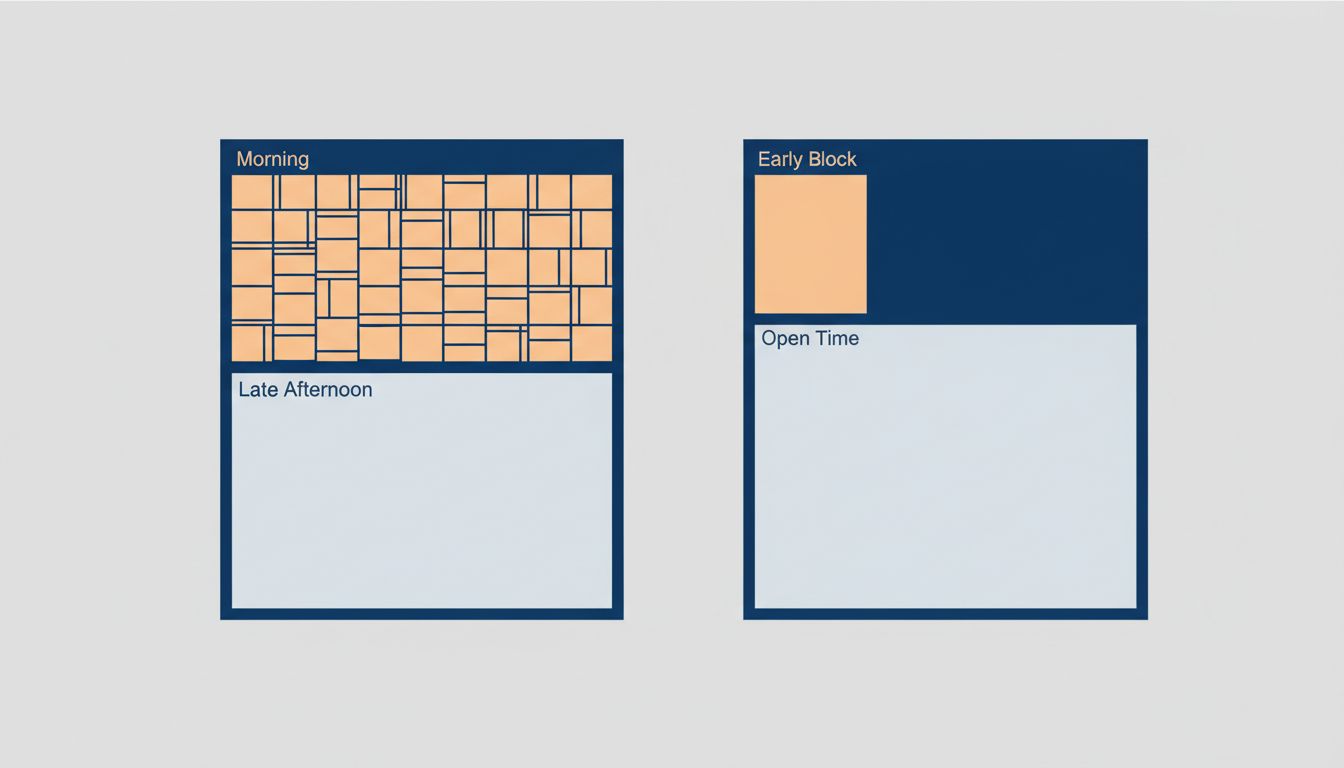
Productivity culture has a heavy bias toward mornings. The literature is full of 5 AM routines, cold showers, journaling before sunrise. Some of this is genuinely useful for some people, but the morning-first framework has a flaw: mornings are when most knowledge workers schedule their important meetings.
If your calendar fills from 9 AM onward with standups, check-ins, and planning sessions, your mornings aren’t a protected creative window. They’re the busiest part of your context-switching day. You’re not using your peak cognitive hours for deep work. You’re using them to be maximally interruptible.
The end-of-day focus surge happens in part because afternoons have been cleared (often unintentionally) of meeting density. The culture of “let’s grab time in the morning” has inadvertently protected your late afternoons. This is backwards from what most productivity advice recommends, and it’s worth taking seriously.
If you want the conditions of 4:40 PM earlier in your day, the most direct path is protecting a block in the morning with the same implicit contract: no new meetings, no interruptions, one task, hard stop. The hard stop matters more than most people realize. It’s not just motivating. It creates the same closed-horizon effect that makes end-of-day focus work.
Why the “Just Focus More” Advice Fails
There’s a version of productivity advice that treats focus as a character trait you either have or you don’t, or as a skill you develop through willpower. This misses something important about how attention actually works.
Focus isn’t a muscle you strengthen by grinding through distraction. It’s a state you create by removing the competition for your attention. Telling yourself to focus while notifications are on, while seventeen browser tabs are open, and while you’re technically available on four different channels is like trying to read in a room where people keep starting conversations near you. The problem isn’t your discipline. The problem is the room.
This is why attention residue is such a persistent problem in knowledge work. Every time you switch tasks, even briefly, some part of your brain keeps processing the previous task. The end of the day works partly because there are no previous tasks left to generate residue. The slate is close enough to clear that you can actually concentrate.
The practical implication: before you try to do important work, you need to close loops, not just close tabs. Responding to the three things in your inbox that are nagging at you, even quickly, reduces the background processing load more than any focus technique.
Designing the Conditions, Not Waiting for Them
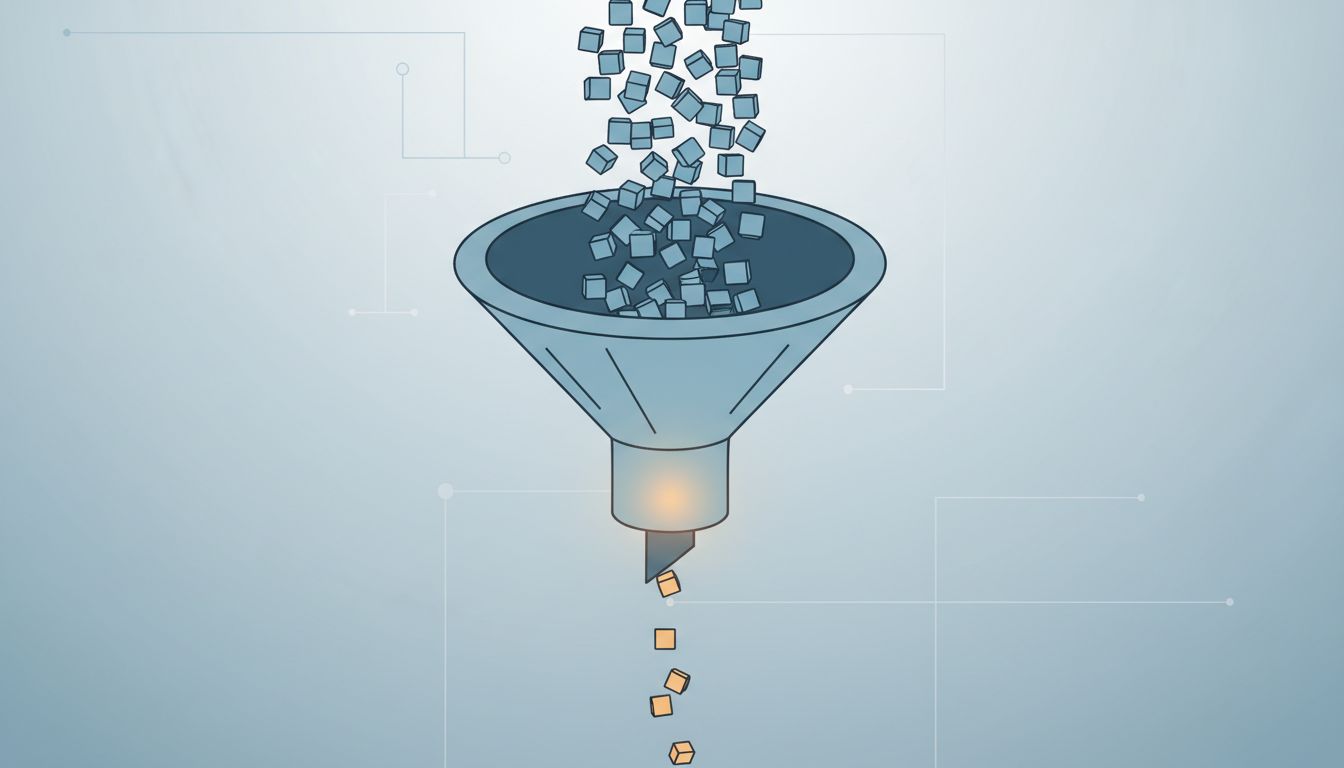
The end-of-day focus window isn’t something that happens to you. It’s a set of conditions that happen to coincide at a predictable time. You can assemble those conditions deliberately.
Here’s what actually creates the state:
A clear single task. Not “work on the report” but “write the executive summary section, stopping when it’s 300 words.” Vague tasks stay vague. Specific tasks have edges you can push against.
A real deadline. The 5 PM stop works because it’s external and credible. You can manufacture this. Book something at the end of your focused block. Tell someone you’ll send them the draft by a specific time. Make the deadline real by attaching a consequence.
A closed communication environment. Not silenced, actually closed. The difference between “notifications off” and “Slack quit” is psychologically significant. The possibility of a notification creates anticipatory attention even when nothing arrives. Your brain is still listening.
Permission to ignore everything else. This is the one people underestimate. A large part of what makes end-of-day focus feel different is that you’ve implicitly given yourself permission to not respond to anything because the day is almost over. You can grant that permission earlier. It requires deciding that for this block, the cost of missing a message is acceptable. For most knowledge workers, it is.
The Specificity Problem
One reason important work gets deferred to end-of-day is that it’s usually the least specified work on your list. “Respond to the invoice question” is easy to start. “Think through the product direction” sits on your list for days because you haven’t defined what done looks like.
Before your focused block, spend five minutes on what some productivity researchers call “pre-mortems for tasks”: what would a completed version of this work look like in concrete terms? Not the perfect version. The version you could ship today. Getting specific about the output reduces the activation energy required to start.
This is also why end-of-day work often produces better results than expected. Scarcity of time forces you to define scope. You stop trying to make it comprehensive and start trying to make it done. That’s often the right trade.
What This Means for How You Structure Your Days
The end-of-day focus surge is a diagnostic, not a productivity hack. It’s telling you that your most important work requires conditions your calendar isn’t providing until 4:40 PM.
The fix isn’t complicated, but it requires treating protected time as non-negotiable rather than aspirational. The most productive people treat their calendar like source code: changes have consequences, and every open slot is an implicit invitation to interrupt.
Here’s the practical framework:
- Identify your one most important task for tomorrow before you close your laptop today. Not your task list. One thing.
- Block ninety minutes for it on your calendar before 11 AM, and treat that block the way you’d treat a client call. Meetings don’t get scheduled over it.
- Before you start the block, close loops on anything that’s generating background noise. Reply, defer, or delete.
- Create an artificial deadline by attaching the end of the block to something real: a meeting, a sent message, a commitment.
- Close communication tools completely. Not silenced. Closed.
That’s it. You’re not doing something exotic. You’re recreating the conditions of 4:40 PM at 9 AM, when your energy is higher and the stakes are clearer.
The end-of-day surge isn’t a gift. It’s evidence of what your work day could have been. The good news is that the conditions are reproducible, and you can start tomorrow.