You’ve got Notion, Obsidian, or Apple Notes open in one tab. You’ve got a beautiful system, maybe even a second brain. And yet, your most interesting ideas, the ones that actually went somewhere, probably started on a napkin or a legal pad. That’s not nostalgia talking. There’s a specific cognitive reason why digital note-taking apps undermine creative thinking, and once you understand it, you can design a hybrid workflow that gives you the best of both worlds.
This tension between analog and digital tools shows up in all kinds of unexpected places. As we’ve written before, the most productive engineering teams deliberately use outdated communication tools because friction, paradoxically, can improve output quality. The same principle applies to how you capture ideas.
The Real Problem Isn’t the App. It’s What the App Optimizes For.
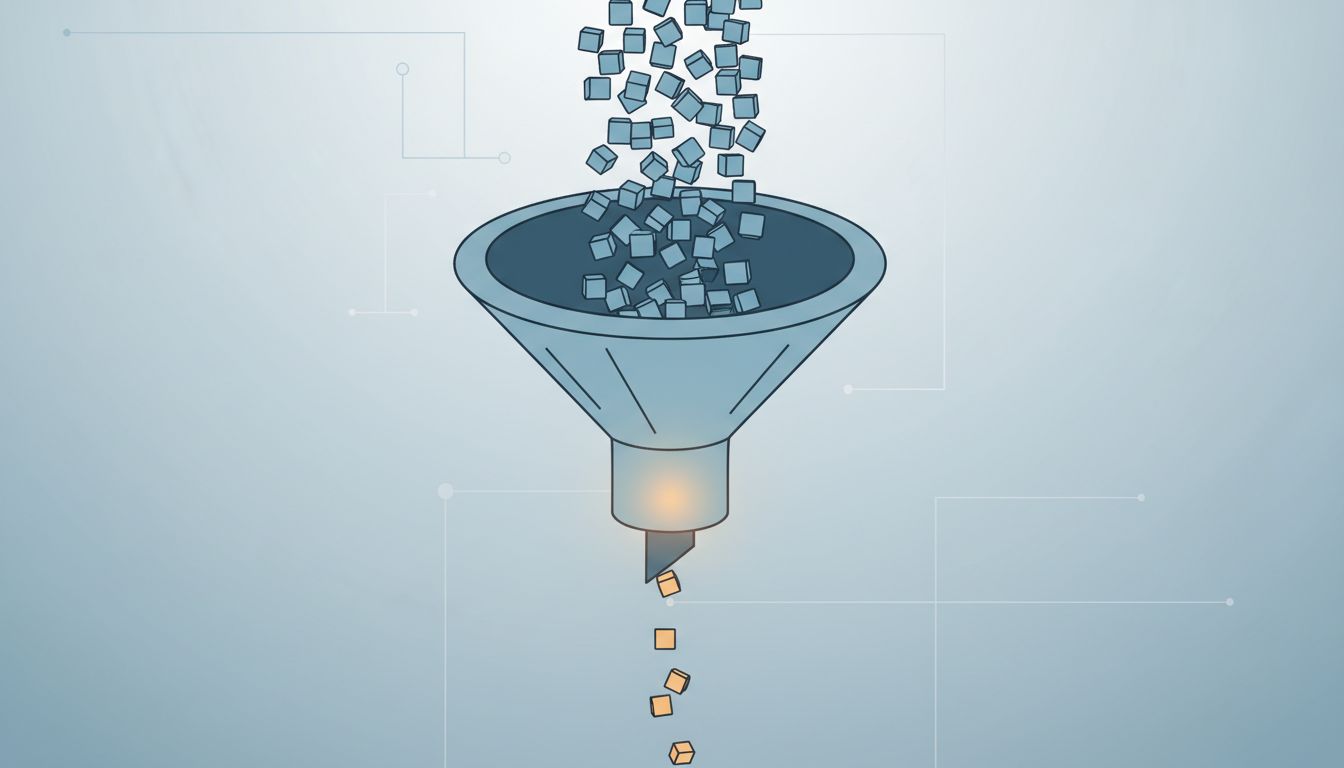
Digital note-taking apps are brilliant at storage and retrieval. They’re designed to make capturing information fast, frictionless, and searchable. That sounds like exactly what you want. But here’s the problem: creative thinking isn’t a retrieval task. It’s a generative one. And the features that make apps great at storage actively interfere with generation.
When you open a new note in Notion or Obsidian, you’re met with a clean, formatted, cursor-blinking interface. It signals: produce something complete. Type in full sentences. Use headers. Link it to your system. That low-friction polish quietly pressures you toward polished thinking before you’re ready for it.
Paper has no such agenda. A blank page doesn’t care if your idea is half-formed, badly drawn, or surrounded by arrows pointing nowhere useful. That permissiveness is the point.
What the Research Actually Says
A well-known study from Princeton University and UCLA found that students who took notes by hand outperformed laptop users on conceptual questions, even though laptop users recorded significantly more information. The reason is that handwriting forces you to process and paraphrase in real time. You can’t type fast enough to transcribe everything, so your brain has to decide what matters, which is exactly the compression process that generates insight.
This connects to something called “desirable difficulty,” a concept from cognitive psychology. When a task is slightly harder, your brain encodes it more deeply. Typing removes most of the difficulty. Handwriting reintroduces just enough.
There’s also the spatial dimension. On paper, your ideas have a physical location. You remember that the thing about the distribution model was in the bottom-right corner of page four. That spatial memory activates more of your hippocampus during recall. In an app, everything lives at the same coordinates: the top of a search results list.
The Hidden Design Choices That Work Against You
It’s worth understanding that digital tools are not neutral. Every interface decision shapes your behavior, often in ways that serve the product’s goals more than yours. We’ve covered how digital calendars are making you worse at time management because of choices built into the design. Note-taking apps have similar embedded assumptions.
Most apps reward completeness. Notion’s database structure, Obsidian’s backlinks, Roam’s block references: they all presuppose that your idea is a node in a graph, something with defined relationships to other things. That’s a great model for organizing existing knowledge. It’s a terrible model for thinking that doesn’t know what it is yet.
Furthermore, apps give you infinite space with zero resistance. This sounds like a feature, and it is, for certain tasks. But creative thinking often benefits from constraints. A half-sheet of paper forces prioritization. A narrow notebook margin forces compression. Constraints don’t limit ideas; they concentrate them.
A Practical Hybrid System You Can Start Using Today
You don’t need to abandon your apps. You need to use them at the right stage of thinking. Here’s a three-phase framework:
Phase 1: Generate on paper. When you’re exploring a new idea, a problem, a strategy, or a creative direction, reach for paper first. Set a timer for 15 to 20 minutes. Write fast and messily. Draw diagrams. Use arrows. Cross things out. Don’t worry about structure. Your only job is to externalize thinking, not organize it.
Phase 2: Filter on paper. Once you’ve filled a page or two, go back with a different colored pen. Circle the two or three things that feel genuinely interesting. Write a sentence under each one explaining why it matters. This step happens on the same physical page, not in a new document.
Phase 3: Capture digitally. Only after you’ve filtered your thinking do you open your app. Type up only the ideas that survived the paper stage. This is where your digital system shines: tagging, linking, cross-referencing, and storing for later. But you’re feeding it finished thoughts, not using it to generate them.
This workflow mirrors something top performers already know. The single-tab rule that high performers use to get more done relies on the same underlying principle: reducing optionality during focused work dramatically improves the quality of output. Giving your paper phase an exclusive window does the same thing for idea generation.
What to Keep in Your Paper Kit
You don’t need anything fancy. The point is accessibility and comfort, not aesthetics. A few practical recommendations:
- Keep a small notebook (A5 or similar) on your desk and a larger pad nearby for bigger thinking sessions
- Use a pen you actually enjoy writing with (this matters more than it sounds)
- Date your pages but don’t number or index them obsessively, that’s what your digital system is for
- Review paper notes within 24 hours while context is fresh, then transfer selectively
The goal isn’t to become a paper purist. It’s to stop expecting your notes app to do something it was never designed to do.
The Uncomfortable Truth About “Frictionless” Tools
The tech industry has sold frictionlessness as a universal good. Remove all barriers between thought and capture, and you’ll think better. But that’s only true if capture is your problem. For most creative professionals, capture is easy. Generation is hard. And the tools built to make capture easier have quietly made generation harder by training your brain to expect a finished product before you’ve done the messy work of actually thinking.
Your best ideas don’t need to be organized. They need to be found. Paper is where you find them. Your app is where you keep them. Use each one for what it’s actually good at, and you’ll be surprised how quickly the gap between having ideas and doing something with them starts to close.