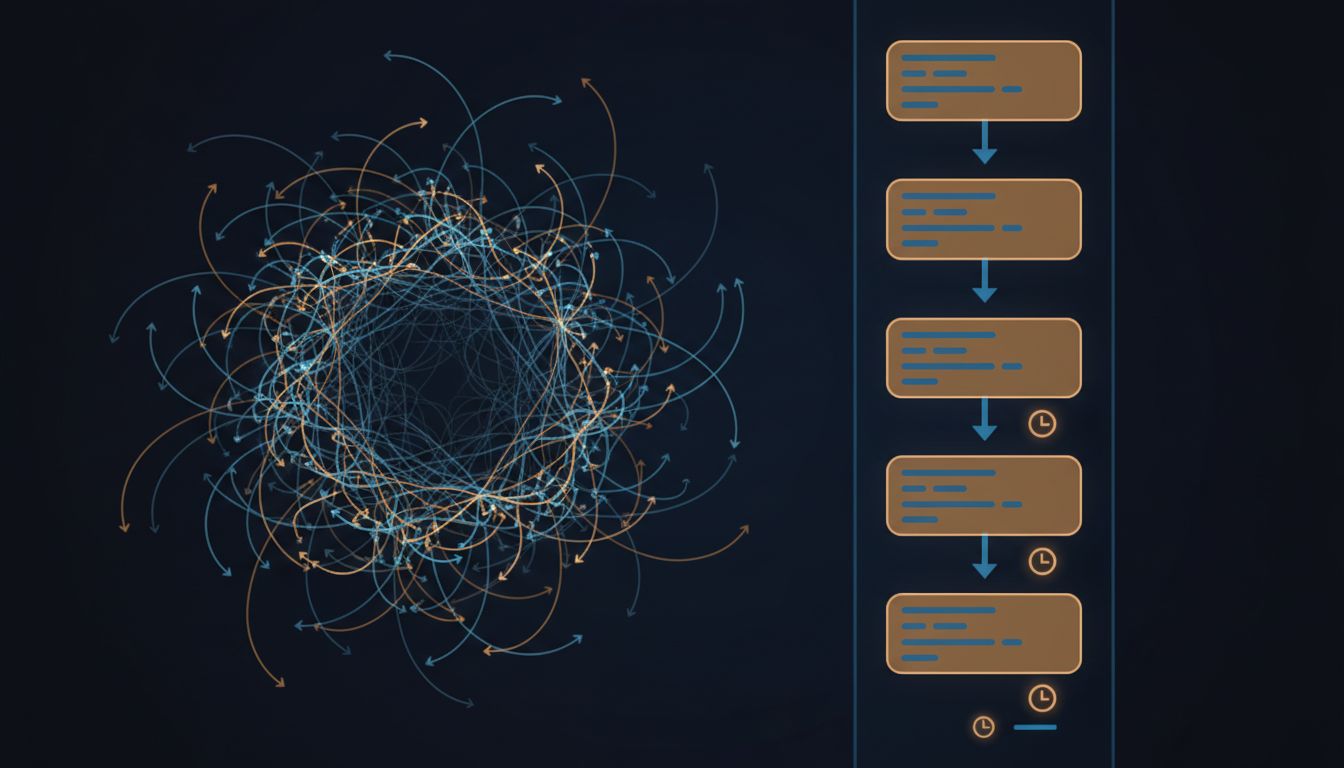
Most people treat their inbox like a database with no schema. Everything arrives in one flat table, and they wonder why querying it feels like a full table scan every time they sit down to work. The solution is not a better filter or a smarter label system. The solution is to stop pouring everything into the same bucket in the first place.
The most productive people I know run three to five email addresses. Not because they have more to manage, but because they have decided to manage less at once. The separation is the system.
Separation of concerns is not just a software principle
In software architecture, separation of concerns means giving each component one job and keeping the boundaries between them explicit. A function that fetches data, transforms it, and renders it is harder to debug, test, and modify than three functions that each do one thing. Your inbox has the same problem.
When a newsletter confirmation, a calendar invite from a client, a GitHub notification, and a message from your manager all arrive in the same place, your brain has to triage before it can act. That triage cost is real and it compounds. You are not just processing email; you are constantly re-deciding what kind of attention each item deserves.
A dedicated address for newsletters and subscriptions removes that cost entirely. You check it when you want to read, not when you want to work. A separate address for automated alerts (CI/CD failures, monitoring pings, invoices) means you can write filters once and let them run without risk of catching something personal. Your primary work address becomes genuinely high-signal.
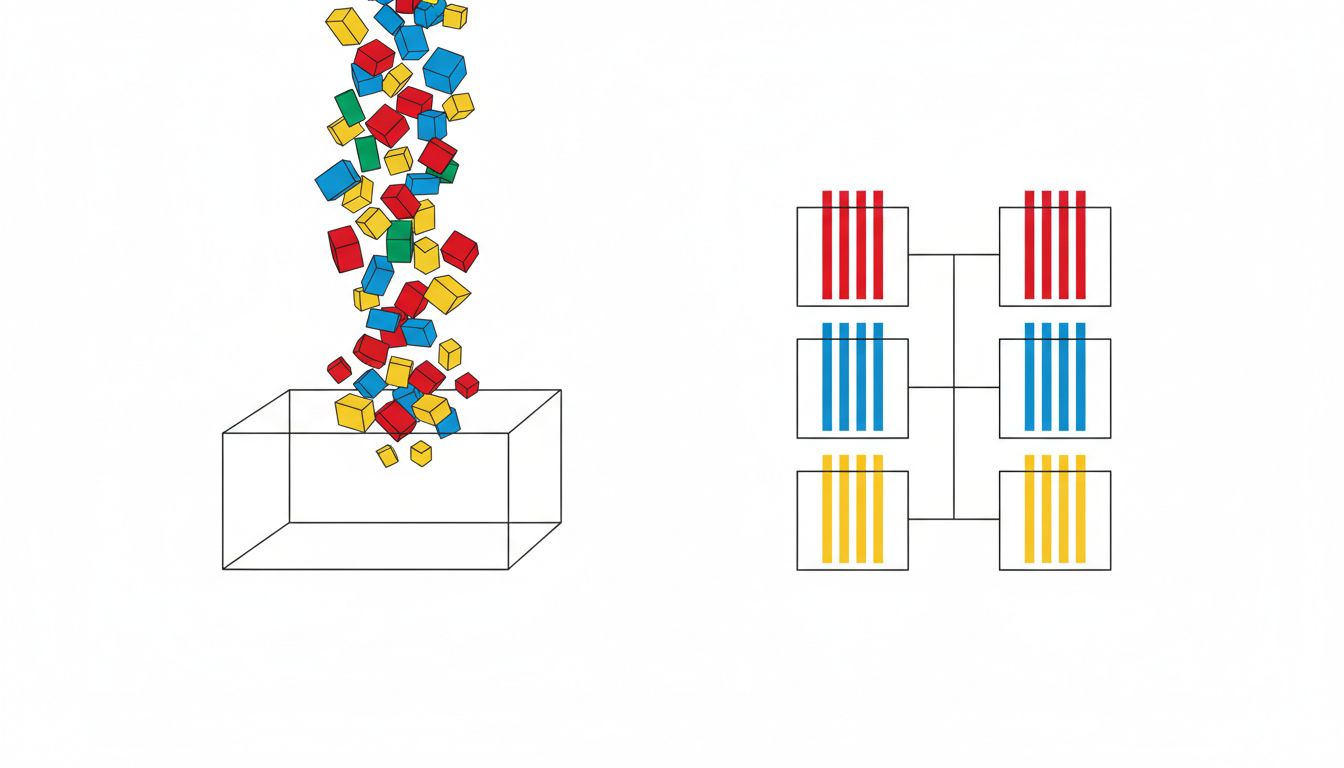
Spam and data exposure are architectural problems, not hygiene problems
When you give your real email address to every service you sign up for, you are creating undifferentiated exposure. You cannot tell which service leaked your address, and you cannot easily cut off the leak without changing an address you use for everything.
Running a dedicated address for signups and purchases solves this at the source. When that address starts receiving spam, you know exactly which category of service sold or leaked it. You can abandon the address with zero collateral damage. Your primary address stays clean not because you were lucky, but because it was structurally protected.
This is the same logic behind using separate API keys for separate services rather than one master key. The blast radius of any single compromise is bounded by design.
Your attention has different modes and your email should match them
Checking work email and checking personal email are genuinely different cognitive states. When you open your work inbox, you are in problem-solving mode, scanning for blockers and obligations. When you open personal email, you are in a different register entirely. Mixing the two means you are never fully in either.
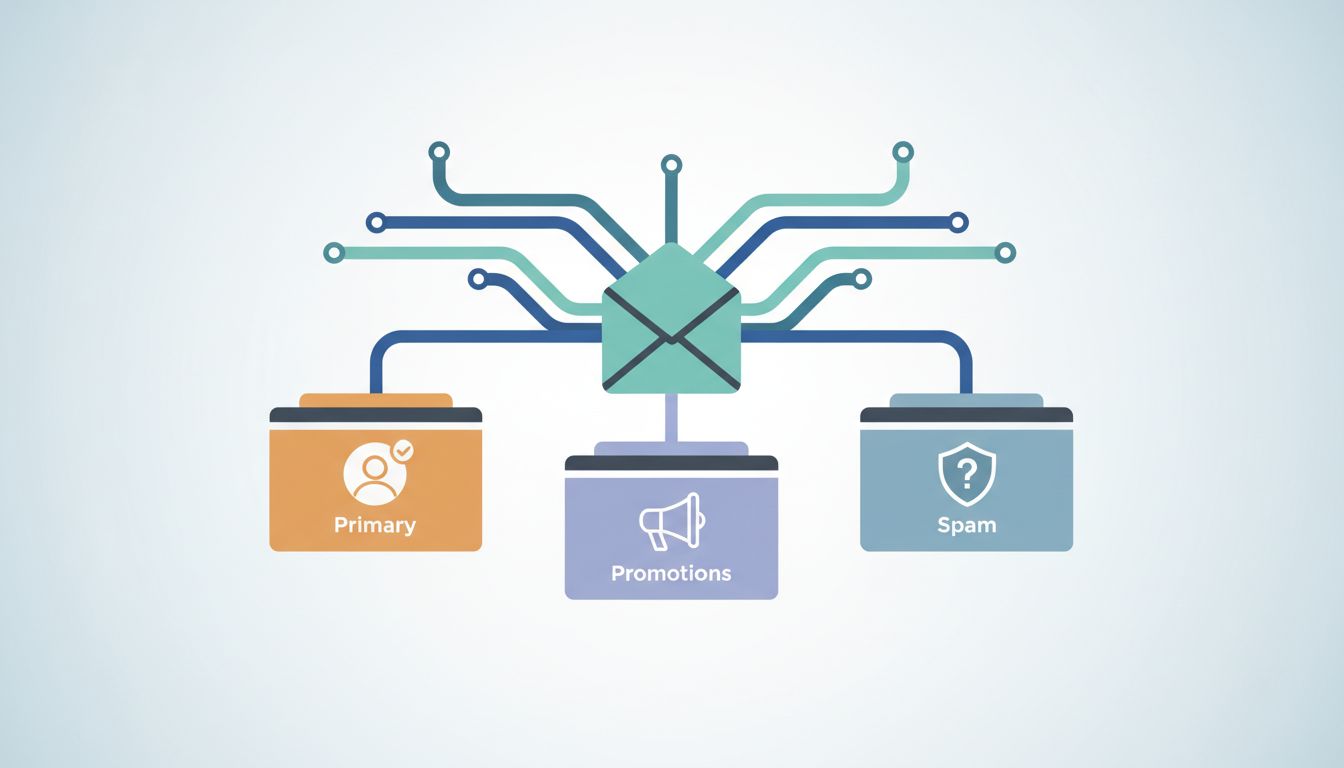
The practical structure that works: a primary professional address that only your colleagues, clients, and serious contacts have; a secondary address for services and subscriptions you actually want; a throwaway address (or an alias service like SimpleLogin or Apple’s Hide My Email) for anything you are not sure about. Three addresses, three modes, three times when you check each one.
This is not complicated to implement. Gmail and most modern email clients support multiple accounts natively, and switching between them takes two seconds. The friction is entirely upfront and one-time. The benefit is ongoing.
The counterargument
The standard objection is that this adds complexity, and that filters and labels can accomplish the same thing inside a single inbox.
This is true in the same way that you could store all your application state in a single global object and just be careful with your variable names. Technically possible. In practice, it degrades over time, it requires constant maintenance, and it breaks in ways that are hard to predict. Every filter you write is a rule you have to remember and update. Every label system you build is a taxonomy you have to keep consistent.
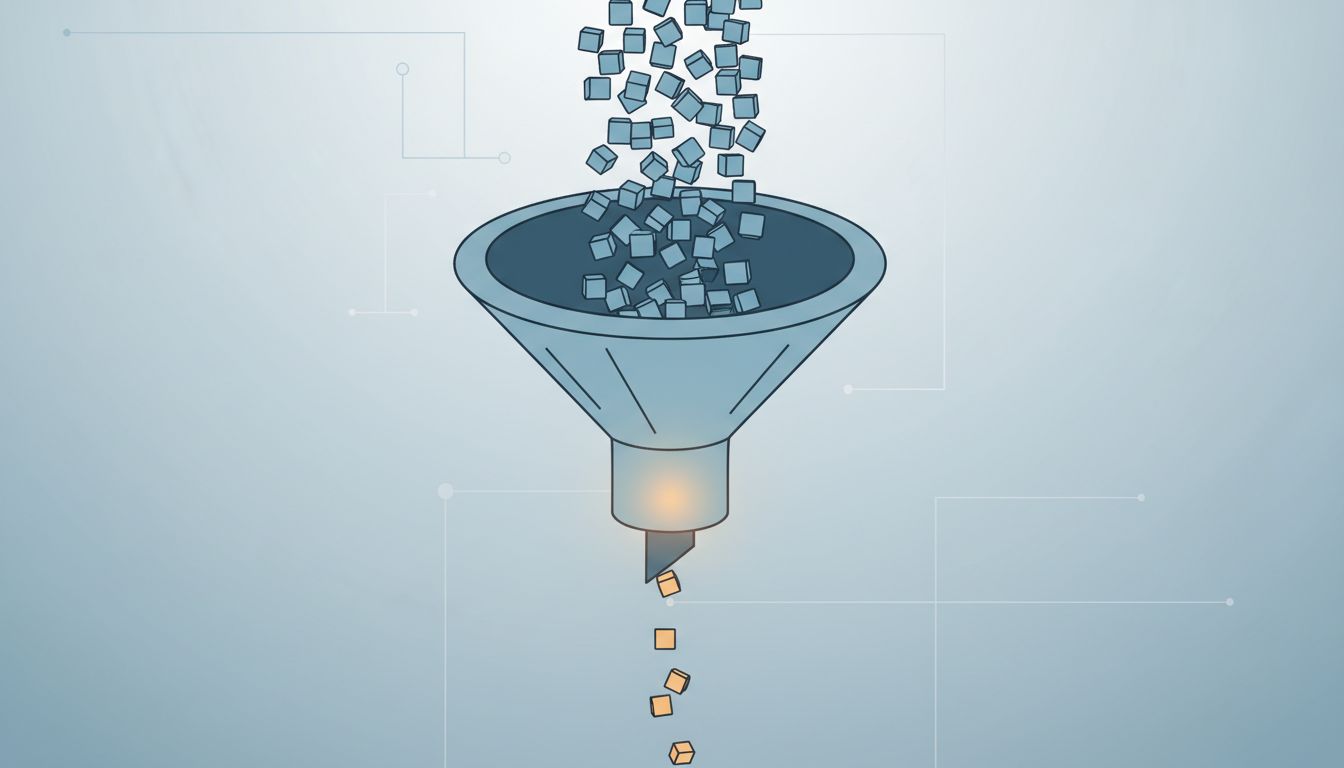
More fundamentally, filters act on email after it arrives. Separate addresses act on email before it arrives. The architectural difference matters. With filters, your inbox still fills up with everything and gets sorted after the fact. With separate addresses, the wrong things never arrive in the wrong place.
There is also the question of what happens when a filter breaks or an exception slips through. With a single inbox, the exception poisons the whole stream. With separate addresses, the exception is contained.
The actual setup, concretely
Here is what a minimal version looks like: [email protected] for work and people who matter. [email protected] or similar for newsletters, subscriptions, and services you trust. An alias via SimpleLogin or a +throwaway suffix (knowing that many sites strip the plus tag) for everything else.
You check the first one during work hours. You check the second one when you have reading time. You check the third one never, or once a week to see if anything real landed there.
The point is not to have more email accounts. The point is to have a system where the category of attention required is determined before the message reaches you, not after. That is what productive people have figured out, and it is not a hack. It is just decent information architecture applied to a tool you use every day.