Every productivity system eventually breaks down in the same place. You open your task manager, scan the list, and feel a familiar low-grade dread. Not because you’re lazy or disorganized. Because the items on your list don’t actually correspond to how work gets done.
The default unit in almost every to-do app is the task. Write report. Schedule meeting. Fix bug. Review proposal. These look like actionable items. They are not. They are category labels dressed up as instructions, and the gap between what you wrote and what you actually need to do is where your productivity disappears.
What a Task Actually Costs You
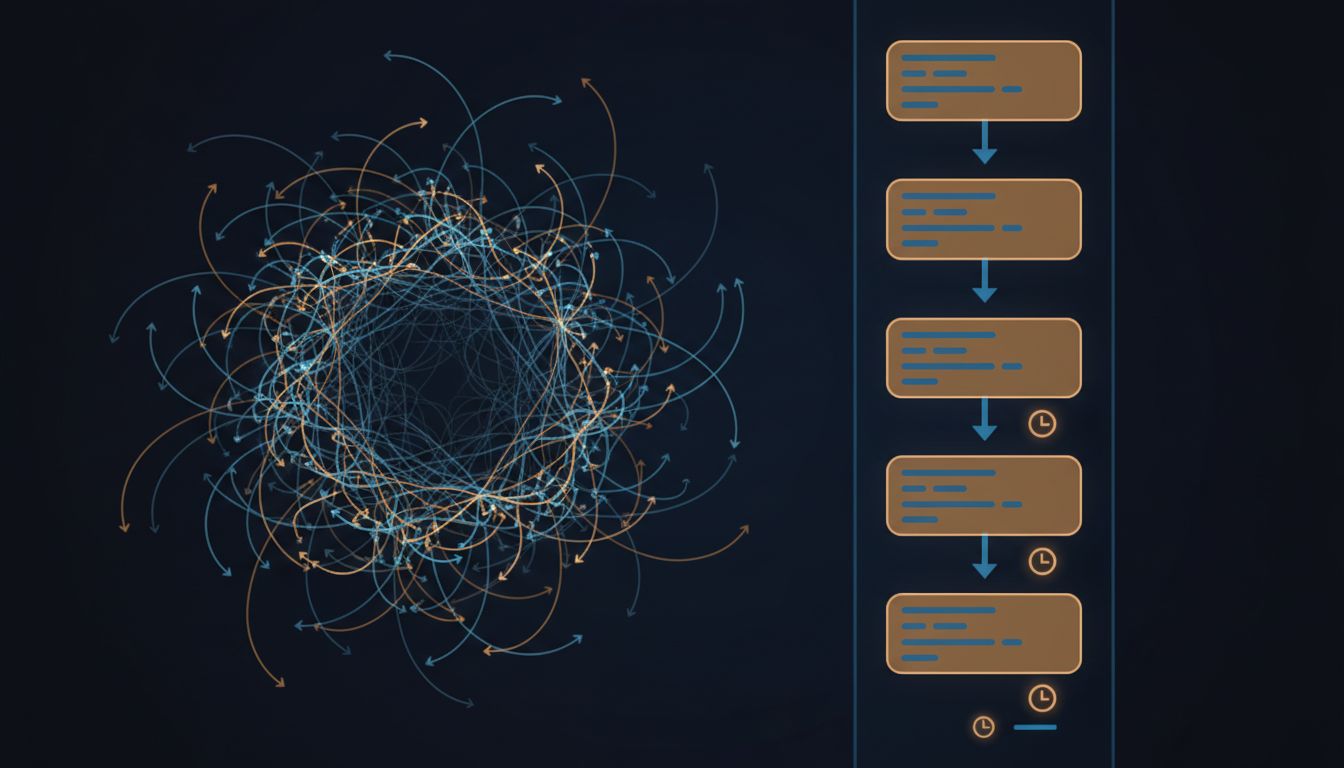
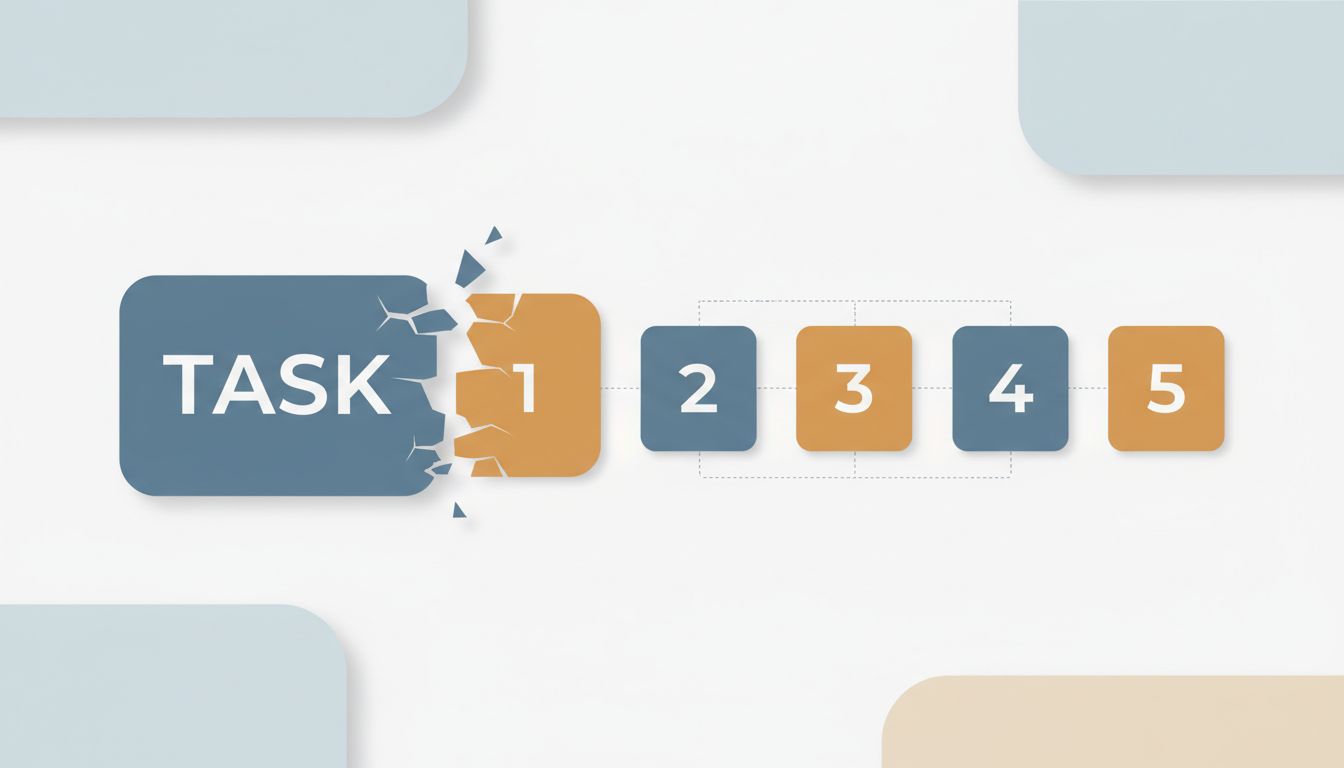
When you write “fix bug” on a to-do list, you’ve captured the outcome, not the work. Before you can fix a bug, you need to reproduce it, understand its context, identify the likely causes, write and test a patch, and verify that nothing else broke. That’s not one task. That’s a sequence of five or six distinct cognitive moves, each of which requires its own setup and attention.
The mismatch matters because your brain treats each item on your list as roughly equivalent until you actually start it. So you look at “fix bug” and “reply to Greg” sitting side by side and you pick “reply to Greg” every time, because its true scope matches what it says on the label. “Fix bug” keeps getting pushed. Not because you’re avoiding it, but because the real cost of starting it is invisible until you’re already in it.
This is related to a broader problem with how we context-switch: fragmented attention doesn’t just slow you down, it fragments the thinking that actually produces work. Bad task decomposition forces unnecessary switching because every “simple” item turns out to have hidden setup costs you didn’t account for.
The Unit That Actually Works: The Defined Next Action
David Allen’s Getting Things Done introduced the concept of the “next action” decades ago, and it remains the most practical fix to this problem. A next action is the specific physical or cognitive step you would take if you sat down right now with nothing else in the way.
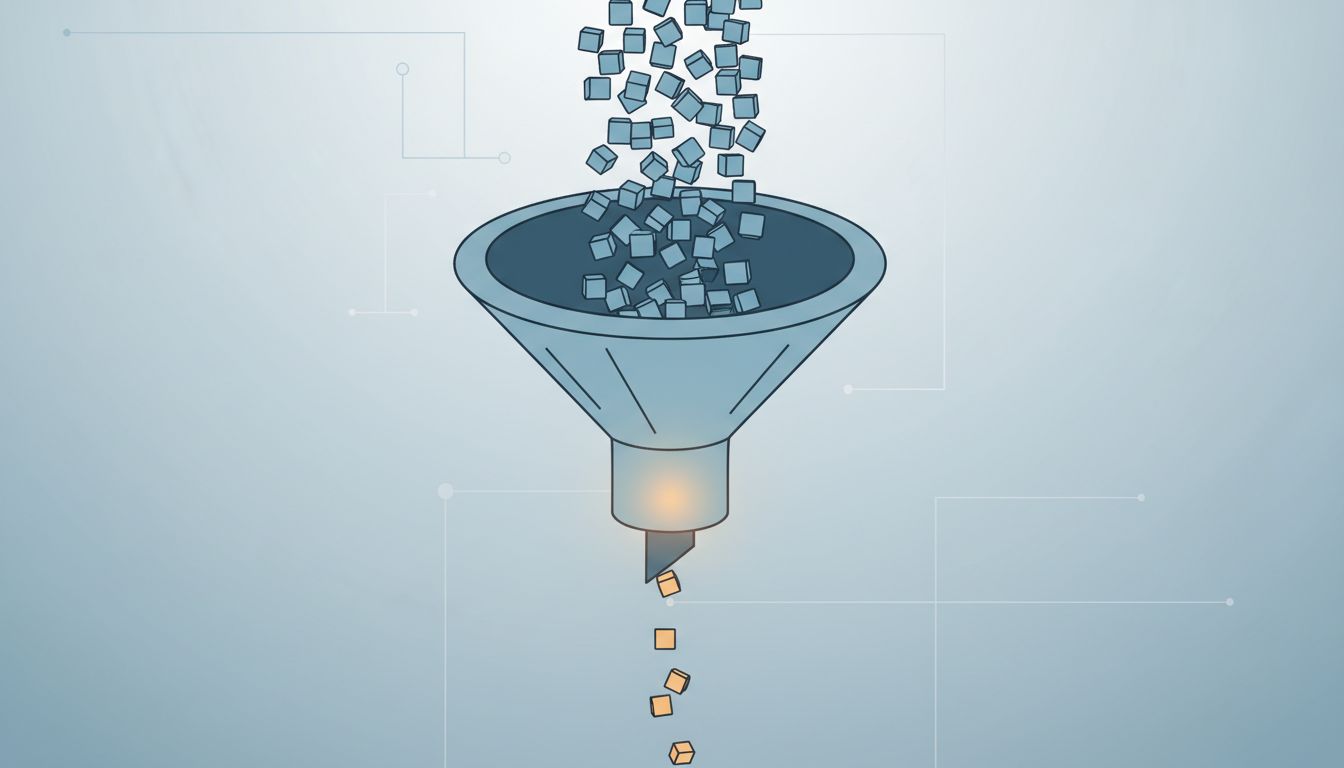
“Fix bug” becomes “open the error log from Friday’s deploy and find the stack trace.” “Write report” becomes “draft the executive summary section in the shared doc.” The difference is not just semantic. A properly defined next action is something you can start within thirty seconds of reading it. You don’t have to plan, interpret, or figure anything out. You just begin.
The discipline here is front-loading the cognitive work. When you capture a task, you take thirty seconds to ask: what would I actually do first? That small investment at capture time pays back enormously at execution time, when your mental resources are already being spent on the work itself.
Where Most People Get This Wrong
The most common mistake is treating projects as tasks. A project is anything that requires more than one step to complete. Most items on a typical to-do list are projects. “Prepare for the board meeting” is a project. “Hire a contractor” is a project. Even “clean out the inbox” is a project if you haven’t done it in two weeks.
When you write a project on your task list, you end up with a list that looks full but provides no traction. You stare at it, feel overwhelmed, and gravitate toward small easy items that feel like progress but don’t move anything important forward.
The fix is simple but requires a habit change: when you capture anything that takes more than one step, immediately write down the first concrete action separately. Keep the project name somewhere as a reference if you want, but make sure the thing on your active list is always a single, startable step.
This also changes how you handle the end of your day. Instead of looking at a list of projects and feeling vague anxiety about tomorrow, you can look at a list of defined next actions and know exactly where each thing picks up. That handoff from your present self to your future self is one of the highest-leverage things you can do for your own productivity.
Sizing Your Actions to Match Your Available Time
There’s a second dimension to getting the unit of work right: matching action size to the time blocks you actually have.
A next action like “outline the entire product roadmap” is technically specific, but it’s not completable in a twenty-minute window between meetings. If your next action is too large for the realistic time you have available, it behaves exactly like a project. It gets deferred until some mythical block of uninterrupted time that may not arrive this week.
When you define a next action, ask two questions. First: is this physically startable right now? Second: could I finish this in one focused sitting given the kind of day I’m actually having? If the answer to either is no, break it down further.
Some people add context tags to their task lists for this reason: actions they can do in fifteen minutes, actions that require deep focus, actions that just need a phone. This isn’t busywork. It’s making your system usable in the actual conditions you face, not idealized conditions where you have three uninterrupted hours every morning.
What to Do With Your Existing List
You don’t need a new app. The problem isn’t your tools, it’s the grammar of how you’re using them. Here’s a practical way to reset your current list without spending a whole day on it.
Go through each item and ask: is this a project or an action? For every project, write one next action below it or instead of it. Delete or archive the project label if having it there confuses things. For actions that survived, ask whether they’re startable in thirty seconds or less. If not, rewrite them until they are.
Do this for your top ten most important items first. Don’t try to process the whole list at once. Get the most important work properly defined, then work your way down over the following days. You’ll likely find that many things on your list simply disappear once you ask what the actual next step is, because some “tasks” turn out to be wishes, not work.
The goal isn’t a perfect system. The goal is a list you can look at and immediately start moving on. If your current list doesn’t give you that, the problem is almost certainly the unit of work, not your willpower.