
In December 2017, a Reddit user named TeckFire posted something that would eventually cost Apple half a billion dollars. They had noticed that their iPhone 6S ran measurably faster after a battery replacement. Benchmarking software confirmed it. The post spread, Geekbench’s John Poole ran systematic tests across thousands of devices, and within days the evidence was unambiguous: Apple had been throttling processor performance on older iPhones to prevent unexpected shutdowns caused by aging batteries.
Apple confirmed it. The company had quietly introduced the feature in iOS 10.2.1 without telling anyone, framing it internally as a battery management improvement. The public called it Batterygate. Regulators in multiple countries opened investigations. Apple eventually paid $113 million in a settlement with state attorneys general in the United States, plus additional settlements in Europe. The company also launched a battery replacement program, temporarily cutting the price from $79 to $29.
The scandal is worth revisiting not as a story about corporate malfeasance but as a case study in how technology companies make decisions that are simultaneously defensible and indefensible, and how the gap between those two positions gets filled with the kind of language that poisons trust.
The Setup: A Real Engineering Problem
To understand what Apple actually did, you need to understand lithium-ion batteries. They degrade with use. A battery rated at 100 percent capacity after manufacture might deliver 80 percent after 500 charge cycles. The problem is that peak power demands, like unlocking Face ID, launching an app, or handling a sudden burst of computation, can momentarily require more current than an aged battery can supply. When that happens, the battery voltage drops below a safe threshold and the phone shuts off unexpectedly.
Unexpected shutdowns are genuinely terrible. They can corrupt data, interrupt calls, and in the case of a device someone relies on for navigation or communication, create real safety problems. Apple had documented a spike in customer complaints about sudden shutdowns on iPhone 6, 6S, and SE models in late 2016. The engineering response, capping peak processor speed to reduce maximum power draw, was a legitimate solution to a legitimate problem.
The engineering decision was not crazy. The communication decision was.
What Happened: A Silence That Spoke Volumes
Apple told nobody. There was no notification when a device entered the throttled state. No explanation in release notes. No option to disable the feature, even if a user was willing to accept the risk of unexpected shutdowns. The company made a choice about how a device would perform and withheld that information from the people who owned the device.
This is where the story stops being purely technical. The throttling affected devices that were approaching the age when many users would consider upgrading. Users who noticed sluggishness and didn’t know about the battery management feature had no obvious explanation except that their phone had gotten old, which is exactly the kind of friction that drives upgrade decisions. Apple did not design the feature to manufacture that friction. But Apple also did not design any transparency mechanism that would have prevented users from interpreting the slowdown as ordinary aging.
The result was a feature that looked indistinguishable from planned obsolescence, even if it wasn’t. Tech companies that build lock-in through cheap entry-point hardware at least make their business model visible. Apple’s opacity here was worse because it came wrapped in a genuine engineering rationale.
Why It Matters: The Justification Architecture
After the story broke, Apple issued a public apology that was notable for its structure. The company explained the technical reasoning, expressed regret for not communicating it clearly, and announced remediation. The apology was sincere in the sense that the engineering explanation was accurate. It was incomplete in the sense that Apple never fully grappled with why transparency had been absent in the first place.
The answer, if you read between the lines of how large consumer technology companies operate, is that transparency about device degradation creates support costs and accelerates the perception of product failure. Telling users their battery is limiting their phone’s performance invites questions, complaints, and requests for free replacements. Saying nothing avoids all of that, while still technically solving the shutdown problem the engineers were tasked with fixing.
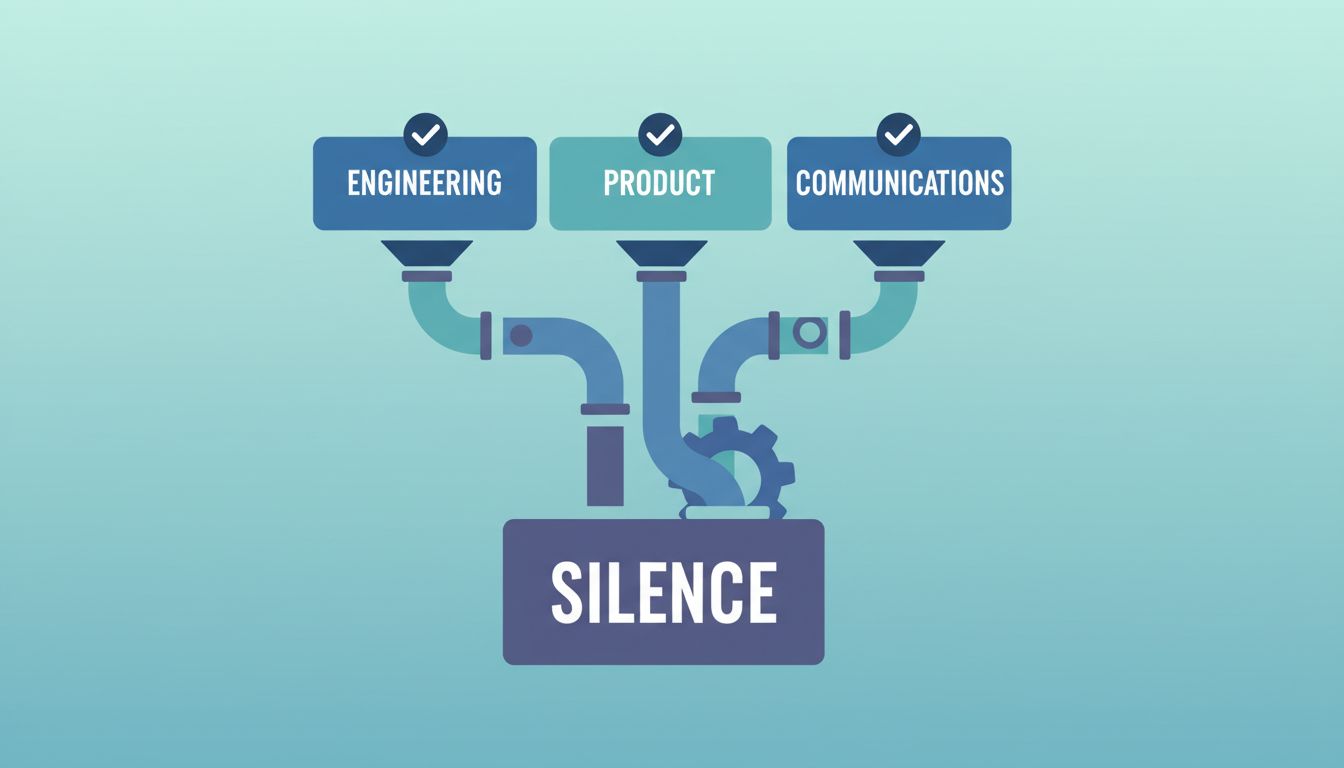
This is not a conspiracy. It is a set of institutional incentives that systematically favor non-disclosure. The engineering team solves a real problem. The product team frames it as a feature rather than a limitation. The communications team, if they’re involved at all, is not going to volunteer information that creates a support nightmare. Each decision is locally rational. The aggregate is a betrayal of user trust.
What We Can Learn: The Transparency Tax
The lesson Apple learned, and it did learn it, is that the cost of eventual forced disclosure is vastly higher than the cost of proactive transparency. After Batterygate, iOS 11.3 introduced a battery health menu that showed users exactly what condition their battery was in and whether performance management was active. That feature should have existed in iOS 10.2.1. Its absence was not a technical oversight.
Broader patterns confirm this. The deliberate confusion that tech companies use around privacy disclosures follows the same logic: when full transparency would generate friction, the default is to reduce transparency rather than reduce the action causing the friction. The pattern recurs because it works, right up until it doesn’t.
For users, the practical takeaway is specific: software updates on older devices should be treated as requiring due diligence, not automatic acceptance. Apple now discloses performance management in the battery health settings. Android manufacturers vary widely. The information is increasingly available if you know to look for it.
For companies, the case is starker. Apple spent years rebuilding trust around battery transparency and still faces consumer skepticism about upgrade incentives. The settlement cost was real but almost beside the point. The reputational cost of being caught managing user experience in secret is structural. It doesn’t go away when the settlement is paid.
The Batterygate story is ultimately about a company that built something useful, hid it, and then had to explain why hiding a useful thing was acceptable. The explanation was never satisfying because there wasn’t one. The engineering was sound. The judgment call to stay silent was not. Those two things can both be true, and in the consumer technology industry, they frequently are.