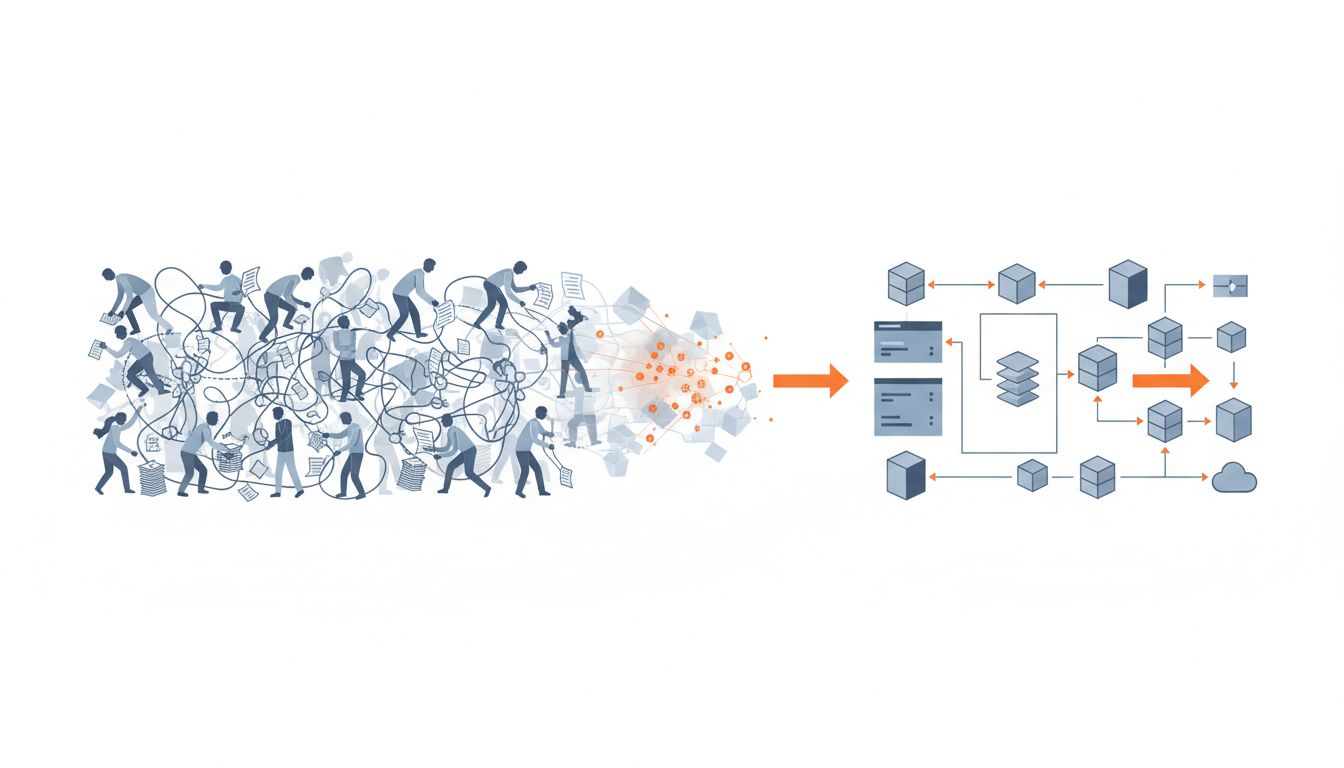

A founder I know spent eight months building a project management tool for construction crews. Custom mobile app, offline sync, the works. He launched it, did a ProductHunt post, sent it to his email list. Crickets. Not “low adoption” crickets. Zero-paying-customers crickets. He’d built something nobody had bothered to ask for, and he’d done it beautifully.
Compare that to another founder who sent a two-paragraph cold email to thirty general contractors describing a tool she hadn’t started building yet. She asked for $300 upfront for annual access. Seven said yes. She built the product. Seven turned into sixty within a year. She never had a dead launch because she never had a launch day that meant anything, because the real launch had already happened when cash hit her account.
These aren’t exceptional stories. They’re the rule, just told honestly for once.
The Mythology Around “Validation”
The startup world talks constantly about validation, but it has quietly redefined the word to mean something toothless. A landing page with a signup form is called validated. A survey with a hundred responses is called validated. An advisor who says “this is interesting” over coffee is, somehow, also called validation.
None of it is. Validation, in any sense that actually protects you from building the wrong thing, requires someone to give up something they care about. Attention is cheap. An email address is cheap. Even a thirty-minute call is cheap. Money is not cheap. Money is the only signal that carries real weight because it’s the one a person can’t easily take back, and it’s the one they think hardest before giving.
Signing up for a waitlist takes four seconds and costs nothing. Handing over $200 for software that doesn’t exist yet requires a person to actually believe you’ll solve their problem. Those are completely different cognitive acts, and confusing them is how you end up eight months into a product with no customers.
Why Prepayment Is Actually More Honest
There’s a version of the charge-before-you-build conversation that frames it as a clever hack: a way to fund development without diluting equity, or a trick to manufacture urgency. That framing undersells it and, frankly, gets the incentive backwards.
Prepayment isn’t a trick you play on customers. It’s a commitment you make to them. When someone pays you for something that doesn’t exist, you now owe them something real. That pressure is not a side effect to manage. It’s the mechanism. It forces specificity. You can’t take $300 from seven people and then go build whatever sounds interesting to you. You have to build the thing you told them you’d build, and you have to talk to them constantly to make sure you understood what they actually meant when they said yes.
The accountability runs both directions: customers who’ve paid are more invested in telling you the truth. They’ll tell you the product is wrong faster than a free user will, because they have skin in the game too. Free users ghost. Paying customers complain, and complaints are what you need.
The Mechanics of Doing It Without Burning Trust
The obvious objection is that this feels like a scam. You’re asking people to pay for something that doesn’t exist, which is a sentence that sounds bad out of context. The difference between preselling and fraud is transparency, and transparency is not actually hard.
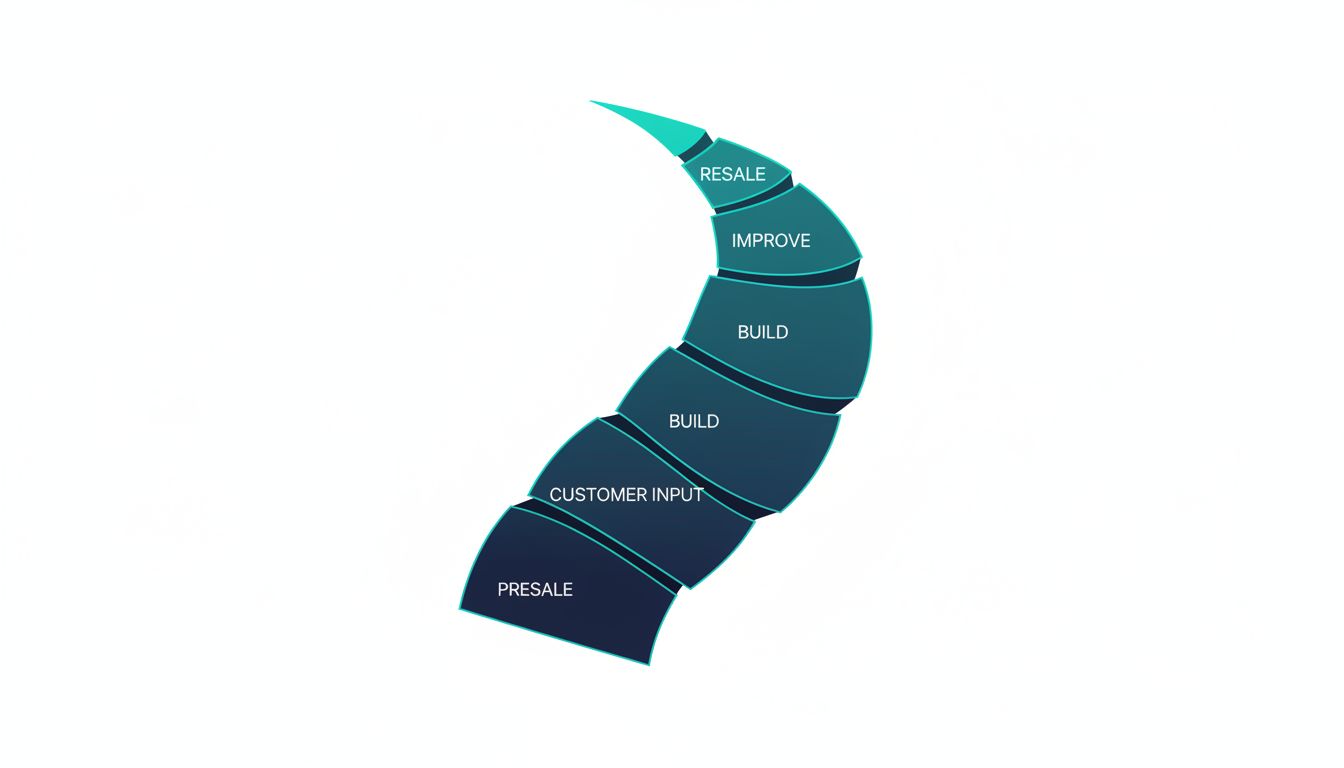
You tell people exactly what you have: a plan, a prototype, a team, a timeline. You tell them what they’re getting: early access, a locked-in price, the ability to shape what gets built. You tell them what the risk is: this is early, and things might change. You give them an easy path to a refund if you don’t ship. That’s it. That’s the whole framework.
What most founders discover, when they actually try this, is that the transparency doesn’t hurt conversion. It sometimes helps it. A certain kind of early adopter wants to be in early. They want to tell people they found something before it was obvious. Honesty about where you are signals confidence, not weakness. The hedging, the fake-polish landing page that hides that you’re three people in an apartment, is what actually reads as suspicious to anyone paying attention.
Pricing matters here too, and it should be taken seriously. The startup charging less is usually losing a war, and that logic applies even at the presale stage. Charge too little and you attract the customers who will nickel-and-dime you forever. Charge at a price that reflects the value you’re promising, and you attract the customers who actually care about the outcome.
What Customers Are Really Saying When They Pay
Money tells you something specific that a survey never can: it tells you whether this problem is in the budget. That sounds obvious but it’s actually doing a lot of work. A customer might genuinely believe they want your product, might rate the pain you’re solving as a nine out of ten, and still not pay, because solving that pain was never going to get approved in their organization, or never going to compete successfully against the other things they could spend $300 on.
Preselling collapses the distance between “I want this” and “I will actually buy this.” Those two things live in completely different universes, and most startups spend years in the gap between them.
It also starts the relationship at the right point. Your first customers are not random consumers. They are partners in figuring out what you’re actually building. Your first customer can save or sink the company, and you want to find them before you’ve locked yourself into a year of architectural decisions that serve the wrong use case.
Where This Breaks Down
Preselling is not universally applicable and it’s worth being straight about that.
Some markets have high skepticism of the model. Enterprise buyers in regulated industries are sometimes not going to hand you a purchase order for vaporware, regardless of how transparent you are. Complex B2B sales cycles with procurement departments and legal reviews are hard to compress into a presale. Hardware with physical manufacturing dependencies is structurally different from software.
And preselling can give you false confidence if your early buyers aren’t representative. Seven construction contractors might love what you’re building, but if you’re actually aiming at a broader market, seven may be too small a signal. The presale proves demand exists somewhere. It doesn’t prove the market is as large as you think it is.
The failure mode is mistaking the presale for the hard work rather than the start of it. You close five customers and think you’ve validated the company. What you’ve actually done is bought yourself the right to start learning. The companies that do this well treat the presale as the beginning of an intense feedback loop, not a finish line.
The Companies That Got This Right
Kickstarter made preselling mainstream for hardware and consumer products, and the model’s success there has been documented extensively enough that it’s stopped being controversial. What’s less discussed is how many software companies have quietly used the same logic.
Basecampbuilt early versions of its project management software while charging consulting clients for it before it was a standalone product. Wufoo sold annual plans before they were profitable. Pebble, before its eventual sale to Fitbit, raised over $10 million from consumers who paid for a smartwatch that didn’t exist yet, which at the time was the most funded Kickstarter project ever. The presale wasn’t a fundraising gimmick. It was proof, at scale, that people wanted this object badly enough to wait for it.
The common thread across these companies isn’t that they were unusually good at sales. It’s that they were willing to ask. Most founders don’t presell because it feels presumptuous or uncomfortable to charge for something that isn’t finished. That discomfort is worth pushing through. The alternative is spending months building in the dark.
What This Means
The startup that charges before building is playing a different game than the one that builds first and figures out sales later. It’s not a funding hack or a confidence trick. It’s a discipline that forces three things simultaneously: honest signal on demand, accountability to real customers, and a feedback loop that starts before you’ve over-engineered the wrong solution.
The question isn’t whether your product is ready to sell. The question is whether your idea is ready to be tested by the one signal that actually tells the truth. If you’re not sure, send the email, describe the product you want to build, and ask for money. The answer you get will tell you more than six months of building ever could.