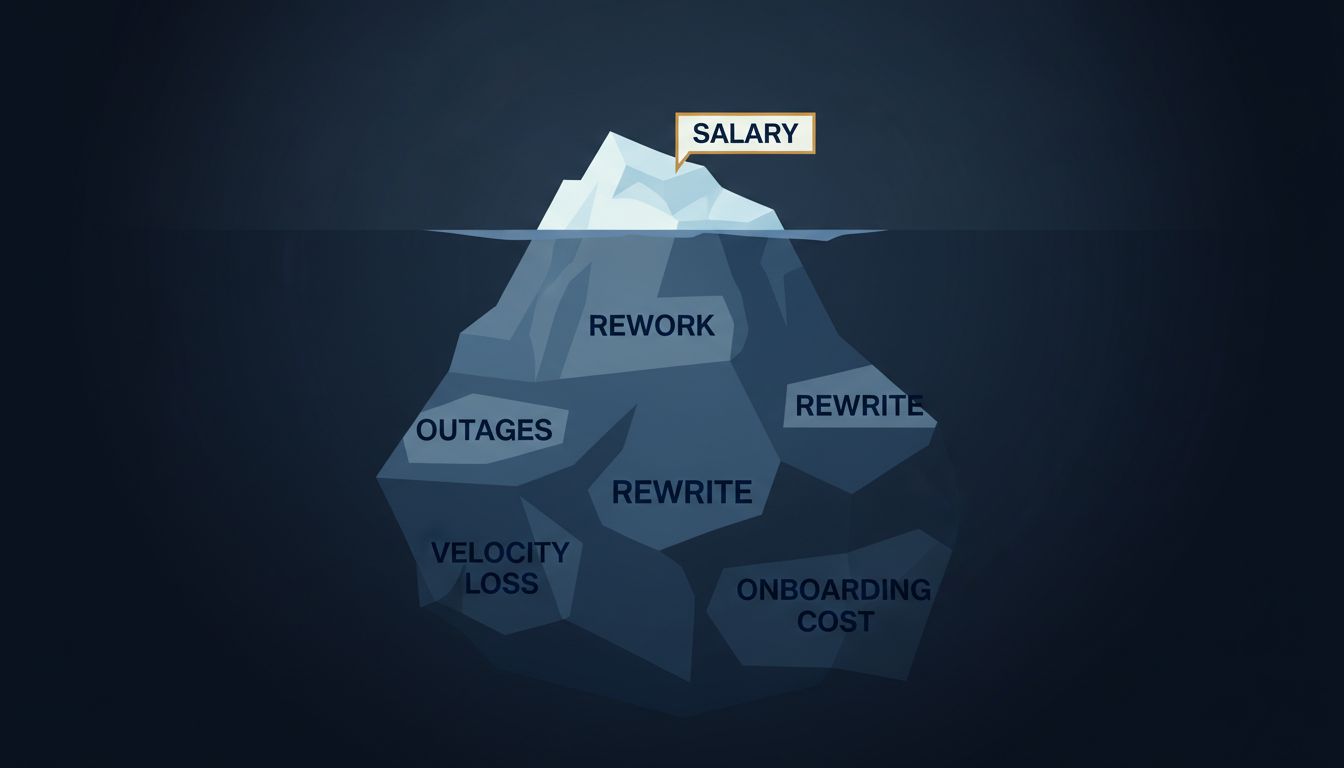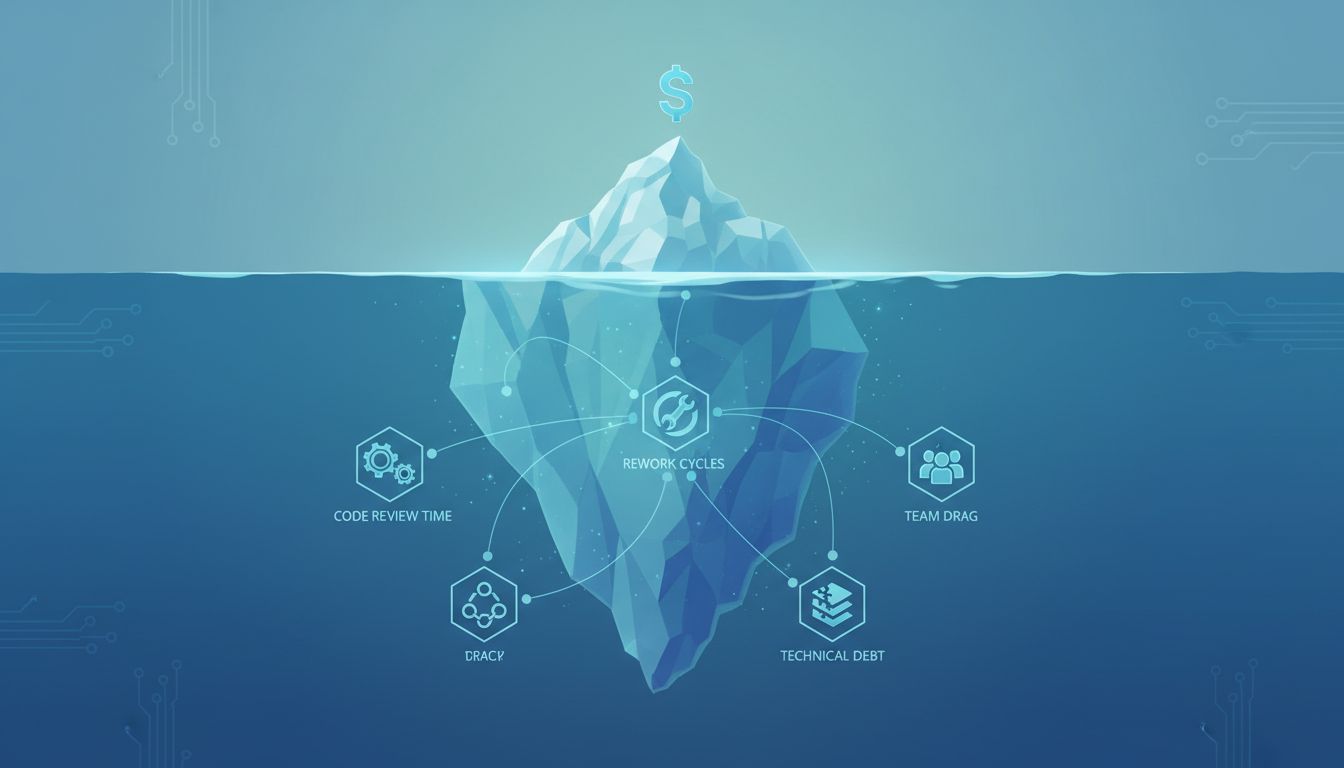

A founder I know recently did a cloud cost audit for the first time in three years. His company stored roughly the same amount of data it had in 2021. His storage bill had nearly doubled. When he called his AWS account rep to complain, the rep walked him through a detailed breakdown of everything he was paying for. Storage itself was, in fact, cheaper. The problem was everything else.
This is not an unusual story. It is the normal story, and the gap between “storage costs are falling” and “my cloud bill is rising” is one of the most reliable pieces of misdirection in enterprise tech.
The Headline Number Is Real and Almost Meaningless
Amazon S3 standard storage pricing has dropped consistently over the years. So has Google Cloud Storage and Azure Blob. This is true and verifiable and widely reported. The major cloud providers genuinely compete on raw storage rates, and the economics of commodity hardware mean that competition has teeth.
But here is what the headline number measures: sitting still. Bytes at rest. The cost of doing nothing with your data except having it exist somewhere on spinning magnetic platters or flash.
Almost nobody’s workload is just bytes at rest. The moment you do something with that data, you leave the cheap zone and enter a pricing structure that is, by design, much harder to reason about in advance.
Egress Is the Toll Booth You Didn’t See on the Map
The most important number that never appears in cloud storage marketing is egress, the cost of moving data out. AWS charges for data transferred out to the internet. Transferring between AWS regions costs money. Even moving data between services within the same provider can trigger fees depending on how those services are architected.
The structure creates a trap that compounds over time. You store data in one region because that’s where your servers are. Your user base grows internationally. Suddenly you’re serving data across oceans, and every gigabyte out is metered. You add a CDN to reduce latency, but the CDN has to pull from origin somewhere, and that pull has a cost. You add a data warehouse for analytics, and the pipeline that feeds it moves data constantly.
None of these decisions feel like “storage decisions.” They feel like growth decisions, product decisions, good engineering decisions. They are. They also happen to be billing decisions, and the bill grows in the background while the team is busy shipping features.
This is not accidental design. The pricing model is built so that the cost of growing a successful product is denominated in egress and API calls and compute, not in the raw storage number that gets advertised.
API Calls Are the Hidden Per-Transaction Tax
Every GET request, every PUT request, every LIST operation on a bucket costs money. Individually, the amounts are trivially small. Collectively, at scale, they are not.
A reasonable modern application might make millions of API calls per day to its storage layer without anyone thinking of this as an expensive operation. If you’re serving images or documents, every page load can trigger multiple GETs. If you’re running a data pipeline, the LIST operations alone can become a non-trivial line item. S3 charges separately for different classes of requests, and the rates for some request types are meaningfully higher than for others.
The thing that makes this particularly insidious is that API call costs scale with product success. The better your product does, the more requests your storage layer handles. Your storage cost curve bends upward not because you’re being wasteful but because your product is working. The per-unit cost is falling, but the unit count is growing faster, and nobody put that in the pitch deck.
Storage Classes and the Complexity Premium
The major providers now offer tiered storage classes: standard, infrequent access, archive, deep archive, and variations thereof. The pitch is straightforward: data you rarely touch should live in cheaper tiers, and lifecycle policies can move data automatically as it ages.
In theory, this saves money. In practice, it adds a layer of operational complexity that most teams don’t have the bandwidth to manage carefully. And mismanaging it can cost more than ignoring it.
Retrieving data from archive tiers isn’t free. There are per-GB retrieval fees, and for some archive classes those fees can be substantial if you pull large amounts of data unexpectedly. If you set lifecycle policies aggressively and then need to run an ad-hoc analytics job over historical data, you can generate a retrieval bill that eclipses months of the storage savings you accumulated.
The complexity itself has a cost, in engineering time spent understanding pricing documentation that routinely runs to dozens of pages, in mistakes made at the margins, and in the conservative choices teams make when they don’t trust that they understand the pricing well enough to optimize aggressively. This dynamic, where intentional complexity becomes a revenue mechanism, is worth understanding at a structural level. Tech companies make their APIs deliberately difficult to use and the strategy is working perfectly, and pricing documentation follows the same logic: legible enough to avoid regulatory scrutiny, complex enough that optimization requires dedicated expertise.
The Data Gravity Problem Nobody Warned You About
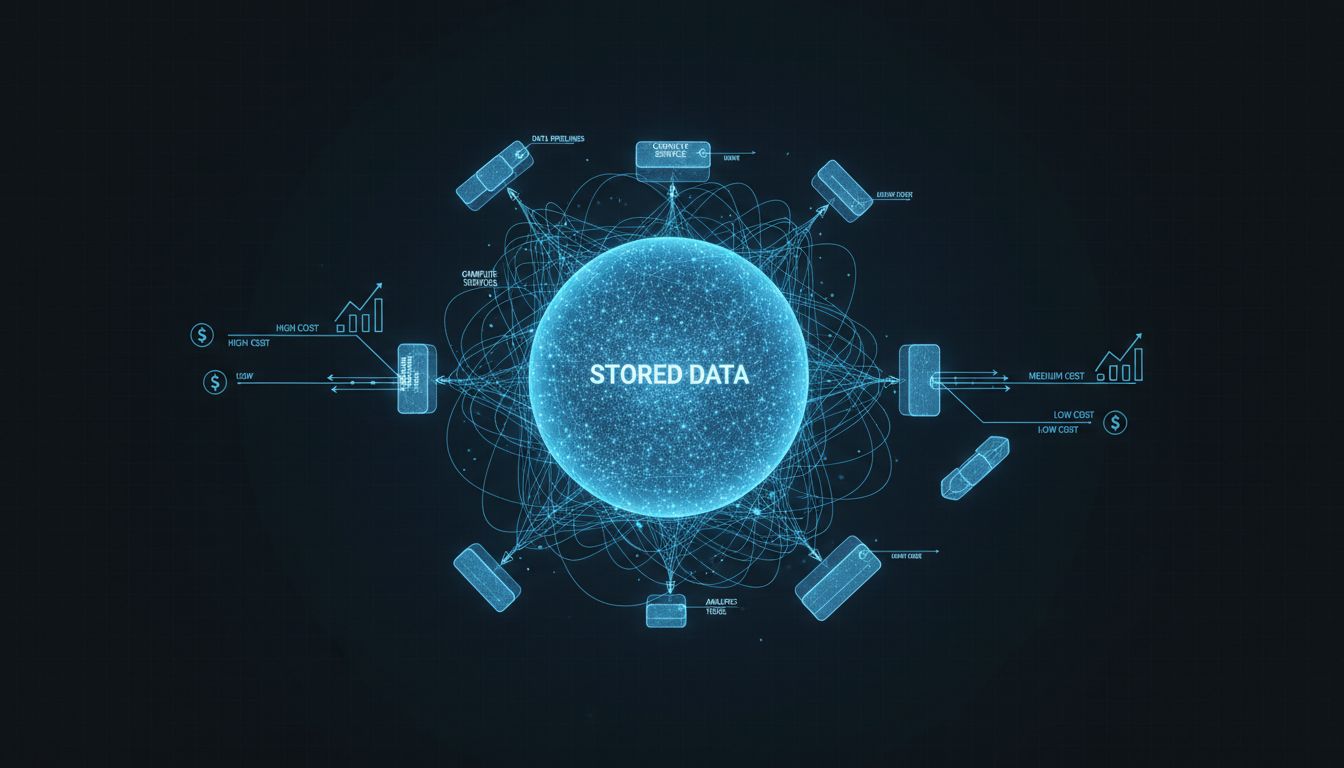
There’s a concept in cloud architecture called data gravity: data accumulates services around it, because moving data is expensive and latency-sensitive workloads need compute close to storage. Once your data is large enough, it’s cheaper to run your analytics, your ML training, your ETL pipelines all in the same cloud than to move the data somewhere cheaper.
This is the real lock-in mechanism, not contracts, not proprietary APIs, but physics and economics. Your data becomes the anchor that holds everything else in place.
Cloudflare published research showing that egress fees represent a meaningful tax on the entire cloud ecosystem, and they’ve built a business case around eliminating them for their R2 storage product. Whether that specific play succeeds commercially is less important than what it reveals: egress pricing is a structural choice, not a cost-of-service necessity. The major providers have chosen to monetize data movement because they can, because your data is already there and the cost of leaving is high.
The Monitoring Gap That Makes All of This Worse
Most engineering teams have good visibility into compute costs. CPU utilization, memory, instance hours: these are the metrics that infrastructure dashboards are built around, because they map obviously to the servers you’re running.
Storage cost decomposition is harder. The line items are numerous, the categories are non-intuitive, and the relationship between application behavior and storage billing is indirect enough that attribution is genuinely difficult. Which service is generating all those LIST requests? Which data pipeline is responsible for the egress spike in week three of last month? Answering these questions requires instrumentation that many teams don’t have in place.
So costs grow, and they grow in the dark. By the time someone does the audit, the patterns are embedded in the architecture, and fixing them requires refactoring work that competes with the feature roadmap for engineering time.
What This Means
The per-gigabyte price of storage will keep falling. This will continue to be reported as good news, and it will continue to mean less than it sounds like.
The structure of cloud pricing is not random. It’s designed to make the entry cost low, the switching cost high, and the growth cost invisible until it isn’t. Raw storage is cheap because raw storage is the loss leader. The margin is in everything data does once it exists: moving, being queried, being retrieved, being processed.
If you’re managing cloud costs, the thing worth auditing is not your storage tier. It’s your data movement patterns. Where is data going, how often, triggered by what, and at what rates? That’s where the actual bill lives.
And if you’re evaluating a cloud provider for a new workload, the storage price on the pricing page is close to irrelevant. The question that matters is: what does it cost to use this data at the scale we expect to reach? Run that model before you commit, not after your data gravity problem is three years old.