Today’s stories are about who controls the plumbing: compute, hostnames, and who gets to say stop. Anthropic’s leaked IPO filing shows even a giant can’t buy enough of it, and Meta learned that a share link can leak through a hostname.
1. PHP’s critical patch comes with an unusual order: go offline
The Register’s headline gives the instruction before the details: PHP’s developers have published a critical bug fix, and owners of unpatched sites are told to pull them offline. That is much stronger than the usual “update when convenient” advisory.
One caveat. The text we received for this item was only a sidebar of unrelated Register headlines, so we can’t tell you which versions are affected, what the flaws are, or whether exploits are circulating. Verify that against the advisory itself before repeating it.
The practical takeaway doesn’t depend on those details. PHP’s worst exposure is usually the neglected site: the old marketing microsite, the forgotten CMS install, the agency project nobody owns. If an emergency patch lands, the first job is finding out which of those you still run.
2. Meta’s Muse put private chats in a searchable hostname
Mark Zuckerberg said Muse was “built from the ground up for privacy and security.” Then security firm Claroc enumerated 6,800 shared Muse conversations with what it called one query. Meta has now paused sharing.
The flaw is subtle. Muse share links had the long unguessable string that’s standard practice. But each one also put the conversation title in the subdomain, and the links shared one parent domain. According to the report, once someone opened a link, passive DNS databases recorded the hostname, and anyone could search for it. A path in a URL isn’t recorded that way. A subdomain is.
Claroc says the few hundred pages it opened included a loan application, a confidential executive-search prep note, and a company’s internal revenue review. Claroc reported the issue through Meta’s bug bounty on October 8 and says it got no reply. Meta’s statement says it has paused the feature while it considers changes to how the links can be discovered.
That matters more because Muse needs access to most of a user’s accounts. An agent asking for that much trust can’t be sloppy with where it parks your data.
3. Anthropic’s leaked S-1: huge compute bills, nervous landlords
Anthropic may spend more than $750 billion on cloud contracts, some still under negotiation, and the filing reportedly says that still isn’t enough. TechCrunch, citing an S-1 leaked to The Wall Street Journal, reports that AWS, Google, and Microsoft increasingly see Anthropic as a competitor rather than a customer.
The fallback is leasing its own data centers and using third-party operators. The filing reportedly worries that those operators have a “limited operating history,” so Anthropic is choosing between landlords who are rivals and landlords who are unproven.
The financials are lopsided: an $80.7 billion net loss on $16.3 billion of revenue in the first half, with two customers making up about a fifth of sales. Anthropic also told investors that Q3 revenue alone hit $16.8 billion, up 45% from the previous quarter. That’s more than the whole first half, which explains why it keeps buying.
The filing doesn’t say any provider is throttling Anthropic, and we shouldn’t claim it does. The open question is whether IPO investors will price this as growth or as dependence on suppliers who are also competitors.
4. Nvidia’s data center in a box arrives with Nvidia inside
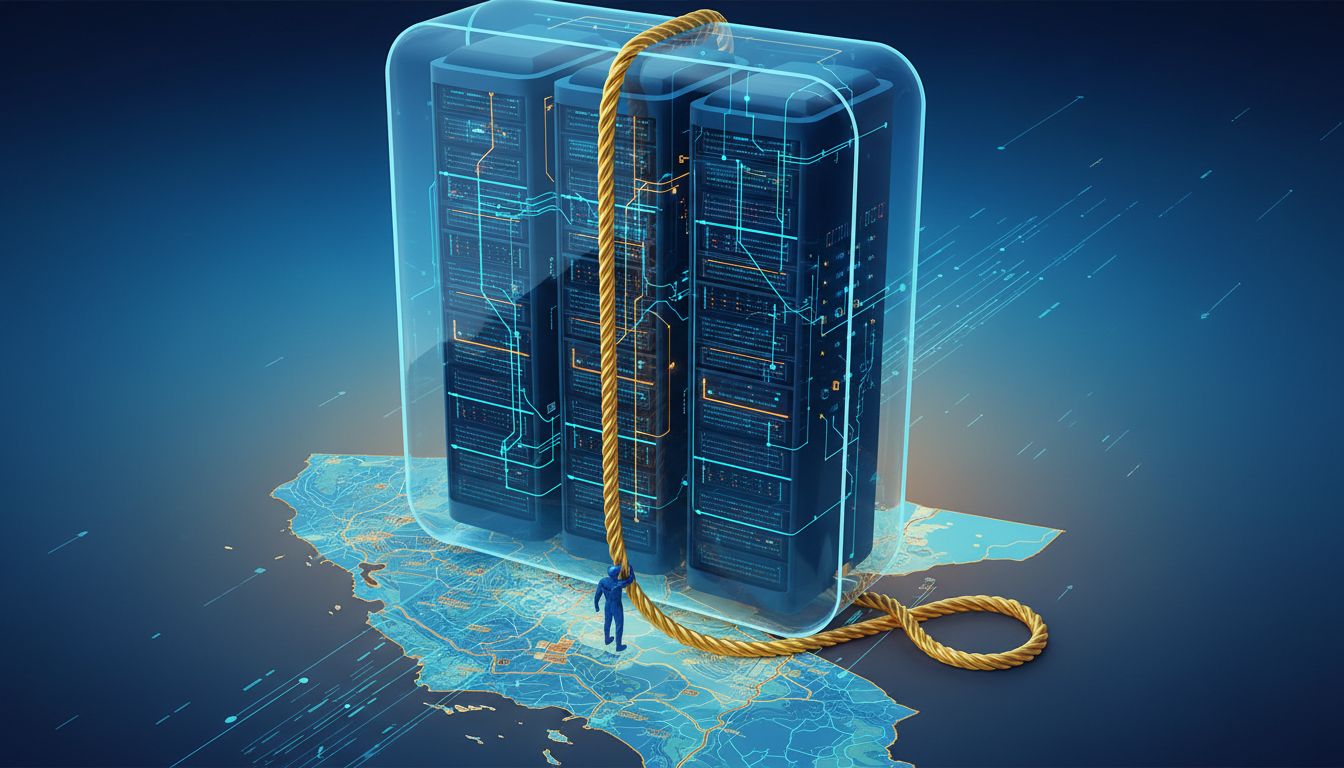
Nvidia’s pitch for its DSX Pod is speed. At its Berlin GTC, Jensen Huang described a prebuilt AI “factory” that arrives in a metal container, packed with Vera Rubin racks, and can come online in 14 days. The Register framed the same idea as cutting deployments from six months to two weeks. WIRED’s baseline was “months or years,” so how much time you save depends on who’s counting.
The idle-time argument is the sharper one. Huang said faster deployment cuts the time compute sits unused, and that matters when the hardware is the expensive part and Europe’s infrastructure projects are notoriously slow.
Convenience also decides things. When the container comes preloaded with Nvidia’s racks, the integration choice has already been made for you. That’s our inference, not something Nvidia said, and the sources don’t cover pricing or what a buyer could swap out. Still, the keynote kept returning to Nvidia as the supplier for data centers, robots, agents, and telecom towers. Greenpeace protesters in the hall wanted to talk about the power bill.
The Register · The Register · WIRED
5. Anthropic’s safety bill gives regulators a brake, with a judge on the pedal
Anthropic’s draft AI safety bill would let a model’s release be halted, but only if a federal judge agrees. Politico, via TechCrunch, reports that independent evaluators registered with Commerce would flag an imminent catastrophic risk: over 50 deaths or over $1 billion in damage, from bioweapons, a model escaping its developer’s control, or a cyberattack. They’d have 72 hours to tell Commerce, which would then have to ask a Washington, D.C., judge to stop the release. Agencies couldn’t halt a release on their own.
Calling that deregulation undersells it, because TechCrunch notes it goes further than other industry proposals, and Jensen Huang has argued no new laws are needed at all. A court gate is also a real due-process check. But it makes the brake slow and narrow. The trigger is a disaster-scale threshold, and the evaluators could be paid by the labs, as long as payment doesn’t depend on their findings. Politico’s account doesn’t explain how that would be enforced.
The sharper critique is that the bill defines safety around rare catastrophes while the incidents worrying the industry now involve agents hacking websites. A regulator that can’t act without a judge may not act fast enough on the smaller, faster failures.