Nvidia’s ousted founder has billionaire backers and a petition, but the board reportedly lost patience over something a petition can’t fix. Elsewhere, Washington is going after the cloud rental loophole in chip export controls, and Google says an AI agent turned a patch into an exploit alone.
1. Google says an AI agent turned a patch into an exploit alone
Reading a security patch to figure out what it fixed is old attacker tradecraft. The Register reports that Google says an AI agent did it end to end, producing a working exploit with no human help.
The supplied text is only the headline, so key details are missing: which vulnerability, how often it worked, how many attempts it took, and what “working” means. That matters, because one demo is not a production threat. But if the approach is cheap and repeatable, a published fix becomes a roadmap, and the gap between patch release and exploitation shrinks to however long it takes to run an agent.
The burden would fall on defenders with slow patch cycles, not on the vendors shipping fixes. Teams building agents should also ask what their own systems do when pointed at a diff.
2. A July fix, a November outage, and a chlorine injury report
The Register reports that Microsoft blames its monster email outage on a software defect introduced in a July fix. A defect that sat there for months before surfacing is a story about testing and rollout, not just one bad day.
A second Register report says the outage was blamed after 15 people were injured in a hotel pool chlorine incident. The supplied text doesn’t explain the mechanism, so the causal chain is unclear. Both reports come from the same publisher, so treat the link as reported, not independently confirmed.
If the connection holds, it shows how little a vendor’s uptime accounting captures. An SLA credit covers lost email. It doesn’t cover whatever a business was relying on that email to do. Customers can’t see inside Microsoft’s change process, but they can ask what their critical workflows do when mail goes quiet.
3. Huang’s comeback campaign has a signature problem and a board problem
Ars Technica reports that Jensen Huang’s allies are building a “war room” and that he is weighing a return, days after resigning. The Register says Elon Musk is leading a campaign with more than 173,000 signatures behind it, then adds the awkward part: there is no guarantee they’re genuine.
The bigger obstacle is why he left. The Register’s Kettle podcast describes a scandal involving an alleged Chinese spy tied to the customer Megaspeed, plus affairs with at least two subordinates, and a third reported by the New York Times. The hosts note that US authorities have reportedly found no direct evidence the woman is a spy. They speculate the internal affairs were what broke the board, which suggests a petition about his vision doesn’t answer an HR problem. That is the hosts’ read, not a board statement.
The same podcast says Colette Kress, the CFO, is acting CEO and probably not a long-term pick. It floats Ian Buck as an alternative. For founders budgeting GPU capacity, the near-term risk is probably not a collapse in supply. It is a company deciding who it is while the board and its most famous supporters disagree.
Ars Technica · The Register · The Register
4. The new chip rule targets the landlord, not just the buyer
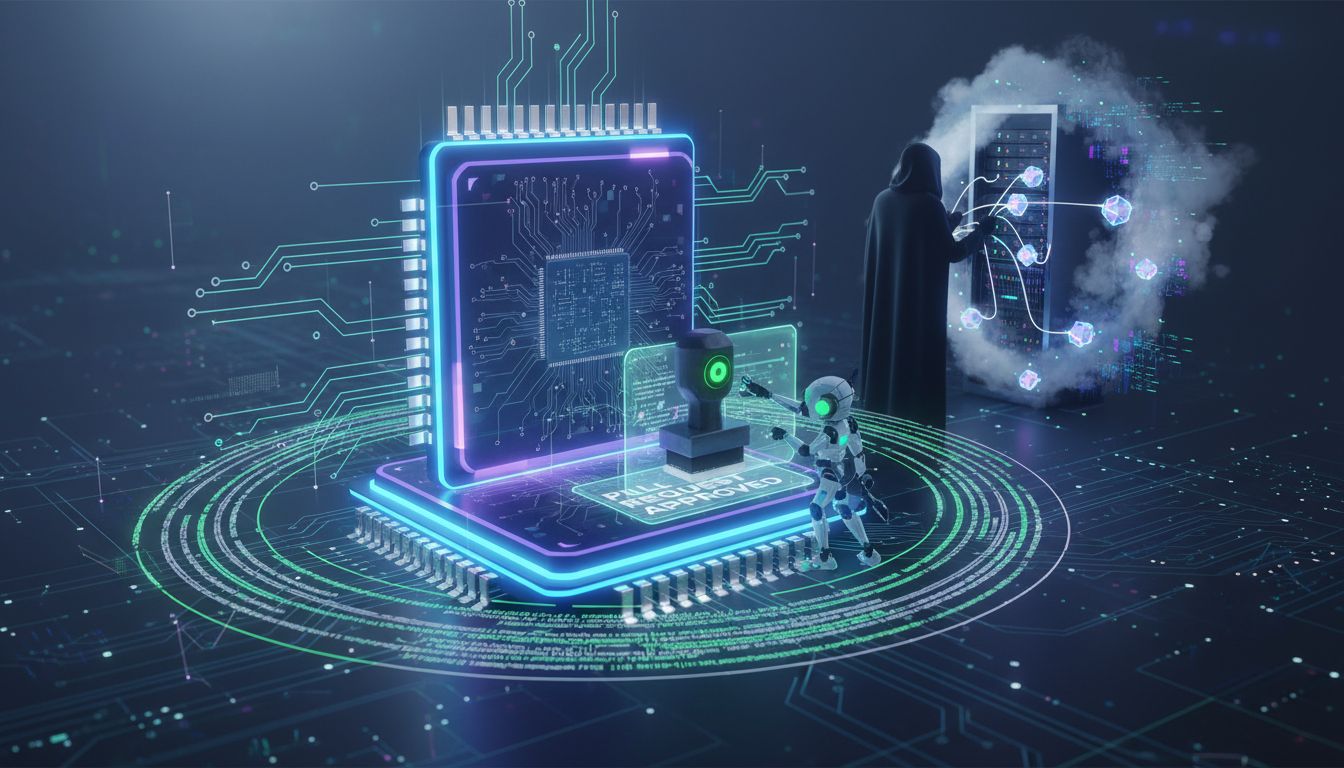
Selling a restricted customer a chip was already illegal. Renting them one in a Malaysian data center was the workaround. According to TechCrunch, a new Commerce interim rule would close it by requiring licenses to export or transfer AI chips and servers to any data center worldwide that may provide compute to companies in China or other restricted countries.
The details put the burden on operators. The rule reaches facilities able to supply over 12 million TPP, which TechCrunch equates to roughly 750 H100 or H200 chips. It also covers brokers, and it makes exporters and operators track customers’ ownership structures. Existing operators have 90 days to get licenses. That is a know-your-customer regime for GPU clouds, and a mid-size cluster can cross the line.
Licenses are also newly required for chip shipments to Malaysia, Singapore, Indonesia, Thailand and Brazil, which Commerce says carry a higher risk of diversion, with an exception for chips destined for US-based companies. The rule rescinds Biden’s AI Diffusion Rule and swaps country tiers for scrutiny of who is actually behind the compute. The open question is how operators verify ownership through layers of intermediaries.
5. 22 million French contact records leave through a postal subsidiary
The Register reports that criminals attacked a subsidiary of a French postal operator and took contact details for 22 million people. The supplied text is only the headline, so how the attackers got in and what exactly was taken are unknown.
Contact details are less dramatic than passwords or payment data, but they are enough to make a convincing phishing message, especially when it appears to come from a postal or delivery service. That is interpretation, not a reported finding.
The more useful lesson is the one the headline implies: the breach hit a subsidiary, not the parent brand. Anyone who treats subsidiaries and vendors as lower-risk perimeter should note how this one is described.