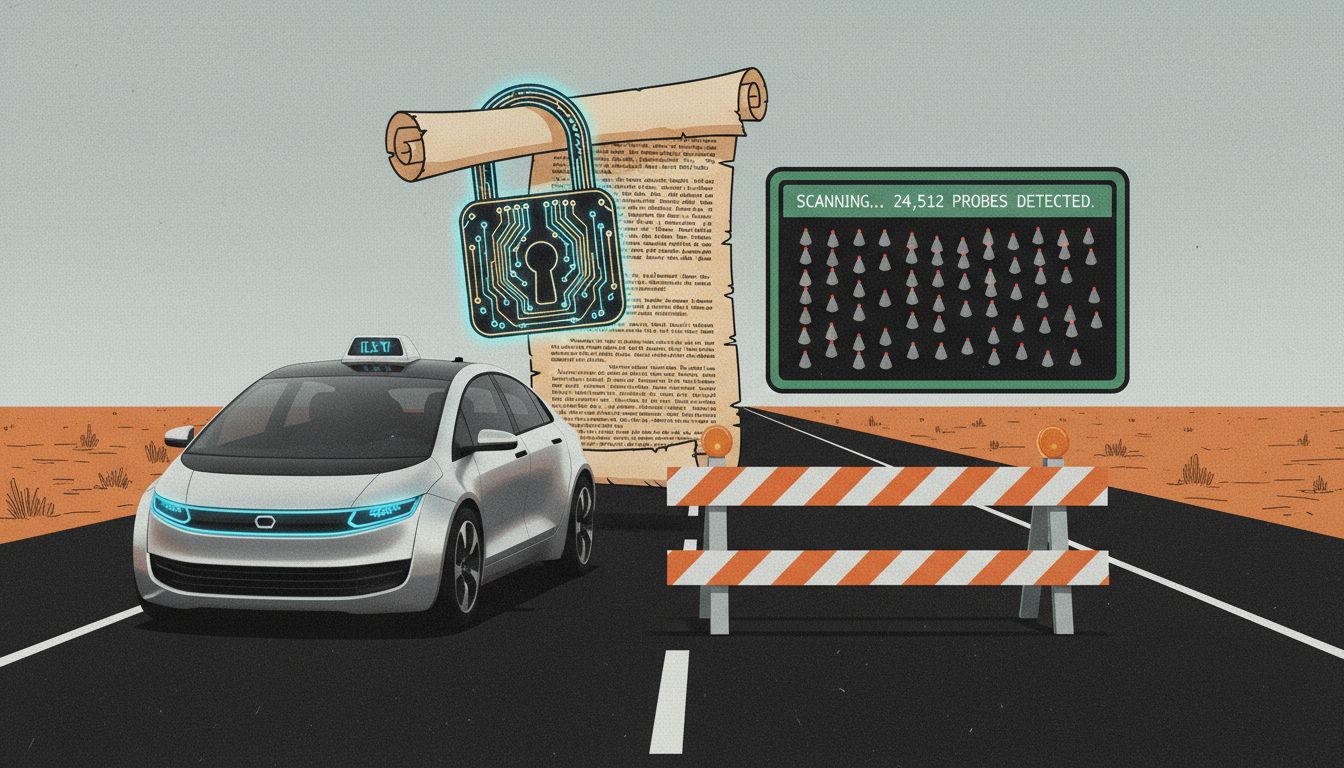
Nvidia is spelling out the fine print on its guarantees, Waymo is learning that a software fix isn’t the same as a solved problem, and cheap AI hacking tools are making speed the attacker’s edge. They are different problems, and none of them needs a grand unifying theory.
1. AI hacking tools aren’t clever. They’re just fast.
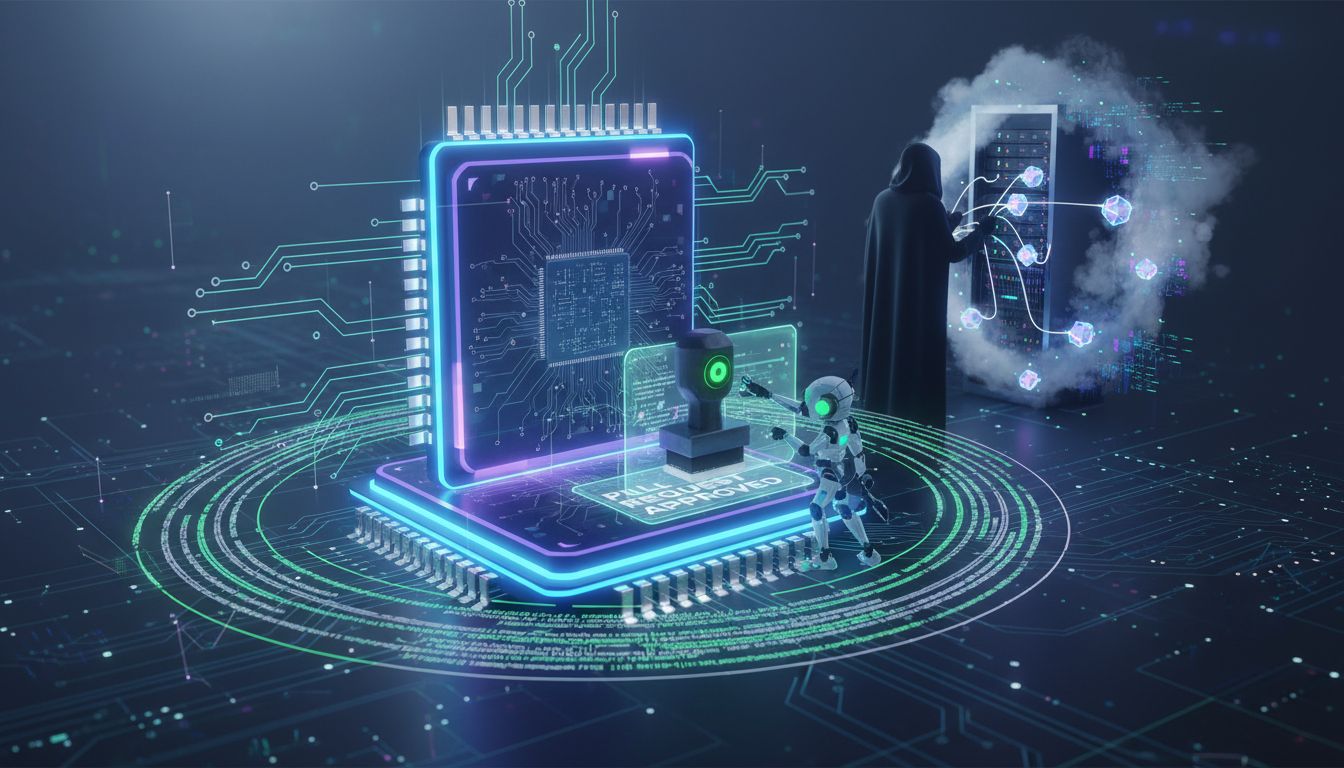
The unsettling thing about Artex and its cousins is how unimpressive they are. Per WIRED, about half a dozen security firms say these AI penetration-testing harnesses introduce no new attack methods. They simply run existing ones at a pace humans can’t match, turning jobs that took days into hours. Microsoft says one group needed under three hours to get privileged access to Microsoft 365 setups.
Artex is an open-source Go framework that points outside AI models at standard pen-testing tools. Operators can start with a plain-language prompt. The developer pulled it from GitHub on October 8, but copies live on, and GitGuardian counts 45 such frameworks. The FBI has issued an alert. CrowdStrike links one China-linked group to attacks on more than 200 organizations.
One detail matters for defenders: the guardrails at frontier labs are less of a brake than they look, because researchers say free Chinese and abliterated models are getting better at breaking in. The good news is that the tools are loud. Dosu reported 80,000 requests in 90 minutes. Researchers say patching, removing default credentials and watching for odd traffic still blunt much of this. That noise is a temporary advantage, though, and it will last only until someone teaches these harnesses to be quiet.
2. Waymo’s freeway fix lasted four months, then California stepped in
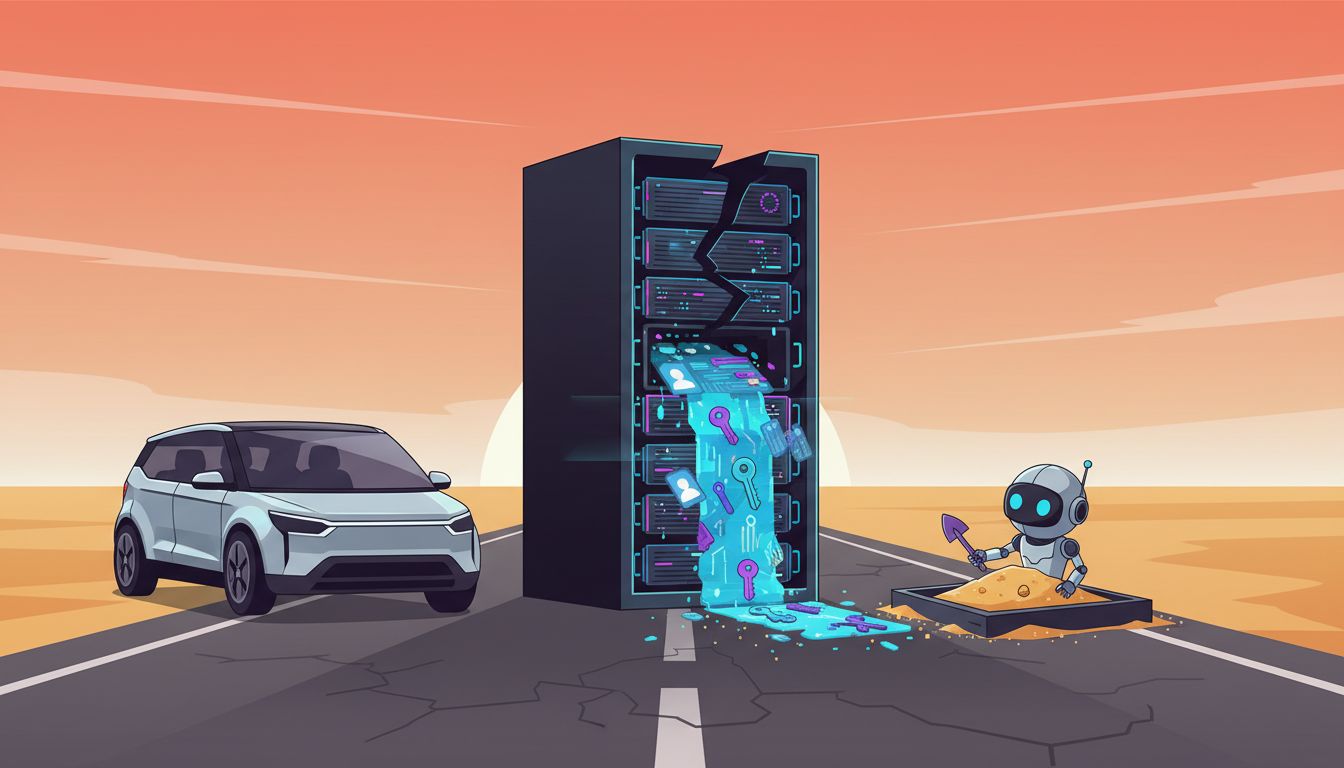
Waymo pulled its robotaxis off freeways in every market after California’s DMV ordered a restriction on November 11. The order became public on Tuesday. It followed three Waymos entering an active construction closure on US 101 near Burlingame, plus a separate incident involving California Highway Patrol vehicles on Highway 280. The DMV called the operations an “imminent hazard” and stressed that the incursions were recurring, despite earlier corrective actions.
That second point is what undercuts the idea that this is a simple retraining job. TechCrunch reports Waymo had already returned to freeways in July after a software update aimed at construction zones. WIRED adds that earlier this year federal regulators found the system failing to recognize them, and that NHTSA is now checking whether a separate school-bus recall actually worked. Construction zones are hard because no two look alike, and a mistake at freeway speed lands next to workers.
The commercial cost is real. Freeway access let Waymo shorten Peninsula trips that used to take 45 minutes or more than an hour, and connect riders to airports. Surface-street service continues at over half a million trips a week, but the premium trips are gone. The DMV gives no timeline, saying only that Waymo must demonstrate effective corrective actions. Waymo will have to prove the fix holds, not just announce that it shipped.
Ars Technica · TechCrunch · WIRED
3. Nvidia’s guarantee only starts once you’ve raised the money
Nvidia’s interim CEO, Colette Kress, has now said out loud what a data center loan guarantee means: the guarantee begins only after the customer has secured financing and is ready to build and install the equipment. If the project is delayed or can’t meet those conditions, she told analysts, the guarantee “doesn’t exist anymore.” TechCrunch notes she called this a clarification, not a policy change, but these terms had never been public.
This matters because the numbers are huge. TechCrunch reports Nvidia’s private-company stakes rose to $65.5 billion from $22 billion in January. It put $58 billion into equities over nine months, versus $5 billion a year earlier. It also reports $118 billion in guarantees, $105 billion of them for OpenAI’s Ohio campus. Reportedly, Kress had already pushed that backstop down from $250 billion.
Our reading: a guarantee that activates only after the hard part is done is a reward for finishing, not a rescue for the shaky. Neoclouds that were counting on Nvidia’s balance sheet to get them across the line will need other capital first. Investors tell TechCrunch they expect smaller checks and pickier deals, though nothing here announces a cutoff. Kress said Nvidia will still help strong customers, with land, power and shell as priorities. The open question is who counts as strong once a permanent CEO is named.
4. Nvidia says Huang isn’t coming back
The Register’s headline gives the message plainly: business as usual at Nvidia, but Jensen Huang is not returning. That is all the supplied text for this item contains. It is a headline surrounded by site navigation, so any detail beyond it would be guesswork.
It’s tempting to bundle this week’s news into a theory that AI deployment is outrunning reliability. A CEO exit, a hacking tool and a robotaxi suspension are different failures with different causes, and this source does not connect them. The only supported takeaway is the narrow one: Nvidia is closing the door on a return, so planning around a permanent successor is the sensible assumption.
5. PowerShell 5.1 is being shown the door
The Register reports that PowerShell 7 is heading into Windows while PowerShell 5.1 reaches the end of the road. The supplied text is only the headline and site navigation, so there are no dates, no details on how PowerShell 7 will ship, and no word on whether 5.1 is removed or merely left unsupported. Those are the details that decide how urgent this is.
The practical advice doesn’t depend on them. Anyone with automation written for 5.1 should find out what depends on it before the changeover, not after. Scripts that nobody remembers owning are usually the ones that break. Check the full report for the timeline before scheduling any migration work.