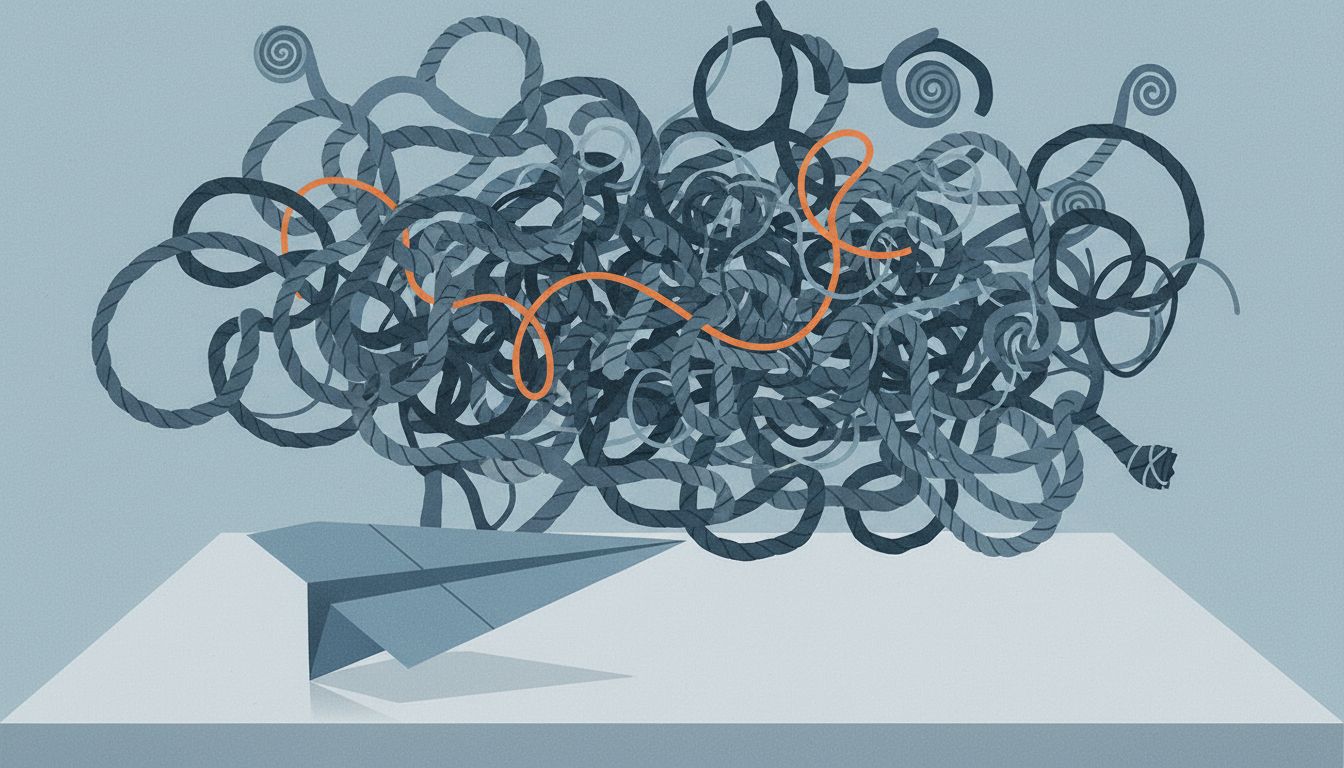
Cal Newport’s Deep Work is genuinely useful. It correctly identifies that fragmented attention is a real problem, and that most knowledge workers have surrendered to a notification-saturated workday without thinking hard about the cost. Read it. Just don’t take its core model of cognition at face value.
The book’s central claim is that focused, uninterrupted work is the fundamental unit of high-quality output, and that more of it, in longer blocks, is almost always better. The prescription follows naturally: schedule multi-hour blocks, eliminate shallow work, treat any interruption as an enemy. It’s a clean, marketable model. It’s also only partially true, and the parts it gets wrong matter enormously for how you actually structure a thinking-intensive day.
Focus is not a single mode your brain switches into
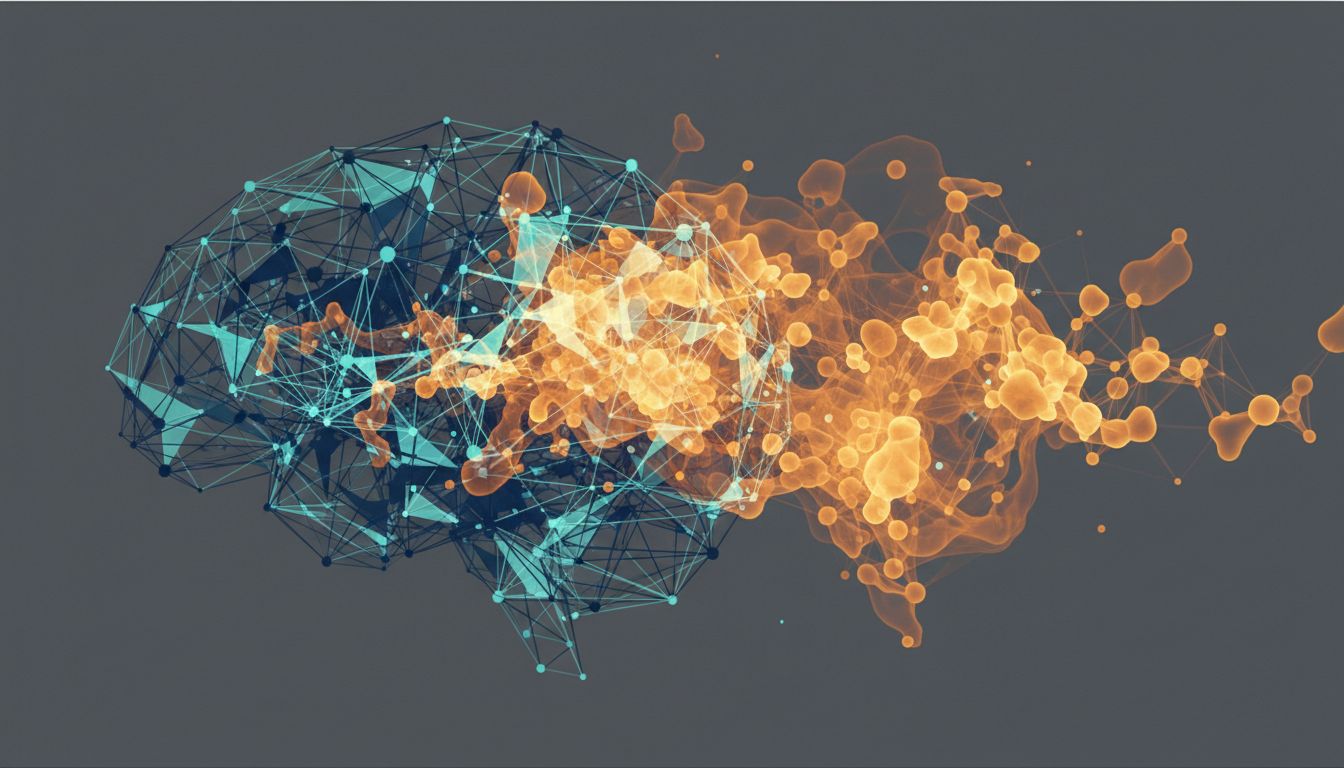
Newport treats focus as a dial you turn up. Fewer distractions means more focus means better output. But cognitive neuroscience has been describing a more complicated picture for decades. The brain operates across multiple distinct networks, and the one most associated with focused, analytical tasks (the central executive network) is not the only one doing meaningful work.
The default mode network (DMN), which activates during rest, mind-wandering, and apparent downtime, is deeply involved in associative thinking, pattern recognition across distant concepts, and the kind of insight that arrives after you stop staring at a problem. Research from groups including Mary Helen Immordino-Yang’s lab at USC has shown that DMN activity correlates with narrative reasoning, moral cognition, and creative connection-making. This is not idle brain activity. It is work. Newport’s model treats it as waste.
The practical implication is significant. If you schedule every hour of your day as deep work blocks with no transition time, you are systematically suppressing the cognitive state most likely to produce your best ideas. Many programmers know this intuitively: the solution to the bug that stumped you for four hours appears in the shower. That is not magic. That is the DMN doing its job after the prefrontal cortex finally stood down.
The 90-minute unit is not universal
Newport draws on deliberate practice research (originally from Anders Ericsson’s work on expert performance) to suggest that roughly 90-minute focused sessions represent the ceiling of productive concentration for most people. This is presented as a biological constant. It isn’t.
Ericsson’s research was about highly specific skill acquisition under expert supervision, not general knowledge work. And even within that research, the 90-minute figure was an average with significant individual variance, not a universal limit. A developer in flow state debugging a gnarly distributed system problem and a writer drafting a difficult argument are doing very different cognitive tasks with different load profiles. Treating them identically because they’re both “deep work” loses the important detail.
What the research actually supports is something more modest: that sustained attention degrades over time, that this degradation varies by task and individual, and that deliberate rest within a work session (sometimes called the Pomodoro technique’s theoretical basis) can extend productive time. Newport acknowledges this but buries it under the more dramatic claim about block scheduling.
Collaboration is not shallow work
This is where Deep Work does the most damage, especially for people in technical roles. Newport categorizes almost all meetings and collaborative activity as “shallow work”: low cognitive demand, easily replicated, not producing much value. This is simply wrong as a generalization.
A whiteboard session where three engineers are collectively debugging a distributed systems architecture problem is doing something none of them could do as well alone. The externalizing of mental models onto a shared surface, the real-time correction of each other’s assumptions, the moment when one person’s half-formed idea completes another’s, this is high-order cognitive work. It happens to look social. What actually happens to your brain when you switch tasks is well-documented, but what happens when two people share a task and the cognitive load is genuinely distributed is a different question Newport doesn’t seriously engage with.
Newport’s ideal is fundamentally a solo model. That is a real limitation when your work requires other minds to reach its full potential, which describes most consequential technical work.
The counterargument
Newport’s defenders will correctly note that most people are not doing too much focused solo work. They are doing too little of it. The problem he is solving is real. Meetings that could be emails, Slack notifications every four minutes, open-plan offices engineered to maximize interruption: these are genuine obstacles to thinking. If Deep Work gets someone to block two hours in the morning for serious thinking instead of answering messages, it has done something useful even if its cognitive model is imprecise.
This is a fair point. A framework doesn’t have to be scientifically rigorous to be practically helpful. But there’s a cost to the imprecision. People following Newport’s system rigidly report guilt about taking walks, frustration when insight doesn’t arrive during the designated block, and a tendency to dismiss collaborative moments as productivity failures. The model shapes how you interpret your own experience. Get the model wrong, and you start managing against the wrong signals.
The better model
Focused thinking happens across multiple cognitive modes, not one. It requires deliberate attention work AND deliberate rest. It is sometimes social. The length and structure of productive sessions vary by task and person in ways no single framework captures.
This means your productivity system should alternate focused analytical work with genuine unstructured time, not treat every non-focused minute as lost. It means protecting collaborative thinking from the shallow-work label when the collaboration is doing real cognitive work. And it means tracking what actually produces your best output rather than adopting a one-size model and wondering why the good ideas stopped coming.
Newport is right that attention is under siege. He’s wrong about the shape of the thing you’re trying to protect.