A few years ago, I watched a procurement manager at a mid-sized logistics company nearly fall out of his chair. He’d just discovered that the project management tool his team used, the same one he used personally at home for $12 a month, was going to cost his company $28,000 a year for 40 seats. Same interface. Same features. Same servers, almost certainly. He spent the next two weeks trying to find the “enterprise features” that justified the price. He never really found them.
He was looking in the wrong place. The price difference between consumer and enterprise software has almost nothing to do with the software itself. It never did. And once you understand the actual mechanics of enterprise pricing, the whole thing shifts from looking like a scam to looking like a coldly logical business decision. This is the story of why that gap exists, and why it’s probably not going anywhere. If you’ve ever wondered why software licenses cost more than the hardware they run on, this is the same phenomenon operating at a different altitude.
You’re Not Buying Software. You’re Buying Risk Transfer.
Here’s the thing most buyers never internalize: when a company signs an enterprise contract, they aren’t purchasing access to a tool. They’re purchasing a guarantee, or at least the closest thing to one that software companies are legally willing to offer.
Consumer software fails, and the worst case is that you lose an afternoon of work. Enterprise software fails, and the company might miss payroll, breach a client SLA, or trigger a regulatory audit. The stakes are categorically different. So the enterprise contract includes SLAs with teeth, uptime guarantees, dedicated support, data processing agreements, security audits, compliance documentation, and sometimes custom legal terms negotiated over months.
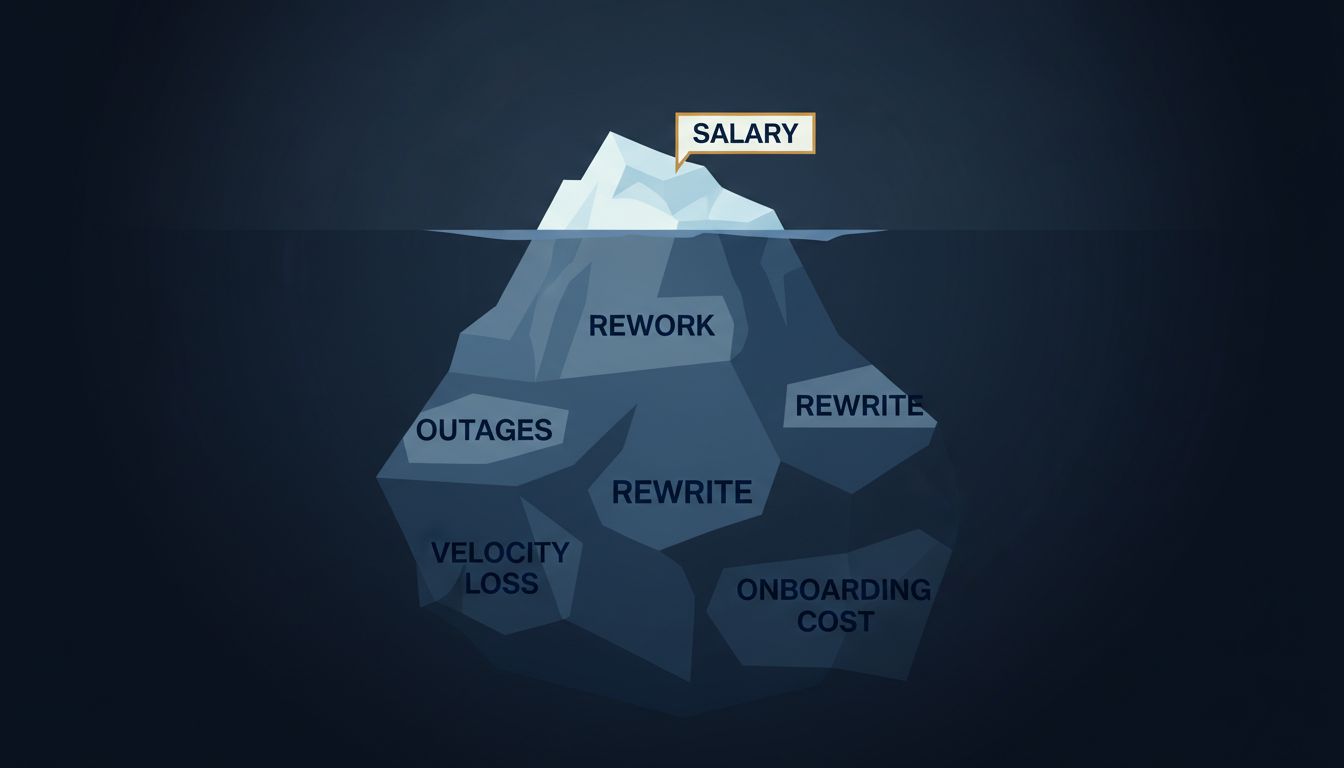
All of that is expensive to maintain. But here’s the part that surprises people: it’s not 10x more expensive to maintain. The infrastructure cost delta between a consumer user and an enterprise user is real but modest. The actual 10x multiplier is built on something else entirely.
The Procurement Process Is the Product
Enterprise software vendors employ entire teams of people who do nothing but navigate corporate procurement. Sales engineers. Account executives. Implementation specialists. Legal liaisons. Customer success managers whose entire job is making sure the software gets used so the contract renews.
None of this exists in the consumer tier. When you sign up for a $12 plan, you watch a two-minute onboarding video and figure it out. When a 500-person company signs an enterprise deal, there are kickoff calls, stakeholder alignment meetings, integration assessments, and training sessions. The vendor is essentially co-managing the deployment.
This is not an accident. It’s a structural feature. Tech companies design software to be complex on purpose, and at the enterprise tier, that complexity justifies the headcount needed to support it. The consultants, the implementation partners, the certified administrators: all of it creates a web of dependency that makes switching vendors feel like performing surgery while running a marathon.
The lock-in is the moat. The price reflects the cost of building and maintaining that moat.
Liability Scales Exponentially, Not Linearly
If Slack goes down for an hour and you can’t message your friends, you’re annoyed. If Slack goes down for an hour during a critical product launch and a hundred-person company loses coordination across three time zones, that’s a business event with real dollar consequences.
Enterprise vendors charge more in part because they are accepting, contractually, a much larger surface area of liability. They’re agreeing to compensate you if things go wrong. They’re agreeing to security audits that expose their internal systems to scrutiny. They’re agreeing to carry cyber liability insurance that covers losses at scale.
This is also why enterprise software often seems slower to ship features. Stability and auditability are not optional in regulated industries. A consumer app can push experimental code and see what sticks, essentially testing new features on millions of real users without telling anyone. An enterprise product serving healthcare or financial services clients cannot afford that approach. The validation pipeline alone adds meaningful cost.
The Buyer Is Never the User
This is the insight that makes everything else click. In consumer software, the person who pays is the person who uses the product. If it’s annoying or expensive, they cancel. Feedback loop is tight.
In enterprise software, the person who signs the contract (a VP of IT, a procurement committee, a CFO) is almost never the person who actually uses it daily. The actual users are employees who didn’t choose the tool and can’t cancel it. The buyer’s priorities are compliance, security, vendor reputation, and contract terms. They are often indifferent to the day-to-day experience that frontline users have.
This creates a strange pricing dynamic. Enterprise vendors optimize their pitch, their feature set, and their contracts for buyers, not users. The glossy security audit reports and the uptime dashboards and the executive business reviews are all designed for the person holding the pen, not the person at the keyboard. And buyers, frankly, will pay a premium for anything that protects them from being blamed when something goes wrong. “We went with the enterprise tier” is a sentence that has ended many awkward conversations with a CEO.
What This Means If You’re Buying
The first thing to accept is that some of this premium is legitimate. If you actually need SOC 2 compliance documentation, SAML-based SSO, custom data retention policies, and a human being who will answer the phone at 2am when your billing system is down, then you are buying something real. The price reflects genuine costs.
The second thing to accept is that a lot of it is not. Many enterprise contracts are sold by demonstrating features that buyers care about theoretically and users will never touch. You can push back. Specifically, push back on seat counts (you rarely need everyone on the full tier), on multi-year lock-ins without performance guarantees, and on implementation costs baked into the first year.
The vendors who are worth working with will negotiate on those terms without much drama. The ones who won’t are often the ones where the price itself is the product: a signal, a status marker, a hedge against accountability. Sometimes, especially in larger organizations, the math of paying more for something that performs worse is genuinely rational from an institutional perspective, even if it looks absurd from the outside.
The procurement manager who nearly fell out of his chair? He ended up signing the enterprise contract. Not because he found the hidden features. Because he realized what he was actually buying: someone to call when things broke, a contract he could show his board, and the quiet comfort of having chosen the “safe” option. That peace of mind, it turns out, really does cost $28,000 a year.