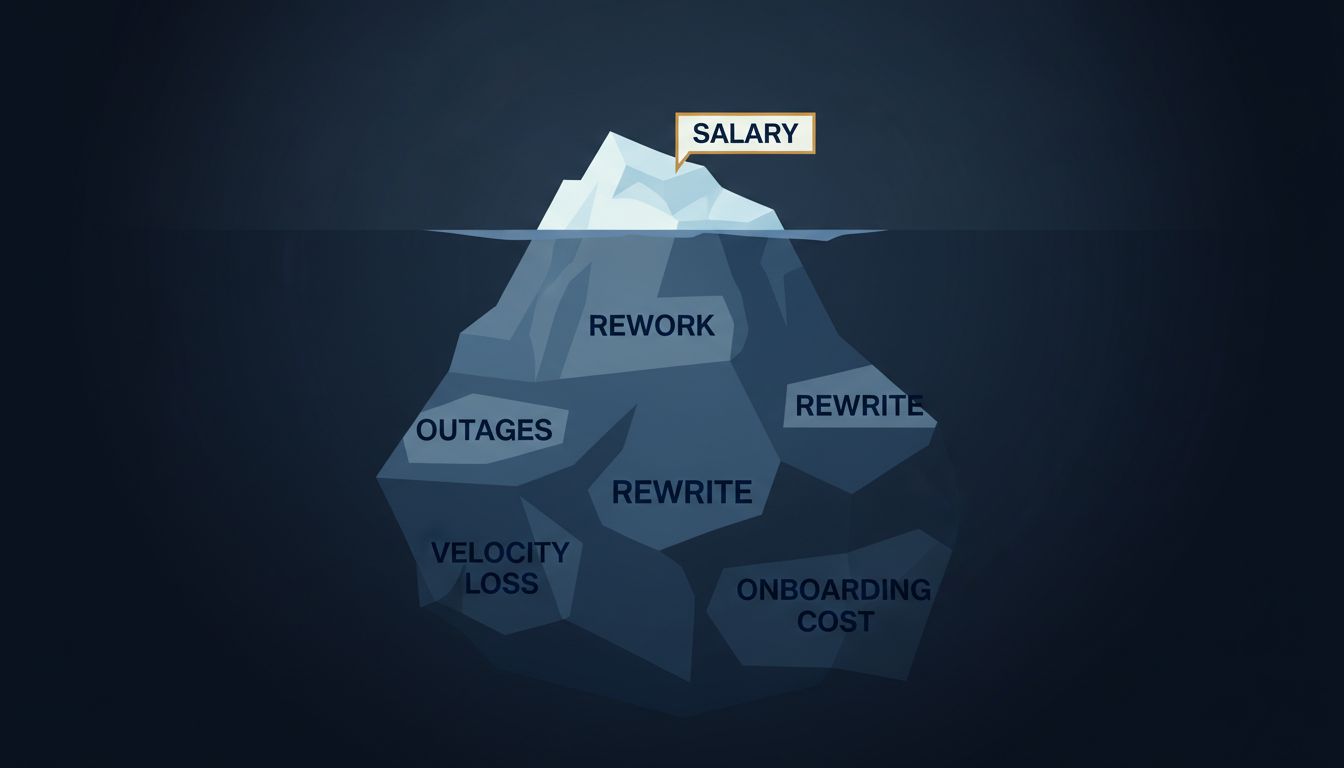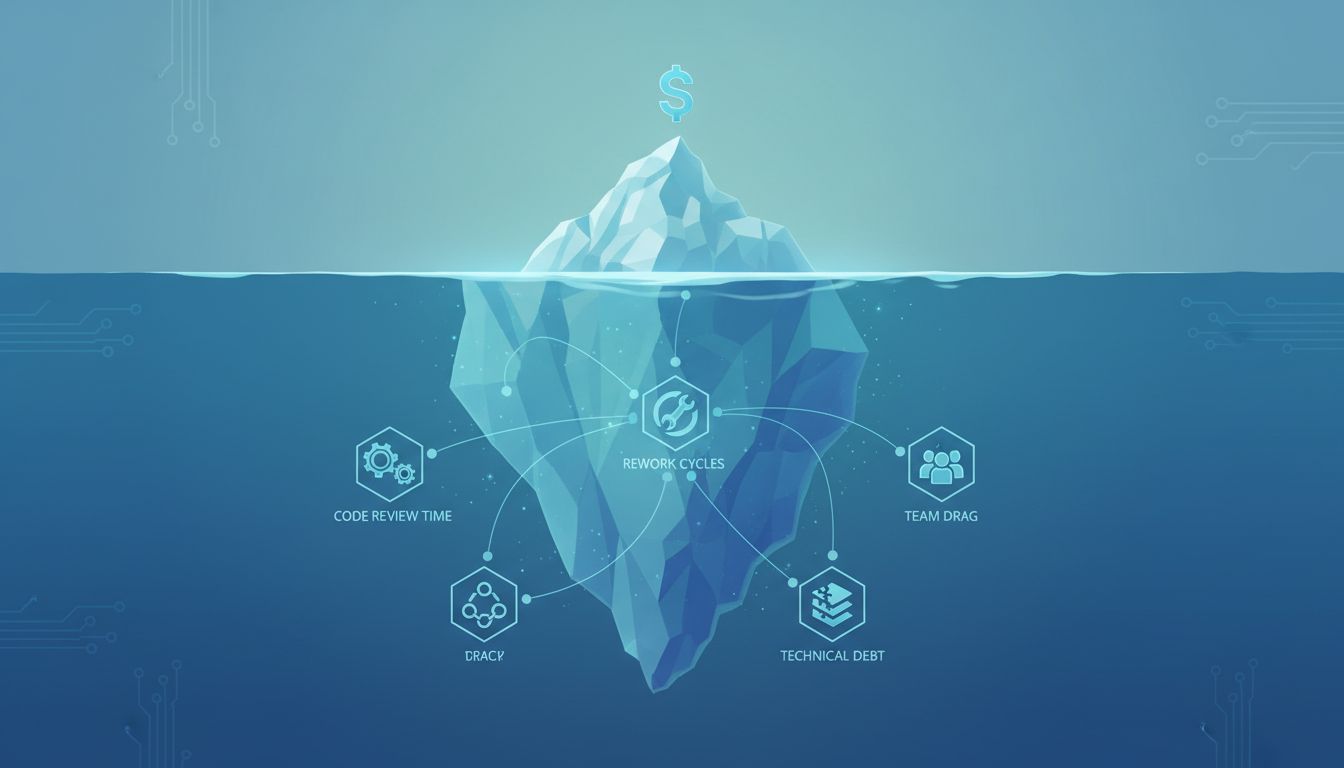
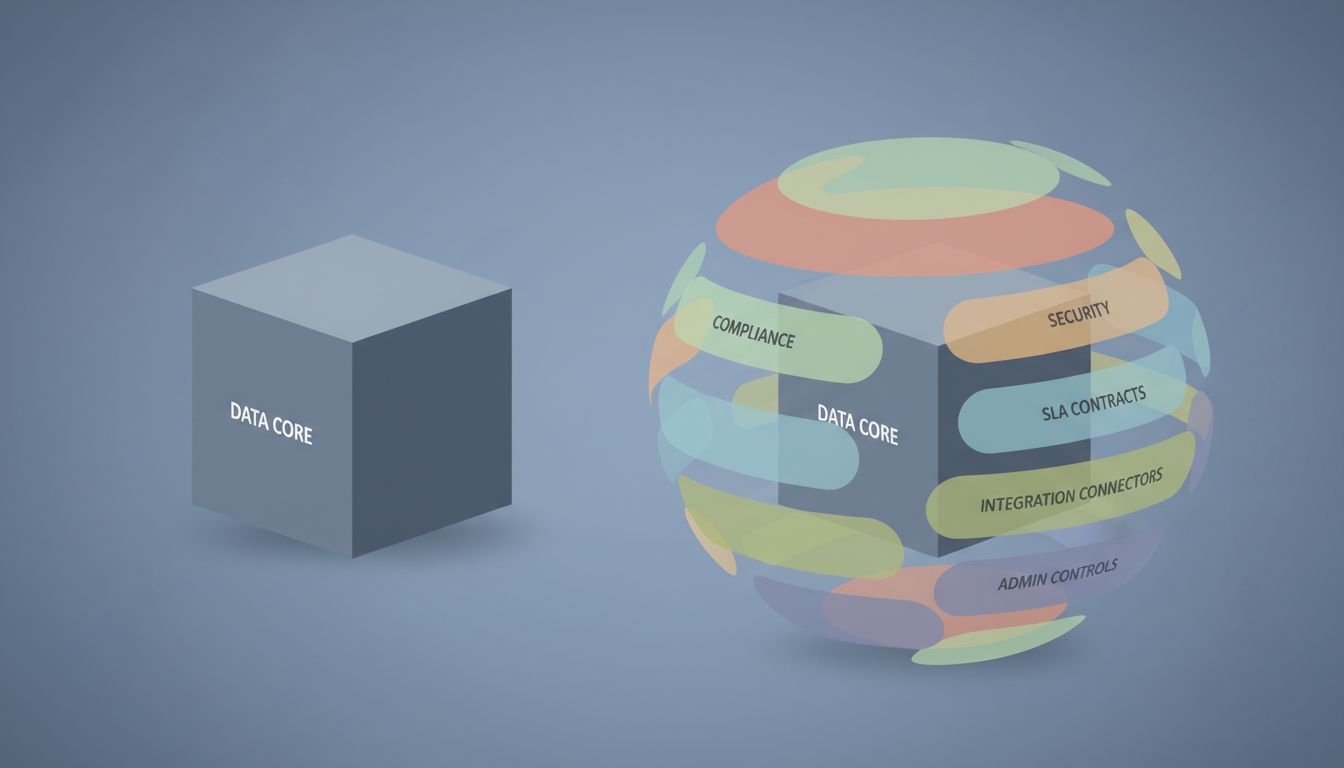
A small business owner pays $15 a month for a project management tool. A Fortune 500 company pays $150 per seat per month for software that does nearly the same thing. The difference is not markup for its own sake. There are six distinct economic forces driving that gap, and understanding them changes how you evaluate any enterprise software purchase.
1. Liability Shifts From the User to the Vendor
When you use a consumer app and it loses your data, you have limited recourse. When a hospital’s electronic health record system fails, the vendor faces contract penalties, regulatory scrutiny, and potential lawsuits. That liability has a price.
Enterprise contracts routinely include service-level agreements that guarantee 99.9% or 99.99% uptime. The engineering cost of moving from three nines to four nines of availability is not linear. It requires redundant infrastructure, on-call engineering teams, automated failover systems, and regular disaster recovery testing. Salesforce, for instance, publishes a detailed trust status page precisely because their enterprise customers have contractual rights to that information and financial remedies if standards are not met. Consumer apps have terms of service that disclaim almost all liability. Enterprise software has the opposite.
2. Security Compliance Is a Separate, Expensive Product
SOC 2 Type II certification, HIPAA compliance, FedRAMP authorization, GDPR data processing agreements: each of these requires dedicated legal, engineering, and audit resources. FedRAMP authorization alone can take 12 to 18 months and cost vendors several million dollars to obtain and maintain. That cost does not disappear. It gets priced into every enterprise contract.
A consumer note-taking app stores your data on servers and calls it a day. An enterprise version of the same app must document exactly where data is stored, who can access it, how it is encrypted at rest and in transit, how breaches are detected and reported, and how data is deleted when a customer leaves. None of this is optional for companies operating in regulated industries, and none of it is cheap to build or maintain.
3. Integration Is Sold as a Feature, but It Is Really a Profession
Consumer apps are designed to be self-contained. Enterprise software is expected to plug into ERP systems, identity providers, data warehouses, and legacy infrastructure that may be decades old. The engineering required to make those connections work reliably is substantial.
This is part of why tech companies deliberately make their APIs hard to use at first. Enterprise API access, pre-built connectors for platforms like SAP or Workday, and SCIM provisioning support are not features that fall out of a standard software build. They require dedicated teams. Workato and MuleSoft exist as standalone billion-dollar businesses because integration is hard enough to support an entire industry.
4. The Sales Cycle Itself Costs Money That Gets Recovered From You
Selling to a consumer takes seconds and costs almost nothing. Selling to an enterprise takes months and involves sales engineers, legal review, security questionnaires, procurement committees, and reference calls. Industry research consistently puts the cost of acquiring an enterprise customer at many multiples of what it costs to acquire a consumer subscriber.
When a software company sends a sales engineer to spend three days helping your IT team evaluate their product, that is a real cost. When they provide a dedicated customer success manager after the sale closes, that is a recurring cost. Enterprise pricing is partly a recovery mechanism for the sales and post-sales support model that enterprise buyers actually require and often demand. Buyers who negotiate hard on price but then expect extensive onboarding support are, in effect, negotiating against themselves.
5. Customization and Admin Controls Are Underestimated Everywhere
Consumer apps give you settings. Enterprise software gives you a control plane. Role-based access control, audit logging, custom data retention policies, single sign-on integration, provisioning automation: these features exist because organizations need to manage software across hundreds or thousands of users simultaneously, and they face legal exposure if they cannot demonstrate control over who accessed what and when.
Building a genuinely robust admin console is not a weekend project. It requires product design, engineering, QA, and ongoing maintenance as regulations change. Many enterprise software vendors spend more engineering time on admin and compliance tooling than on the core features that appear in marketing materials. This is largely invisible to end users, which is exactly why the price premium surprises people.
6. Switching Costs Are Baked Into the Price From the Start
Consumer apps compete on a relatively level playing field. If you dislike one to-do app, you export your data and move to another in an afternoon. Enterprise software buyers face a different reality. Migrating an ERP system, retraining hundreds of employees, rebuilding integrations, and re-certifying compliance documentation can cost more than a decade of subscription fees.
Vendors know this, and they price accordingly. The first contract is often reasonably competitive because vendors want to establish a foothold. Renewals, add-on modules, and expanded seat counts tend to carry different economics. This is not conspiracy. It is rational behavior by sellers who understand that their customers’ cost to leave is high. The best defense for buyers is to negotiate data portability and migration assistance into the original contract, before switching costs are real.
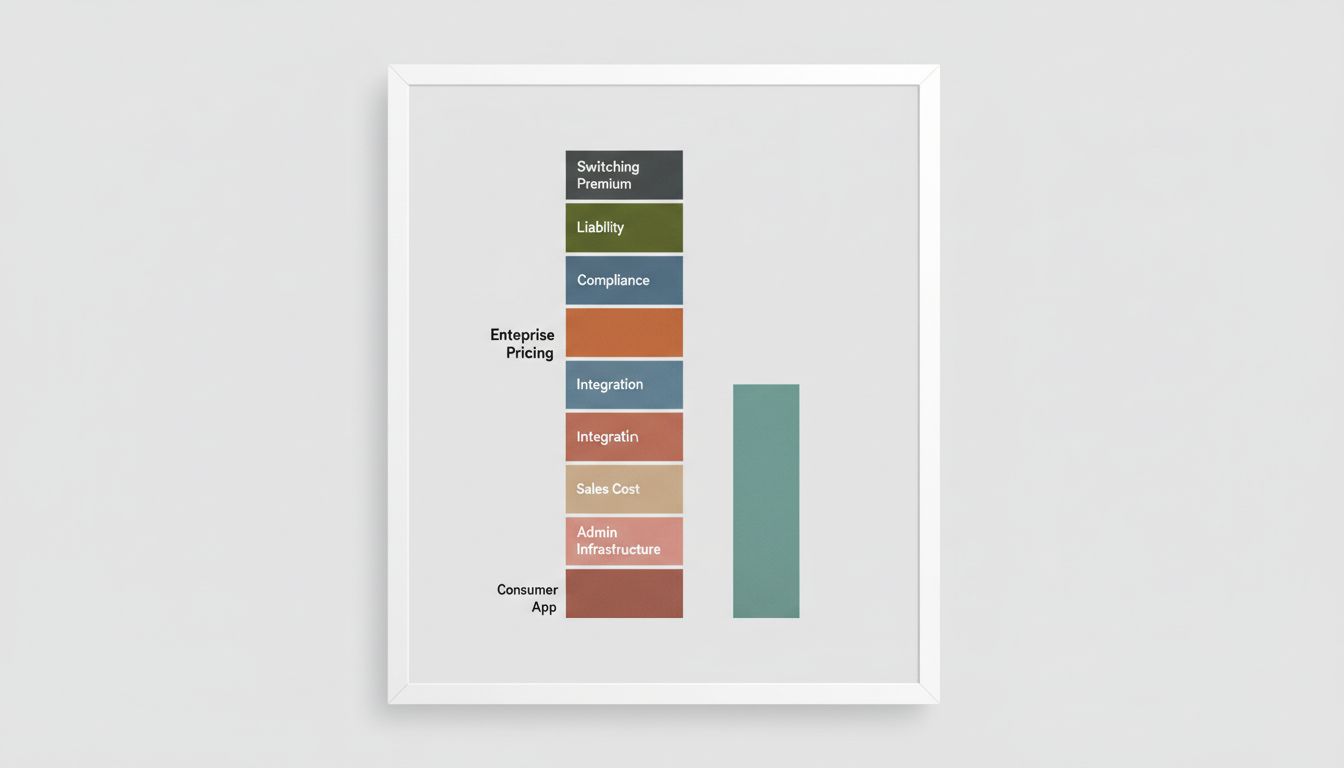
The ten-times price gap is not irrational pricing by vendors or naive purchasing by enterprises. It is the market pricing in liability, compliance, integration complexity, sales costs, administrative infrastructure, and switching dynamics that consumer apps simply do not carry. Understanding that breakdown does not mean accepting every price you are quoted. It means you know which costs are real and which represent margin worth negotiating on.