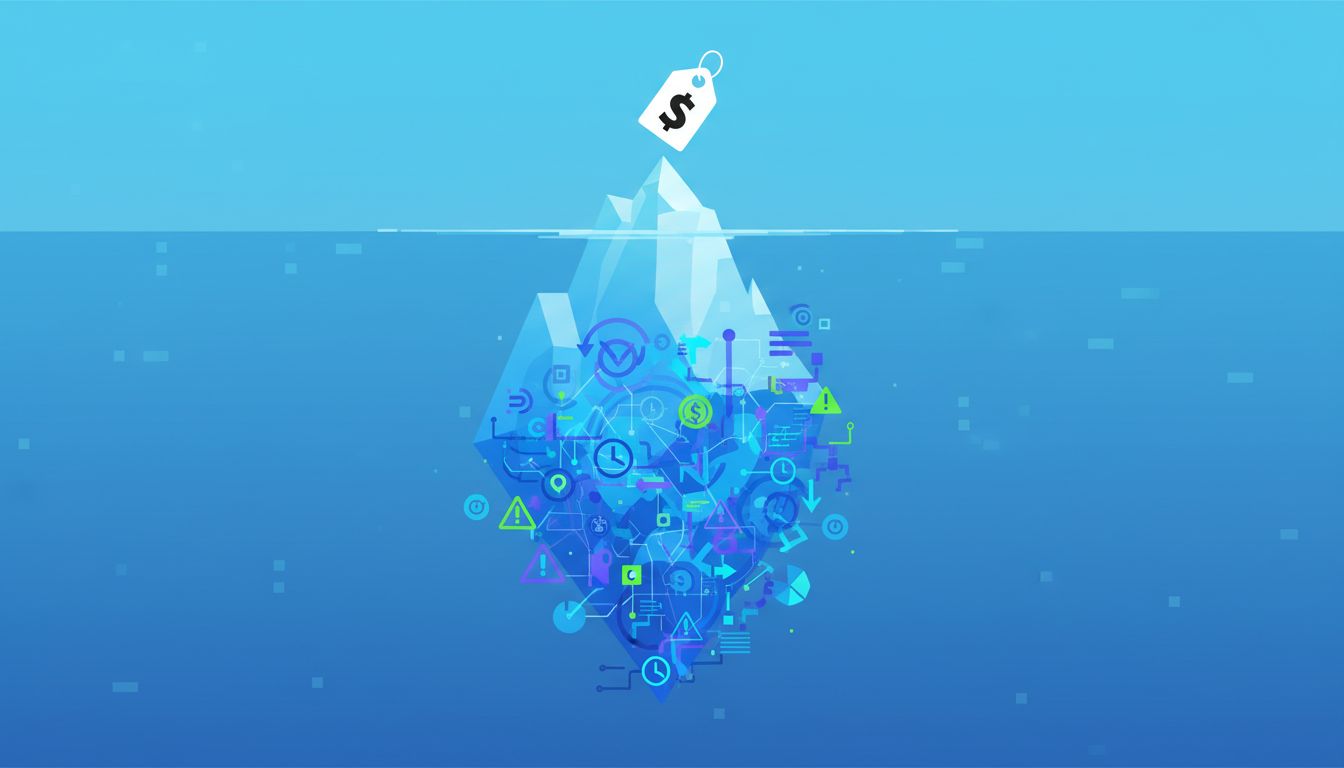
A startup I consulted for a few years back ran its entire customer communication workflow on a free tier of an automation tool. Two people on the team had built elaborate multi-step sequences inside it over eighteen months. No documentation. No version history. Just a sprawling web of triggers and conditions that had become, quietly and completely, load-bearing infrastructure. When the vendor announced they were sunsetting the free tier and tripling prices, the team sat down to migrate. Three weeks later, they were still untangling it. The real cost of that “free” software turned out to be somewhere north of forty thousand dollars in engineering time, lost deals during the disruption, and a two-month delay on a product initiative they’d been planning.
This is not a rare story. It is almost the default story, and the pattern is consistent enough that it functions like a rule: the software you pay the least for tends to be the most expensive to replace.
Why Low Cost Disables Your Judgment
When you pay real money for a tool, you evaluate it. You ask whether it integrates cleanly, whether the vendor is stable, whether your team can build on top of it without painting yourself into a corner. The procurement process, however annoying, creates friction that forces some due diligence.
Free software skips all of that. You sign up with an email address. There’s nothing at stake financially, so there’s nothing to scrutinize. The same team that would spend two weeks evaluating a fifty-thousand-dollar contract will spin up a free tool on a Tuesday afternoon and have their whole workflow built around it by Thursday. The low price doesn’t just reduce cost. It disables the evaluation instinct that would otherwise protect you.
Cheap software has a related but subtler problem. When a tool costs thirty dollars a month, nobody does a serious build-versus-buy analysis. Nobody asks what happens if this company folds, pivots, or raises prices. Thirty dollars doesn’t feel like a commitment. But thirty dollars a month, multiplied by eighteen months of accumulated workflow and institutional knowledge, is actually a very large commitment. You’ve just been making it in increments too small to notice.
The Accumulation Problem
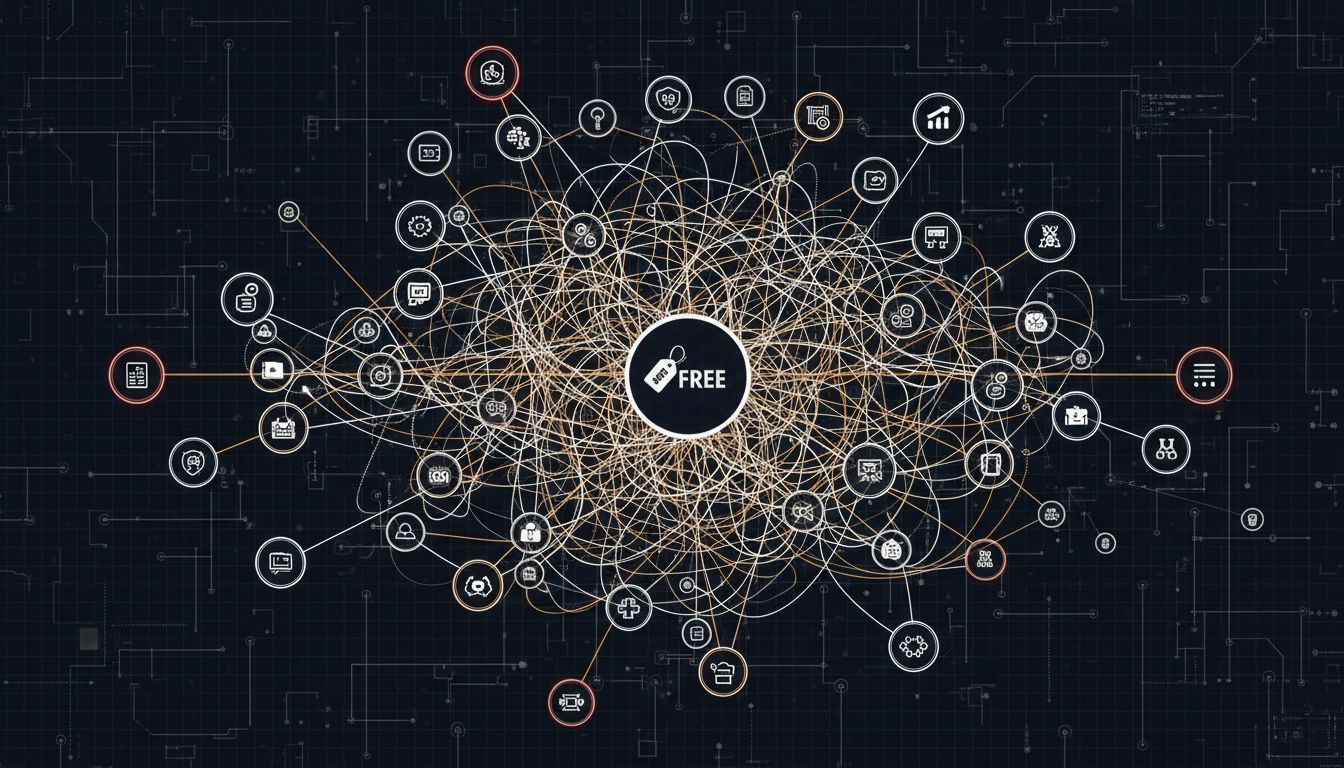
The real trap isn’t the software itself. It’s what grows around it.
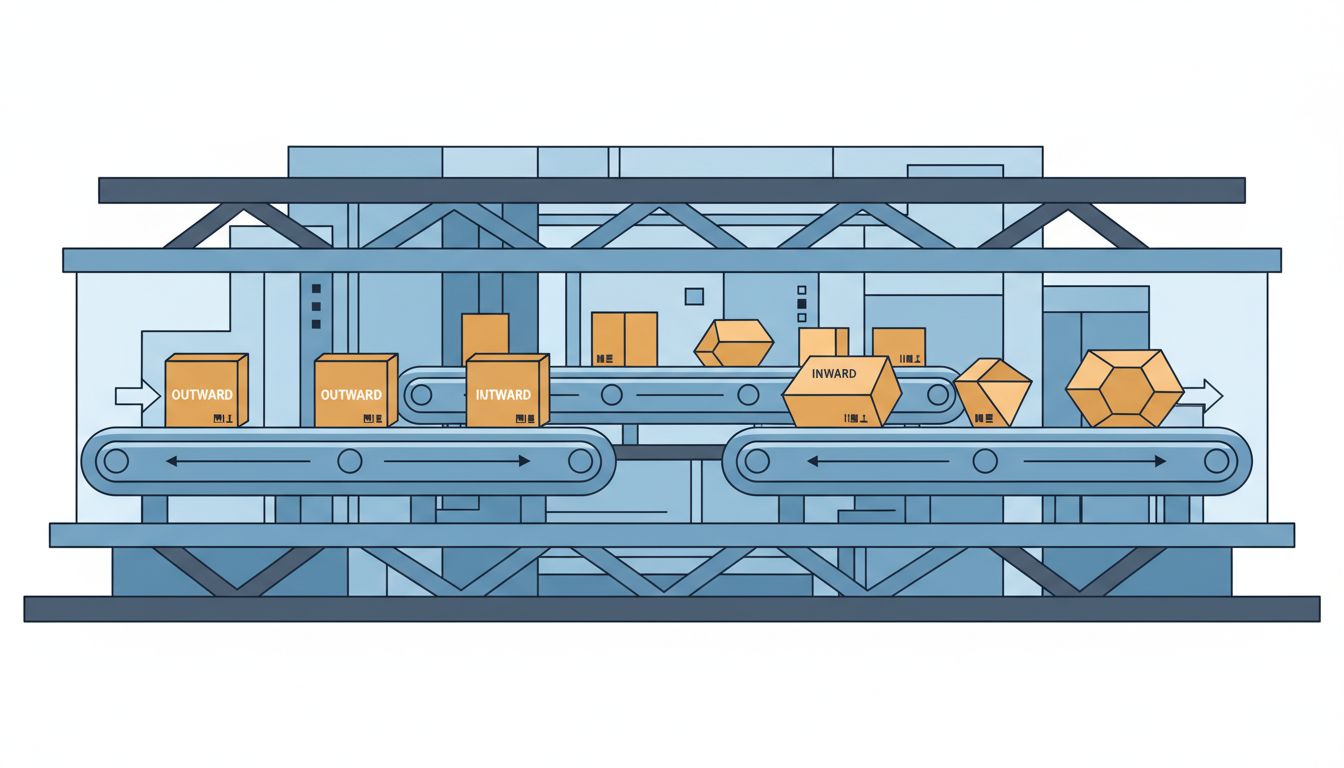
Every tool your team uses accumulates what you might call workflow sediment: the custom fields nobody else would configure the same way, the internal shorthand baked into naming conventions, the integrations someone built by hand because the native connector didn’t do exactly what was needed. This sediment forms regardless of what you paid for the underlying tool. But with expensive software, you tend to be more deliberate about architecture because the cost of being sloppy is visible. With free tools, you optimize for speed and convenience, and the sediment builds faster.
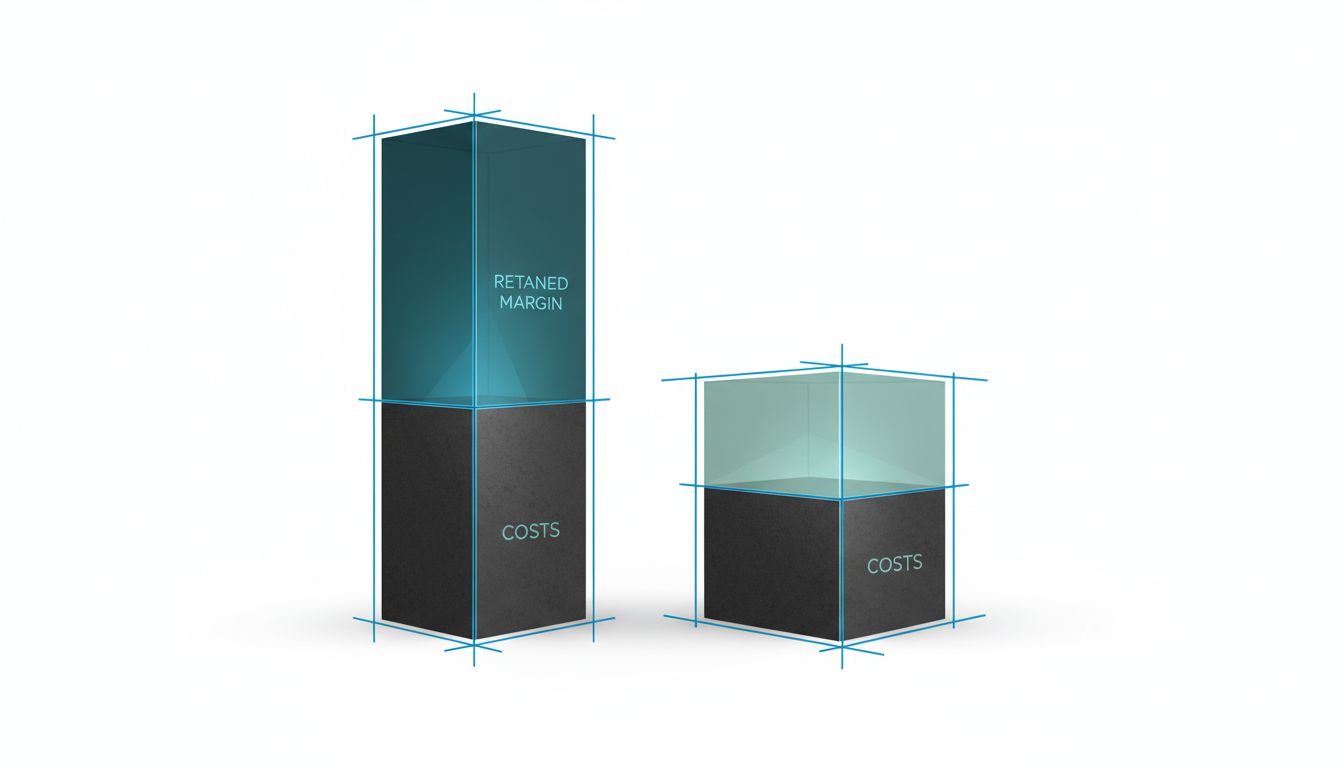
The real cost of keeping a software product alive is almost always dominated by accumulated complexity rather than licensing fees. When you pay almost nothing for a tool, you tend to borrow against that complexity budget aggressively, because there’s no monthly line item reminding you that the debt exists.
Slack is the canonical example. Free tier usage convinced millions of teams to move their institutional communication off email and into a platform where it was searchable, threaded, and integrated with their other tools. By the time the free message history limit started mattering, or the upgrade economics started making less sense, the idea of migrating was absurd. Slack understood this perfectly. The free tier was never a product decision. It was a switching-cost installation strategy.
The Vendor’s Incentive Structure
When a vendor offers software for free, the business model is usually one of three things: they’re growing toward a paid tier, they’re harvesting your data, or they’re building a moat around your workflow so that eventually you have no real choice but to pay.
All three of these incentive structures are misaligned with yours. In the first case, the product will change as they optimize for conversion rather than for your specific needs. In the second, you’re the product, not the customer, which means quality and reliability are not their core concern. In the third, the entire product strategy is designed around making it painful for you to leave, which is a very different goal than making the product genuinely good.
This doesn’t mean free software is always a bad choice. It means you should evaluate it with the same skepticism you’d apply to a vendor whose pricing model you didn’t understand. Which, to be clear, you mostly aren’t doing right now.
How to Audit What You’ve Already Built Around
The practical question is what to do about the free and cheap tools already embedded in your stack.
Start by making the hidden costs visible. For each low-cost tool your team uses in a workflow-critical way, ask a single question: if this tool disappeared tomorrow, what would it take to rebuild or migrate? Put a number on it. Engineering hours, business disruption, knowledge reconstruction. This exercise is clarifying in a way that just looking at the invoice never is.
Then apply a simple filter. If the answer is “two days,” the low cost is a genuine advantage. If the answer is “three months and we’d probably lose a key account,” you have a risk that isn’t showing up anywhere on your balance sheet. That’s not an argument to immediately replace the tool. It’s an argument to treat it like what it actually is: critical infrastructure, which means it deserves the documentation, the contingency planning, and the vendor scrutiny that critical infrastructure gets.
The other thing worth doing is getting honest about the evaluation process that let these tools in. The discount on a tool is not a reason to skip diligence. It’s a reason to add some, because the vendor’s incentives when they’re not charging you are less aligned with your long-term interests than when they are.
What You’re Actually Buying
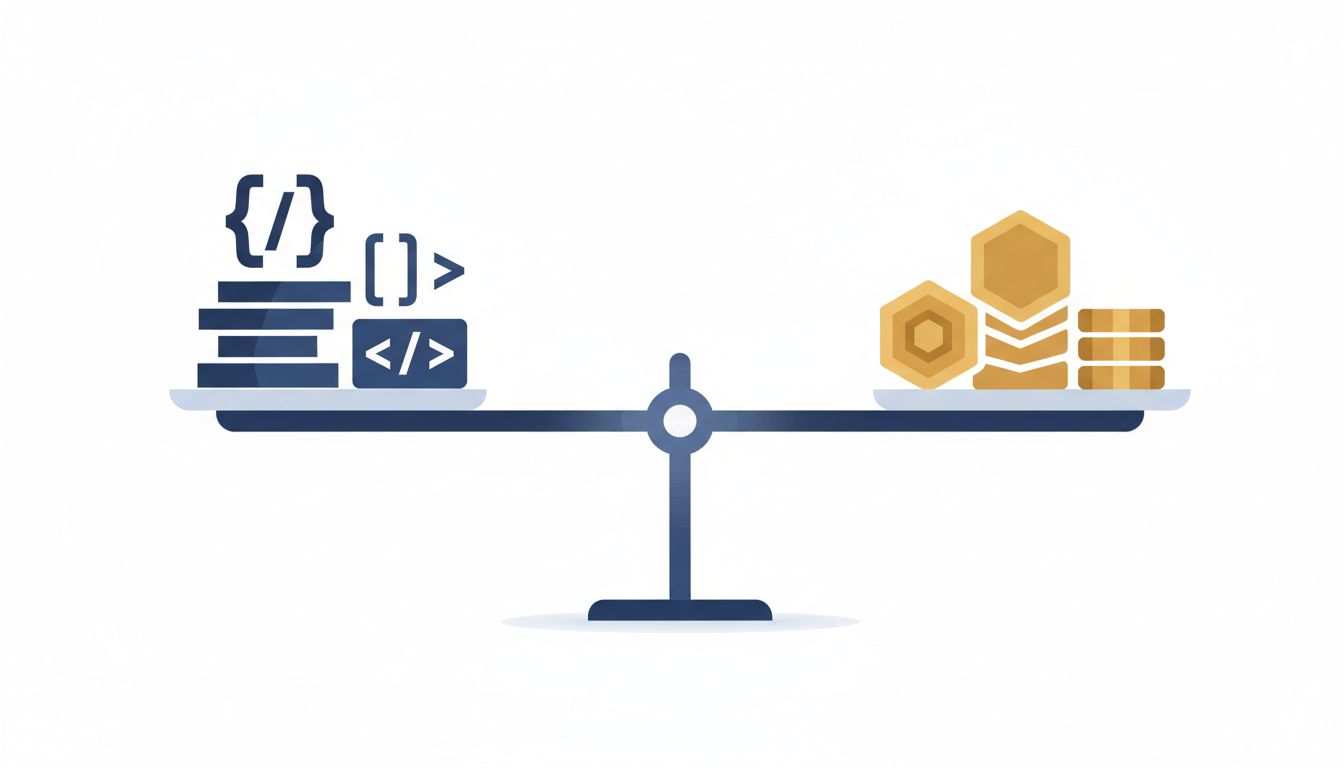
Software has two prices. There’s the price on the invoice, and there’s the price of being dependent on it. Most purchasing decisions optimize aggressively for the first and ignore the second entirely.
The tools that end up costing the most are rarely the ones with the biggest contracts. They’re the ones that got in for free, grew into something essential, and are now structurally immune to replacement. The startup I mentioned at the beginning didn’t make a bad purchasing decision. They made no purchasing decision at all. That was the mistake. When something is free, you feel like there’s no decision to make. But absence of cost is not absence of consequence, and the teams that learn this the hard way tend to learn it at the worst possible moment.