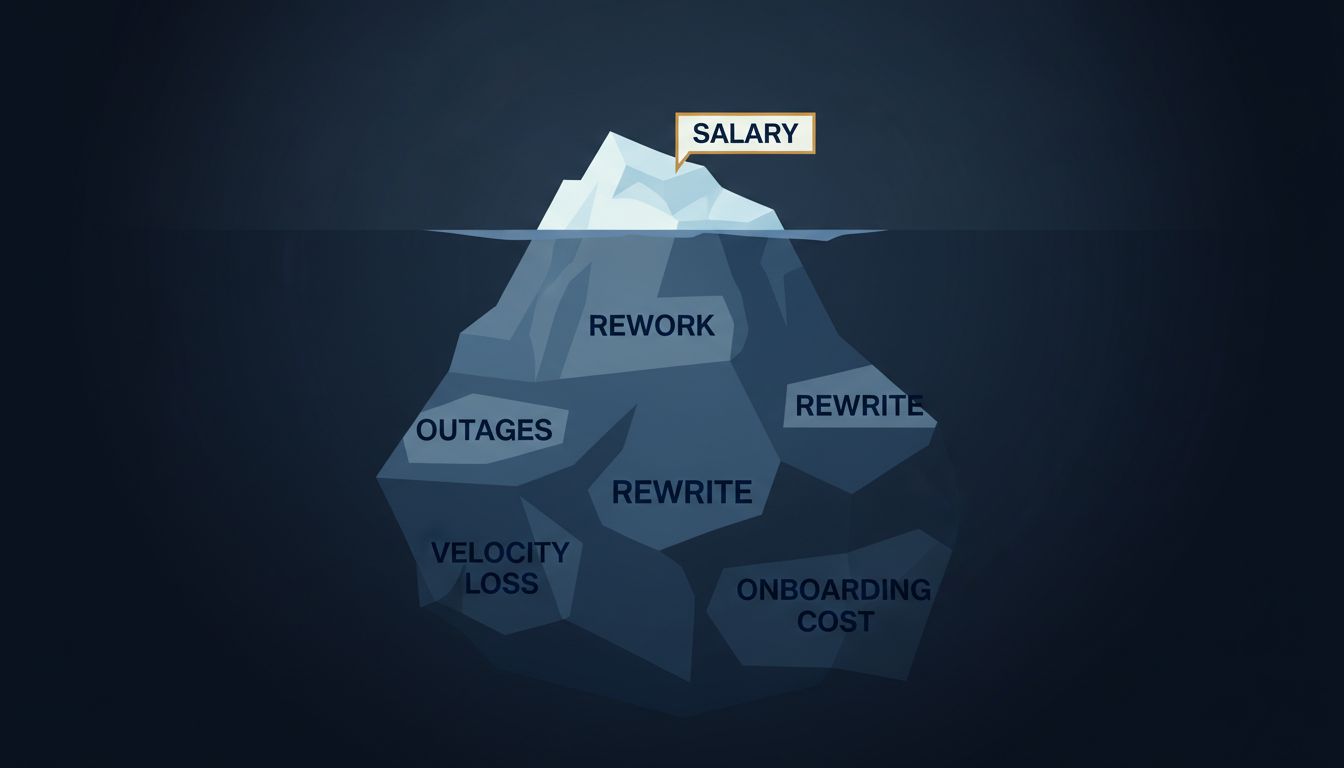
A startup burning through cash is either making a calculated bet or slowly self-destructing. From the outside, these two things look identical until they don’t. The conventional wisdom holds that frugality signals discipline and spending signals recklessness. The conventional wisdom is wrong, or at least incomplete. Burn rate is a statement of belief. What matters is whether the belief is grounded.
1. Burn Rate Is a Forecast in Disguise
When a company decides how fast to spend, it is making an implicit prediction about its own future. High burn means leadership believes revenue, the next funding round, or a market window is coming fast enough to justify the acceleration. Low burn means they are not yet confident enough to bet on that timeline.
This is why comparing burn rates across companies without comparing their competitive contexts is nearly useless. A SaaS startup spending conservatively while a well-funded rival races toward enterprise contracts is not being disciplined. It is potentially ceding ground it cannot recover. The frugal company might be making the more reckless call.
2. Markets With Network Effects Punish the Cautious
In winner-take-most markets, being second is often the same as being irrelevant. Uber did not spend aggressively because its founders lacked financial discipline. It spent because the alternative was losing city after city to Lyft, and because Benchmark understood exactly what was at stake when it backed both sides of the ride-sharing war.
Network-effects businesses require density to work. A marketplace that is 80 percent as good as its competitor does not capture 80 percent of the market. It captures almost none of it, because users go where other users already are. In this context, spending to reach critical mass faster is not a luxury. It is the product strategy.
The companies that pulled back in these markets to preserve runway often found that a longer runway led straight into the ground, just more slowly.

3. The Best Investors Read Burn Rate as a Conviction Signal
Experienced venture investors are not just looking at how much a company spends. They are looking at what the spending pattern reveals about founder judgment. Is the burn concentrated in areas that compound, like engineering talent, distribution infrastructure, or category-defining partnerships? Or is it diffuse, spread across overhead, conferences, and premature expansion into markets the company has not earned?
A founder who can articulate exactly why each dollar is being deployed before it is spent is demonstrating something valuable: a mental model of causation. Spending X on Y should produce Z, and here is why we believe that. When that logic is coherent and falsifiable, high burn looks less like recklessness and more like confidence with a clear thesis attached.
This is different from spending that just happens. Many startups that blow through capital without milestones to show for it were never running a real strategy. They were running vibes.
4. Constrained Burn Can Be Confidence Too, But for Different Reasons
None of this means aggressive spending is automatically a sign of strategic clarity. Underfunded startups have built lasting advantages precisely because limited capital forced prioritization. When you cannot afford to run five experiments simultaneously, you become very good at choosing the right one.
The signal is not the number itself. It is the relationship between the burn rate, the market structure, and the founder’s stated theory of winning. A company in a fragmented market with no network effects, spending heavily on sales before it has repeatable unit economics, is making a bad bet at high velocity. A company in a consolidating market with proven retention metrics, spending to outpace a slower rival, is making a calculated one.
The number means nothing without the context. Anyone evaluating a startup on burn rate alone is reading one variable from a multivariate equation.
5. Runway Math Is Necessary but Not Sufficient
Every founder knows to calculate runway: cash divided by monthly burn equals months until the company needs more money. It is a useful survival metric. It is a poor measure of strategic health.
A company with 36 months of runway and no meaningful progress on product-market fit is in worse shape than one with 12 months of runway and accelerating revenue. The first company is surviving. The second is building. The market does not reward survival. It rewards building.
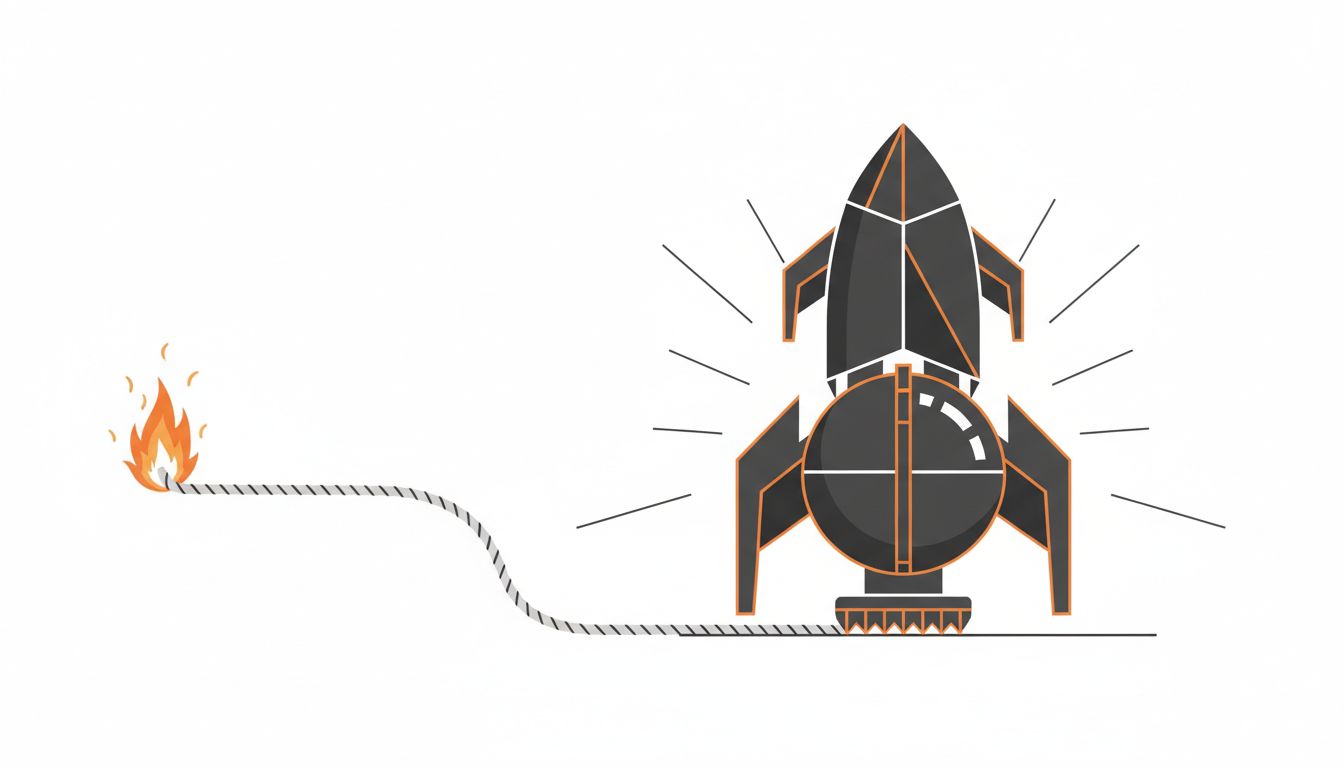
The founders who eventually find durable product-market fit often took longer than expected to get there, which means they had to be intentional about when to spend aggressively and when to husband resources. That timing judgment, knowing when the moment has arrived to pour fuel on a fire versus when you are still looking for the fire, is what separates the burn rate that signals confidence from the one that signals denial.
6. What You Should Actually Ask About Any Company’s Burn
The right questions are never “is this too much?” They are: Does the burn rate match the market timeline the company is operating in? Is there a coherent theory of what the spending buys, and is that theory being tested against reality? Are there milestones on the horizon that would make the current burn rate obviously correct in hindsight?
If the answers are yes, the burn is a signal of confidence. If the answers are vague or circular, the burn is a warning. The number on the spreadsheet does not tell you which is which. The reasoning behind it does.