The simple version
Every notification on your phone is something you opted into at some point. The problem isn’t that apps are interrupting you — it’s that you set them up to interrupt you and then forgot you made that choice.
Why your brain treats a Slack ping like a fire alarm
Your nervous system doesn’t naturally distinguish between “your manager needs you right now” and “someone reacted to your LinkedIn post.” Both arrive as a buzz in your pocket. Both create a small spike of urgency. Over time, your brain starts treating the channel itself as high-stakes, regardless of what’s coming through it.
Gloria Mark’s research at UC Irvine found that after an interruption, it takes an average of about 23 minutes to return to a task with full focus. That number gets quoted constantly, but the more important implication is usually missed: most interruptions aren’t worth 23 minutes of recovery cost. A Slack message telling you the team lunch is at noon is not worth that. A calendar reminder for a meeting you already know about is not worth that.
You’re not bad at focus. You’re paying a 23-minute tax on interruptions that were never urgent to begin with.
The confusion between “timely” and “time-sensitive”
Here’s the distinction that changes how you think about this. A notification can be timely (it’s new information) without being time-sensitive (it requires your attention right now). Most notifications are timely. Almost none are genuinely time-sensitive.
Think about the last ten notifications you received. How many actually required an immediate response? Not just a response within a few hours — but an immediate one, where a delay of 30 minutes would have caused a real problem? For most people in most jobs, the honest answer is: one or two, maybe. Possibly none.
The apps on your phone are not designed to help you make this distinction. They’re designed to feel urgent. The badge count on your email app isn’t there for your productivity. It’s there because keeping apps alive costs more than most users realize, and engagement is currency.
A practical audit you can do in 20 minutes
Open your notification settings. Go app by app. For each one, ask a single question: in the last month, has an alert from this app ever required me to act within 30 minutes?
If no, turn off all alerts from that app. You can still open it whenever you want — you’re just removing its ability to pull you away from whatever you’re doing.
If yes, ask a follow-up: does it need to be a sound and vibration, or just a badge? Most things that are time-sensitive can wait for you to glance at your screen. Very few need to physically interrupt you.
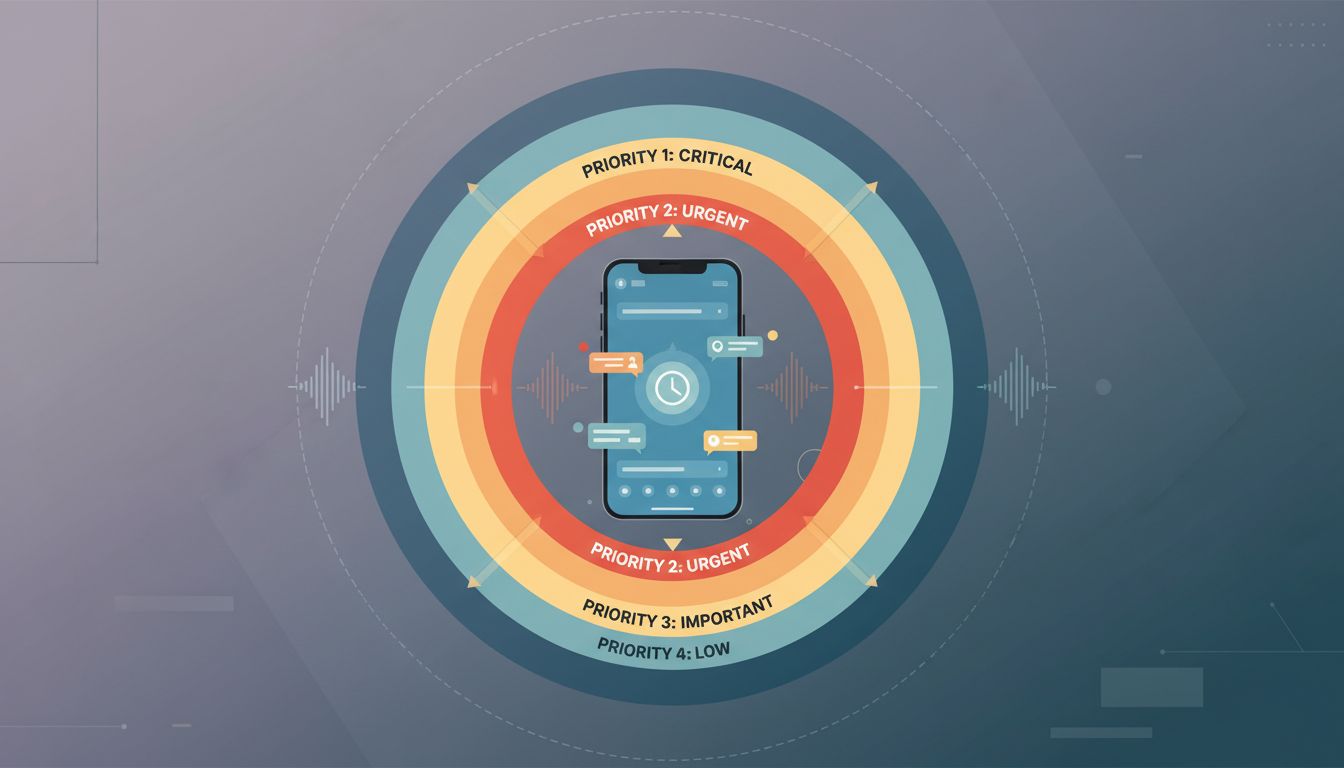
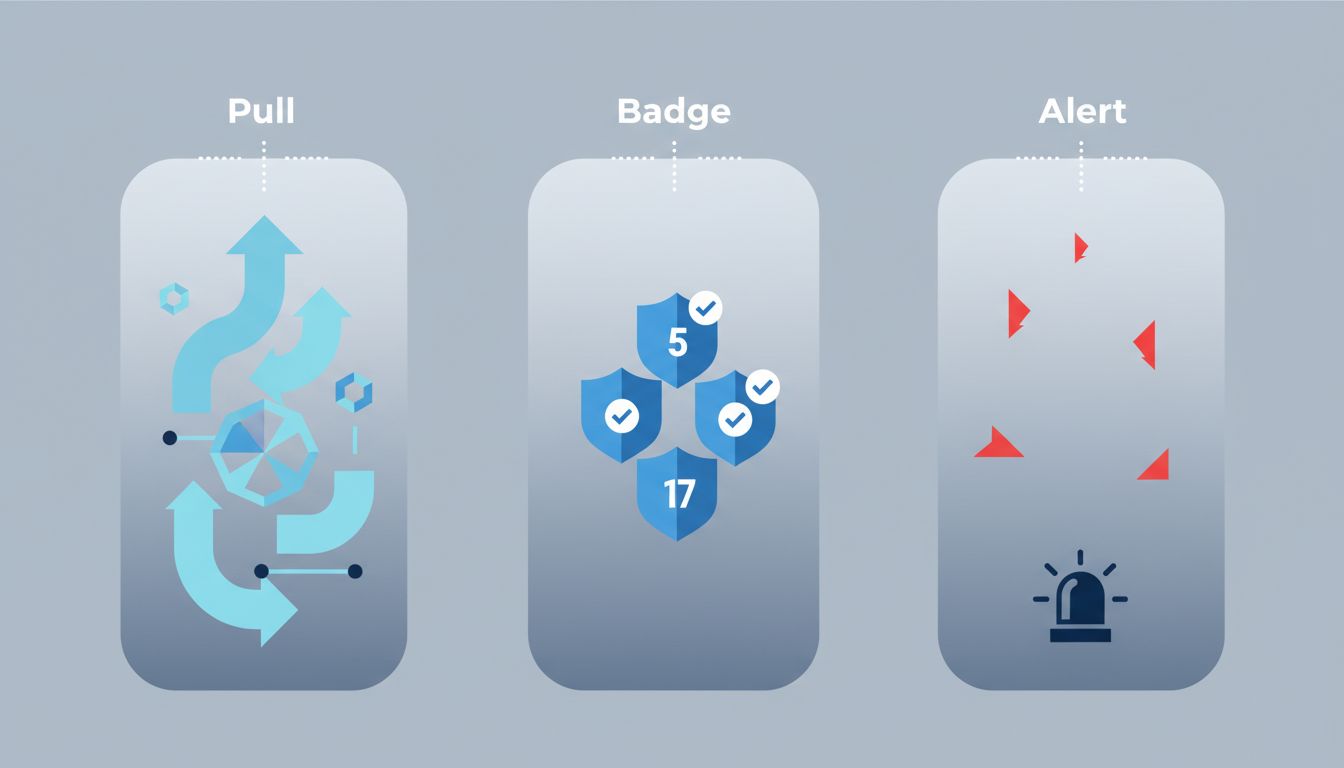
A useful mental model: sort everything into three buckets.
Bucket 1: Pull (no notification needed). Apps you check on your own schedule — social media, most email, news. You’ll look at these when you want to. They don’t need to reach for you.
Bucket 2: Badge only. Apps with information that’s useful when you happen to open your phone, but that don’t need to interrupt you mid-task. Most messaging apps for most people fall here.
Bucket 3: Sound and vibration. Genuinely reserved for things where a 30-minute delay would cause a real problem. For most people, this is phone calls, possibly texts from a small set of people, and calendar reminders for things starting soon.
This isn’t about becoming unreachable. It’s about deciding when you’re interruptible, rather than leaving that decision to every app developer who wanted more engagement.
The social pressure problem
The most common pushback here is: “But people expect quick responses.” This is worth taking seriously, because the expectation is real. If your team uses Slack and everyone responds within minutes, opting out of that norm has a cost.
But two things are worth separating. First, the actual expectation is often softer than it feels. Many people assume others want instant responses because others assume the same thing about them — and nobody has ever checked. If you respond to non-urgent messages within two hours instead of two minutes, you may discover the consequences are much smaller than you feared.
Second, you can be responsive without being always-on. Checking Slack three times a day deliberately and responding thoroughly is often more useful to your team than scattered two-word replies every few minutes. As Gloria Mark’s research also suggests, constant responsiveness can create the feeling of productivity while undermining the actual work.
If your role genuinely requires instant availability, that’s a real constraint worth naming explicitly — not a default to accept without examination.
What this looks like in practice
After running the audit above, a reasonable setup for most knowledge workers looks something like this: phone calls and texts from family ring through. Calendar alerts for events in the next 15 minutes fire. Everything else is either a badge or nothing. Slack and email get checked at intentional intervals (morning, midday, late afternoon works for many people) rather than on demand.
The first few days feel strange. Then they mostly feel like having your attention back.
You opted into all of this. You can opt back out.