
Most companies that get hit with a surprise cloud bill did not fail to budget. They budgeted carefully, reviewed the estimates, and got sign-off from finance. The bill arrived anyway. The problem is not discipline. It’s that cloud pricing is architecturally resistant to prediction in ways that most planning processes never account for.
Here are the structural reasons this keeps happening.
1. You Are Forecasting Consumption, Not Cost
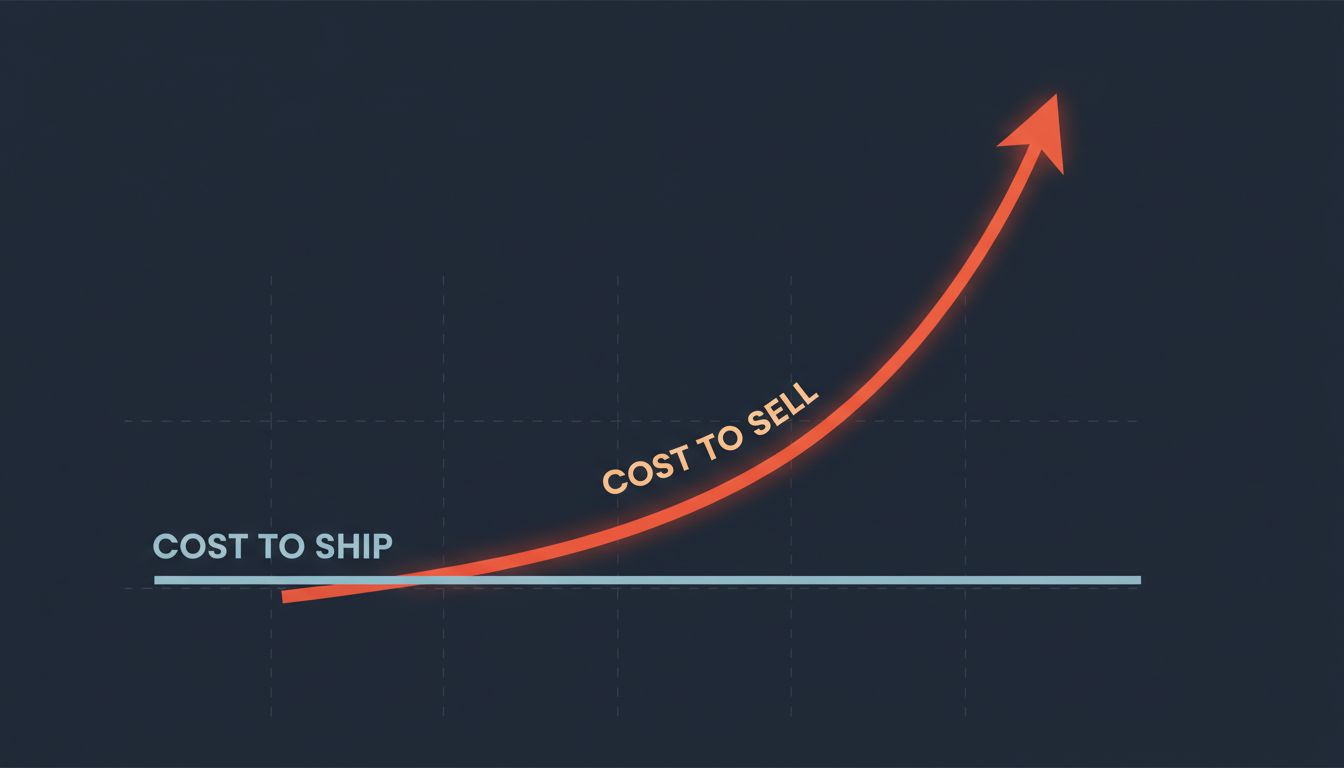
Traditional IT spending is largely fixed. You buy servers, you pay the contract, the number does not change much month to month. Cloud flips this entirely: you pay for what you use, which means your bill is a function of user behavior, traffic patterns, and engineering decisions that finance has no visibility into.
This is the core problem. When a product team ships a feature that doubles database read volume, there is no procurement approval process. There is no purchase order. The cost simply appears on next month’s bill. Finance had a number; engineering changed the conditions that generated that number without anyone treating it as a financial event.
2. Reserved Instances Require Predicting the Future With Precision
The main tool cloud providers offer for cost predictability is commitment discounts: pay upfront or commit to a one- or three-year term, and AWS, Google Cloud, or Azure will charge you significantly less per hour. AWS advertises savings of up to 72% on Reserved Instances compared to on-demand pricing.
The catch is that these commitments only save money if your usage matches what you committed to. Overcommit and you are paying for capacity you are not using. Undercommit and your overflow runs at full on-demand rates. Forecasting the right level requires predicting your infrastructure needs one to three years out, which is an unreasonable ask for any company growing or changing its architecture. Most companies end up with a patchwork of commitments that partially cover their actual usage, and the gap is expensive.
3. Data Transfer Costs Are Almost Always Underestimated
Cloud providers charge almost nothing to move data in, and significantly more to move it out. AWS charges for data egress at rates that vary by destination, volume tier, and service. Data transferred between availability zones within the same region also carries a charge, which surprises teams that assumed traffic within the same cloud was free.
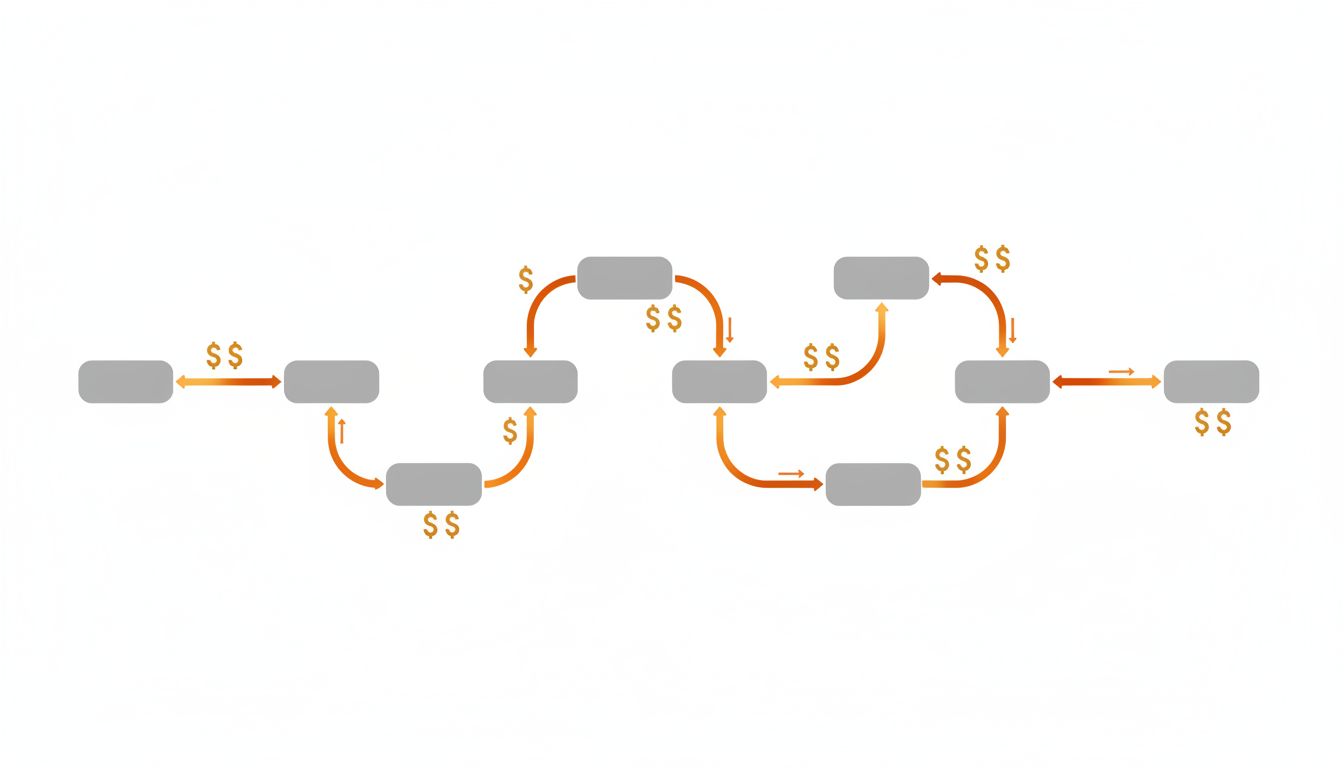
This matters because modern application architectures are deliberately distributed. Microservices call each other. Data pipelines move data between storage layers. Analytics queries pull from production databases into separate compute environments. None of this felt expensive when engineers designed it, because the cost is invisible at the architecture decision stage. It becomes visible at billing time.
4. Managed Services Hide Costs Behind Convenience
One of the genuine value propositions of cloud is managed services: let AWS run your Kafka cluster, let Google manage your database replication, let Azure handle your Kubernetes control plane. You pay a premium, but you save engineering time.
The problem is that the premium is not always legible when you adopt the service. Teams evaluate managed services on features and operational burden, not on total cost at their projected scale. A managed service that costs twice as much per unit as the self-hosted alternative looks like a minor expense at low volume and a significant one at high volume. Many teams discover this only after they have built substantial dependencies on the service, at which point migration costs make the math complicated. The convenience was real. So is the bill.
5. Tagging Failures Make Accountability Impossible
Cloud providers let you tag resources with metadata: team name, project, environment, cost center. If you do this consistently, you can see exactly which team or product is responsible for which portion of the bill. If you do not, you get a total number with no decomposition.
Tagging sounds simple and is in practice difficult to maintain. Resources get created in experiments and never deleted. Automation scripts spin up infrastructure without tags. New team members do not know the tagging convention. Over time, a meaningful fraction of cloud spend becomes unattributed, which means no one is accountable for it and no one has incentive to reduce it. Gartner has estimated that organizations waste significant portions of cloud spend on unused or unoptimized resources, and poor tagging is a primary reason that waste persists undetected.
6. AI and ML Workloads Are Especially Hard to Budget
GPU compute is expensive and bursty. A training run that an engineer estimates will take ten hours sometimes takes thirty, because the estimate was based on a different dataset size or a configuration that turned out to be inefficient. The cost of that error is not a wasted afternoon. It is a bill that reflects the GPU-hours consumed, at prices that can reach several dollars per hour per GPU.
This problem is getting more common as more companies add ML to their workflows. The engineering cost of experimentation has historically been time. In cloud-based ML, it is also money, and the two are not always treated as equivalent. The economics of AI inference are genuinely strange in ways that make cost modeling harder than it looks: marginal cost is not zero when a GPU has to process every request.
7. Budget Alerts Are Lagging Indicators, Not Controls
Most cloud platforms let you set budget alerts: notify someone when spend reaches 80% or 100% of a threshold. This feels like a control mechanism. It is not. It is a notification that a thing has already happened.
By the time the alert fires, the workload has already run. If a misconfigured job consumed three times its expected compute overnight, the alert arrives in the morning. The money is gone. Real cost control requires either architectural constraints (rate limits, auto-shutdown policies, spending caps enforced at the API level) or engineering cultures where cost is treated as a first-class metric alongside performance and reliability. Most organizations have neither, and so they run alerts that inform without preventing.
The underlying issue across all seven of these patterns is the same: cloud pricing is a continuous variable that responds to engineering decisions, and most organizations treat it as a periodic fixed cost that responds to procurement decisions. Until the feedback loop between engineering choices and cost outcomes is shortened, the surprises will continue regardless of how carefully finance runs the planning cycle.