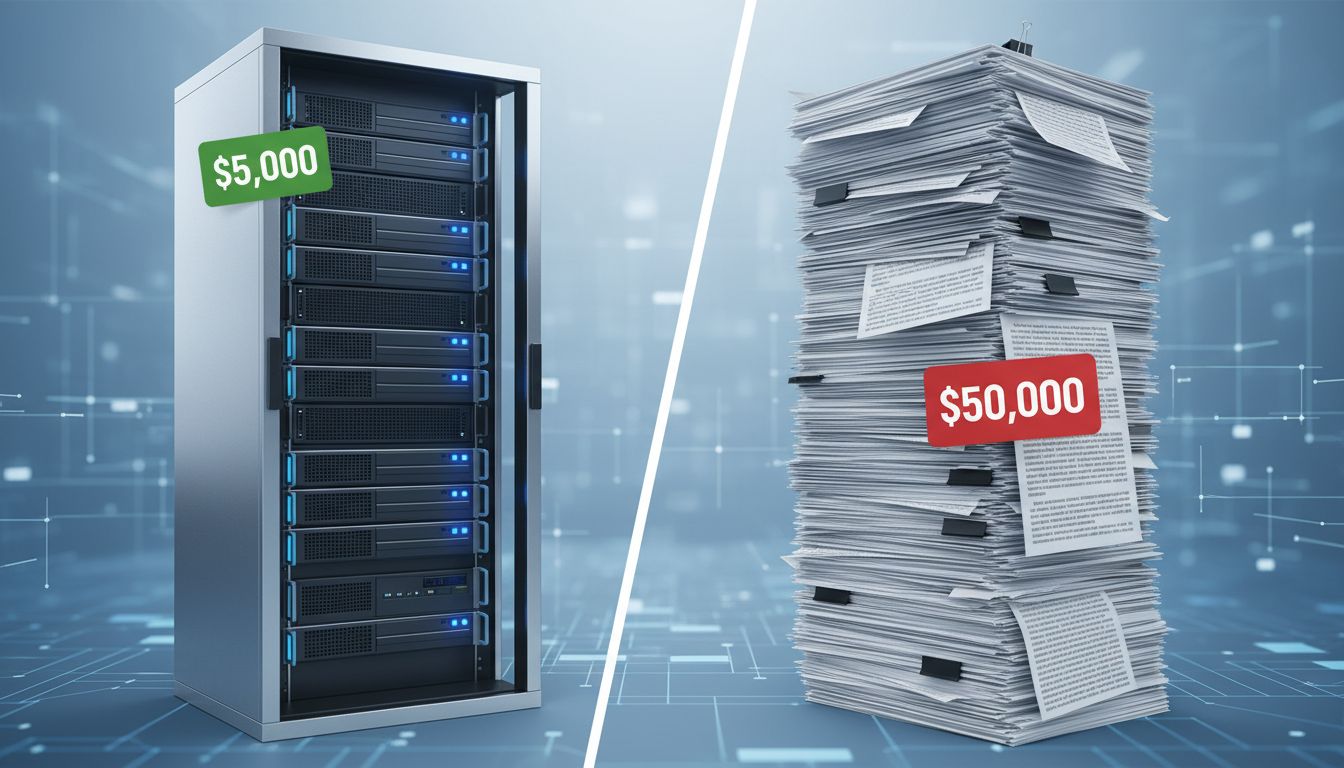
A friend of mine spent three months negotiating a server deal for his mid-sized logistics company. He got a great price, $4,800 per unit, solid hardware, plenty of RAM, the works. Then the vendor slid over the software licensing sheet. Oracle database licenses alone came to $47,000. Per year. He called me genuinely furious, convinced he was being robbed. He wasn’t wrong, but he was confused about who was doing the robbing and why.
This scenario plays out in procurement meetings every single day, and the explanation most people reach for (software companies are greedy) is technically true but strategically useless. The real answer is stranger and more interesting than simple greed. Cloud storage costs more than physical hard drives because the price was never about storage, and the same logic applies here with even higher stakes.
You’re Not Buying a Product. You’re Buying a Position.
Hardware is a commodity. The moment you take a server out of the box, it starts losing value. It depreciates, it breaks, it becomes obsolete. The vendor’s leverage over you ends the second the truck pulls away.
Software is different. The moment your team learns it, integrates it, builds workflows around it, and stores years of data in its proprietary format, you are no longer a customer. You are a dependent. The switching cost isn’t the price of the new software. It’s the retraining, the migration risk, the productivity loss, the months of parallel running, and the very real possibility that something breaks catastrophically mid-transition.
Vendors price licenses to reflect that captured position, not the cost of producing the software. The marginal cost of producing one more copy of a database license is basically zero. The price has nothing to do with production cost. It’s priced at whatever the market can bear, and “the market” in enterprise software is really “whatever you’d pay to avoid a nightmare migration.”
The Lock-In Architecture Is the Product
Here’s what most buyers don’t realize until it’s too late: the lock-in is engineered deliberately. It’s not a side effect of good software. It’s a design goal.
Proprietary file formats, custom query languages, non-standard APIs, deep integrations with adjacent tools the same vendor sells, these aren’t technical accidents. They’re moats. Every time your developers learn a vendor-specific syntax instead of an open standard, the switching cost goes up. Every integration you build deepens the dependency.
This is worth sitting with for a second. Tech companies deliberately hide their best features from new users because revealing everything at once overwhelms people, but there’s a secondary effect: it creates a long discovery arc that keeps users invested for months or years before they’ve even seen everything the product can do. By the time you’ve seen everything, you’re so embedded that leaving feels impossible.
Enterprise software vendors play the same long game. The onboarding is generous. The first renewal is reasonable. By the third year, the price is whatever they want it to be, because leaving now would cost you more than staying.
Why the Math Always Favors the Vendor
Let’s look at how enterprise software companies actually think about pricing, because understanding their model explains everything.
A company like Salesforce doesn’t think in terms of what their software costs to build and what margin they want on top. They think in terms of customer lifetime value and expansion revenue. The initial deal is almost loss-leader territory. They want you in. They want your data in their system. They want your sales team trained on their interface.
Then the expansion begins. New seats. New modules. The marketing cloud. The analytics add-on. The AI features that are, conveniently, a separate SKU. Each expansion is easier to sell than the last because the alternative is always the same: abandon everything you’ve built and start over.
This is the hidden subsidy in the hardware price. Vendors can offer competitive hardware (or partner with hardware vendors who do) because they’re not making their money there. They’re making it on the decade-long software relationship that hardware purchase initiates.
The Open Source Illusion
At this point, you’re probably thinking: open source. And yes, open source software solves the licensing cost problem directly. PostgreSQL doesn’t send you a $47,000 invoice. Linux doesn’t charge per core.
But open source shifts costs rather than eliminating them. The support, maintenance, security patching, and expertise required to run open source infrastructure at scale isn’t free. You’re hiring it. Companies that go deep on open source often discover they’ve traded a predictable licensing fee for an unpredictable talent cost, and senior engineers who can wrangle production Kubernetes clusters or tune PostgreSQL at scale are not cheap.
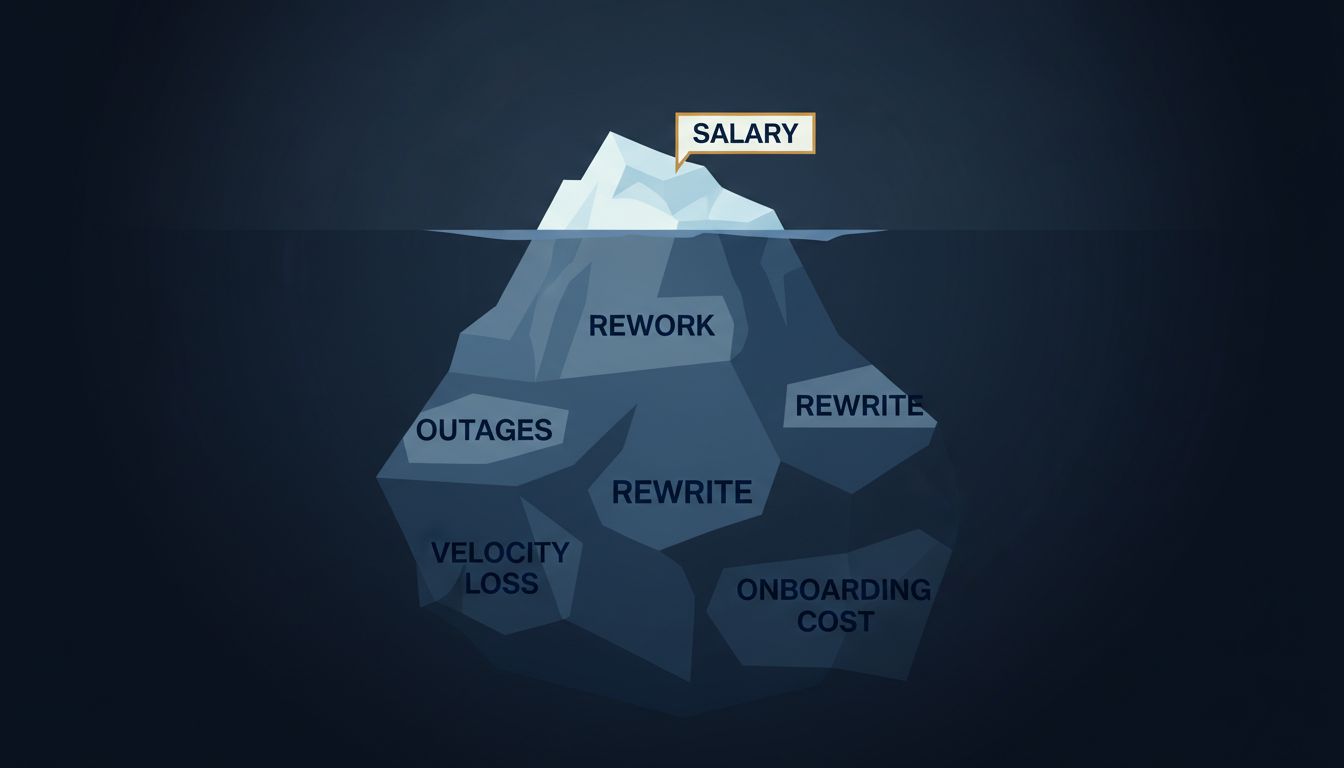
The honest answer is that there’s no version of enterprise software where the total cost is low. The question is only which form the cost takes: licensing fees you can see on an invoice, or engineering salaries, consultant hours, and migration risks that are harder to attribute.
Tech companies build features they never launch on purpose partly as competitive insurance, but also because having a roadmap that justifies subscription renewals is a real business strategy. Open source projects don’t play this game, which is part of why they often struggle to match enterprise software on the features that matter most to large organizations.
What Smart Buyers Actually Do
The buyers who navigate this well share a few habits. They negotiate on contract length and exit clauses, not just price. Getting a 20% discount in exchange for a three-year lock-in is often a bad trade, even when it feels like a win.
They also invest in internal expertise on the tools they choose. Not to build alternatives, but because vendors treat informed buyers differently. When your team actually understands the architecture, you can credibly threaten migration, and that changes the negotiation dynamic entirely.
And the best of them standardize on fewer tools, chosen more carefully, rather than accumulating software sprawl they can’t control. Digital minimalists ignore most tech trends on purpose and outperform everyone who doesn’t, and that restraint has a direct financial analog in software procurement. Every tool you add is a future negotiation you’re going to lose.
My friend eventually renegotiated his Oracle contract. It took six months, a genuine evaluation of PostgreSQL migration costs, and a consultant who had done this before. He got the price down by about 30%. Oracle still made a lot of money. They always do.
The lesson isn’t that software pricing is unfair. It’s that you’re not buying software. You’re buying your way into a relationship with defined power dynamics, and the price of the license is just the entry fee.